 Birch Bay Siding
 New-Construction Windows Built for Point Whitehorn's Marine Climate
Building a home in Point Whitehorn puts you close to the water, and that comes with a specific set of demands most inland builds never have to deal with. Salt-laden air off the Strait of Georgia, wind-driven rain that hits window assemblies sideways instead of straight down, and a moss season that runs long and damp for much of the year all put extra stress on the window openings in a new build. Getting the window installation right the first time, while the wall assembly is still open, is one of the few chances you get to build in long-term protection instead of patching problems later.
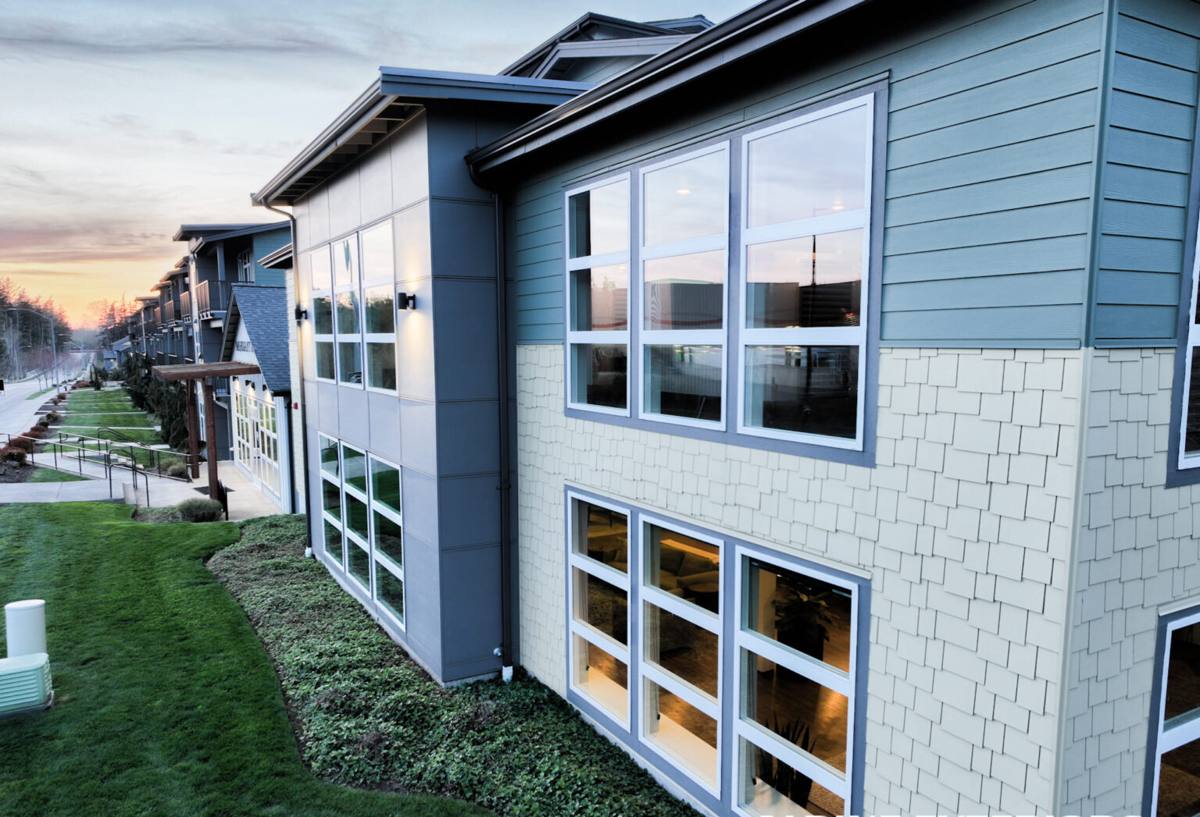
Why New-Construction Windows Are a Different Job Than Replacement
New-construction windows are installed with a nailing flange that fastens directly to the sheathing before siding goes on, and the window becomes part of the building's water management system rather than sitting inside an existing wall. This is different from replacement work, where an insert window goes into a pocket that's already flashed and finished. On a new build, we're not working around old materials — we're setting the flashing sequence, the weather-resistant barrier integration, and the sill detailing from scratch. That's an advantage if it's done correctly, because there's no old, compromised flashing hiding behind the trim. It's also a liability if it's rushed, because any shortcut taken now gets sealed behind siding for the next 20-plus years.
What Point Whitehorn's Site Conditions Actually Demand
Salt Air and Corrosion
Homes built close to the shoreline see airborne salt settle on hardware, fasteners, and unprotected metal far more than homes a few miles inland. Over time, standard fasteners and low-grade window hardware can corrode, pit, and eventually fail — often at the exact points holding the window flange to the wall. We spec corrosion-resistant fasteners and hardware for shoreline-exposed builds as a standard, not an upcharge.
Wind-Driven Rain
Point Whitehorn's exposure to marine wind means rain doesn't just fall on a house here, it gets pushed into it — under sills, around trim, and into any gap in the water barrier. A window that would perform fine on a sheltered inland lot can leak on a bluff-exposed or open lot if the flashing isn't lapped and sealed to handle wind-driven moisture specifically, not just gravity-fed rain.
A Long Moss Season
Whatcom County's damp season runs long, and shaded or north-facing walls stay wet for extended stretches. Moss and algae growth around window trim isn't just cosmetic — sustained moisture against wood trim or poorly sealed joints accelerates rot and paint failure. Detailing that sheds water quickly and doesn't trap it against trim matters more here than in drier parts of the state.
Water Management: The Part That Determines Whether Windows Last
The window unit itself is rarely where a new-construction window fails. Failures almost always trace back to the water management details around it — the parts that are invisible once siding goes on. On every install we follow the same sequence: a sloped sill pan flashing to direct any water that gets past the window back outside the wall, self-adhered flashing tape at the jambs lapped correctly with the weather-resistant barrier, and head flashing integrated so water sheds over the top of the window rather than behind it. Each layer laps over the one below it, shingle-style, so water is always directed down and out — never into the wall cavity. On a project with heavy wind-driven rain exposure like a Point Whitehorn shoreline lot, we don't treat this as optional best practice. It's the baseline.
We also pay close attention to how window flashing ties into the broader siding and weather barrier system, since we install both. A window that's flashed correctly but poorly integrated with the siding trim around it can still leak. Coordinating those two trades under one crew removes the handoff gap where a lot of new-construction leaks actually originate.
Choosing Window Frame Materials for This Site
There's no single "best" frame material for every home — it depends on budget, the home's design, and how much upkeep the homeowner wants to take on. For a shoreline-exposed build like Point Whitehorn, we weigh coastal durability more heavily than we would inland.
| Frame Material | Coastal / Salt Air Durability | Maintenance | Typical Cost Tier |
|---|---|---|---|
| Vinyl | Good — won't corrode or rot; UV-stable finishes hold up well | Low | Entry to mid |
| Fiberglass | Very good — dimensionally stable, resists warping in temperature swings | Low | Mid to upper |
| Wood-clad | Fair to good, depends heavily on cladding quality and joint sealing | Moderate to high — exposed wood joints need monitoring in a damp climate | Upper |
| Aluminum | Fair — prone to corrosion near salt air unless specifically coated | Moderate | Mid |
For most Point Whitehorn builds, vinyl and fiberglass are the frame materials we recommend most often, simply because they hold up to salt air and damp seasons with the least ongoing maintenance. Wood-clad windows can still be the right call architecturally — we just make sure the homeowner understands the maintenance commitment before installation, not after.
Performance Ratings Worth Checking Before You Sign Off
Beyond frame material, a few performance numbers matter more here than they might in a milder or more sheltered location:
- U-factor — measures heat loss through the window; lower is better for Whatcom County's cool, damp winters
- SHGC (Solar Heat Gain Coefficient) — affects passive heat gain; less critical here than in sunnier climates, but still worth reviewing per elevation
- Design Pressure (DP) rating — the window's tested resistance to wind load; exposed shoreline and bluff lots warrant a higher DP rating than a sheltered inland lot
- Air infiltration rating — lower ratings mean less wind-driven air (and moisture) finding its way through the assembly
Every window schedule we work from lists these ratings by unit, and on an exposed Point Whitehorn lot we'll flag any opening where the site's wind exposure calls for a higher-rated unit than what's on the standard plan.
Our New-Construction Window Process
- Review the window schedule and plans with the builder or homeowner before any units arrive on site
- Confirm frame material, sizing, and performance ratings against the site's actual wind and moisture exposure
- Prep the rough openings and install sloped sill pan flashing before the window ever goes in
- Set the window plumb, level, and square, and fasten per manufacturer spec
- Integrate jamb and head flashing with the weather-resistant barrier in the correct shingle-lap sequence
- Inspect every opening before it gets closed in behind siding — this is the last point anyone can verify the water management detailing
- Coordinate final trim and siding tie-in so the window and siding systems work together, not against each other
Coordinating with Your Builder and Timeline
Windows sit at a pinch point in most new-build schedules — framing has to be done, but siding and interior finish work are usually waiting on windows to be set. We work directly off the general contractor's schedule and window supplier lead times, and we flag early if a product choice is going to create a bottleneck. On a shoreline lot, we'd rather have that conversation up front than rush a flashing detail to hit a date. A window opening that's closed in wrong is a much bigger, more expensive problem to fix later than a short delay is now.
Why Hire a Crew That Already Works in Point Whitehorn
A lot of window failures on the coast aren't caused by a bad product — they're caused by an installation crew applying inland assumptions to a shoreline lot. A crew that regularly works Birch Bay and Point Whitehorn knows which elevations take the worst of the wind-driven rain, which lots need a higher DP-rated window than the plan spec'd, and how long a wall stays wet during moss season if the detailing doesn't shed water fast. That local pattern recognition doesn't show up in a spec sheet — it comes from having flashed openings on this shoreline before and having gone back to see what held up and what didn't.
It also matters for logistics. Coordinating material deliveries, working around a builder's schedule, and knowing the practical realities of building on wooded or bluff-adjacent lots in this part of Whatcom County goes smoother with a crew that's already familiar with the area.
Protecting Your Investment After Move-In
Correct installation gets you most of the way to windows that last, but a little homeowner attention goes a long way in this climate:
- Rinse salt residue and grime off exterior frames and glass a couple of times a year, more often on shoreline-facing elevations
- Keep gutters and downspouts clear so roof runoff isn't sheeting down over window heads
- Watch for moss or algae buildup on window trim and sills, especially on shaded or north-facing walls, and clean it off before it holds moisture against the wood or paint
- Check caulk lines at trim joints annually and have any cracked or missing sealant addressed before the wet season
- Operate hardware (locks, cranks, tilt latches) periodically so moving parts don't seize from disuse or corrosion
- Have any condensation between panes checked promptly — it usually signals a failed seal, not a workmanship issue, but it's worth addressing early
If you're building in Point Whitehorn and want windows installed correctly the first time — flashed, integrated, and rated for what this shoreline actually throws at a house — we're happy to walk the plans with you and put together a free, no-pressure estimate.