 Birch Bay Siding
 Why Custer Roofs Wear Differently
Custer sits close enough to Birch Bay and the Strait of Georgia that homes here deal with a mix of conditions that inland Whatcom County roofs don't see as heavily: salt-laden air off the water, long stretches of driving rain that comes in sideways during winter storms, and a moss season that can run most of the year given how little the roof surface fully dries out. None of these things destroy a roof overnight. What they do is speed up the small failures — a lifted shingle tab, a soft spot in the decking, a flashing seam that was never quite sealed right — until they turn into a leak.
A roof built for a drier or more sheltered part of the state won't necessarily hold up the same way out here. When we install a new roof in Custer, we're planning for the specific combination of moisture load, wind-driven rain, and organic growth this area gets, not just following a generic install checklist.
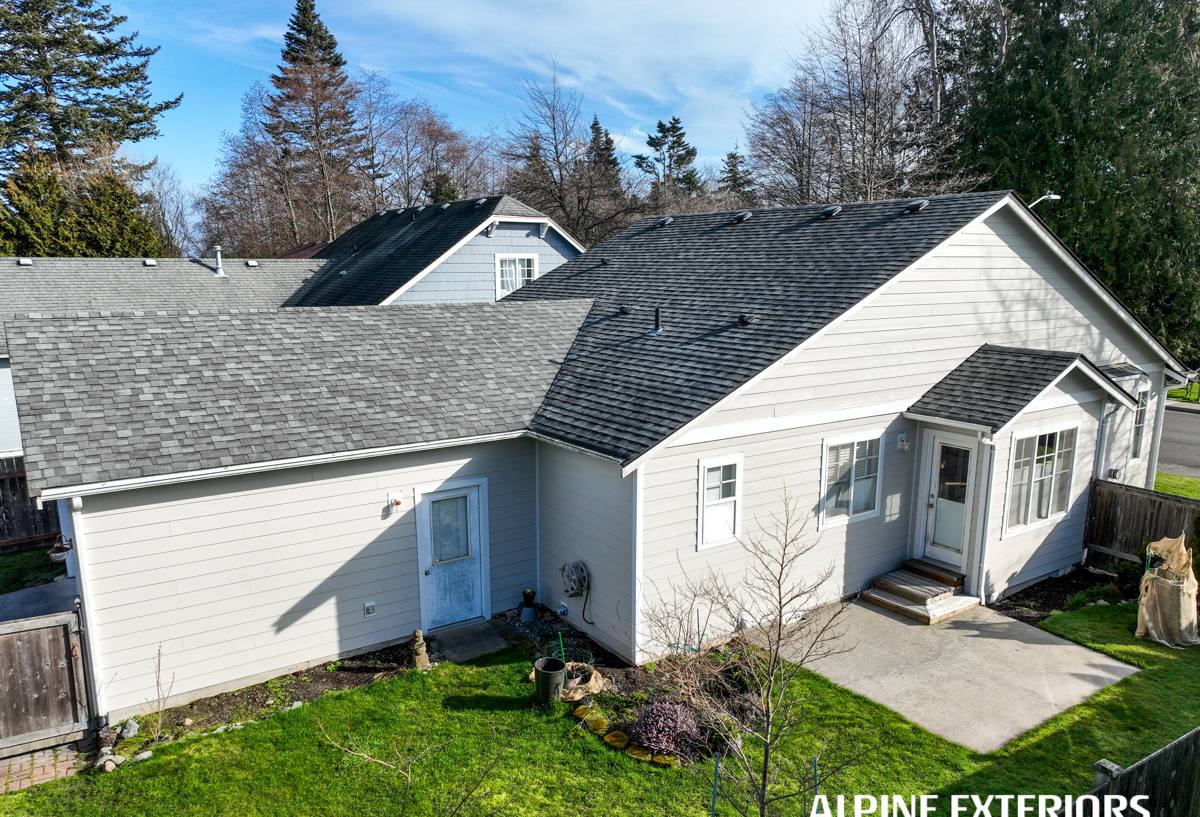
What a Correct Roof Installation Actually Involves
"New roof" can mean a lot of different things depending on who's doing the work. A correct installation isn't just laying new shingles over what's there — it starts underneath, with the parts of the roof system nobody sees once it's finished.
Tear-Off and Deck Inspection
We remove the old roofing down to the deck rather than layering over it. That's the only way to actually see the condition of the plywood or OSB sheathing underneath. In this climate, it's common to find soft or delaminated decking around old leak points, vent penetrations, or valleys — areas where moisture has been getting in slowly for years without an obvious sign inside the house. Any damaged decking gets replaced before anything new goes down. Skipping this step is one of the most common ways a "new roof" ends up leaking within a couple of seasons.
Underlayment and Water Protection
Underlayment is the roof's backup layer — the barrier that protects the deck if wind-driven rain gets past the shingles, which happens more often here than in calmer climates. We use synthetic underlayment across the field of the roof and self-adhered ice-and-water membrane in the vulnerable spots: eaves, valleys, and around chimneys or skylights. Given how much driving rain Custer gets in winter, this layer matters more here than it would in a lot of the country.
Ventilation
A roof that can't breathe traps moisture in the attic, which encourages rot in the sheathing and rafters from the inside out — a problem that has nothing to do with the shingles themselves. Proper intake at the eaves and exhaust at the ridge keeps air moving and keeps that moisture from building up. We check existing ventilation on every replacement and correct it where it's undersized or blocked.
Flashing Details
Flashing around chimneys, skylights, sidewalls, and roof-to-wall transitions is where most leaks actually start — not in the open field of shingles. We install new flashing rather than reusing old pieces, and we pay particular attention to step flashing at wall intersections, since that detail is frequently done wrong or skipped on cheaper installs.
Choosing Materials for Custer's Climate
There's no single "best" roofing material — the right choice depends on your budget, your home's structure, and how much long-term maintenance you're willing to do. Here's how the common options stack up for a coastal Whatcom County property specifically.
| Material | Salt Air / Moisture Behavior | Moss Resistance | Typical Lifespan |
|---|---|---|---|
| Architectural asphalt shingle | Good with proper ventilation and flashing | Moderate — benefits from algae-resistant granules | 25–30 years |
| Standing seam metal | Very good if properly coated and fastened | Sheds moss more easily due to slick surface | 40–50+ years |
| Cedar shake | Higher maintenance burden near salt air | Prone to moss without regular treatment | 20–30 years with upkeep |
| Composite/synthetic shake | Good, low absorption | Moderate to good | 30–50 years |
Most Custer homeowners land on architectural asphalt shingle with algae-resistant granules — it balances upfront cost, appearance, and reasonable performance in this climate. Metal roofing costs more initially but sheds moisture and moss more effectively, which some homeowners value given how much upkeep this area's climate otherwise demands. We'll walk through the real trade-offs for your specific roof rather than pushing one product for everyone.
Moss, Algae, and Salt Air: What Keeps Working Long-Term
Because Custer stays damp for so much of the year, moss and algae growth is less a "maybe" and more a "when." A correctly installed roof accounts for this rather than ignoring it:
- Algae-resistant shingles with built-in copper or zinc granules slow staining and growth
- Proper ventilation keeps the underside of the deck drier, which reduces moss's foothold from below
- Clean valleys and gutters matter more here — trapped debris holds moisture against the roof surface
- Zinc or copper strips near the ridge can be added to help limit moss regrowth over time
No roof is moss-proof in this part of Whatcom County. The goal is a system that sheds water efficiently and doesn't give moss easy places to take hold, so maintenance stays manageable instead of becoming a recurring problem.
Our Installation Process
We keep the process straightforward and communicate what's happening at each stage, since a roof replacement is disruptive enough without added uncertainty.
- On-site assessment — we inspect the existing roof, attic ventilation, and any visible problem areas before quoting anything
- Written estimate — materials, scope, and timeline laid out clearly, no vague allowances
- Tear-off and deck inspection — old roofing removed, decking checked and repaired as needed
- Underlayment and flashing installation — the protective layers that determine how well the roof handles driving rain
- Roofing material installation — installed to manufacturer specifications, which also protects your warranty coverage
- Ventilation check and correction — intake and exhaust verified and adjusted if needed
- Cleanup and final walkthrough — site cleared of debris and nails, and we go over the finished work with you
Signs Your Custer Home May Need a New Roof
Roofs rarely fail all at once — there are usually warning signs first. Worth checking for, or having a contractor check for you:
- Shingles that are curling, cracked, or missing granules
- Dark streaking or heavy moss growth across large sections of the roof
- Soft or spongy spots when walking the roof (best left to a professional to check)
- Daylight visible through the roof deck from inside the attic
- Water stains on interior ceilings, especially near chimneys or skylights
- Granules collecting in gutters, a sign the shingles are wearing down
- A roof older than 20–25 years that hasn't been replaced, even if it looks fine from the ground
If your roof is showing more than one of these, it's worth getting a real inspection rather than waiting for a leak to force the decision — patch repairs on an aging roof often cost more over a few years than a planned replacement would have.
Why Hire a Crew That Already Works Custer
A roofing crew that regularly works this stretch of Whatcom County already knows which details matter here — how much underlayment coverage driving rain actually requires, which ventilation setups hold up against sustained moisture, and where salt air tends to accelerate wear on fasteners and flashing. That's not something you get from a crew that mostly works drier, inland areas and treats every job the same way.
It also means we're not disappearing after the last shingle goes down. If a question comes up in year three about a vent boot or a shifted ridge cap, you're calling a company that's still working in your neighborhood, not chasing down a contractor who did one job here and moved on.
Permits, Timeline, and What to Expect
Most residential roof replacements in this area require a building permit, which we handle as part of the job. Weather is the biggest variable on scheduling — a full tear-off and reinstall generally isn't started with heavy rain in the forecast, since an exposed deck needs to stay protected. Depending on roof size and complexity, most single-family homes take one to a few days once work begins. We'll give you a realistic timeline based on your roof and the season, not an optimistic best-case number.
If your roof is showing its age or you're just planning ahead, we're happy to take a look and give you a straightforward, no-pressure estimate for your Custer property. The form below is the easiest way to get started.