 Birch Bay Siding
 Why Nooksack Homes Need Siding That Can Take a Beating
Nooksack sits close enough to the Salish Sea that salt-laden air is a constant factor in how a home's exterior ages, and Birch Bay's weather pattern doesn't do siding any favors either. Winters bring long stretches of driving rain pushed sideways by wind off the water, and the shoulder seasons in Whatcom County are damp enough, long enough, that moss and algae get a real foothold on anything that stays wet. Add the tree cover common on lots around Nooksack — shade that keeps siding from drying out fully between rain events — and you have a climate that's genuinely hard on exterior materials, not just mildly inconvenient.
None of that is a reason to panic about siding. It's a reason to be specific about what you install and how it's installed. Products that tolerate a dry Eastern Washington summer and a mild winter don't necessarily hold up the same way here. Salt air accelerates corrosion on fasteners and trim hardware. Constant moisture cycling — wet, dry, wet again — is what breaks down materials that rely on paint film or factory coatings that weren't engineered for it. And moss doesn't just look bad; it holds moisture against the siding surface longer than open air would, which matters a lot over a 20- or 30-year timeline.
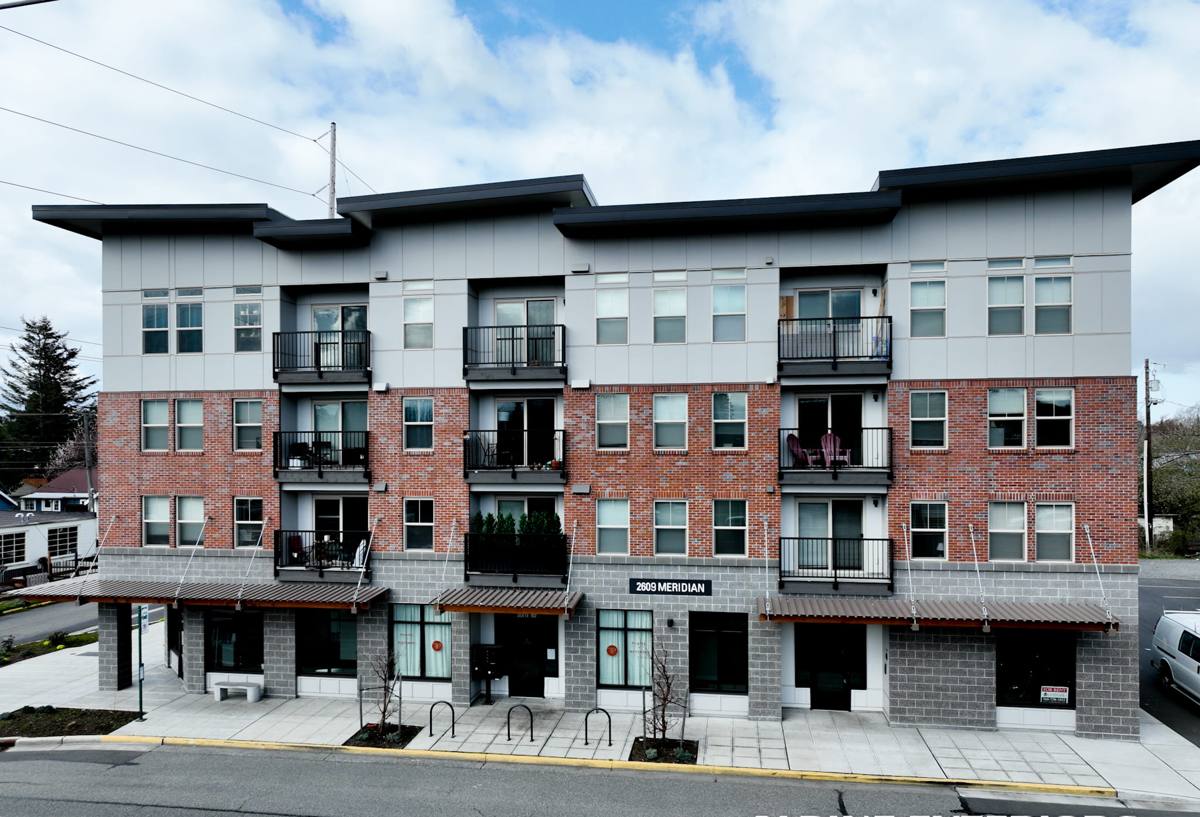
What Correct Fiber Cement Installation Actually Requires Here
Fiber cement siding, done right, handles this climate about as well as any exterior product available. But "done right" is doing a lot of work in that sentence. Fiber cement is not forgiving of shortcuts, and in a wet coastal climate the shortcuts show up faster — as staining, swelling at cut edges, or paint failure at seams.
Clearance and Drainage
Siding needs a gap at grade, at decks, and at roof lines so water has somewhere to go besides straight into the material. In Nooksack's rain volume, skipping proper clearance is one of the fastest ways to see problems within a few years instead of a few decades.
Flashing Details
Window heads, door heads, and any horizontal trim need flashing that actually sheds water outward, not caulk standing in for flashing. Caulk fails; properly lapped flashing doesn't rely on a bead of sealant to keep water out of the wall assembly.
Fastener Choice
Salt air corrodes the wrong fasteners over time, and corroding fasteners eventually stain the siding face and lose their grip. Corrosion-resistant fastener specifications aren't optional upgrades near Birch Bay — they're baseline.
Cut-Edge Sealing
Every field cut on fiber cement exposes raw material that needs to be sealed before installation. Skipping this step is invisible on install day and shows up years later as edge swelling or staining, usually right at the joints where two boards meet.
Why This Crew Installs Only James Hardie
We install James Hardie fiber cement exclusively — not vinyl, not LP SmartSide, not primed wood, not other fiber cement brands. That's a standard we hold ourselves to, not a knock on every alternative product on the market. Hardie's HZ5 formulation is engineered specifically for wetter, harsher climates like the Pacific Northwest, and the ColorPlus factory-applied finish is baked on under controlled conditions rather than field-applied, which matters when a home is going to spend most of the year damp. It's also non-combustible, which is worth something even in a region where wildfire isn't the primary concern, simply because it removes one more variable from the equation for the life of the siding.
We made this call because we got tired of being the crew called back in eight years to explain why a cheaper product failed early in Whatcom County's climate. Standardizing on one system we trust means we know exactly how it behaves here, exactly how to detail it, and exactly what warranty backs it up — instead of juggling installation quirks across five different product lines.
How Siding Options Compare for a Coastal Whatcom County Home
| Factor | James Hardie Fiber Cement | Vinyl | Primed Wood / Cedar |
|---|---|---|---|
| Salt air / moisture resistance | Engineered for it (HZ5 line) | Doesn't corrode, but can warp and gap over time | Needs consistent maintenance to resist rot |
| Moss and algae resistance | Good with proper drainage detailing | Moderate; seams trap grime | Poor without regular treatment |
| Finish durability | Factory ColorPlus finish, long fade resistance | Color is in the material, can chalk over time | Field-applied paint, repaints needed regularly |
| Fire resistance | Non-combustible | Combustible | Combustible |
| Typical repaint interval (PNW) | 15+ years (factory finish) | N/A (can fade/chalk) | 5–8 years |
This isn't a claim that vinyl or wood siding is defective — plenty of homes wear them fine elsewhere. It's a reflection of what tends to hold up best against the specific combination of salt exposure, driving rain, and shade-driven dampness that Nooksack and the surrounding Birch Bay area deal with every year.
Our Process for a Nooksack Siding Job
Every fiber cement install we run follows the same sequence, adjusted for the specific house — not a generic checklist rushed through to hit a schedule.
- Walk the home and assess the existing wall assembly, sheathing condition, and any trapped moisture before anything gets removed
- Remove old siding and inspect for rot, hidden water damage, or failed flashing that needs to be corrected before new siding goes on
- Install or verify a proper weather-resistive barrier and correct any drainage gaps at grade, decks, and rooflines
- Detail flashing at every window, door, and horizontal trim transition
- Install James Hardie panels or lap siding to manufacturer fastening specs, using corrosion-resistant fasteners appropriate for coastal exposure
- Seal every field-cut edge before it goes on the wall, not after
- Final walkthrough covering caulking, trim, and touch-up so paint and finish match consistently
Skipping the assessment step is a common shortcut in this trade, and it's the one that causes the most expensive surprises later — siding installed over sheathing that was already compromised doesn't stay looking good for long, no matter how good the siding itself is.
Why a Crew That Already Works Nooksack Matters
A lot of exterior work is generic — the tools and techniques are similar everywhere. But knowing how a specific area behaves matters more than people expect. A crew that's already worked houses around Birch Bay and Nooksack knows which sides of a house typically take the worst of the wind-driven rain, which lots hold shade and moisture longer because of tree cover, and where moss tends to establish first. That's the kind of judgment that shows up in small decisions — an extra flashing detail here, a slightly different fastener spacing there — that don't cost much more but make a real difference over the life of the siding.
It also means a shorter feedback loop. If something about a Nooksack home's exposure calls for a different approach than a textbook install, a local crew has already seen that pattern on other jobs nearby and knows how to handle it correctly the first time.
Maintenance Expectations in This Climate
James Hardie siding, correctly installed, is low-maintenance compared to most alternatives, but "low-maintenance" isn't "no-maintenance," especially with Whatcom County's long moss season.
Annual Rinse-Down
A gentle rinse once a year, focused on north-facing and shaded walls where moss and algae get the most encouragement, keeps growth from establishing and staining the finish.
Caulk and Trim Checks
Even with correct flashing, caulked joints at trim and penetrations should get a visual check periodically — catching a failed bead early is a five-minute fix, not a wall repair.
Gutter and Drainage Maintenance
Clogged gutters overflow directly onto siding below, which undermines even a well-installed system over time. Keeping gutters clear matters as much as the siding installation itself.
Signs Your Current Siding Is Losing the Fight
Homeowners in Nooksack and around Birch Bay should watch for a few specific warning signs rather than waiting for obvious failure.
- Persistent moss or dark streaking on shaded walls that returns quickly after cleaning
- Soft spots, swelling, or visible gaps at panel seams and cut edges
- Peeling or chalking paint on wood siding that's outpacing your repaint schedule
- Rust staining running down from fasteners or trim hardware
- Visible warping or waviness on vinyl panels after a cold snap or heavy rain season
Any of these are worth a look before they turn into sheathing or framing problems underneath, which cost significantly more to fix than siding alone.
Get a Straight Answer for Your Nooksack Home
If your siding is showing its age or you're planning ahead for a replacement, we're happy to take a look and give you an honest read on what your home actually needs — no pressure, no inflated scope. Reach out for a free estimate and we'll walk the property with you, in person, before recommending anything.