 Birch Bay Siding
 Why Siding Replacement Works Differently in Nooksack
Homes in the Nooksack area near Birch Bay sit in one of the tougher climate zones in Whatcom County for exterior materials. Salt-laden air off the water, long stretches of driving rain, and a moss season that can run most of the year put constant pressure on whatever is nailed to the wall. Siding here doesn't fail because it's old — it fails because it was never matched to the conditions it has to live in. Replacement done right isn't just swapping old panels for new ones; it's rebuilding the wall assembly so water, salt, and organic growth stop finding a way in.
We see the same failure patterns on house after house in this area: caulk-dependent seams that opened up after a few winters, fastener corrosion at the coast-facing elevations, and moss and algae staining that never fully washes off certain materials. A replacement project that doesn't account for these specifics will just repeat the same problems on a five- to ten-year cycle instead of solving them.
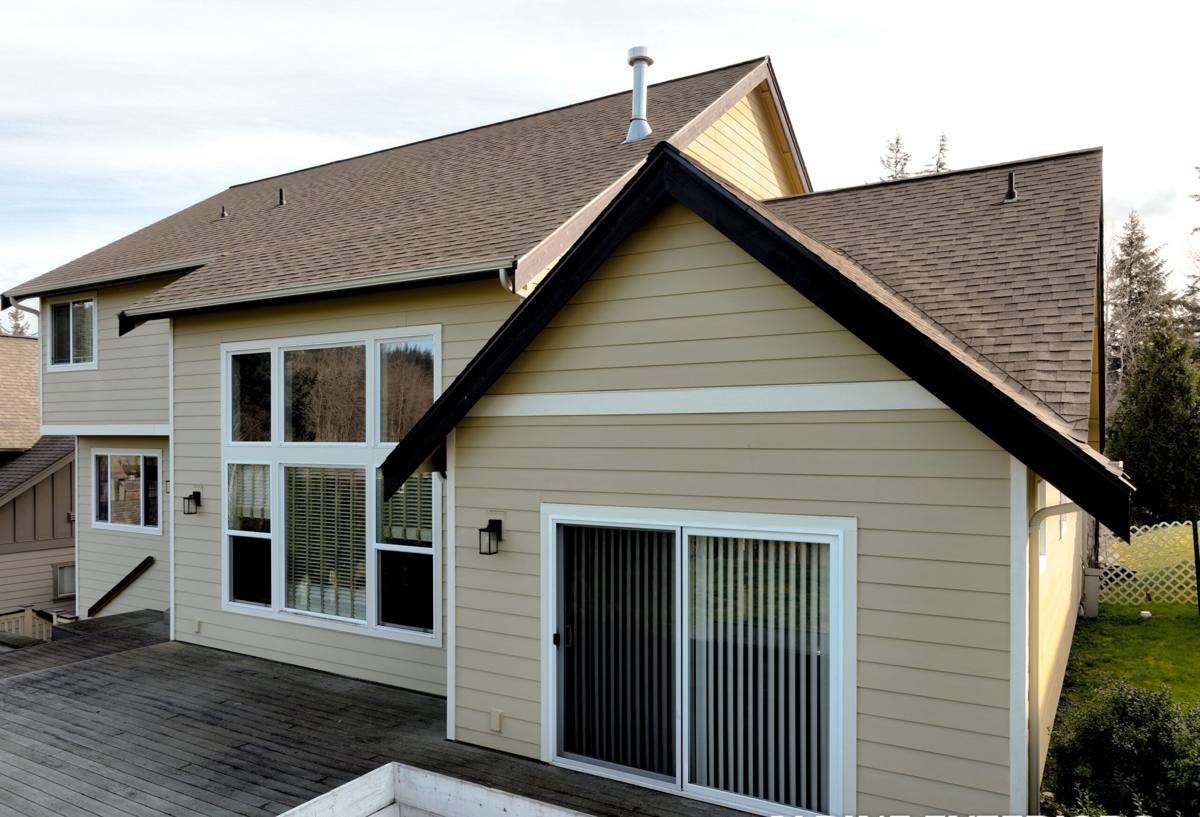
What Nooksack's Climate Actually Does to Siding
Salt Air and Coastal Moisture
Proximity to the Salish Sea means airborne salt is a real factor, not a talking point. Salt accelerates corrosion on fasteners, staples, and any exposed metal trim, and it speeds up the breakdown of finishes that aren't formulated to resist it. Siding that looks fine going up can chalk, fade, or corrode at the fastener heads well ahead of schedule if the material and hardware weren't chosen with that exposure in mind.
Driving Rain and Wind-Driven Water
Storms coming off the water don't fall straight down — they drive sideways into walls, which means water gets forced up under laps, into butt joints, and behind trim in ways that vertical rain never would. If the weather-resistive barrier, flashing, and lap spacing underneath the siding aren't installed to handle wind-driven water specifically, moisture works its way behind the cladding long before a homeowner sees a stain on the outside.
Moss, Algae, and a Long Wet Season
Shade, humidity, and mild temperatures for most of the year make this one of the best climates in the country for moss and algae growth. Some siding materials — especially wood-based products — absorb moisture and give organic growth something to root into. Others shed water and resist staining far better. The difference shows up as early as year two or three after installation.
What a Correct Siding Replacement Involves
A proper replacement is a full wall-system project, not a surface swap. Skipping any of these steps is how a brand-new siding job ends up with the same problems as the one it replaced.
- Full tear-off and inspection: Old siding comes off completely so the sheathing underneath can be checked for rot, soft spots, or hidden water damage — problems that are invisible until the wall is opened up.
- Sheathing repair: Any damaged sheathing gets replaced before anything new goes on. Installing new siding over compromised sheathing just hides a structural problem.
- New weather-resistive barrier: A correctly lapped and taped house wrap or building paper is the actual water shedding layer — the siding is the first line of defense, the barrier is the backup that has to work if the first line ever fails.
- Flashing at every penetration: Windows, doors, hose bibs, light fixtures, and roof-to-wall transitions all need proper flashing, not just caulk. Caulk is a maintenance item, not a waterproofing strategy.
- Correct fastening for coastal exposure: Fastener type, length, and placement matter more here than in drier inland areas, where fastener corrosion isn't accelerated by salt exposure.
- Manufacturer-spec installation: Lap exposure, clearance from grade and roof lines, and joint treatment all have to match the manufacturer's published requirements to keep the warranty valid.
Why We Install James Hardie Fiber Cement — And Nothing Else
We standardized on James Hardie fiber cement siding for every project we take on, including in Nooksack, and we don't install vinyl, LP SmartSide, cedar, or primed wood siding. That's not a marketing position — it's a decision based on what actually holds up in this climate over the long term.
Fiber cement is non-combustible, doesn't absorb water the way wood-based products do, and won't warp, rot, or feed insects. James Hardie's ColorPlus factory-applied finish is baked on under controlled conditions rather than field-painted, which gives it better fade and chip resistance than most site-applied finishes — a meaningful advantage in a climate that's hard on paint. For homes closer to the water, Hardie's HZ10 product line is engineered specifically for higher-moisture, coastal-adjacent conditions, which makes it a strong fit for the Nooksack and Birch Bay area.
Vinyl siding is lightweight and low-cost, but it expands and contracts significantly with temperature swings, can crack in cold snaps, and isn't rated to the same wind and impact standards as fiber cement. LP SmartSide and other wood-strand products perform reasonably in drier climates but are more sensitive to sustained moisture exposure — a real concern given how much of the year this area spends wet. Cedar and primed wood siding require ongoing refinishing to keep water out and are the most susceptible of all common siding materials to the moss and algae growth this climate produces. We'd rather stand behind one product system we trust completely than offer several and let a homeowner discover the trade-offs after installation.
Material Comparison for This Climate
| Material | Moisture Resistance | Salt Air Durability | Moss/Algae Resistance | Finish Longevity |
|---|---|---|---|---|
| James Hardie Fiber Cement | Excellent | Excellent | Good | Factory ColorPlus, long-lasting |
| Vinyl | Good (but can trap moisture behind it) | Fair (fasteners, fading) | Fair | Can fade/chalk over time |
| LP SmartSide | Fair — sensitive to sustained wetness | Fair | Fair | Field or factory finish varies |
| Cedar / Primed Wood | Poor without diligent upkeep | Poor | Poor — absorbs moisture | Requires recoating on a cycle |
How Our Process Works
1. On-Site Assessment
We walk the exterior, check current siding condition, look for signs of moisture intrusion, and evaluate which elevations take the most exposure to wind-driven rain and salt air.
2. Written Estimate and Product Selection
We recommend the appropriate Hardie product line and profile for the home and exposure level, and put the scope of work in writing before anything is scheduled.
3. Tear-Off and Sheathing Check
Old siding comes off, sheathing gets inspected and repaired as needed, and any hidden damage is documented and discussed before we close the wall back up.
4. Weather Barrier and Flashing Installation
This is the step that determines whether the new siding actually keeps water out for the long run, and we don't rush it.
5. Siding Installation to Manufacturer Spec
Panels or planks go up with correct exposure, fastening, and joint treatment so the finished wall performs the way James Hardie's system is engineered to perform — and so the warranty stays intact.
6. Final Walkthrough
We walk the finished job with the homeowner, cover basic care, and answer questions about what to expect over the first few seasons.
Signs a Nooksack Home Needs Siding Replacement Now
- Soft, spongy, or crumbling spots when you press on the siding
- Persistent moss or algae staining that returns shortly after cleaning
- Visible warping, buckling, or gaps at seams and corners
- Paint or finish failing faster than expected, especially on wind-exposed walls
- Rust streaks around fasteners or trim
- Rising energy bills that suggest the wall assembly is no longer sealing properly
- Interior signs like peeling paint or musty smells near exterior walls
What Drives Cost on a Nooksack Siding Project
| Factor | Why It Matters |
|---|---|
| Home size and wall complexity | More elevations, corners, and cutouts mean more labor and material |
| Sheathing condition | Hidden rot or water damage found during tear-off adds repair scope |
| Product line and profile | Standard Hardie lines vs. HZ10 coastal-engineered products, plank vs. panel |
| Trim and detail work | Window, door, and roofline flashing detail takes more time to do correctly |
| Site access | Tight lots, second stories, or landscaping obstacles affect labor time |
Why Hiring a Crew That Already Works This Area Matters
Siding installation isn't one-size-fits-all across Whatcom County. A crew that mostly works drier, inland projects can install a technically correct siding job that still underperforms once it meets sustained salt exposure and wind-driven rain. Knowing how much lap exposure to hold, where to double up on flashing, and which fastener spec to use on a coast-adjacent home isn't something you learn from a manufacturer manual alone — it comes from doing this specific type of work in this specific climate repeatedly. That local experience is part of what you're paying for when you hire the right contractor, not just the material itself.
After Installation: Keeping New Siding Performing
Even the right material benefits from basic upkeep in this climate. A simple annual routine goes a long way toward protecting the investment:
- Rinse siding annually to clear salt residue and organic buildup before it stains
- Keep gutters clear so overflow doesn't run directly down exterior walls
- Trim back vegetation that shades siding and keeps it damp longer than it should be
- Re-caulk or address any trim gaps at the first sign of separation, rather than waiting
- Have flashing and joints checked periodically, especially on the most weather-exposed elevation
If you're weighing a siding replacement for a home in the Nooksack or Birch Bay area, we're happy to take a look and walk you through what your home actually needs — no pressure, no upsell to a product we wouldn't put on our own homes. Use the form below to request a free estimate.