 Birch Bay Siding
 Deck Repair Built for Point Roberts Conditions
Point Roberts sits out on its own peninsula, surrounded on nearly every side by water, which means homes here take a different kind of weather beating than a deck three miles inland in Birch Bay proper. Salt-laden air moves in off the water and settles into wood grain, metal fasteners, and any seam in a coating. Add the long, wet stretch of Whatcom County's fall and winter — driving rain that doesn't let up for days — and a deck's moisture problems compound fast. Then there's moss season, which here isn't really a season so much as most of the year: shaded decks, north-facing decks, and anything under tree cover grow a slick green film that holds water against the boards long after the rain stops.
A deck repair that doesn't account for all three of these — salt exposure, sustained rain, and moss — tends to fail again within a year or two. Our approach starts with understanding which of these is actually driving the damage on your deck, because the fix is different for each.
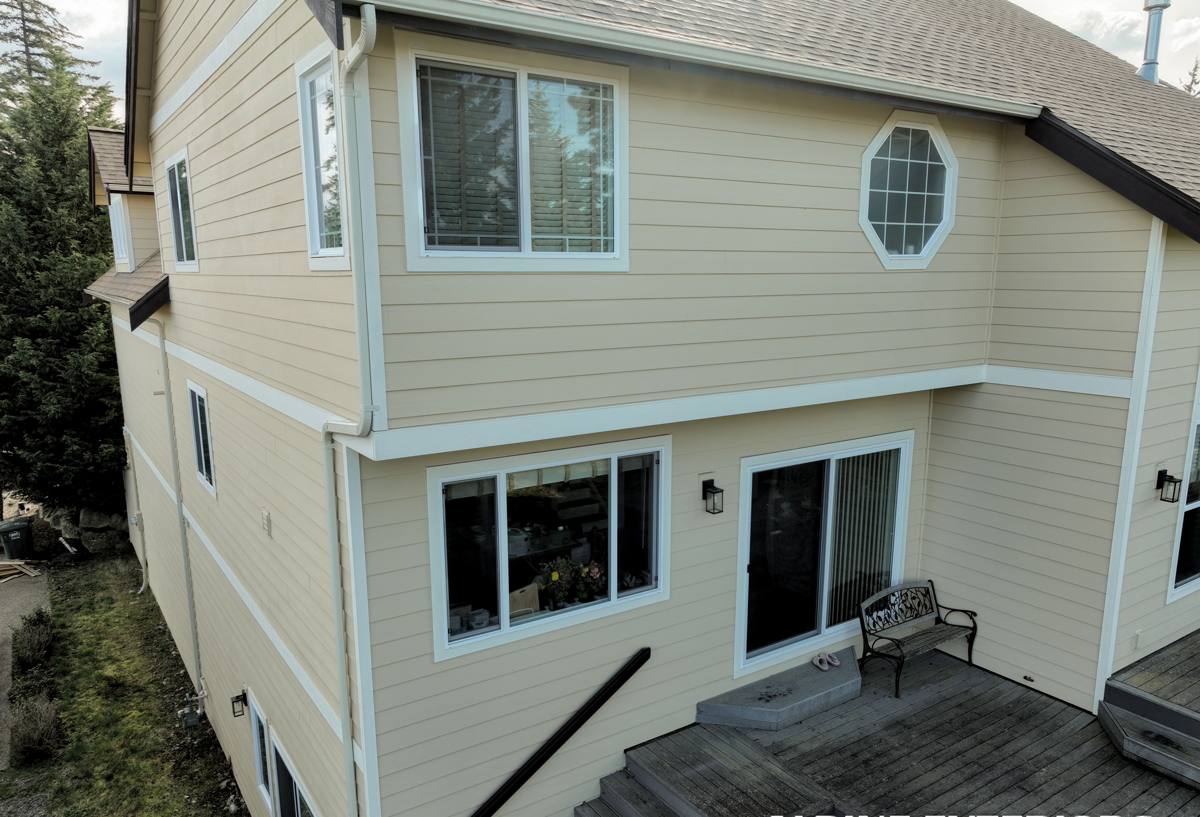
What a Real Repair Should Address
Not every deck problem is visible from the top. A lot of homeowners call us about a soft spot or a squeak, and the surface board is really just the symptom. Before we touch a single board, we check the structure underneath — because replacing decking on top of a compromised frame just buys you a few more months.
Signs your deck needs more than a surface fix
- Boards that feel spongy or flex noticeably when you walk across them
- Persistent black or green staining that comes back within weeks of cleaning
- Fasteners that are rusted, popped up, or have left dark streaks in the wood
- Gaps opening up around the ledger board where the deck meets the house
- Railings that wiggle or posts that feel loose at the base
- A musty smell coming from underneath the deck, especially after rain
The ledger board and framing come first
The ledger board — where the deck attaches to the house — is the single most important structural piece on most decks, and it's also the piece most exposed to water intrusion because it sits right where two building surfaces meet. In a climate this wet, we've found that ledger flashing failures are a leading cause of hidden rot, and they don't show up until the damage has already spread into the house's rim joist. Any repair worth doing checks this connection first, not last.
Why Moss Is More Than a Cosmetic Problem
Moss and algae on a deck aren't just slippery and unattractive — they hold moisture against the wood or composite surface far longer than open air would allow. On wood decking, that trapped moisture accelerates rot from the top down, especially in the tight spaces between boards where debris collects. On composite decking, moss buildup can work its way into surface texture and, over time, contribute to staining that's difficult to fully remove. Decks in shaded spots, or those tucked against tree lines and hedges, need to be part of a regular cleaning routine — not just a one-time power wash when things look bad.
Part of a proper repair often includes correcting the conditions that let moss take hold in the first place: improving airflow underneath the deck, trimming back vegetation that's shading the surface, and making sure water has somewhere to go instead of pooling.
Matching the Repair to the Right Material
Point Roberts has a mix of older wood decks, cedar decks, and newer composite installations, and the right repair approach depends heavily on what you're working with. We don't push a single product as the answer for everything — each material has real trade-offs worth understanding before you decide.
| Material | How it handles salt air and moisture | Repair considerations |
|---|---|---|
| Pressure-treated lumber | Holds up reasonably well if sealed regularly; untreated cuts and fastener holes are vulnerable points | Individual board replacement is usually straightforward and cost-effective |
| Cedar | Naturally rot-resistant but still needs periodic sealing in this climate; salt air can gray and dry out the surface faster | Matching weathered cedar color takes care; structure underneath still needs inspection |
| Composite decking | Doesn't rot, but can trap moisture at the substructure level if the frame underneath isn't properly ventilated | Surface itself rarely needs repair; problems are almost always in the frame or fasteners below |
| Fasteners and hardware | Standard galvanized hardware corrodes faster in salt air; stainless steel holds up significantly longer | Often the actual point of failure even when the decking itself looks fine |
Our Deck Repair Process
We keep this simple and honest, because homeowners deserve to know exactly what they're paying for and why.
- Full inspection — we get underneath the deck, not just walk across the top, checking ledger attachment, joists, posts, and footings
- Moisture and rot assessment — we probe suspect areas to find soft wood that isn't visible from the surface
- Written scope — you get a clear breakdown of what's structural, what's cosmetic, and what can reasonably wait
- Repair or replacement of compromised framing — this happens before any decking goes back down
- Fastener and flashing upgrades — where corrosion is a factor, we address it as part of the repair, not as an upsell afterward
- Surface repair or replacement — matched to your existing material where possible, or discussed honestly where it isn't
- Final walkthrough — we point out what maintenance will keep the repair holding up long-term
The Small Parts That Fail First
In our experience, decks in coastal Whatcom County conditions rarely fail because the decking boards themselves gave out first — they fail because a fastener, a piece of flashing, or a connector corroded and let water in behind it. Salt air accelerates galvanic corrosion on standard hardware in a way that inland properties don't experience nearly as fast. When we do a repair, we look closely at every visible fastener and connector, not just the boards that prompted the call, because a repair that reuses failing hardware is a repair you'll be paying for again soon.
Repair or Replace?
This is the question every homeowner asks, and the honest answer depends on how much of the structure is still sound. As a general guide:
| Factor | Leans toward repair | Leans toward replacement |
|---|---|---|
| Structural framing | Solid, dry, no soft spots at joists or ledger | Widespread soft wood or rot at multiple structural points |
| Age of deck | Under 10-12 years with good maintenance history | Original deck is well past typical service life for the material |
| Extent of damage | Isolated boards, a section of railing, a few connectors | Damage is spread across the whole deck rather than concentrated |
| Budget goals | Targeted repair extends life at lower upfront cost | Replacement resets the maintenance clock and avoids repeat repair calls |
We'll tell you plainly if a repair is the right call or if you're better off putting that money toward a full rebuild — it's your deck and your budget, and we'd rather be straight with you than sell you a repair that won't last.
Why It Matters That We Already Work Point Roberts
Point Roberts is a bit of an outlier logistically — getting crews, materials, and equipment out to the peninsula takes planning that a contractor who's never worked out there won't have already figured out. Because we already schedule work in Point Roberts regularly, we're not learning the access logistics on your project's dime, and we're not treating your job as an inconvenient add-on to a Birch Bay schedule. That familiarity also means we've seen how homes on this stretch of coastline actually age, which shapes what we look for before we ever quote a repair.
Keeping a Repaired Deck in Good Shape
A good repair is only half the equation — the other half is what happens after we leave. A few habits go a long way in this climate:
- Sweep off debris regularly, especially in fall when leaves and needles collect between boards
- Clean moss and algae buildup before it has a chance to sit through an entire wet season
- Check that gutters and downspouts near the deck are directing water away, not onto it
- Reseal or re-stain wood decking on the schedule your product manufacturer recommends
- Do a quick check under the deck once a year for new soft spots or corroded hardware
- Trim back vegetation that's shading the deck and keeping it damp longer than it needs to be
If you're noticing soft spots, persistent moss, or rust stains on your Point Roberts deck, it's worth getting a straight answer on what's actually going on underneath before the problem spreads. We offer free, no-pressure estimates — fill out the form below and we'll take a look.