 Birch Bay Siding
 Roofing in an Exclave: Why Point Roberts Is Its Own Case
Point Roberts sits at the tip of a peninsula that's politically part of Washington State but geographically cut off from the rest of the U.S. mainland — to drive there by land, you cross into Canada and back out again. That single fact changes how roofing projects actually get done. Material deliveries, dumpster hauls, and crew scheduling all have to account for a border crossing, and not every contractor based in the Bellingham or Blaine area is set up to handle that smoothly on a routine basis.
A crew that already works Point Roberts regularly has that logistics problem solved before your project starts. Trucks are already crossing on a schedule, lead times for shingles or metal panels are already built into the plan, and there's no learning curve costing you delays mid-project.
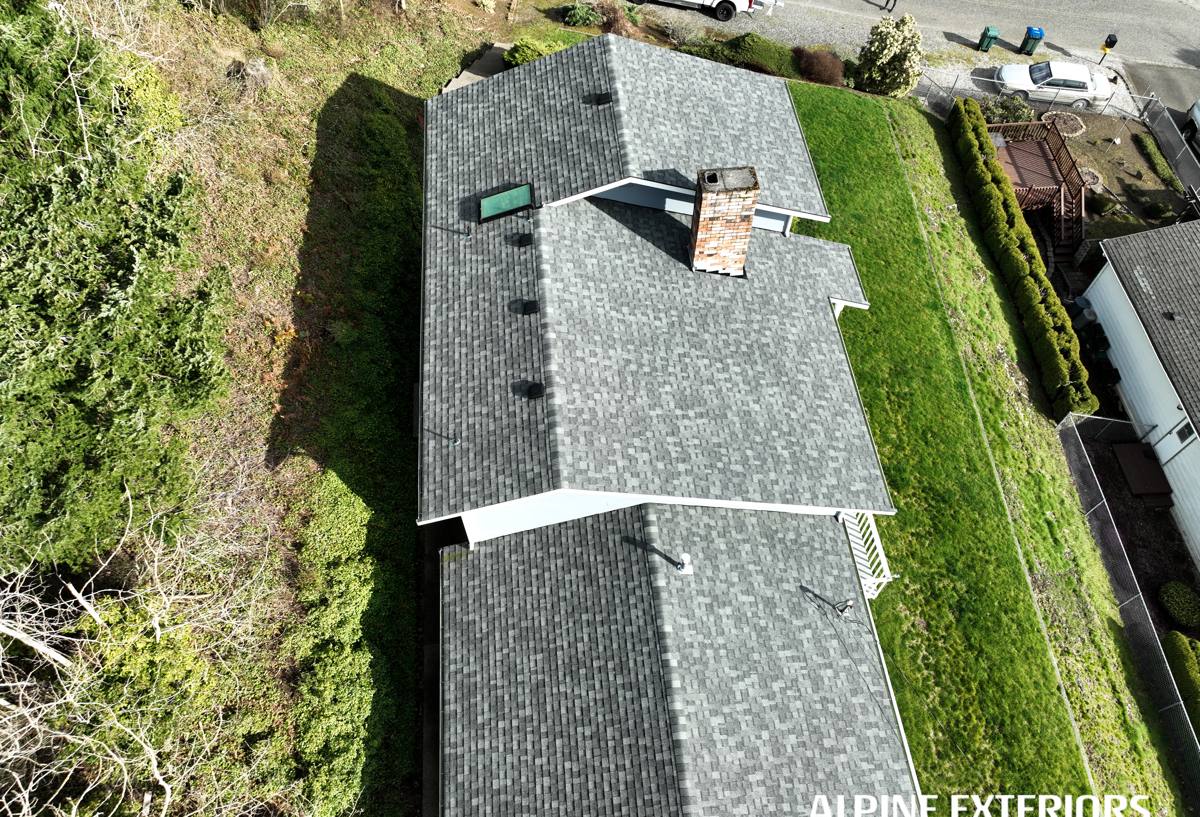
What Whatcom County's Climate Does to a Point Roberts Roof
Point Roberts is surrounded by water on three sides — Boundary Bay and the Strait of Georgia — which means salt-laden air is a constant, not an occasional coastal storm event. Combine that with the wind-driven rain that comes through Whatcom County off the water, plus tree cover that keeps parts of many roofs shaded and damp for long stretches, and you get a roofing environment that ages materials faster than an inland Washington home ever would.
Salt Air
Salt exposure accelerates corrosion on exposed metal — flashing, fasteners, drip edge, and any exposed roofing hardware. Galvanized fasteners that would last decades in a dry inland climate can start showing rust streaks and weakening well before their rated lifespan near the water. This is one of the biggest reasons material and fastener selection matters more here than in a generic roofing job.
Driving Rain
Wind-driven rain doesn't just fall straight down — it gets pushed sideways and upward under shingle edges, around vents, and into any flashing detail that isn't installed correctly. A roof that would hold up fine in calm rainfall can leak within a season or two if the underlayment and flashing weren't built for wind-driven moisture specifically.
Moss Season
The long, wet Pacific Northwest moss season is hard on roofs in a way a lot of homeowners underestimate. Moss doesn't just look bad — it holds moisture against the roofing surface, lifts shingle edges as it grows, and can work its way under flashing over time. Shaded, north-facing slopes and roofs near tree cover are the most affected, and moss growth is often the first visible sign that a roof's surface is aging.
Repair or Replace? Reading the Signs
Not every roofing problem means a full replacement, but in a climate this hard on roofing materials, waiting too long on a repair-able issue often turns it into a full tear-off. Here's what we look for on an inspection to make that call honestly.
- Shingles that are cupping, curling, or missing granules across large sections rather than a few isolated spots
- Persistent moss or algae staining that keeps coming back after cleaning
- Soft spots or sagging in the roof deck when walked, which usually means moisture has reached the wood underneath
- Rust streaking or corrosion at flashing, vents, or exposed fasteners
- Daylight visible through the attic roof boards, or damp insulation after a storm
- A roof that's simply reached the end of its material's realistic service life for this climate — often shorter here than manufacturer estimates written for milder regions
- Multiple past repairs in different areas, suggesting the roofing system as a whole is failing rather than one localized spot
If only one or two of these apply and the roof deck is sound, a targeted repair is often the honest answer. When several apply at once, replacement is usually the more cost-effective path — patching an aging roof piecemeal tends to cost more over a few years than doing the job right once.
What a Correct Roof Replacement Actually Involves
A roof replacement is more than stripping old shingles and nailing down new ones. In a coastal, high-moisture climate, the details underneath the visible surface are what determine whether the new roof lasts.
Full Tear-Off and Deck Inspection
We remove the old roofing down to the deck rather than layering over it. That's the only way to actually see the plywood or plank decking underneath and catch any water damage, soft spots, or rot before it's sealed under a new roof for another 20-plus years.
Underlayment Built for Wind-Driven Rain
The underlayment is the roof's real waterproofing layer — the shingles or panels on top are the first line of defense, but the underlayment is what keeps a home dry if wind pushes water past that first layer. Given how much wind-driven rain this area sees, this is not a place to cut corners.
Flashing Detail Work
Most roof leaks trace back to flashing — around chimneys, skylights, vent pipes, and roof-to-wall transitions — not to the field of shingles itself. Correctly formed and sealed flashing, using corrosion-resistant materials given the salt air, is where a careful crew earns its reputation.
Ventilation
Proper attic ventilation keeps moisture from building up under the roof deck from the inside, which matters just as much as keeping rain out from the outside. Poor ventilation traps humid air, which can rot decking and shorten shingle life from underneath — often invisibly until it's a bigger problem.
Fastener and Hardware Selection
Given the corrosion risk from salt air, we pay attention to fastener and flashing material choice rather than defaulting to whatever's standard inland. It costs a little more up front and saves a lot of grief down the road.
Comparing Roofing Materials for a Point Roberts Home
There's no single "best" roofing material for every home — it depends on your budget, roof pitch, and how much long-term maintenance you're willing to take on. Here's an honest comparison of the main options homeowners in this area typically consider.
| Material | Salt Air / Corrosion Resistance | Moss Resistance | Typical Lifespan Here | Maintenance Burden |
|---|---|---|---|---|
| Asphalt composition shingle (standard) | Fair — depends on flashing/fastener choice | Moderate; benefits from algae-resistant granules | 15–25 years | Moderate — periodic moss and debris removal |
| Asphalt composition shingle (algae-resistant, impact-rated) | Fair to good with proper flashing | Better resistance to staining and growth | 20–30 years | Lower, but not maintenance-free |
| Standing seam metal | Good with coated, corrosion-resistant panels and fasteners | Good — smooth surface sheds moss more easily | 40–50+ years | Low, but higher upfront cost |
| Composite / synthetic shake | Good | Good | 30–50 years | Low to moderate |
We don't push one material as universally "the best" — we walk through your roof's pitch, sun/shade exposure, and budget, and give you a straight answer on what makes sense for your specific home rather than a one-size-fits-all recommendation.
Our Process, Start to Finish
- Inspection and honest assessment — we get on the roof (not just a ground-level look) and document what we actually find, including deck condition, flashing condition, and ventilation.
- Written estimate — clear scope, material options, and pricing, with no pressure to decide on the spot.
- Scheduling and material logistics — because we already work Point Roberts, delivery timing across the border is built into the schedule rather than a surprise delay.
- Tear-off and deck repair — old roofing removed, any damaged decking replaced before anything new goes down.
- Underlayment, flashing, and installation — done to hold up against wind-driven rain and salt exposure, not just to pass a quick visual check.
- Cleanup and walkthrough — magnetic sweep for stray fasteners, full debris haul-off, and a walkthrough so you understand exactly what was done.
Maintenance That Actually Extends a Roof's Life Here
A well-installed roof still benefits from basic upkeep in this climate — and skipping it is one of the most common reasons a roof underperforms its expected lifespan.
- Clear moss and debris from valleys and shaded slopes before it builds up thick enough to hold moisture
- Keep gutters clear so water isn't backing up under the roof edge during heavy rain
- Trim back overhanging branches to reduce shade, debris, and moss pressure on affected slopes
- Have flashing and fastener points checked periodically for early rust or corrosion signs, especially closer to the water
- Address small leaks or lifted shingles promptly rather than waiting for a bigger failure
Why a Local Crew That Works Point Roberts Matters
Beyond the border-crossing logistics, working this area regularly means we've seen how homes here actually age — which slopes hold moss longest, where salt air does the most damage to flashing, and which details tend to fail first when they're not done right the first time. That's the kind of judgment that only comes from doing the work in this specific environment repeatedly, not from a general roofing playbook applied everywhere the same way.
It also means straightforward accountability. We're not a crew passing through the area for one job — we're based nearby in Birch Bay and plan to be here for the next one, too.
If your roof is showing wear from moss, salt air, or age, we're happy to take a look and give you a straight, no-pressure assessment. Use the form below to request a free estimate.