 Birch Bay Siding
 Point Roberts Puts Siding Through More Than Most Whatcom County Homes See
Point Roberts sits out on its own — a peninsula wrapped in water on three sides, with nothing between the exterior walls of a home and whatever the Strait of Georgia and the Salish Sea decide to throw at it. That geography is part of what makes the place special, and it's also exactly why siding here fails faster than siding on a home twenty minutes inland in Birch Bay. Salt-laden air corrodes fasteners and trim faster than plain rain does. Wind-driven rain doesn't just fall on a wall, it gets pushed sideways into every seam, lap, and penetration. And the long, damp moss season that Whatcom County is known for turns north-facing and shaded walls into a slow-motion science experiment if the siding and the water management behind it aren't doing their job.
None of this means Point Roberts homes need something exotic. It means they need the basics done correctly, with materials that are actually rated for marine exposure, installed by people who understand why every detail matters more out here than it does somewhere sheltered.
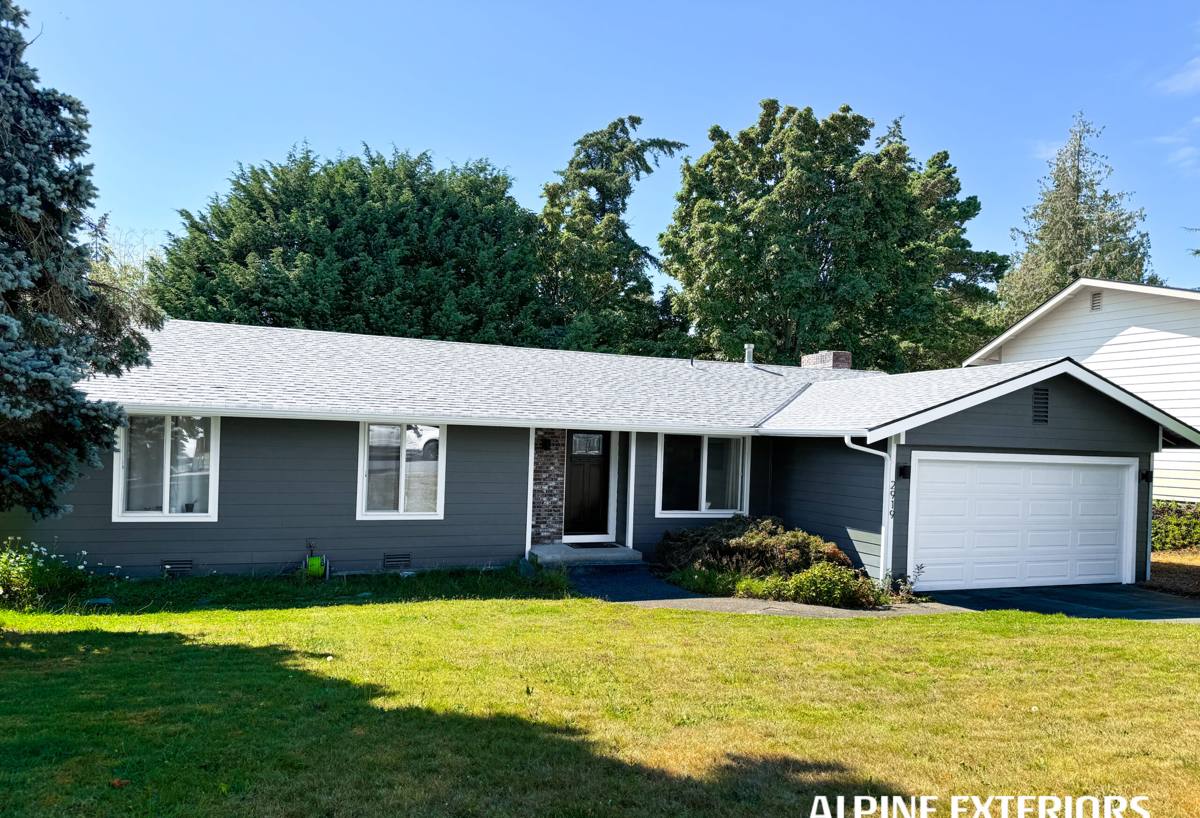
What Marine Exposure Actually Does to a Wall Assembly
Salt Air
Airborne salt is corrosive to metal and accelerates the breakdown of many finishes. Fasteners, flashing, and trim that would last decades in a drier inland climate can start showing rust streaks, pitting, or finish failure years earlier when they're exposed to constant salt-laden wind. This is why fastener choice and flashing material aren't afterthoughts on a Point Roberts job — they're decided up front, specifically for this exposure.
Driving Rain
Wind off the water doesn't let rain fall straight down. It drives it sideways and upward, forcing water into laps, corners, and penetrations that would stay dry in a calmer setting. A siding system here has to assume water will reach the surface of the wall and has to be built so that water sheds back out rather than finding a way behind the cladding.
Moss and Prolonged Dampness
Whatcom County's moss season runs long, and shaded or north-facing walls on a peninsula lot can stay damp for extended stretches. Moss and algae growth on siding isn't just cosmetic — it holds moisture against the surface and, on the wrong material, can accelerate deterioration underneath.
What Correct Siding Installation Involves Out Here
A siding job is really two systems working together: the visible cladding, and the water management assembly hidden behind it. In a marine exposure like Point Roberts, both have to be right, or the good-looking wall on day one becomes a moisture problem by year five.
- A continuous weather-resistive barrier installed shingle-style so every seam laps correctly and water is directed outward, not trapped.
- A drainage plane or rainscreen gap that lets any water that gets past the cladding drain and dry out instead of sitting against the sheathing.
- Corrosion-resistant fasteners and flashing sized and spaced to manufacturer spec, chosen for salt-air exposure rather than the cheapest option that passes inspection.
- Properly flashed penetrations at every window, door, vent, and fixture — the single most common source of hidden water intrusion on any home.
- Correct clearances at grade, decks, and roof lines so siding isn't sitting in standing water or trapped moisture from day one.
- Factory-finished cladding that doesn't depend on a field-applied paint job to keep water out.
Skip any one of these and the siding itself almost doesn't matter — water will find the gap.
Why We Install Only James Hardie Fiber Cement
We don't install vinyl, LP SmartSide, cedar, or primed spruce siding, and on a peninsula lot exposed to salt air and driving rain, that decision matters even more than it does elsewhere in Whatcom County. Vinyl siding relies on lap joints and expansion gaps that can loosen and rattle in sustained coastal wind, and it's a petroleum-based product that softens in heat and turns brittle in cold — neither extreme is common here, but the material's dimensional instability under moisture and temperature swings is a real, ongoing maintenance factor. Wood-based products, including primed spruce and engineered wood like LP SmartSide, depend on an intact factory or field finish to keep moisture out; any breach — a scratch, a poorly sealed cut edge, a fastener that backs out — gives water a path into a substrate that swells, rots, or delaminates once it's wet. In a long moss season with shaded, damp walls, that's not a hypothetical.
James Hardie fiber cement is engineered specifically for this kind of exposure. It's non-combustible, dimensionally stable in wet and dry cycles, and doesn't feed moss or algae growth the way wood fiber can. Hardie's ColorPlus finish is baked on at the factory under controlled conditions, not brushed on at the jobsite, which means the finish holds up to UV and salt air far longer than a field-applied paint job and carries its own finish warranty. Hardie also engineers specific HZ product lines for different climate zones, so the material specified for a marine, high-moisture area like Point Roberts is built for exactly that exposure rather than a one-size-fits-all product.
None of this is a knock on every homeowner's past choice — vinyl and wood siding get installed successfully all over the country. It's simply that after years of doing this work in wet, salt-exposed environments, we standardized on the one material system that holds up to this specific climate with the least long-term maintenance and risk, and we'd rather install that one thing well than install several things we don't fully stand behind.
Our Installation Process
- On-site assessment. We look at wall exposure, existing moisture damage, grade clearances, and how the home is oriented to prevailing wind and rain.
- Tear-off and sheathing check. Old cladding comes off and we inspect the sheathing underneath for rot or hidden moisture damage before anything new goes up.
- Weather-resistive barrier and drainage plane. Installed shingle-style with a drainage gap behind the cladding, sized for this exposure.
- Flashing at every penetration. Windows, doors, vents, and fixtures get flashed and sealed before siding goes over them.
- Hardie panel or lap installation to spec. Correct fastener type, spacing, and clearances, per James Hardie's published installation requirements for the product line used.
- Trim, caulking, and final detail work. The details that keep water from finding the one gap that undoes everything else.
- Walkthrough. We go over the finished work with the homeowner before calling the job done.
Signs Your Current Siding Is Losing the Battle
- Soft or spongy spots when you press on the wall, especially near the bottom courses
- Paint or finish that's peeling, bubbling, or chalking unevenly
- Persistent moss or dark streaking that keeps coming back after cleaning
- Visible warping, buckling, or gaps opening up between panels or laps
- Rust streaks below fasteners or trim
- Rising utility bills with no other explanation — often a sign water or air is getting behind the wall assembly
What Drives the Cost of a Siding Job Here
| Factor | Why It Matters in This Exposure |
|---|---|
| Extent of tear-off and any hidden rot repair | Marine exposure and moss season can hide moisture damage behind old siding that only shows up once it's opened up |
| Wall complexity and penetrations | More corners, windows, and fixtures mean more flashing detail, which takes more time to do right |
| Product line selected | Hardie panel vs. lap profile, and the specific HZ formulation for this climate zone |
| Access and site logistics | Getting crews, equipment, and material to a peninsula property affects scheduling and mobilization |
| Trim and finish details | Corner boards, fascia, and color selection add labor and material cost |
We give a written, itemized estimate before any work starts — no vague allowances, no surprise change orders for things we should have caught during the assessment.
Why Hiring a Crew That Already Works Point Roberts Matters
Point Roberts isn't like scheduling a job in the middle of a normal service area. It's a U.S. exclave reachable by land only by crossing through Canada, which means material deliveries, crew scheduling, and logistics all take a bit more planning than a job twenty minutes down the road. A contractor who hasn't worked out here before is learning that logistics curve on your project. A crew that already knows the drill — border timing, delivery coordination, the realities of working on a peninsula lot — shows up ready to actually work instead of losing the first day figuring out the basics.
Familiarity with the exposure itself matters just as much. A crew that's installed siding all along this stretch of Whatcom County coastline knows which walls take the worst of the wind-driven rain, where moss tends to hang on longest, and how to detail flashing so it holds up to salt air rather than just meeting minimum code. That's the difference between a siding job that looks right at handoff and one that still looks right in year fifteen.
Maintenance That Actually Fits This Climate
Correctly installed Hardie siding is low-maintenance, not no-maintenance. In a salt-air, high-moisture environment like Point Roberts, a periodic rinse to clear salt residue and moss spores, a visual check of caulking and trim after the wet season, and prompt attention to any fastener or flashing issue go a long way toward getting the full lifespan out of the installation. None of that requires re-painting the way a wood or field-finished product would.
If your siding is showing its age, or you're planning ahead for a home on Point Roberts that's never had the wall assembly done right, we'd like to take a look. Reach out for a free, no-pressure estimate — we'll walk the exterior with you, tell you honestly what we see, and lay out what correct installation looks like for your specific home.