 Birch Bay Siding
 Roofing Built for a Marine Climate, Not Against It
Cherry Point sits close enough to the water that every roof in the area lives under the same three pressures: salt-laden air off the Strait, driving rain that comes in sideways more often than straight down, and a moss season that can run eight or nine months out of the year. None of these are dramatic events on their own. What they do is wear a roof down quietly, year after year, until a homeowner is dealing with a leak that traces back to a problem that started long before the water ever showed up inside.
A roof repair here has to account for that pattern. Patching the spot where water is currently coming in is the easy part. Understanding why it's coming in — and what else nearby is heading the same direction — is what separates a repair that lasts from one you'll be calling about again next winter.
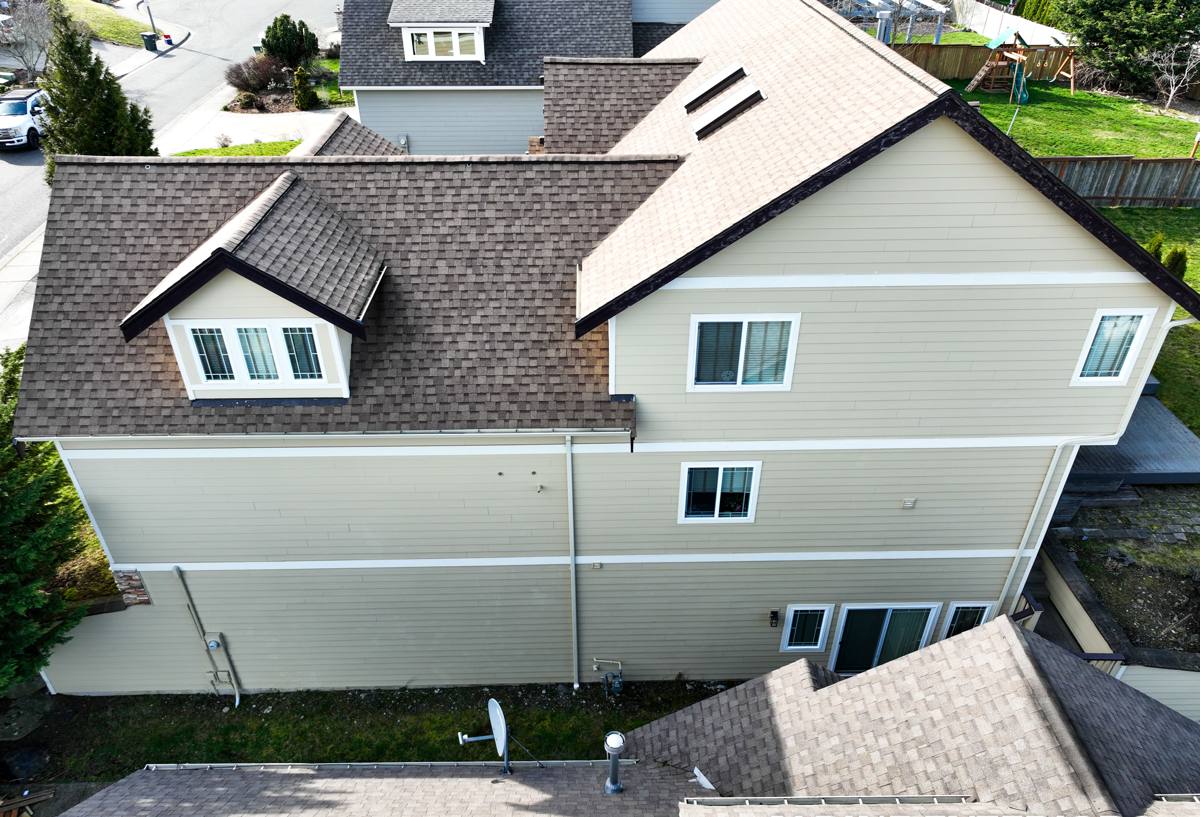
What Cherry Point's Climate Actually Does to a Roof
Salt Air and Metal Fatigue
Airborne salt accelerates corrosion on anything metal on your roof: nail heads, flashing, vent caps, and the fasteners holding shingles or panels down. On homes closer to the water, we see corrosion on exposed fasteners and flashing edges well before the roofing material itself is due for replacement. Once flashing starts to pit or thin out, it stops sealing the way it's supposed to, and that's usually where a leak starts — not in the field of the roof, but at a joint.
Wind-Driven Rain
Whatcom County storms rarely come straight down. Wind pushes rain up and under roofing edges, ridge caps, and anywhere a seal has started to fail. A roof that would shed a vertical rain just fine can leak badly in a wind-driven storm if a shingle tab is lifted, a seam is open, or caulking at a penetration has cracked. This is why so many "mystery leaks" only show up during specific storms — the water is only finding its way in when the wind is blowing from a particular direction.
Moss, Algae, and Trapped Moisture
Shade, moisture, and mild temperatures are exactly what moss wants, and Cherry Point offers all three for most of the year. Moss does more than look bad — it lifts shingle edges as it grows, holds water against the roofing material long after a storm has passed, and works its way into seams. Left alone, a healthy patch of moss can turn a five-year-old roof into one that needs section repairs well ahead of schedule.
Signs a Cherry Point Roof Needs Repair, Not Just Watching
Some damage is obvious. A lot of it isn't, especially from the ground. These are the signs we'd want a homeowner to act on rather than wait out another season:
- Water stains on interior ceilings or upper walls, especially ones that appear after a windy storm specifically
- Granules collecting in gutters or at downspout outlets (a sign of asphalt shingle wear)
- Visible moss or dark streaking concentrated on north-facing or shaded slopes
- Curling, cracked, or missing shingle tabs, particularly along ridges and edges
- Rust staining below metal flashing, vents, or valleys
- Soft or spongy-feeling spots when walked (a sign of underlayment or sheathing damage)
- Daylight visible through the roof deck from inside an attic
- Higher heating bills with no other explanation, which can point to moisture-saturated insulation under a slow leak
Any one of these on its own might not mean much. Two or three together usually means there's an active problem that's been developing for a while.
What a Correct Repair Actually Involves
A roof repair that holds up in this climate isn't just about swapping out damaged material. It's about restoring the whole water-shedding system at that section of the roof, in the right order.
Find the Real Source, Not Just the Visible Damage
Water travels along the roof deck before it drips through a ceiling, so the interior stain is rarely directly above the actual entry point. A proper repair starts with tracing the leak back to its source — usually a flashing failure, a fastener failure, or a seam that's opened up — rather than patching wherever the ceiling happens to be discolored.
Address What's Underneath
If water has been getting in for any length of time, the underlayment and possibly the decking underneath the visible roofing material may already be compromised. Replacing the top layer without checking what's underneath just re-covers a problem instead of fixing it.
Rebuild Flashing and Seals Properly
Flashing around chimneys, vents, skylights, and valleys is where most Cherry Point leaks originate, thanks to the combination of salt exposure and wind-driven rain. Repair work here means replacing corroded or undersized flashing correctly — not just re-caulking over a gap, which is a short-term fix at best.
Match Materials Correctly
Patched sections that don't match the surrounding roofing in type, weight, or even shingle lot can create their own water-shedding problems, on top of standing out visually. We match materials as closely as possible and explain honestly when an exact match isn't available.
Roofing Materials Common in the Birch Bay Area — Repair Considerations
| Material | Common Repair Issues Locally | Repair Approach |
|---|---|---|
| Asphalt composition shingle | Granule loss, curling, moss lift, wind-lifted tabs | Section replacement matched by shingle type and age; reseal or replace exposed fasteners |
| Wood shake/shingle | Moss and moisture retention, splitting, fastener corrosion | Selective plank replacement, improved ventilation, moss treatment |
| Metal roofing/panels | Fastener backing out, seam and flashing corrosion, panel oil-canning at repairs | Fastener replacement with correct gaskets, seam resealing, panel-matched patching |
| Flat or low-slope membrane | Seam separation, ponding near drains, UV and salt-air degradation | Seam re-welding or patching, drain clearing, membrane section replacement |
How We Approach a Repair, Start to Finish
- On-site inspection. We walk the roof (weather permitting) and check the attic from inside, since attic-side inspection often tells us more than what's visible from the ground or even the roof surface.
- Honest diagnosis. We explain what's actually failing and why, in plain terms, before recommending any work.
- Written scope and estimate. You know what's being repaired, what materials are being used, and roughly what it will cost before anything starts.
- Repair the source first. Flashing, underlayment, and decking issues get addressed before any cosmetic patching.
- Material-matched finish work. We match roofing material as closely as available stock allows and are upfront if an exact match isn't possible.
- Cleanup and walk-through. Debris and old material removed, and we show you what was done before we consider the job finished.
Repair or Replace? How We Help You Decide
Not every roof problem in Cherry Point needs a full replacement, and we don't push one when a repair is the honest answer. But there's a point where repeated repairs cost more over time than replacement would. These are the factors that actually matter in that decision:
| Factor | Favors Repair | Favors Replacement |
|---|---|---|
| Age of roof | Under roughly 15 years (asphalt) or well-maintained wood/metal | Near or past manufacturer-rated lifespan |
| Extent of damage | Isolated to one section, flashing, or a specific leak point | Multiple areas failing, widespread granule loss or moss damage |
| Deck condition | Sheathing solid, no rot found | Soft or rotted decking in multiple areas |
| Repair history | First or second repair in several years | Recurring repairs to the same or nearby areas |
| Future plans | Repair buys reasonable, cost-effective time | Selling soon or planning long-term ownership where a new roof adds more value |
Ongoing Maintenance That Reduces Future Repairs
A repair fixes what's broken now. A little maintenance afterward keeps salt air, rain, and moss from creating the next problem.
- Keep gutters and downspouts clear so water isn't backing up under roof edges
- Trim back branches that keep shaded roof sections damp and encourage moss growth
- Have moss treated or removed before it takes hold, rather than after it's lifted shingles
- Check attic ventilation — poor airflow traps moisture and speeds up wood and fastener deterioration
- Have flashing and seals inspected every couple of years, especially after a hard windstorm
Why Local Experience in Cherry Point Matters
A roofing crew that mostly works inland doesn't see salt-accelerated fastener corrosion or wind-driven rain leaks often enough to recognize the pattern quickly. We work roofs throughout the Birch Bay area regularly, which means we already know which failure points to check first on a marine-exposed roof, what materials hold up honestly out here versus which ones create more maintenance than they're worth, and how Whatcom County's weather actually behaves through the fall and winter repair season. That local familiarity usually means a faster, more accurate diagnosis and a repair that's built for the conditions your roof is actually facing, not generic conditions.
If you're dealing with a leak, storm damage, or a roof that's just showing its age near Cherry Point, we're happy to take a look and give you an honest read on what it needs. Use the form below to request a free, no-pressure estimate.