 Birch Bay Siding
 Roof Replacement in Lynden: Doing the Tear-Off Right the First Time
Lynden sits inland in the Nooksack River valley, in the northern reach of Whatcom County, and while it's not on the water the way some of our other service areas are, it still sits inside the same marine-influenced weather system that shapes exterior work across this whole corner of Washington. Moist air moves up the valley off the Sound, rain through fall and winter is frequently wind-driven rather than falling straight down, and mild temperatures give moss a growing season that runs most of the year on shaded roof planes. A roof replacement done without those specifics in mind can look fine on install day and still start failing years ahead of schedule.
Birch Bay Siding Company handles full roof replacements for Lynden homes, along with the siding, window, and flashing work that often comes up once a roof is opened up. A replacement is a bigger commitment than a repair — it's also the point where a lot of long-term problems either get corrected or get sealed back under a new roof for another twenty years. This page is about what a correct replacement actually involves here, not just the shingles on top.
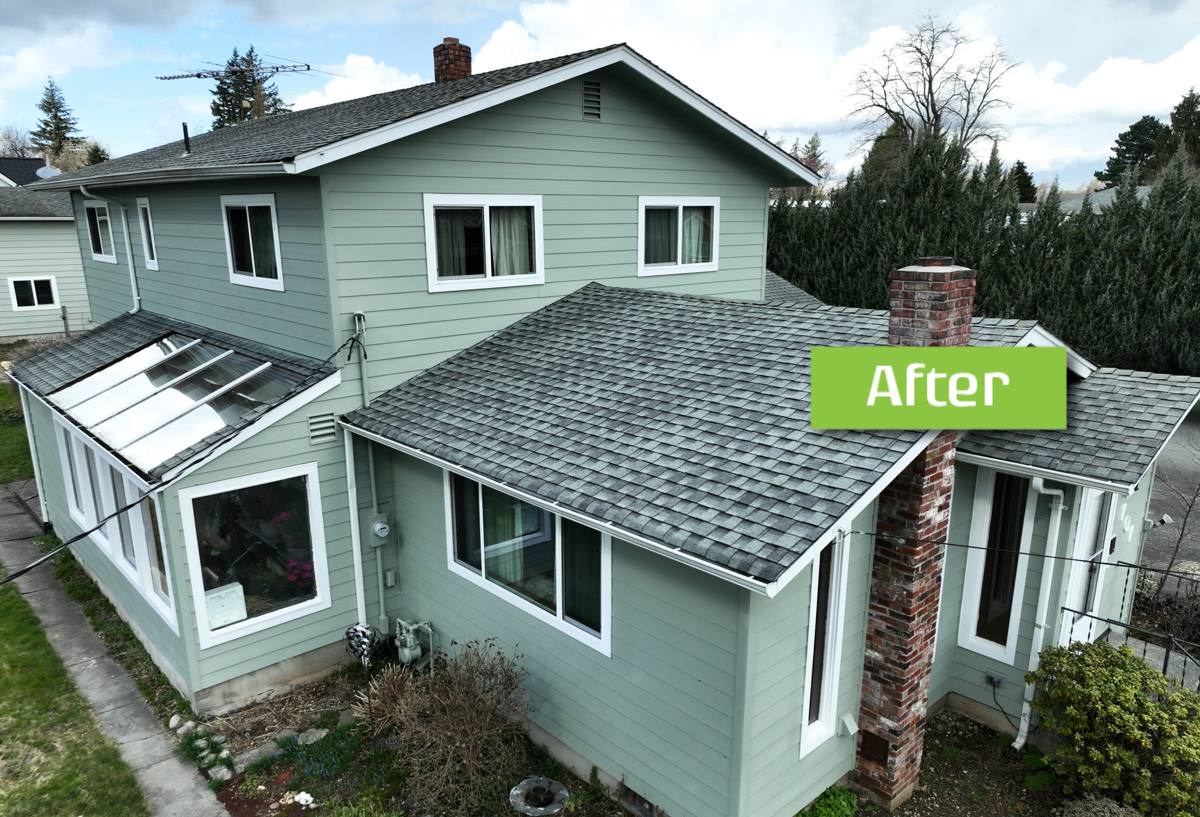
When Replacement Is the Honest Answer, Not Repair
We don't push replacement as a default. A localized leak, a small area of storm damage, or a handful of lifted shingles on an otherwise sound roof is usually a repair, and we'll say so. Replacement becomes the honest recommendation when the roof is nearing or past its rated service life, when moss and moisture damage have spread across multiple slopes rather than one isolated area, when the roof deck itself shows soft spots or rot from long-term moisture intrusion, or when the roof has already had several rounds of patch repairs and is running out of sound material to patch into. A roof with widespread granule loss, brittle or curling shingles across most of its surface, or flashing that's failed in more than one location is usually past the point where another repair makes financial sense.
The other honest factor is what's underneath. Once we're up on the roof for an estimate, we're looking at more than the shingles — we're checking the deck, the ventilation, and how the flashing at valleys and penetrations has held up. That inspection is what actually tells us whether repair or replacement is the right call, and we'll walk you through what we find either way.
What This Valley Climate Puts a New Roof Through
Moss on Shaded and North-Facing Slopes
Lynden's mix of open farmland and tree-lined residential lots means moss exposure varies a lot from house to house. A roof plane facing open field dries out between rains; the same roof shaded by mature trees or facing north often doesn't dry out at all through the wet months. That moisture sits against the shingle surface, works under tabs and edges, and over a few seasons can lift or degrade roofing that would otherwise still have years left in it.
Wind-Driven Rain
Rain in this valley doesn't reliably fall straight down. Wind pushes it sideways into valleys, around chimneys and vent pipes, and under flashing that isn't lapped correctly. That's a heavier, more directional load than an annual rainfall total suggests, and it's exactly where a poorly detailed replacement will leak first — usually within the first couple of wet seasons, not right away.
Repeated Wet-Dry Cycling
Whatcom County doesn't see extreme heat or deep freezes most years, but the repeated cycle of damp, mild days followed by occasional sharp cold snaps still stresses roofing materials over the long run. Shingles that stay saturated more often than they fully dry age faster than the same product would in a drier region, which is part of why the underlying details — ventilation, underlayment, fastener choice — matter as much as the shingle brand itself.
What a Correct Roof Replacement Actually Includes
A roof replacement is more than pulling off old shingles and nailing down new ones. The parts that don't show from the ground are usually what determine whether the new roof lasts twenty-five years or twelve. On every replacement, that means:
- Full tear-off to the deck — no installing new shingles over an existing layer, which traps moisture and voids most manufacturer warranties
- Deck inspection and repair of any soft, rotted, or delaminated sheathing found once the old roofing is removed
- Underlayment rated for sustained moisture exposure, not just a bare minimum-code product
- Ice-and-water shield at eaves, valleys, and other areas prone to water and debris collection
- Properly lapped and sealed flashing at every valley, chimney, vent pipe, and roof-to-wall transition
- Balanced intake and exhaust ventilation so moisture and heat can actually escape the attic space
- Corrosion-resistant fasteners and metal components, chosen for a consistently damp regional climate
None of this adds much to the overall cost of a job relative to the shingles themselves, but skipping any of it is exactly what turns a twenty-five-year roof into one that's leaking or losing granules inside a decade.
Choosing Materials for a Replacement, Not Just a Repair
Repairs work with whatever's already on the roof. A full replacement is the one chance to actually match the material to the house — its pitch, its sun and shade exposure, and how long you plan to own it.
| Material | Moss & Moisture Behavior | Typical Maintenance | Realistic Lifespan Here |
|---|---|---|---|
| Architectural asphalt shingle | Performs well with proper ventilation; moss-resistant granule options help on shaded slopes | Periodic moss removal and gutter checks | 20-30 years |
| Standing seam metal | Sheds water and resists moss buildup well due to its smooth, non-porous surface | Low; occasional fastener and sealant checks | 40-60 years |
| Cedar shake | Absorbs moisture readily; requires good airflow underneath to dry between rains | Higher; regular treatment and moss control | 20-30 years with consistent upkeep |
| Composite/synthetic shingle | Resists moisture absorption; performance varies meaningfully by product quality | Low to moderate | 30-50 years depending on product |
We'll walk through which option actually fits your roof rather than defaulting to whatever's easiest to sell. A steep, sun-exposed roof and a low-slope roof shaded by a tree line aren't the same decision, and the right answer depends on your budget and how long you're planning to stay in the house.
How a Replacement Runs, Start to Finish
- On-site inspection and estimate. We get on the roof, check the deck condition where accessible, look at existing ventilation and flashing, and give you a straightforward read on repair versus replacement.
- Material selection. We go over the realistic trade-offs for your specific roof and budget, not a one-size-fits-all pitch.
- Scheduling around the weather. Tear-off exposes the deck to the elements, so we plan around the forecast and work in staged sections when a full-day dry window isn't available.
- Full tear-off and deck inspection. Old roofing comes off completely, and any deck damage found underneath gets addressed before anything new goes down — not covered over.
- Underlayment, flashing, and ventilation installed to spec. This is the stage that determines how the roof performs in year ten, not just how it looks on install day.
- New roofing installed and details finished. Ridge, valleys, and penetrations get finished last, since that's where the majority of future leaks would otherwise start.
- Cleanup and final walkthrough. Old material and debris hauled off, magnetic sweep for stray fasteners, and a walkthrough of what was done and why.
Signs a Lynden Roof Is Due for Replacement
- Moss buildup on shaded or north-facing slopes that returns quickly after cleaning
- Granules collecting heavily in gutters or at the base of downspouts
- Curling, cupping, or missing shingles across multiple areas of the roof
- Water staining on interior ceilings near exterior walls or around chimneys
- Daylight visible through the roof deck when viewed from inside the attic
- Sagging rooflines or soft spots underfoot
- A roof already carrying two or more prior patch repairs
Any single item on that list might still be a repair. Several of them together, especially on a roof already past the middle of its expected life, is usually the point where replacement is the more honest and more cost-effective path.
Permits, Timeline, and What to Expect
Roof replacement in Whatcom County typically requires a building permit, and we handle that as part of the job rather than leaving it to the homeowner to sort out. Most single-family roof replacements take one to a few days on-site depending on roof size, complexity, and weather, though the permit and material lead time on the front end usually stretches the overall timeline out further than the install itself. We'll give you a realistic schedule up front, including what happens if a weather window closes mid-job.
Why a Crew That Already Works Lynden Matters
A crew that replaces roofs across this county through every season sees how moss, wind-driven rain, and long-term moisture actually behave on real houses over years, not just how a shingle performs on a manufacturer's data sheet. That shows up in practical decisions on a Lynden job: how much ventilation a given attic actually needs versus the code minimum, which roof orientations need extra ice-and-water shield because of tree shade, and which flashing details are worth the extra time on install day so you're not dealing with a callback two winters later. It also means we already understand the difference between an inland valley roof and one closer to open water, and we don't apply the same playbook to both.
Beyond the Roof
Roof replacement often uncovers issues at the wall-to-roof transition — aging trim, water-damaged siding, or flashing that's failed where the roof meets a wall. We handle siding and window work as well, including James Hardie fiber cement siding as our standard for this climate, so if a replacement turns up damage nearby, we can address it as part of the same project instead of sending you to find a second contractor.
If your Lynden roof is showing its age or you're weighing repair against replacement, we're glad to take a look and give you a straightforward, honest read on what it actually needs. Reach out using the form below to schedule a free, no-pressure estimate.