 Birch Bay Siding
 Marietta's Roofs Work Harder Than Most
Marietta sits right up against the water on the north side of Birch Bay, close enough to Semiahmoo Bay and Drayton Harbor that salt air is part of daily life, not an occasional thing. That air carries fine salt that settles on every exposed surface, including your roof. Combine that with the driving, wind-pushed rain that comes off the Strait during fall and winter storms, and a moss season that can run eight months out of the year in the shaded, damp spots under fir and cedar cover, and you get a roof environment that's noticeably tougher on materials than what you'd find twenty miles inland.
We've replaced roofs all over Whatcom County, but Marietta and the rest of Birch Bay get their own approach. The fasteners, flashing details, and ventilation choices that hold up fine in a drier climate don't always hold up here. A roof replacement done for Marietta needs to be done for Marietta's actual conditions, not a generic template.
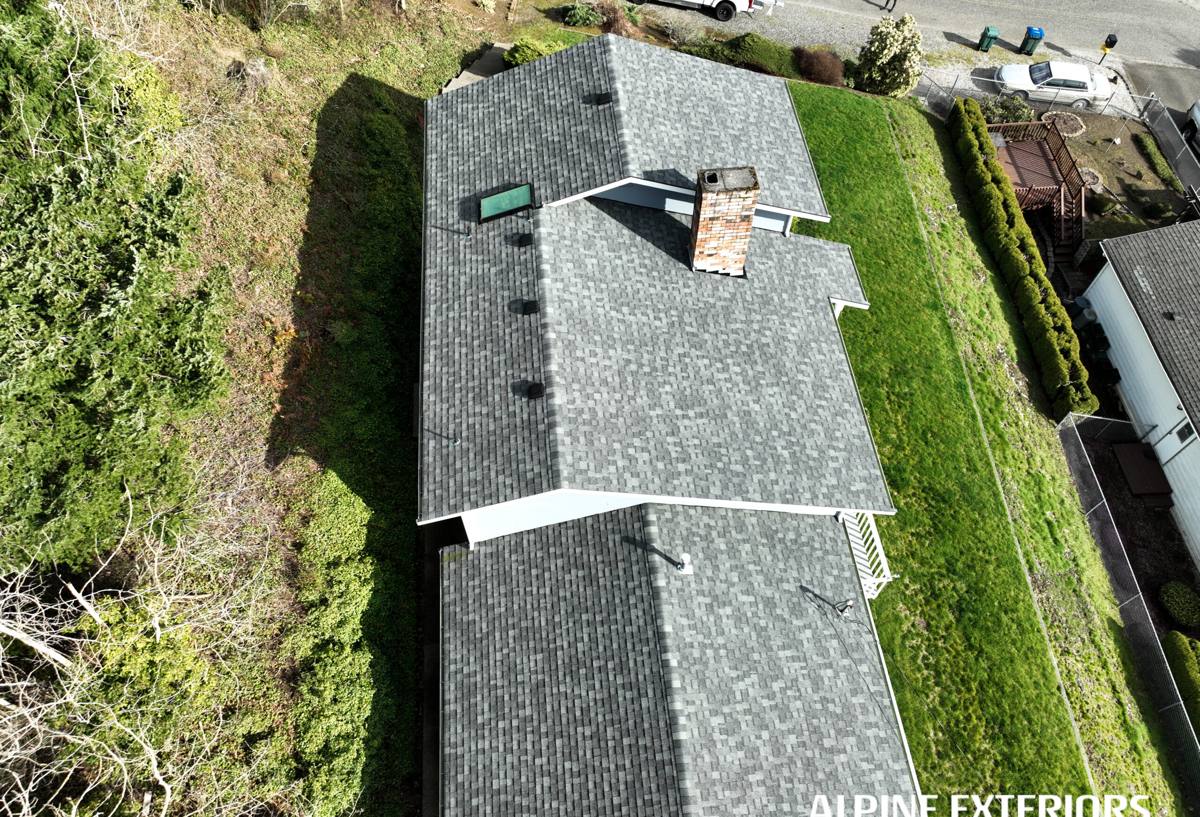
How Salt Air, Rain, and Moss Actually Damage a Roof
Salt Air
Airborne salt accelerates corrosion on anything metal — nails, flashing, gutter hangers, valve caps on vents. Once corrosion starts on a fastener, it loosens its grip on the shingle or panel it's holding, and that's how small leaks start years before anyone notices water inside the house.
Driving Rain
Most roofing is designed assuming rain falls mostly straight down. Wind off the bay pushes rain sideways and up under laps, ridge caps, and around chimneys or skylights. This is why flashing detail and underlayment quality matter more here than they might in a calmer inland location — a roof that's "good enough" elsewhere can still leak in Marietta during a strong southwesterly blow.
Moss and Sustained Moisture
Shaded roof sections that stay damp for long stretches grow moss, and moss does real damage: it holds moisture against the shingle surface, lifts shingle edges as it grows, and works its way under laps and around nail heads. Left unmanaged, a mossy roof ages faster than a clean one, sometimes losing years off its expected life.
Signs a Marietta Home Needs Replacement, Not Another Repair
Not every roof problem calls for a full replacement. But there's a point where patching stops making financial sense and a full tear-off and replacement is the honest recommendation. Watch for:
- Granules collecting in gutters or at downspout outlets — a sign the shingle surface is wearing thin
- Shingles that are curling, cupping, or cracking, especially on south- and west-facing slopes
- Moss growth that comes back within a season or two of cleaning
- Soft spots or slight sagging when walked on the roof deck
- Daylight visible through the attic roof boards
- Rusted or heavily corroded flashing around chimneys, vents, or valleys
- A roof approaching or past 20-25 years old (asphalt) with multiple active repair spots
- Interior water stains that reappear after repairs, indicating the leak source has shifted
If your roof shows two or more of these at once, that's usually the tipping point where a replacement costs less over time than continuing to chase individual repairs.
What a Correct Roof Replacement Involves Here
A roof replacement is more than swapping old shingles for new ones. In a marine climate like Birch Bay's, the details underneath the surface layer matter as much as the shingle itself.
Full Tear-Off and Deck Inspection
We remove the existing roofing down to the deck so we can actually see what's underneath. Years of moisture exposure can soften or rot sections of plywood or plank decking, especially around old leak points or valleys. Any compromised decking gets replaced before anything new goes down — covering over bad decking just hides a problem that will resurface.
Underlayment Built for Wind-Driven Rain
Given how often rain comes in sideways here, we use synthetic underlayment with proper overlap and, in vulnerable areas like eaves and valleys, self-adhering ice-and-water barrier. This gives the roof a second line of defense if wind ever forces water past the surface layer.
Flashing Detail
Chimneys, skylights, sidewall intersections, and valleys are where most roof leaks actually originate — not the open field of shingles. We install new flashing at every one of these transitions rather than reusing old, corroded pieces, and we pay particular attention to step flashing along sidewalls, which is a common weak point on older Birch Bay homes.
Ventilation
Proper intake and exhaust ventilation keeps the attic temperature and moisture level balanced, which reduces condensation, helps shingles last their full rated lifespan, and cuts down on the damp conditions moss prefers. On many older Marietta homes, ventilation was undersized or blocked over the years by insulation upgrades — a replacement is the right time to correct that.
Choosing the Right Material for Coastal Whatcom County
There's no single "best" roofing material — the right choice depends on your home's exposure, budget, and how long you plan to stay in it. Here's how the common options hold up under Birch Bay conditions specifically:
| Material | Salt Air Performance | Moss Resistance | Typical Lifespan Here |
|---|---|---|---|
| Architectural asphalt shingle | Good with corrosion-resistant fasteners | Moderate; benefits from zinc/copper strips | 20-30 years |
| Standing seam metal | Very good with marine-grade coatings | Excellent — sheds moss easily | 40-60 years |
| Cedar shake | Fair; needs regular maintenance | Poor without diligent upkeep | 20-30 years with maintenance |
| Synthetic composite shingle | Very good | Good | 30-50 years |
For a lot of Marietta homes — especially those with tree cover or a shaded north slope — we lean toward architectural asphalt with zinc or copper strips at the ridge, or metal roofing on homes with heavier moss history or a longer ownership horizon. Cedar shake looks great and has real history in this region, but we're upfront that it demands more maintenance in a damp, mossy climate, and we frame that as a maintenance trade-off, not a reason to avoid it outright if you're willing to stay on top of it.
Our Roof Replacement Process
- On-site inspection and estimate — we walk the roof, check the attic, and note anything specific to your home's exposure and slope orientation.
- Material selection — we go over options and trade-offs in plain terms, matched to your budget and how exposed your roof is to wind and shade.
- Scheduling around weather — Birch Bay's rain pattern means timing matters; we plan installation windows to minimize any open-deck exposure.
- Tear-off and deck repair — old roofing removed, decking inspected and replaced where needed.
- Underlayment and flashing installation — the moisture-management layer that does the real work in a marine climate.
- Roofing material installation — installed to manufacturer specs, with attention to nailing pattern and exposure for wind resistance.
- Ventilation check and correction — intake and exhaust balanced for the attic's actual size and insulation.
- Final walkthrough and cleanup — magnetic sweep for stray fasteners, gutter check, and a final look with you before we call it done.
Why a Crew That Knows Marietta Matters
A roofing crew that mostly works drier, inland areas can still do competent work, but they won't necessarily know to double up on valley protection for a home that catches the full brunt of southwest wind off the bay, or which slopes on a given lot tend to hold moss because of tree shade patterns typical to this stretch of Whatcom County. A crew that already works Marietta and the surrounding Birch Bay shoreline has seen these patterns repeatedly and builds the roof accordingly from the start, rather than learning it through a callback.
Local familiarity also matters for permitting and code requirements specific to Whatcom County, and for knowing realistic weather windows for scheduling a tear-off without leaving a home exposed longer than necessary.
What Affects the Cost of a Roof Replacement
Every roof is different, but the main cost drivers we walk through with Marietta homeowners are consistent:
| Factor | Why It Matters |
|---|---|
| Roof size and pitch | Larger and steeper roofs take more material and labor time |
| Decking condition | Rotted or soft decking sections add replacement material and labor |
| Material choice | Asphalt, metal, and composite carry different upfront costs and lifespans |
| Number of penetrations | Chimneys, skylights, and vents each require additional flashing work |
| Access and tear-off complexity | Layers of old roofing or difficult site access can add labor time |
We give straightforward, itemized estimates so you can see exactly what you're paying for, rather than a single lump number.
If your Marietta home is due for a new roof, or you're just not sure whether what you're seeing is a repair issue or something bigger, we're happy to take a look. Reach out for a free, no-pressure estimate using the form below.