 Birch Bay Siding
 Why Windows in Sandy Point Wear Out Faster
Sandy Point sits right up against the water in Birch Bay, and that location comes with a real cost to a home's windows. Salt-laden air carries moisture and fine salt particles that settle into window tracks, weep holes, and hardware. Over time that salt film holds moisture against metal and vinyl components, which speeds up corrosion on hinges, locks, and balance mechanisms long before the glass itself fails.
Add in wind-driven rain off the Strait, and you get water pushed sideways into gaps that would stay dry on a home a few miles inland. Whatcom County's long gray season doesn't help either — weeks of low sun and high humidity feed the moss and algae that colonize north-facing sills, sashes, and the caulk lines around older frames. Once moss gets a foothold in a seam, it holds water there permanently, and that's exactly where wood rot and seal failure start.
None of this means Sandy Point homes need exotic solutions. It means the ordinary parts of a window replacement — flashing, sealant choice, hardware material, drainage — matter more here than they would in a drier, more sheltered part of the county.
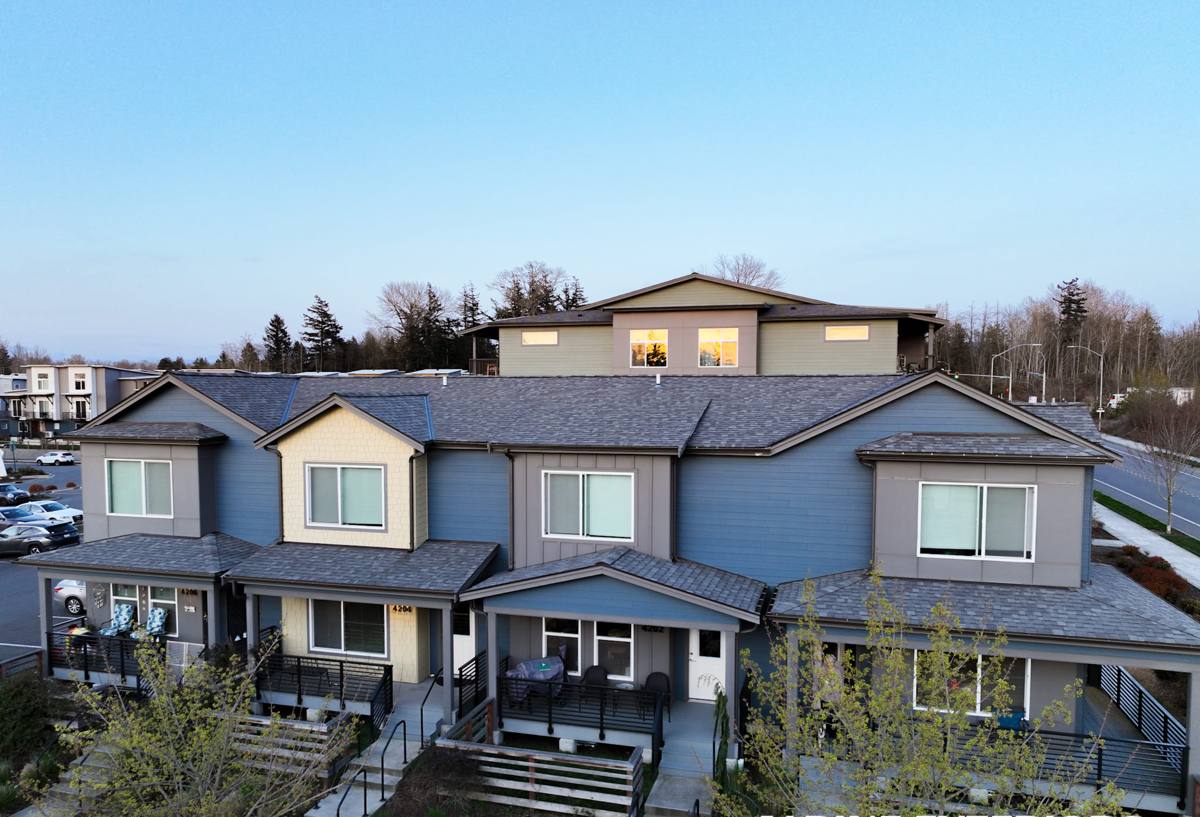
Signs Your Sandy Point Home Needs Window Replacement
Some window problems are obvious. Others show up gradually and get written off as "just an old house." In a marine climate like this one, it's worth checking for these specifically:
- Fogging or a permanent haze between panes — the seal has failed and the gas fill (or trapped air) is gone
- Soft or spongy wood at the sill or lower corners of the frame
- Windows that are hard to open, won't stay up, or rattle in wind
- Visible corrosion on hinges, cranks, or locks, even if the frame looks fine
- Black or green growth in the corners of the frame that comes back no matter how often it's cleaned
- A noticeable draft or cold spot near the window on windy days
- Peeling or bubbling paint on interior sills, which usually points to moisture getting in from outside
Any one of these can be a minor repair. Two or three together, especially on a home more than 15-20 years old, usually means the windows are past the point where patching makes sense.
What a Correct Window Replacement Involves
Removal and Inspection
Pulling the old window is when you find out what's really going on behind the trim. A proper job stops here to check the sheathing and framing for rot before anything new goes in. Installing a new window over a soft or wet opening just hides the problem — it doesn't fix it.
Flashing and Weatherproofing
This is the step that matters most in a wind-driven-rain climate. Flashing tape and a properly lapped weather-resistant barrier need to shed water down and out, not let it collect behind the new frame. In a spot like Sandy Point, we treat this step as non-negotiable — it's the difference between a window that lasts and one that starts leaking again in a few years.
Setting, Shimming, and Sealing
The new window has to be plumb, level, and square, and shimmed so it isn't relying on the fasteners alone to hold its shape. Interior and exterior sealant beads go in with attention to full, continuous coverage — gaps in caulk are exactly where salt-laden moisture finds its way in over time.
Trim and Finish
Exterior trim gets caulked and, where wood trim is used, primed and painted on all cut edges — not just the face — since end grain is where rot usually starts. Interior finish work is matched to the existing trim so the new window looks like it belongs.
Choosing Window Materials for a Salt-Air Climate
Every window material has trade-offs. In a coastal, high-moss environment like Birch Bay, some of those trade-offs matter more than they would elsewhere.
| Material | How it holds up near salt air | Maintenance |
|---|---|---|
| Vinyl | Won't corrode or rot; performs well in most Sandy Point applications | Low — occasional cleaning of tracks and weep holes |
| Fiberglass | Very stable, resists moisture and temperature swings well | Low, similar to vinyl |
| Aluminum-clad wood | Good exterior protection, but hardware and cladding seams need attention | Moderate — cladding seams should be checked periodically |
| Bare wood | Most vulnerable to rot and moss in this climate without diligent upkeep | High — repainting and sealing on a regular schedule |
We're not against wood windows as a category — some homeowners want the look and are willing to keep up with the maintenance. Our standard recommendation for Sandy Point is a vinyl or fiberglass frame with corrosion-resistant hardware, simply because it holds up with the least ongoing work in this specific environment.
Glass and Hardware Choices That Matter Here
Dual-pane, gas-filled glass with a Low-E coating is standard on nearly every replacement window sold today, and it's the right baseline for Birch Bay's mix of cool, damp winters and mild summers. Beyond that baseline, a few choices are worth thinking through:
- Hardware finish: stainless steel or corrosion-resistant coated hardware holds up noticeably longer than standard finishes this close to salt air
- Weep hole design: clear, unobstructed weep holes let wind-driven rain drain back out instead of pooling in the frame
- Glass tint or coating: a moderate solar-control coating helps on south- and west-facing windows that get direct afternoon sun
- Screen frame material: aluminum screen frames resist warping better than lighter alternatives in windy conditions
None of these are upsells for their own sake — they're the details that decide whether a window is still operating smoothly in ten years or starting to bind and corrode.
Our Process, Start to Finish
- On-site visit to measure openings, check for rot or moisture damage, and talk through material and glass options
- A written estimate that spells out scope, materials, and timeline — no vague allowances
- Ordering windows built to the exact openings, which typically takes a few weeks depending on the manufacturer
- Installation, done one opening at a time so the home isn't left exposed to weather overnight
- Flashing, sealing, and trim work as described above, with photos of the flashing detail before it's covered
- Final walkthrough to check operation, seals, and finish work before we consider the job done
- Daily cleanup — job sites don't get left with debris or exposed openings
What Window Replacement Typically Costs in Sandy Point
Costs vary based on the specifics of the job. The factors below tend to move the number more than anything else:
| Factor | Why it affects cost |
|---|---|
| Number of windows | Per-unit cost drops somewhat on larger orders due to shared labor and setup |
| Frame material | Vinyl is typically the most budget-friendly; fiberglass and clad-wood cost more |
| Window size and type | Large picture windows or specialty shapes cost more than standard double-hungs or sliders |
| Condition behind the old window | Rotted sheathing or framing found during removal adds repair work |
| Access | Second-story or hard-to-reach openings take more time and equipment |
| Trim and finish work | Matching existing wood trim or interior finishes adds labor beyond a basic install |
We give a firm, itemized number after actually looking at the openings — not a phone estimate — because guessing on any of the factors above is how homeowners end up with surprise charges partway through a job.
Why Local Experience in Sandy Point Matters
Sandy Point is a tight-knit, close-set community, and jobs here often involve narrow lanes, shared or private roads, and neighbors close enough that courtesy on noise, parking, and cleanup actually matters. A crew that's worked the area before knows how to stage material and schedule the loud parts of the day without it becoming a problem for the street.
Weather timing is the other piece. Wind off the water can turn a calm morning into a bad afternoon for having an opening exposed. Crews familiar with Birch Bay's patterns plan installs around that instead of getting caught mid-job when conditions turn. That local judgment doesn't show up on an estimate sheet, but it's a big part of why the finished work holds up.
Caring for New Windows in a Marine Climate
A well-installed window in this climate still benefits from a little upkeep:
- Rinse salt residue off frames and glass every few months, especially after storms
- Keep weep holes clear of debris and moss so water can drain properly
- Wipe down tracks and hardware periodically to prevent salt buildup from stiffening moving parts
- Check exterior caulk lines once a year and touch up any that have cracked or pulled away
- Trim back vegetation that shades a window and keeps it damp, since that's where moss takes hold fastest
None of this is heavy maintenance — it's the kind of occasional attention that keeps a good installation performing the way it should for the long haul.
If your windows in Sandy Point are showing any of the signs above, or you'd just like an honest read on their condition, we're glad to take a look. The estimate is free, there's no pressure attached to it, and you'll get a straight answer about what your home actually needs.