 Birch Bay Siding
 Building Decks for a Semiahmoo Address
Homes around Semiahmoo sit about as close to the Salish Sea as a Whatcom County property can get, and that proximity shapes every decision that goes into a deck out here. Salt-laden wind comes off the water more or less constantly, driving rain arrives sideways more often than straight down, and the long, damp shoulder seasons common to Birch Bay and the rest of Whatcom County give moss and algae months at a time to take hold on any horizontal surface that doesn't drain and dry properly. A deck built to a generic spec sheet — the kind that works fine forty miles inland — tends to show its age fast here. Fasteners weep rust, wood decking cups and splinters, and railings loosen at the posts within a few seasons.
We work this stretch of the coast regularly, which means we're not guessing at what holds up. This page covers what a Semiahmoo-area deck actually needs, what a correct build looks like from the framing up, and how we approach the job so it's still solid a decade from now.
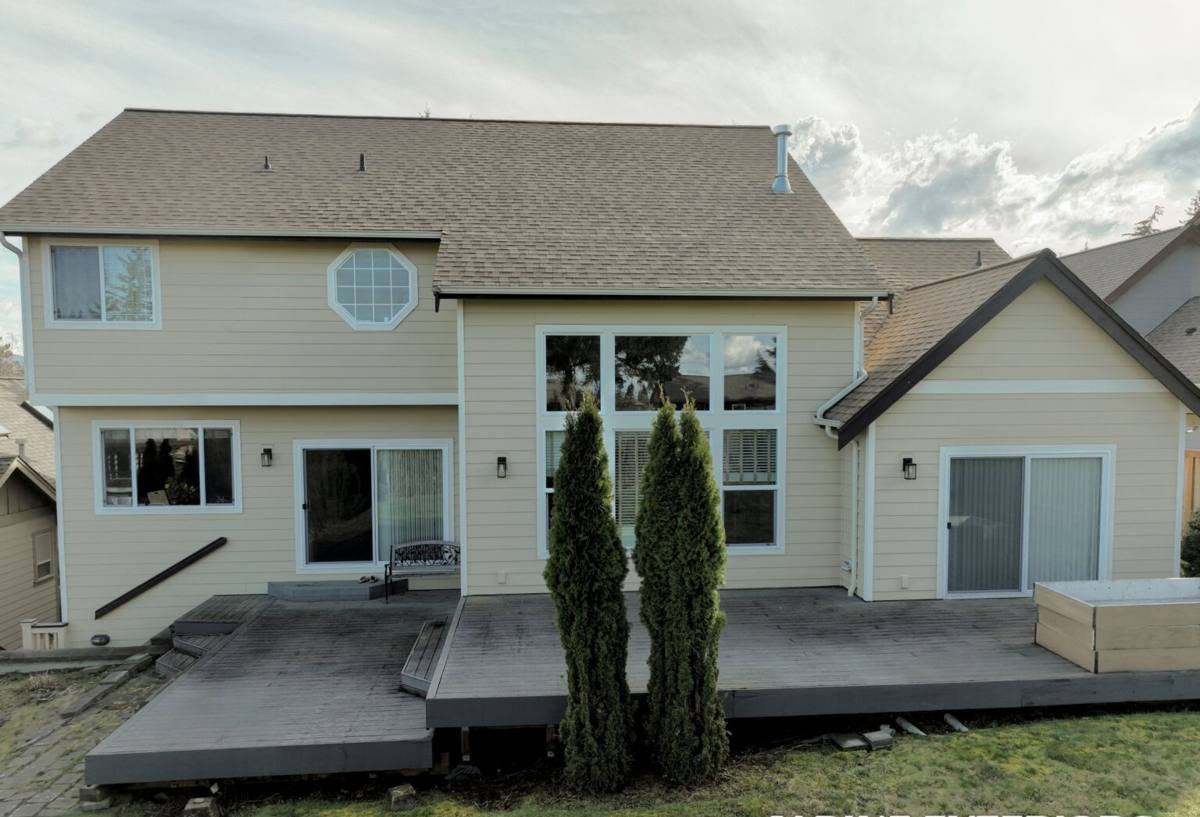
What Salt Air and Moisture Actually Do to a Deck
It helps to understand the failure modes before talking about materials, because most of the choices below exist to head off one of these problems.
- Corrosion: Salt-bearing air accelerates rust on any fastener, bracket, or hardware that isn't rated for coastal exposure. Standard interior-grade screws and nails can start showing rust streaks in a single wet season.
- Moisture trapping: Driving rain gets pushed into joints, ledger connections, and end grain that would stay drier in a calmer inland spot. Wherever water can collect and not fully evaporate between storms, rot and mildew follow.
- Moss and algae growth: Birch Bay's overcast, damp stretches give organic growth time to establish on shaded or poorly-drained boards. Beyond looking bad, a mossy deck surface gets slick and holds moisture against the wood underneath.
- UV and wind cycling: Salt air plus sun and wind exposure ages finishes and sealants faster than a sheltered site, so protective coatings need more frequent attention than the can's label might suggest.
None of this means a deck near Semiahmoo can't last. It means the build has to account for these conditions from the framing out, not patch around them after the fact.
Decking Material Options for a Coastal Site
There's no single "best" decking material — there's a best fit for your budget, your maintenance appetite, and how exposed your specific lot is to wind and salt spray. Here's how the common options actually perform in this environment.
| Material | Coastal Performance | Maintenance | Trade-offs |
|---|---|---|---|
| Pressure-treated wood | Good if detailed correctly; treatment resists rot but not corrosion of exposed fasteners | Annual cleaning, re-staining every 2-3 years | Lowest upfront cost; shortest lifespan without upkeep |
| Cedar | Naturally rot-resistant, ages to a silver-gray patina that suits the look many owners want here | Periodic cleaning; sealing optional depending on desired appearance | Softer wood, more prone to surface checking in wind-driven weather |
| Composite decking | Excellent — doesn't absorb moisture like wood, resists rot and insect damage | Occasional washing to prevent surface mildew; no staining or sealing | Higher upfront cost; quality varies significantly by brand and board construction |
| PVC/capped polymer | Very good moisture resistance; fully sealed surface sheds salt spray easily | Lowest of the group — soap and water | Highest upfront cost; can feel less "natural" underfoot than wood |
For a lot with heavy direct wind and spray exposure, we usually steer owners toward composite or capped polymer decking specifically because it doesn't wick moisture the way wood does. On more sheltered, tree-buffered lots, a well-detailed cedar or treated-wood deck can perform just as well and costs less to build. We'll walk your specific site with you rather than default to one answer.
A Note on Product Choice
We don't install every decking product on the market, and that's a deliberate call, not an oversight. Some composite lines have thinner capping or weaker moisture seals at the cut ends, which matters a lot more here than it would on a dry-climate build — a board that's fine in Spokane can fail early on a windward Whatcom County lot. We stick with products whose warranty and construction we trust to actually hold up under salt exposure, and we're happy to explain why we recommend one brand over another for your specific site.
Framing and Substructure: The Part Nobody Sees
The decking surface gets all the attention, but the framing underneath is what determines whether the deck is still safe in fifteen years. For a Semiahmoo-area build, that means:
- Ledger flashing installed and sealed correctly where the deck meets the house — this is the single most common source of hidden rot on older decks in wet coastal climates.
- Joist tape or a comparable moisture barrier on top of framing lumber, so fastener penetrations don't become entry points for water.
- Post bases set above grade and away from standing water, with proper drainage so the base of each post isn't sitting in a wet pocket after every storm.
- Adequate airflow underneath the deck structure to let framing dry out between rain events instead of staying damp for weeks at a time.
A deck can look finished and still be built wrong underneath. This is the part of the job that separates a deck that needs major repair in eight years from one that needs routine maintenance for thirty.
Fasteners and Hardware Rated for Salt Exposure
This is one of the cheapest details to get right and one of the most commonly skipped. Standard galvanized fasteners can start corroding within a couple of seasons this close to the water. We spec stainless steel or marine-grade coated fasteners and structural hardware for coastal builds — brackets, joist hangers, post anchors, and screws all included, not just the visible ones. It costs more upfront than builder-grade hardware. It's also the difference between hardware that's still sound decades out and hardware that's staining the wood around it with rust within a few years.
Railings, Stairs, and Attachment Points
Railings take direct wind load on an exposed lot, so post attachment matters as much as the railing material itself. Loose or under-fastened posts are one of the most common deck safety issues we find on inspection, and it's almost always a connection detail that was rushed rather than a material failure. We use through-bolted post connections rather than relying on screws alone at load-bearing points, and we select railing hardware with the same corrosion resistance as the rest of the build. Whether you want wood, metal, cable, or composite rail systems, the same rule applies: whatever's holding it to the structure needs to be rated for this environment.
Our Process, Start to Finish
- On-site walkthrough: We look at sun exposure, wind direction, drainage, and how sheltered or exposed your specific lot is before recommending materials.
- Honest material recommendation: Based on that walkthrough and your budget, we'll tell you what we'd actually build for our own house in that spot — not just upsell the priciest option.
- Permitting: We handle the permit process where required so the deck is built to code and won't cause problems at resale.
- Framing first, inspected before covering: The structural work gets built and checked before decking goes down, since that's the part you won't be able to see or fix easily later.
- Decking, railing, and finish work: Surface materials, railings, stairs, and any built-in features go in last, with attention to clean fastener patterns and consistent spacing.
- Walkthrough and care guidance: We go over what your specific materials need going forward — cleaning schedule, sealing if applicable, what to watch for.
Maintenance Checklist for a Semiahmoo-Area Deck
Even the best-built deck needs some seasonal attention out here. This is the routine we recommend to owners after we finish a build:
- Sweep or rinse debris off the surface regularly, especially in fall when leaves and needles trap moisture against the boards.
- Check for early moss or algae growth in shaded corners and low-traffic areas before it spreads.
- Inspect fastener heads and hardware once a year for any early rust staining, particularly near the ledger and post bases.
- Confirm gaps between boards stay clear so water keeps draining through rather than pooling.
- Re-seal or re-stain wood decking on the schedule appropriate to your product — don't wait until it's visibly gray and dry to reapply.
- Walk the railing posts periodically and check for any give or looseness at the connection points.
Why a Crew That Already Works Semiahmoo Matters
A contractor who mostly builds decks in drier, more sheltered parts of the county will default to specs that make sense there — and those specs are often wrong for a lot exposed to direct salt spray and wind off the water. We work Birch Bay and the surrounding Whatcom County coastline regularly enough to know which fastener grades actually hold up here, which decking products handle the moisture load, and which framing details matter most given the weather this stretch of coast sees most of the year. That's not a marketing claim — it's the practical result of building in this specific climate over and over instead of treating every coastal job as a one-off.
If you're planning a new deck or replacing one that's showing its age near Semiahmoo, we're happy to walk the site with you and give you a straightforward, no-pressure estimate — just fill out the form below and we'll get in touch.