 Birch Bay Siding
 Semiahmoo Homes Take a Different Kind of Beating
Homes in and around Semiahmoo sit close enough to the water that siding has to deal with more than just Pacific Northwest rain. Salt-laden air off the water accelerates corrosion on fasteners, trim, and anything with a weak factory finish. Add in near-constant onshore wind that drives rain sideways into wall assemblies, and a moss and algae season that runs long into the year under Whatcom County's cloud cover, and you end up with siding conditions that are noticeably tougher than an inland lot fifteen minutes away.
None of that is exotic or unmanageable — but it does mean the siding product and the installation details matter more here than they would in a drier, more sheltered part of the state. A product or a install method that "gets by" in a low-exposure area can fail years early on a wind-facing wall near Semiahmoo.
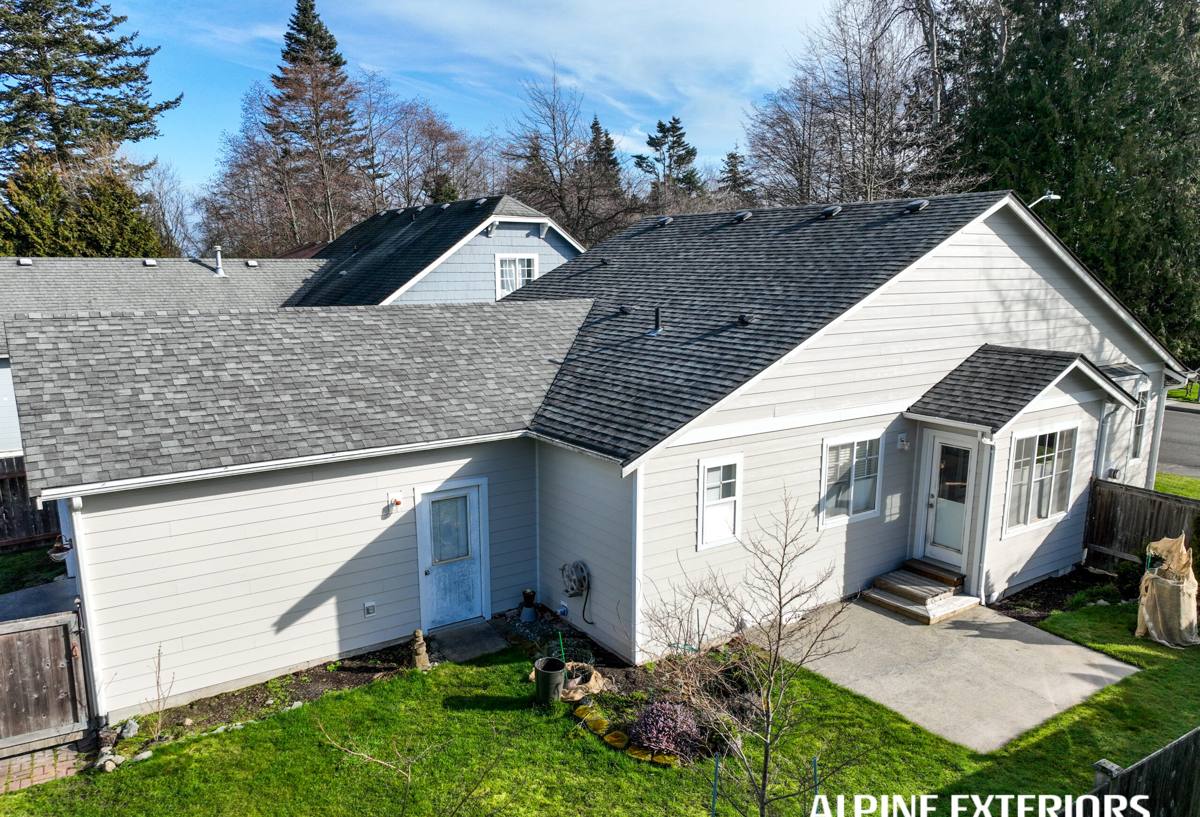
What Salt Air, Driving Rain, and Moss Actually Do to Siding
Salt Air
Airborne salt is corrosive to exposed metal — nail heads, flashing, trim fasteners — and it can degrade lower-quality paint and coating systems over time, leading to chalking, fading, and adhesion loss well before the siding is structurally worn out.
Driving Rain
Wind-driven rain doesn't just run down a wall, it gets pushed sideways and upward into seams, laps, and penetrations. Siding that relies on caulk alone at butt joints, or that isn't lapped and flashed correctly, will eventually let water behind the cladding — which is where the real damage (sheathing rot, framing decay, mold) actually happens.
Moss and Algae
Shade, moisture, and mild temperatures are a perfect combination for moss and algae growth on north-facing and low-airflow walls. Beyond the cosmetic issue, moss holds moisture against the siding surface far longer than open air would, which shortens the life of any product that's sensitive to sustained dampness.
What a Correct Siding Installation Involves
A siding job that's going to hold up under these conditions isn't just "removing the old boards and nailing up new ones." The parts that actually determine whether siding lasts 10 years or 40 happen before the first course goes up and in the details most homeowners never see once the wall is closed up.
- A water-resistive barrier (weather-resistant house wrap or building paper) installed shingle-style so every lap sheds water downward
- Properly flashed windows, doors, and any wall penetrations — this is where most real-world leaks start
- Correct fastener type, length, and spacing for the specific siding product and substrate
- Rainscreen or drainage gap detailing where conditions call for it, so any incidental moisture can drain and dry instead of sitting against the wall
- Manufacturer-specified clearances at grade, roof lines, and decks so siding isn't sitting in standing water or snow load
- Factory-finished panels and trim installed to the manufacturer's fastening and joint-treatment specs, not field-painted shortcuts
Skip any one of these and the siding may look fine for a year or two before the underlying problems show up — usually as a wall that costs far more to fix than it would have cost to install correctly the first time.
Why We Only Install James Hardie Fiber Cement
We install James Hardie fiber cement siding exclusively — no vinyl, no LP SmartSide, no Cemplank, no Allura, no primed spruce or cedar. That's a deliberate standard, not a lack of options.
Vinyl can crack and become brittle in cold snaps and tends to fade and chalk under UV and salt exposure over time, with limited practical repair options once a panel is damaged. Engineered wood products like LP SmartSide use a wood-strand substrate that, while treated, is still more moisture-sensitive at cut edges and damaged spots than fiber cement — a real concern in a driving-rain, high-moss environment. Primed wood siding (spruce, cedar) needs a maintenance commitment — regular repainting and caulking — that most homeowners underestimate, and any lapse in that maintenance schedule shows up fast in this climate.
James Hardie fiber cement is non-combustible, dimensionally stable in wet-dry cycling, and comes with a factory-applied ColorPlus finish that's baked on and warrantied against fading and cracking — instead of a field-applied paint job that starts weathering the day it's installed. Hardie's HZ5 product line is specifically engineered for the freeze-thaw and moisture conditions of the Pacific Northwest, which is exactly the environment Semiahmoo sits in.
Quick Comparison
| Product | Salt Air / Moisture Behavior | Maintenance Burden |
|---|---|---|
| James Hardie Fiber Cement | Non-combustible, dimensionally stable, factory ColorPlus finish resists fading and chalking | Low — occasional wash, no repainting on the ColorPlus schedule |
| Vinyl Siding | Can become brittle in cold, fades and chalks under sun and salt exposure | Low, but limited repair options once damaged |
| LP SmartSide (Engineered Wood) | Wood-strand substrate more sensitive at cut edges and damage points | Moderate — field-painted, needs edge sealing and upkeep |
| Primed Spruce / Cedar | Natural wood movement, moisture uptake without diligent upkeep | High — regular repainting and caulking required |
How Our Installation Process Works
Every job follows the same sequence, regardless of house size, because the sequence is what protects the wall long-term.
- Assessment and measure: we walk the exterior, note wind-exposed and moss-prone walls, check existing sheathing condition at removal points, and measure for material.
- Tear-off and sheathing check: old siding comes off and we inspect the sheathing underneath for rot or soft spots before anything new goes up — this is the point where hidden moisture damage gets caught.
- Water-resistive barrier and flashing: house wrap and flashing are installed and lapped correctly at every window, door, and penetration.
- James Hardie installation: siding, trim, and accessories go up to manufacturer fastening specs, with correct clearances at grade, roofs, and decks.
- Final detailing and walkthrough: caulking at specified joints only (not as a substitute for flashing), touch-up of any factory finish nicks, and a walkthrough so you know what to expect from the material going forward.
Signs Your Current Siding Is Already Losing the Fight
If you're in Semiahmoo and noticing any of the following, it's worth having the siding looked at before it turns into a sheathing or framing repair:
- Persistent moss or algae staining that comes back quickly after cleaning
- Soft spots, bubbling, or visible warping, especially on north-facing or wind-exposed walls
- Rust streaking from fasteners or trim, a sign salt air is working on exposed metal
- Paint that's chalking, peeling, or failing faster than expected on wood or engineered wood siding
- Gaps opening up at seams, corners, or around windows
What Siding Installation Typically Costs
Every home is different, but the main cost drivers on a Semiahmoo siding job are consistent:
| Factor | How It Affects Cost |
|---|---|
| Home size and wall complexity | More square footage and more corners, gables, and dormers mean more material and labor |
| Existing wall condition | Sheathing rot found during tear-off adds repair scope before new siding can go up |
| Siding profile and trim detail | Lap width, trim style, and accent details (shakes, board-and-batten sections) change material and labor time |
| Wind and moisture exposure | Higher-exposure walls may warrant additional drainage detailing |
| Access | Multi-story sections, tight lot lines, or limited staging area affect labor time |
We give firm numbers only after seeing the house — anyone quoting a whole-house siding price over the phone without a walk-through is guessing.
Living With James Hardie Siding After Installation
Part of why we standardized on Hardie is how little ongoing work it asks for compared to wood or engineered wood alternatives. Still, a little basic upkeep keeps it looking and performing its best in this climate:
- Rinse walls (especially shaded, moss-prone sides) with a garden hose once or twice a year to keep organic growth from taking hold
- Keep gutters clear so overflow doesn't run down the siding face repeatedly
- Trim back vegetation and shrubs that trap moisture against the wall
- Recaulk at manufacturer-specified joints if you ever see a caulk line failing — don't let it sit open
- Watch grade and landscaping over time so soil or mulch doesn't creep up and bury the bottom clearance
Why It Matters That We Already Work This Area
Siding crews that mostly work drier, inland parts of Whatcom County don't always default to the drainage and flashing details that a Semiahmoo wall actually needs — because most of their jobs don't demand it. A crew that regularly works this stretch of coastline already treats rainscreen detailing, upgraded flashing at exposure points, and moss-conscious wall planning as standard practice, not an upsell. That familiarity with the specific way salt air, wind-driven rain, and moss behave on homes here is what keeps a siding job performing years after the crew has moved on to the next house.
If you're weighing a siding replacement or new installation on a Semiahmoo home, we're happy to walk the exterior with you, look at what your walls are actually dealing with, and put together a straightforward, no-pressure estimate using the form below.