 Birch Bay Siding
 Siding Repair Built for Semiahmoo's Waterfront Exposure
Homes along Semiahmoo and the surrounding Birch Bay waterfront face a tougher siding environment than most of Whatcom County. The combination of salt-laden air off the water, wind-driven rain, and a moss season that can stretch nearly eight months out of the year means siding here ages differently than siding a few miles inland. A repair that looks fine from the ground can be hiding trapped moisture, corroded fasteners, or a moss colony working its way into a seam. Getting the repair right the first time matters more here than almost anywhere else in the region.
This page covers what Semiahmoo homeowners should know about siding repair specifically: what the local climate does to siding, how to tell a cosmetic issue from a structural one, what a correct repair actually involves, and why hiring a crew that already understands this stretch of coastline is worth more than hiring the cheapest bid.
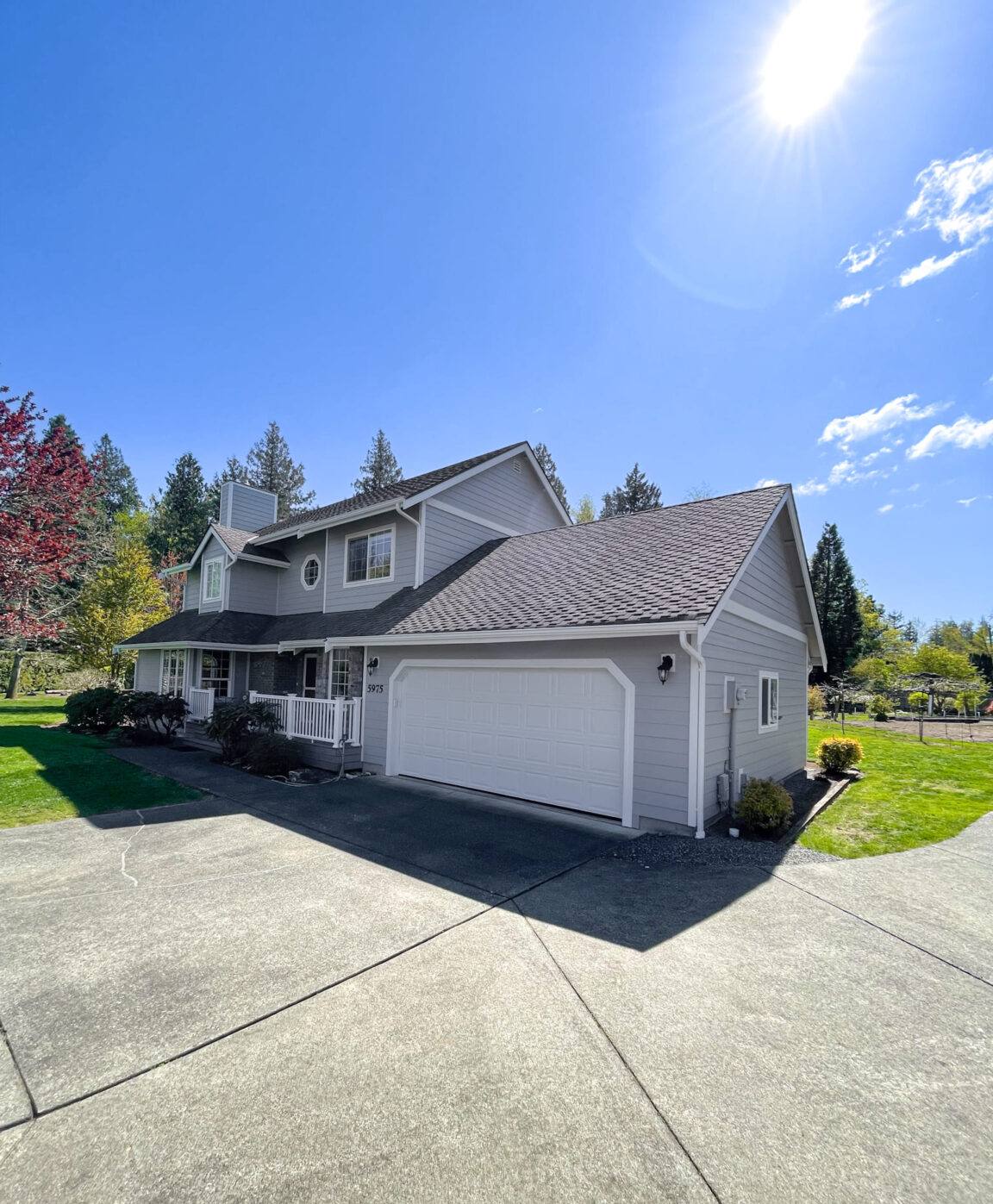
Why Siding Fails Faster on the Semiahmoo Waterfront
Salt Air and Corrosion
Proximity to saltwater accelerates corrosion on anything metal — nails, staples, flashing, and trim fasteners. Once a fastener starts to rust, it loses its grip on the siding it's holding, and that's often the real cause behind a panel that looks like it's "coming loose" for no obvious reason. Salt air also breaks down certain paints and caulks faster than they'd wear inland, which shows up as chalking, fading, or cracked caulk lines well before a manufacturer's stated service life would suggest.
Driving Rain and Wind-Driven Moisture
Storms coming off the water don't just fall straight down — wind pushes rain sideways and up under laps, trim, and around windows and doors. Siding systems are designed to shed water that hits them head-on, but wind-driven rain finds the gaps: a hairline crack, a nail hole that's backed out slightly, a caulk joint that's shrunk. Once moisture gets behind the siding, it doesn't dry out quickly in this climate, and that's when rot, mold, and sheathing damage start.
Moss, Algae, and the Long Wet Season
Birch Bay's marine climate keeps surfaces damp for long stretches, and shaded, north-facing walls near tree lines are especially prone to moss and algae growth. Moss holds moisture against the siding surface far longer than open air would, and its root structure can work into seams and butt joints over time. Left alone, it doesn't just look bad — it keeps the substrate wet in a way that speeds up whatever decay process has already started underneath.
Signs Your Siding Needs Repair
Most siding problems announce themselves quietly before they become expensive. Homeowners in Semiahmoo should watch for:
- Soft or spongy spots when you press on the siding, especially near the bottom courses or around window and door trim
- Visible gaps, cracks, or separated joints, particularly on walls that face the water or prevailing wind
- Peeling or bubbling paint, which often signals moisture trying to escape from behind the siding
- Persistent moss or dark streaking that comes back within a season of cleaning
- Warping, buckling, or panels that no longer sit flush against the wall
- Rust streaks below nail heads or fasteners, a sign the fasteners themselves are corroding
- A musty smell in an adjacent interior room, which can indicate moisture intrusion behind the wall
Any one of these on its own might be minor. Several showing up on the same wall usually means water has been getting in longer than it's been visible.
Repair or Replace? How We Make the Call
Not every siding problem needs a full replacement, and not every repair is worth doing if the underlying material is failing systemically. The honest answer depends on how localized the damage is and what's found once the siding is opened up.
| Factor | Favors Repair | Favors Replacement |
|---|---|---|
| Extent of damage | Isolated to one wall or a few panels | Recurring across multiple walls or elevations |
| Sheathing condition | Dry, solid wood behind the damaged area | Soft, rotted, or delaminated sheathing found |
| Material match | Matching material or color is available | Discontinued product, faded ColorPlus finish, or obsolete profile |
| Age of existing siding | Under 10-15 years old, otherwise sound | Near or past its expected service life |
| Moisture source | A single identifiable cause (flashing, caulk failure) | Multiple entry points or unknown, ongoing intrusion |
We'll tell you plainly which situation you're in. If a repair genuinely solves the problem, that's what we recommend — there's no reason to sell a full re-side to a homeowner who needs a flashing detail fixed and three boards replaced.
What a Correct Siding Repair Actually Involves
Matching Material and Finish
A repair that doesn't match the existing siding's profile, reveal, and finish stands out immediately, and mismatched material can also perform differently in weather than what's around it. Where the original siding is James Hardie fiber cement with a factory ColorPlus finish, matching the exact color and texture keeps the repair invisible and keeps the finish warranty intact. Where the original material is something we don't install as new work — vinyl, LP SmartSide, cedar, or a primed wood product — we'll still repair it correctly with compatible material, but we'll also be honest with you about that product's remaining service life and trade-offs.
Checking What's Behind the Siding
Any competent repair starts by opening up the damaged section far enough to see the house wrap, flashing, and sheathing underneath — not just patching the visible symptom. In a wind-driven-rain environment like Semiahmoo, water often travels sideways or downward from its actual entry point before it shows up as a soft spot or stain, so the repair has to trace the moisture back to its source rather than just replacing the board where the damage is visible.
Flashing, Caulking, and Drainage
A huge share of siding failures near the water trace back to flashing and sealant, not the siding material itself. Correct repair work re-flashes window and door heads where needed, uses sealants rated for exterior UV and salt exposure, and re-establishes proper drainage paths so water sheds away from the wall instead of pooling behind a lap or trim board. Skipping this step is the single most common reason a "repaired" wall fails again within a year or two.
Our Repair Process in Semiahmoo
- On-site inspection — we look at the damage itself, the surrounding siding, trim, flashing, and any interior signs of moisture before recommending anything.
- Diagnosis — we identify the actual cause (fastener corrosion, flashing gap, failed caulk joint, moss-related moisture retention, impact damage) rather than just the visible symptom.
- Written scope and estimate — a clear explanation of what will be repaired, what material will be used, and why, before any work starts.
- Repair work — removal of damaged material, inspection and repair of sheathing or flashing if needed, installation of matched or compatible siding, and correct sealing and fastening for a marine environment.
- Final check — confirming the repaired area sheds water correctly and blends with the surrounding siding.
Why We Only Install James Hardie When Replacement Is the Right Call
When a repair isn't enough — when the damage is widespread, the sheathing is compromised in multiple places, or the existing siding is simply at the end of its useful life — we recommend James Hardie fiber cement for the replacement, and only James Hardie. It's non-combustible, holds up to the freeze-thaw and moisture cycling that Whatcom County's marine climate produces, and its factory-applied ColorPlus finish is built to resist the fading and chalking that salt air and UV cause faster here than inland. We don't install vinyl, LP SmartSide, cedar, or primed wood siding as new work, because we've seen how each of those products behaves over time in exactly this kind of exposure, and we'd rather stand behind one system we trust than offer several we have reservations about. If your situation calls for replacement rather than repair, we'll walk you through why Hardie is what goes back on the wall.
Why Hiring a Crew That Already Works Semiahmoo Matters
A crew that works this stretch of coastline regularly already knows which walls take the worst of the wind-driven rain, how fast moss reestablishes on shaded siding near the water, and which fastener and sealant choices actually hold up here versus what a manufacturer's general spec sheet assumes. That local pattern recognition shortens the diagnosis, reduces the odds of a repeat repair, and means the crew showing up at your door isn't learning Birch Bay's climate on your dime. It also means we're a known, findable business in this community — not a traveling crew that's hard to reach if a repair needs a follow-up visit next winter.
Get a Straightforward Estimate
If you're seeing soft spots, gaps, recurring moss, or peeling paint on your Semiahmoo home's siding, it's worth having someone look at it before the next wet season makes the underlying damage worse. We offer free, no-pressure estimates — we'll tell you honestly whether you're looking at a repair or something bigger, and what either option actually involves. Fill out the form below to get started.