 Birch Bay Siding
 Semiahmoo's Coastal Climate Is Hard on Siding
Semiahmoo sits right up against the water in Whatcom County, and that location comes with a specific set of exterior problems that homes a few miles inland simply don't deal with in the same way. Salt-laden air moves off the water and settles on everything, including your siding, trim, and fasteners. Wind-driven rain hits exposed walls at an angle instead of falling straight down, which pushes moisture into seams, laps, and fastener points that were never designed to handle standing water. And because this part of Washington stays cool and damp for so much of the year, homes here go through a long moss and algae season that keeps siding surfaces wet longer than materials were ever tested for.
None of this is unique to any one house — it's just what siding on the Semiahmoo waterfront has to survive, year after year. The material and the installation both have to be matched to that reality, or you end up replacing siding again well before it should have worn out.
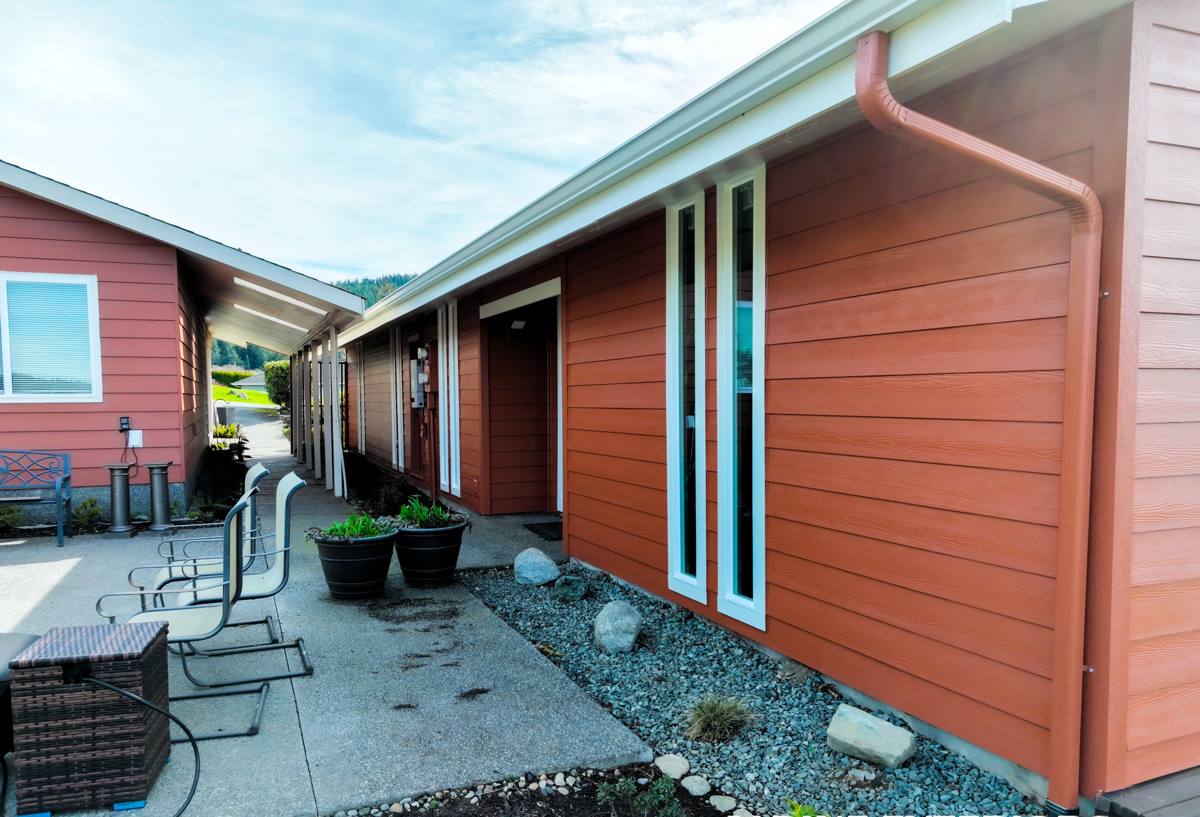
Signs a Semiahmoo Home Needs Siding Replacement
Salt air and constant moisture don't usually announce themselves with one obvious failure. They show up as a pattern of small problems that add up. If you're seeing more than one or two of these, it's worth having someone look at the whole wall system, not just the spot that's bothering you.
- Soft or spongy spots when you press on the siding, especially near the bottom courses or around windows
- Paint that keeps failing in the same spots no matter how often it's repainted
- Persistent moss, algae, or black streaking that comes back within a season of cleaning
- Visible warping, cupping, or buckling of siding boards or panels
- Rust bleeding from fastener heads or corroded trim pieces
- Gaps opening up at seams, corners, or where siding meets trim and flashing
- A musty smell or visible staining on interior walls that back up to exterior siding
Any one of these can be a cosmetic nuisance. Together, especially on a home exposed to salt air and wind-driven rain, they usually mean moisture has been getting behind the siding for a while.
Why We Only Install James Hardie Fiber Cement
We install James Hardie fiber cement siding exclusively. That's not a marketing preference — it's a standard we hold to because of what we see happen to other materials on homes exposed to the kind of weather Semiahmoo gets. Vinyl siding can hold up reasonably well for a while, but it's a thin plastic product that expands and contracts with temperature swings, and driving rain can work its way behind loose panels over time. Wood and primed spruce siding look good on day one, but they need a level of ongoing paint maintenance and moisture vigilance that's tough to keep up with in a climate this wet, and any lapse invites rot. Engineered wood products like LP SmartSide use wood strand cores that are more moisture-resistant than raw wood, but they're still wood-based, and cut edges or damaged coatings can let water in over the years.
James Hardie fiber cement is made from cement, sand, and cellulose fiber. It doesn't absorb water the way wood-based products do, it won't rot, and it's not a food source for the pests and moss that thrive in this climate. Hardie's ColorPlus factory finish is baked on under controlled conditions rather than field-painted, which means better adhesion and a finish that resists the fading and peeling that salt air accelerates on site-painted siding. Hardie also engineers specific product lines (HZ5 and HZ10) for different climate zones, so the board specified for a Pacific Northwest coastal home is built to handle sustained moisture exposure, not just general weather. Backed by a strong transferable warranty, it's the product we're willing to put our name behind on homes that take this much of a beating from the weather.
How Siding Materials Hold Up Under Coastal Conditions
| Material | Moisture & Salt Air Resistance | Maintenance Needs | Typical Lifespan Here |
|---|---|---|---|
| Vinyl | Fair — panels can loosen or crack under wind-driven rain and temperature swings | Low, but damage often means full panel replacement | 15-25 years, often less on exposed walls |
| Cedar / Primed Wood | Poor without diligent upkeep — absorbs moisture, prone to rot in constant damp | High — repainting and sealing on a regular cycle | 10-20 years depending on maintenance |
| LP SmartSide (engineered wood) | Moderate — better than raw wood, but still vulnerable at cut edges and damage points | Moderate — coating integrity must be maintained | 20-30 years with good upkeep |
| James Hardie Fiber Cement | Strong — non-combustible, doesn't absorb water or feed moss/pests | Low — occasional washing, factory finish resists fading | 30+ years when installed to spec |
These are general patterns, not guarantees for any one product line or installation — but they reflect the real trade-offs we weigh when we recommend a material for a home this close to the water.
What a Correct Siding Replacement Involves
Swapping old siding for new isn't just a cosmetic swap. On a coastal home, the parts of the job you can't see afterward matter more than the parts you can.
Tear-Off and Inspection
Once the old siding comes off, we inspect the sheathing and framing underneath for water damage, soft spots, or rot that may have developed unseen. Any compromised sheathing gets replaced before anything new goes up — covering damaged wood with new siding just seals the problem in.
Moisture Barrier and Flashing
A weather-resistive barrier goes over the sheathing to manage any moisture that does get past the siding. Flashing at windows, doors, roof lines, and any wall penetration is what actually keeps wind-driven rain from finding its way behind the cladding — this detail work is where a lot of siding failures on exposed homes actually originate, not the siding material itself.
Fastening and Clearances
James Hardie specifies fastener type, spacing, and placement for a reason — get it wrong and you can void the warranty and create entry points for moisture. We also hold proper clearance between the siding's bottom edge and grade, decks, or roof lines, which keeps splash-back and standing water away from the material.
Our Process, Start to Finish
Assessment and Estimate
We walk the exterior with you, look at what's actually happening on the walls that take the worst of the weather, and give you a straightforward estimate. No pressure, no inflated scare tactics — just what we see and what we'd recommend.
Prep and Tear-Off
We protect your landscaping and property, remove the old siding, and inspect and repair the wall assembly underneath before anything new gets installed.
Installation
Barrier, flashing, and James Hardie siding go on to manufacturer spec, with attention to the coastal-specific details — clearances, sealant at penetrations, and fastening — that matter most for a home exposed to salt air and driving rain.
Final Walkthrough
We go over the finished work with you, answer questions, and make sure you understand the maintenance (minimal as it is) that keeps a Hardie install looking right for decades.
Why a Crew That Already Works Semiahmoo Matters
A siding crew that mostly works drier, inland areas doesn't always think about clearance at grade, flashing detail at every penetration, or fastener corrosion resistance the same way a crew that works this coastline every week does. Working homes in and around Semiahmoo and greater Birch Bay regularly means we're not guessing at how a wall assembly needs to be built here — we're applying what we've already seen hold up, and what we've seen fail, on homes exposed to the same wind, salt air, and moss season as yours. That local pattern recognition is worth as much as the material itself.
Cost Factors to Expect
Every home is different, so we don't quote a number without seeing the job, but a few things reliably move the price on a Semiahmoo siding replacement:
- How much of the existing sheathing needs repair or replacement once old siding comes off
- Home size, wall complexity, and how many corners, penetrations, and trim details need flashing and fitting
- Siding profile and ColorPlus finish selection
- Accessibility — stories, roof lines, and how much of the home faces direct weather exposure
- Whether trim, fascia, or other exterior elements are being replaced alongside the siding
We'll walk through all of this with you during the estimate so you know exactly what's driving the number, not just a total.
If your Semiahmoo home is showing any of the wear this climate causes, we're happy to take a look and give you a straightforward, no-pressure assessment. Fill out the form below to request a free estimate, and we'll get back to you to schedule a time to walk the exterior together.