 Birch Bay Siding
 Siding Repair Built for Custer's Weather, Not Just Any Weather
Custer sits a few miles inland from Birch Bay, but it doesn't escape what Whatcom County's weather does to a house. Wind off the Strait of Georgia still carries salt-tinged moisture through the area on a regular basis, the region's rainfall is heavy and prolonged for much of the year, and the shaded, damp conditions common to this part of the county keep moss and algae active on north- and west-facing walls longer than homeowners expect. Siding repair here isn't just about matching a patch to a wall — it's about understanding why that section failed in the first place and making sure the fix doesn't fail the same way again in another two or three winters.
We work on homes throughout Birch Bay and the surrounding Custer area regularly, which means we're not guessing at how local conditions behave. We know which sides of a house tend to take the worst of it, what a genuine moisture problem looks like versus cosmetic wear, and how to repair siding so it actually holds up to another Whatcom County winter.
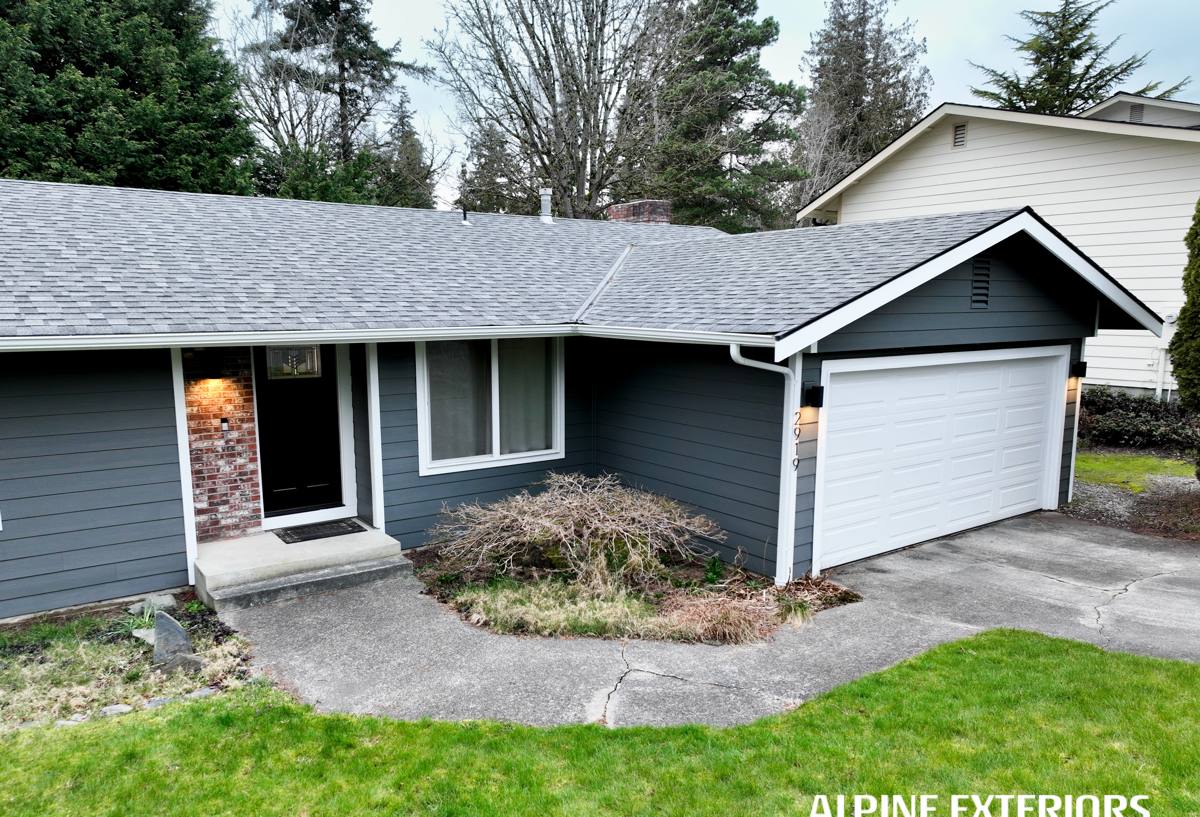
What Whatcom County's Climate Does to Siding Over Time
Three factors drive most of the siding repair calls we get in the Custer area, and they compound each other:
Salt-Laden Air
Even set back from the water, homes in the Custer area catch salt-carrying wind coming off Birch Bay and the Strait of Georgia often enough that it matters. Salt air accelerates corrosion on exposed fasteners and metal trim, and it speeds up the breakdown of lower-grade paint finishes on siding that wasn't built to handle it.
Driving, Wind-Pushed Rain
This isn't gentle, straight-down rain. Storms here regularly push rain sideways into wall assemblies, which finds every gap in flashing, every under-caulked joint, and every seam where siding wasn't lapped correctly. Water that gets behind siding and can't get back out is the single biggest cause of the rot and swelling we find during repairs.
Extended Moss and Algae Season
Because the region stays cool and damp for much of the year, moss and algae get a long runway to establish themselves on siding, trim, and the ground-level areas where a house rarely gets direct sun. Left alone, that growth holds moisture against the siding surface, which is exactly the wrong thing for any wood-based product and a maintenance headache even for materials that resist rot.
Signs Your Custer Home Needs Siding Repair
Most siding damage doesn't announce itself right away. By the time it's visible from the driveway, it's often been developing for a while. Here's what we tell homeowners to watch for between our visits:
- Soft or spongy spots when you press on the siding, especially near the bottom courses or under windows
- Visible swelling, bubbling, or a "puffy" look to painted siding panels
- Paint that's peeling, cracking, or failing in patches rather than evenly across the wall
- Persistent moss or dark streaking that returns quickly after cleaning
- Gaps or separation at seams, corners, or around window and door trim
- Staining on interior walls or ceilings near exterior corners, which often points to water already inside the wall
- Rust streaks below fasteners or trim pieces
- A musty smell near exterior walls, particularly after a heavy rain
Common Repair Issues We See in the Custer Area
| Issue | Typical Cause | What a Correct Repair Involves |
|---|---|---|
| Soft, swollen siding panels | Trapped moisture, often from failed caulking or poor flashing | Remove affected panels, inspect and repair the water-resistive barrier, replace with properly flashed material |
| Rot at bottom courses | Splashback, poor grade slope, or missing clearance from soil/mulch | Replace rotted sections, correct clearance and drainage, reinstall with proper starter strip |
| Cracked or separated seams | Improper original installation, thermal movement, or impact damage | Replace the damaged piece with correctly lapped and fastened material, not just caulk over the gap |
| Persistent moss/algae staining | Shade, poor airflow, and the region's extended damp season | Clean surface, address the moisture source if present, and use a factory finish that resists regrowth better than field-applied paint |
| Fastener rust streaks | Non-corrosion-resistant fasteners exposed to salt air | Replace with corrosion-resistant fasteners rated for coastal-influenced climates |
| Warped or cupped panels | Moisture absorption in wood-based or lower-grade composite siding | Full panel replacement — warped material doesn't flatten back out and shouldn't be patched |
Repair or Replace? How We Make That Call
Not every damaged section means the whole wall needs to come off, and not every "small patch" is actually a good long-term fix. We look at three things before recommending either path:
| Factor | Leans Toward Repair | Leans Toward Replacement |
|---|---|---|
| Extent of damage | Isolated to one or two sections, source clearly identified | Recurs in multiple areas or the underlying material is failing broadly |
| Underlying material | Sound siding with a localized moisture entry point | Wood, vinyl, or lower-grade composite showing systemic swelling or rot |
| Age and condition of the rest of the siding | Siding is otherwise in good shape and well within its service life | Rest of the siding is aging out or was never installed correctly |
A repair should solve the problem, not just hide it. If we find that the damage is a symptom of a bigger installation or material issue, we'll tell you plainly rather than sending someone out to patch the same spot again next year.
What a Correct Siding Repair Actually Involves
A repair done right isn't just swapping one panel for a similar-looking piece. Every repair we do follows the same basic sequence, whether it's one section or a full wall:
- Diagnose the actual cause — not just the visible damage, but why water or moisture got where it shouldn't have
- Remove damaged material back to sound substrate, checking the sheathing and water-resistive barrier underneath
- Correct the underlying issue — reflash a window, fix a caulking failure, adjust grade clearance, or address whatever let moisture in
- Install matching or compatible replacement material with proper overlap, fastening, and clearances per manufacturer spec
- Finish and blend so the repair doesn't stand out as an obvious patch
Skipping step three is the most common shortcut in this trade, and it's why some "repairs" fail again within a season or two. A new piece of siding over an unresolved moisture problem just buys a little time.
Our Process for Custer Repair Calls
When you reach out about a repair, here's what happens:
- We schedule an on-site inspection to look at the damage in person — not just from photos, since moisture problems often extend beyond what's visible
- We identify the cause, not just the symptom, and explain what we find in plain terms
- We give you a straightforward recommendation and estimate before any work starts, including whether a targeted repair or a broader replacement makes more sense
- We complete the repair using materials and fastening methods suited to this region's rain and salt exposure
- We check surrounding areas of the siding while we're there, since one failure point is often a sign to look nearby
Why We Repair With James Hardie Fiber Cement
When a repair calls for replacement material, we use James Hardie fiber cement — it's the only siding product we install, on repairs and full projects alike. Fiber cement doesn't absorb and swell the way wood-based or lower-grade composite sidings do, which matters enormously in a climate that stays wet for much of the year. It's also non-combustible, resists pest damage, and holds its factory-applied ColorPlus finish far longer than field-applied paint, which means repaired sections keep their color and don't become the spot on the house that needs repainting first.
We won't pretend fiber cement is maintenance-free — no siding is. But when we're standing behind a repair, we want it built from a material that holds up to Whatcom County's rain and salt air rather than one that's likely to bring us back out for the same problem. That's also why, when a repair reveals that a home's existing siding is a product prone to moisture issues in this climate, we'll say so directly and lay out the options rather than just patching around it.
Why Hiring a Crew That Already Works in Custer Matters
Siding repair mistakes usually come from one of two places: not correctly identifying the actual cause of the damage, or using a fix that isn't suited to the local climate. A crew that works this area regularly has already seen how Custer and Birch Bay homes take on damage — which walls catch the worst wind-driven rain, how moss behaves in the shaded, damp pockets common here, and what corrosion-resistant fastening actually needs to look like this close to the water. That local pattern recognition is the difference between a repair that lasts and one that's a temporary cover-up.
If you're seeing soft spots, peeling paint, persistent moss, or any of the warning signs above on your Custer home, it's worth getting it looked at before the next stretch of wet weather makes it worse. We offer free, no-pressure estimates — fill out the form below and we'll take a look at what's going on and give you a straight answer on what it'll take to fix it right.