 Birch Bay Siding
 Deck Building for Sumas Homes
Sumas sits out at the edge of Whatcom County, in the flat farmland along the Nooksack valley near the Canadian border. It's a quieter, more inland setting than the coastal towns closer to Bellingham Bay, but a deck built here still has to hold up to the same underlying weather pattern that shapes exterior work across this part of the Pacific Northwest: driving rain that comes in sideways as often as it falls straight down, salt-tinged marine air that drifts inland on a west wind, and a moss season that runs long across most of the year. A deck is a horizontal surface exposed to all of it, sitting low to the ground where water lingers instead of shedding off a wall the way it does on siding. That's a different set of demands than most homeowners expect when they picture a deck project, and it's why we build decks in Sumas the same disciplined way we approach siding and roofing — as an exterior system that has to perform for decades, not just look good on install day.
We build decks for homes in Sumas and across Whatcom County, and we treat the framing, fasteners, decking material, and railing as one connected system rather than a collection of separate purchases. Getting any one piece wrong — the wrong fastener grade, a ledger board attached without proper flashing, decking spaced too tight to drain — shortens the life of the whole structure regardless of how good the visible decking material is.
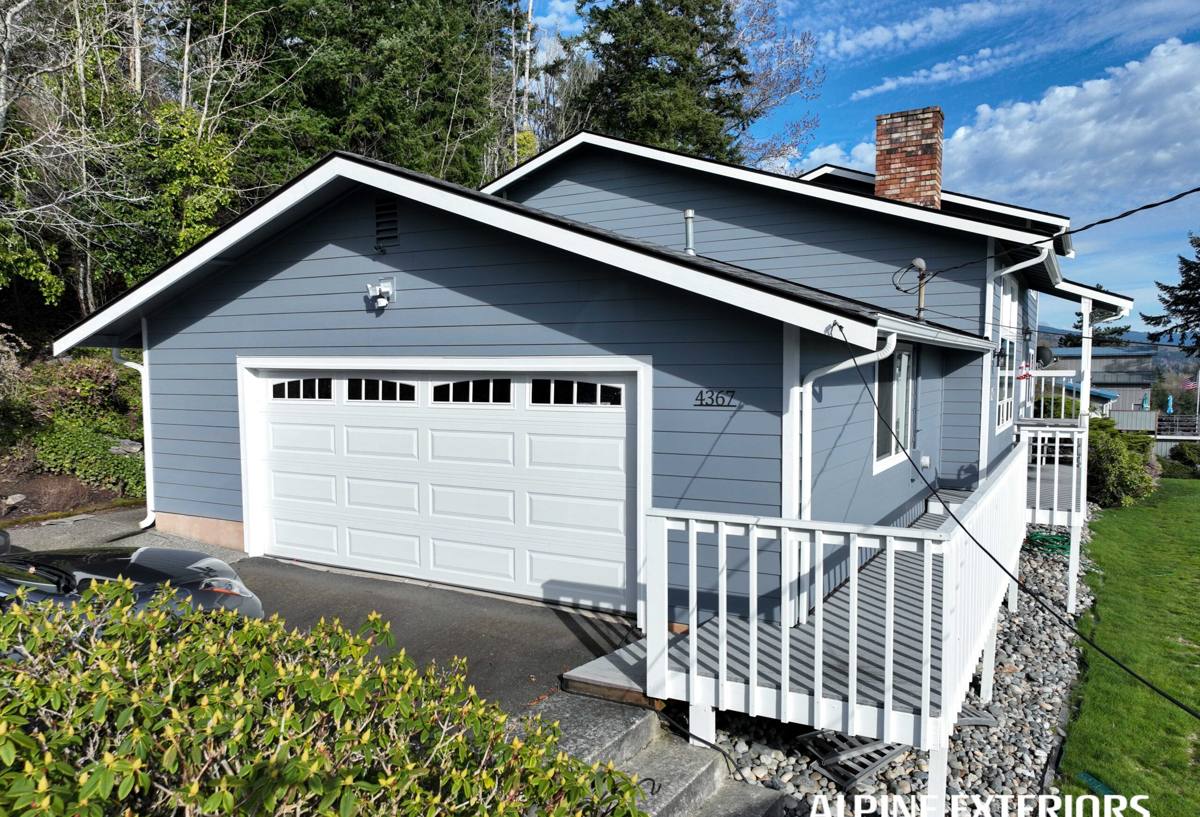
What Sumas's Climate Does to a Deck
Driving Rain and Standing Moisture
Rain in this part of Washington rarely falls straight down. Wind pushes it sideways and it collects on horizontal surfaces — deck boards, ledger connections, joist tops — in a way it never does on a vertical wall. A deck built without deliberate drainage detailing holds that moisture against the framing far longer than it should, and wood that stays wet longer than it dries out is wood that's headed toward rot, regardless of the species or treatment.
A Long Moss and Mildew Season
Mild temperatures, shade from trees and structures, and consistent regional moisture add up to a moss and mildew season that runs most of the year across Whatcom County. Deck surfaces are especially exposed to it because they're horizontal and often partially shaded — moss doesn't just look bad, it holds moisture against the board surface and turns a walking surface slick and genuinely dangerous underfoot, especially on stairs.
Marine Air and Valley Damp
Sumas is further from open water than towns right on Birch Bay or Bellingham Bay, so it doesn't take the same direct salt exposure a shoreline deck does. But it still sits low in a river valley that holds humidity and fog longer than higher, more exposed ground, and westerly weather systems carry marine moisture inland across the whole county before they reach the border. The practical result is a deck in Sumas stays damp for extended stretches even without being right on the water, which is exactly the condition that rewards good drainage and fastener choices and punishes cut corners.
What a Correctly Built Deck Involves
A deck that's going to hold up in this climate isn't just decking boards laid over joists. Every layer of the structure has a job to do in keeping water moving instead of sitting still.
- Ledger board flashing: Where the deck attaches to the house, proper flashing keeps water from tracking behind the ledger and into the wall assembly — one of the most common places deck-related water damage actually starts.
- Joist protection: Taping or flashing the tops of framing lumber keeps fastener penetrations from becoming entry points for standing water, which extends framing life well beyond untreated joists.
- Proper board spacing: Gaps between deck boards need to be wide enough to let water drain and air circulate underneath, especially important given how long this region stays damp between dry spells.
- Corrosion-resistant fasteners and hardware: Structural connectors, joist hangers, and screws need a corrosion rating that matches sustained regional moisture exposure, not just a generic exterior-grade label.
- Footings sized and set to code: Footing depth and sizing need to account for local frost depth and soil conditions, which is a permitting and inspection matter, not a guess.
- Railing and stair details built to code: Height, baluster spacing, and stair geometry all have to meet Washington building code, and those details also directly affect long-term safety once moss and wear enter the picture.
Decking Material Options for a Sumas Property
| Material | Moisture Behavior | Maintenance | Typical Longevity Here |
|---|---|---|---|
| Capped composite decking | Resists moisture absorption; won't swell, splinter, or rot | Low; periodic cleaning to keep moss from taking hold | 25+ years with correct framing and fasteners |
| Uncapped composite decking | More moisture-resistant than wood, but the exposed core can absorb some water at cut ends | Moderate; cut ends should be sealed at install | Solid, though shorter than fully capped composite |
| Pressure-treated lumber | Absorbs and releases moisture readily; prone to cupping and checking over time | High; needs regular sealing or staining | Shorter without consistent upkeep in this climate |
| Cedar decking | Naturally moisture- and rot-resistant when new, but that resistance fades as the wood weathers | High; refinishing needed to maintain protection | Depends heavily on maintenance discipline |
Each of these materials has a legitimate place in the market, and the right choice often comes down to budget and how much upkeep a homeowner actually wants to do. We walk through the real tradeoffs — not just the sales pitch — for each option before a homeowner decides.
Railings, Fasteners, and Hardware for a Wet Climate
The hardware holding a deck together matters as much as the decking on top of it, and it's the part homeowners see least. Structural screws, joist hangers, post bases, and railing brackets all need a corrosion-resistant rating suited to a climate that stays damp for long stretches of the year. Using standard exterior-grade fasteners in a setting with this much sustained moisture is a common shortcut that doesn't show up as a problem until years later, when rust staining or a loosened connection reveals itself — often at the worst possible time, on a structural component. Railings themselves need to be set and fastened to resist the wind loads this area sees during storm events, not just meet a minimum code height.
Our Deck Building Process
We start with an on-site visit to look at the property: grade, drainage, sun and shade exposure, and how the deck will tie into the existing structure. From there we put together a clear, written scope covering framing, fastener grade, decking material, and railing details before any work begins, so there's no ambiguity about what's included. Footings and framing go in first and get inspected to code before decking is installed. Ledger flashing, joist protection, and fastener corrosion resistance are handled as standard practice on every deck we build, not offered as an upgrade. We walk the finished deck with the homeowner before calling the job complete.
Cost Factors for a Sumas Deck Project
| Factor | What Drives Cost | Climate-Specific Consideration |
|---|---|---|
| Size and layout | Square footage, multiple levels, stairs | Larger horizontal surfaces hold more standing moisture without proper drainage detailing |
| Framing material | Pressure-treated lumber vs. steel framing components | Corrosion-resistant hardware matters more in a climate that stays damp for extended stretches |
| Decking material | Pressure-treated wood, cedar, composite, or capped composite | Moisture behavior and moss resistance vary significantly between materials |
| Railing style | Wood, composite, metal, or cable railing | Metal components need a corrosion rating suited to sustained regional moisture |
| Site conditions | Grade, existing structure condition, permit and footing requirements | Low or poorly draining ground needs extra attention to keep water from sitting under the deck |
Exact numbers depend on the specific property and scope, which is why we walk each site before giving a real estimate instead of quoting off a generic price list.
Signs an Existing Deck in Sumas Needs Attention
- Soft, spongy, or springy boards, especially near the ledger board or stairs
- Moss or algae buildup on the deck surface that returns quickly after cleaning
- Rust staining around fasteners or visibly corroded hardware
- Gaps, cupping, or splitting boards that have widened noticeably over a season or two
- A railing or post that feels loose or wobbles under normal weight
- Water pooling on the deck surface instead of draining off after rain
Why a Crew That Already Works Sumas Matters
We're based in Birch Bay, and we work across Whatcom County day to day, including regularly out in Sumas. That matters for a deck build because the details that hold up here — how much drainage detailing a horizontal surface needs, which fastener grade actually earns its keep, how long moss stays a problem on a shaded section of decking — come from repeated, direct experience with this specific climate, not a generic national build spec. A crew that treats every job the same regardless of region tends to under-detail the parts that don't show up as a problem until a few winters in. Working this area regularly means we've already seen what happens when those details get skipped, and we build accordingly from the start.
A Simple Checklist Before Hiring a Deck Builder in This Area
- Ask what fastener and hardware corrosion rating they use, and why
- Confirm they pull permits and schedule footing and framing inspections as required
- Ask how they detail ledger board flashing where the deck meets the house
- Get a clear, written scope covering framing, decking material, and railing before signing anything
- Confirm current Washington contractor licensing and active liability insurance
If you're planning a new deck or need to replace one that's showing its age on a Sumas property, we're glad to walk the site with you and give an honest read on what it needs. Reach out using the form below to schedule a free, no-pressure estimate.