 Birch Bay Siding
 Fiber Cement Siding Built for Sumas' Climate
Sumas sits at the edge of Whatcom County, tucked against the foothills near the Canadian border, and it gets the full range of what Pacific Northwest weather can throw at a house. Long stretches of driving rain in the fall and winter, humidity that lingers into the shoulder seasons, and shaded north sides that stay damp for days after a storm passes. Add in the moss and algae growth that thrives in that kind of moisture, and you have a climate that is genuinely hard on exterior siding — especially anything with wood content or a factory finish that isn't built to handle repeated wet-dry cycles.
We install James Hardie fiber cement siding, and only James Hardie. This page is about what that means specifically for a Sumas home: what the local climate demands from your siding, what a correct installation looks like, and why a crew that already works this part of Whatcom County is worth the extra questions when you're vetting contractors.
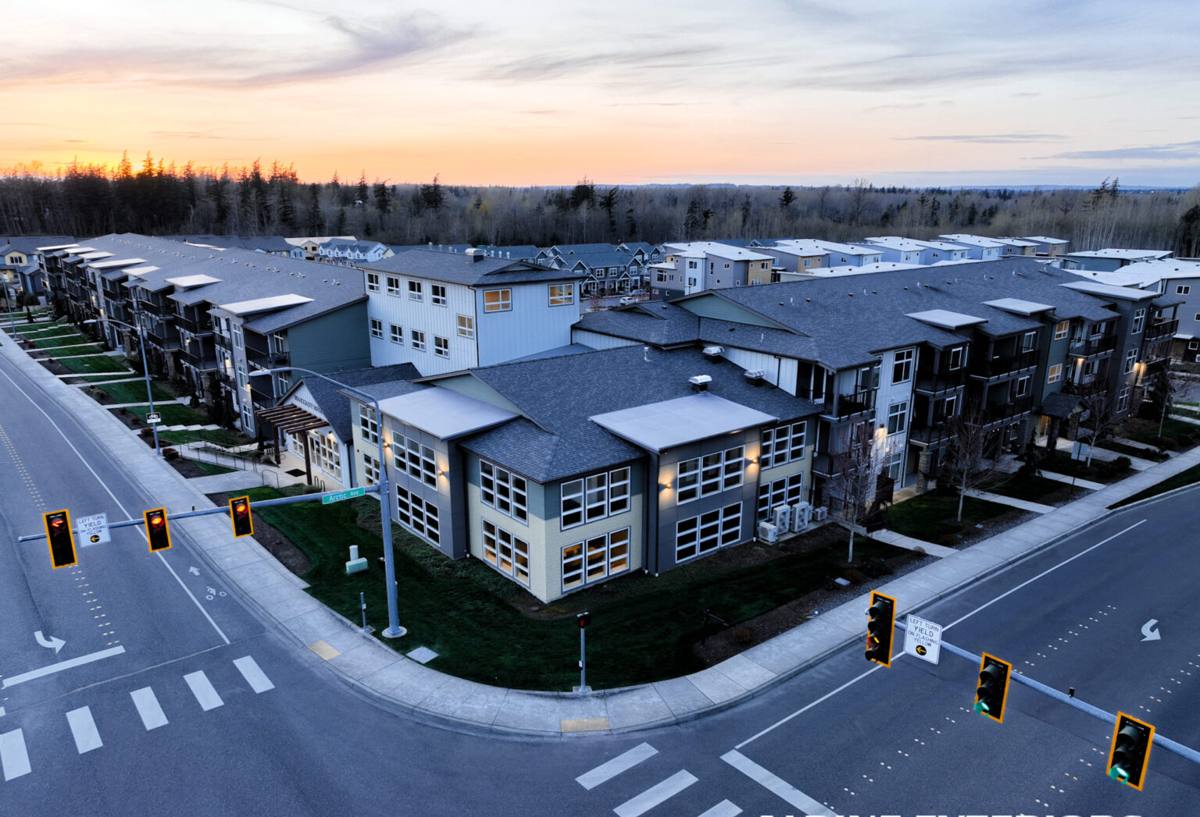
What Sumas Homes Actually Deal With
Moisture that doesn't let up
Whether a house sits closer to the water out toward Birch Bay or further inland near Sumas, the pattern is the same: driving rain that gets pushed sideways into wall assemblies, long moss seasons where north- and east-facing walls barely dry out between storms, and freeze-thaw cycles that stress any material that absorbs water. Siding here isn't just a cosmetic layer — it's the first line of defense for the wall assembly behind it.
Why that matters for material choice
Wood-based products — cedar, primed spruce, engineered wood siding like LP SmartSide — all share one vulnerability: they're organic material, and organic material plus sustained moisture is exactly the environment moss, mildew, and rot need. Vinyl doesn't rot, but it moves with temperature swings, can crack in a hard freeze, and won't stop UV fade over time. Fiber cement is the one category that shrugs off moisture without being a food source for anything growing on it.
Why We Install Only James Hardie
James Hardie fiber cement is a mix of cement, sand, and cellulose fibers, cured into planks and panels that are dimensionally stable and non-combustible. The specific reasons it holds up in a climate like this:
- It doesn't feed moss and mildew. Fiber cement isn't an organic food source the way wood-based products are, so growth on the surface is a cleaning issue, not a material breakdown issue.
- It's engineered for wet climates specifically. Hardie's HZ5 product line is formulated for regions with sustained moisture and freeze-thaw exposure — the Pacific Northwest is squarely what it's built for.
- ColorPlus factory finish. The color is baked on in a controlled factory process rather than field-applied, which matters a lot when you're painting in a climate that doesn't give you many consecutive dry days.
- It doesn't warp or swell. Cedar and primed wood siding can cup, swell, or check as they absorb and release moisture season after season. Fiber cement holds its shape.
We don't install LP SmartSide, vinyl, Cemplank, Allura, primed spruce, or cedar. Some of those are reasonable products in the right application — this is a standard we hold for the work we put our name on, not a claim that every alternative is defective. For a house in Sumas' moisture and moss conditions, Hardie is the material we're confident will still look and perform right in fifteen years.
What a Correct Installation Actually Involves
Fiber cement is only as good as the installation behind it. Most of the siding failures we get called to look at aren't material failures — they're installation shortcuts. On every Hardie job we do, the process includes:
- Tear-off and substrate inspection. Old siding comes off and we check the sheathing underneath for rot, soft spots, or prior water damage before anything new goes up.
- Weather-resistive barrier. A correctly lapped and taped house wrap goes on before any siding, giving the wall a second line of defense against wind-driven rain.
- Proper flashing at every penetration. Windows, doors, hose bibs, vents, and any other wall penetration get flashed so water is directed out and down, not into the wall cavity.
- Manufacturer-spec fastening. Hardie has specific nailing patterns, fastener types, and clearances (ground clearance, roofline clearance, joint spacing) — skipping these is the single most common cause of premature failure and also voids the warranty.
- Caulking and joint treatment done to spec. Butt joints and trim transitions get sealed correctly the first time, since redoing this later means pulling siding back off.
- Final inspection and cleanup. We walk the job before we call it done, checking reveals, fastener lines, and finish consistency.
Common mistakes we see on re-siding jobs
| Shortcut | What it causes |
|---|---|
| Face-nailing instead of manufacturer clearance | Cracked or split boards, voided warranty |
| Missing or reused house wrap | Water intrusion behind siding, hidden sheathing rot |
| No kick-out flashing at roof-wall intersections | Concentrated water damage at a single point, often not visible until it's severe |
| Field-cut boards left unsealed at cut edges | Moisture wicking into the cut edge, localized swelling and paint failure |
| Siding installed too close to grade or a deck surface | Constant splash-back moisture, accelerated wear at the base of the wall |
Our Process for a Sumas Project
The work itself doesn't change much house to house, but the sequencing and scheduling do change based on the season and how a particular property drains and drys out. Here's how a typical project runs:
- On-site assessment. We look at your current siding, the condition of the sheathing where it's exposed, drainage around the foundation, and any trouble spots — deck ledgers, chimney chases, window returns.
- Written estimate. You get a clear scope of work and pricing before anything is scheduled, with the Hardie product line and color specified.
- Scheduling around the weather. Given how much rain this area gets, we plan tear-off and wrap installation for stretches with a realistic dry window, so bare sheathing isn't sitting exposed longer than necessary.
- Installation. Full crew on-site, following the steps above, with daily cleanup.
- Final walkthrough. We go over the finished work with you before considering the job complete.
Why Hire a Crew That Already Works This Area
Siding installation isn't exotic work, but climate-specific judgment calls matter: how much ground clearance to leave given local drainage patterns, how to handle a north wall that never fully dries, when to push a tear-off date because a wet system is rolling in versus when it's fine to proceed. A crew that's worked houses throughout Whatcom County — including conditions Sumas shares with the rest of the region, from moss load to moisture cycling — has already made the judgment calls that a crew unfamiliar with the area is making for the first time on your house.
It also matters for warranty support. James Hardie's product warranty is strongest when installation followed spec, and a local, established installer is the one who'll actually be reachable if a warranty question comes up five or ten years down the line.
What to Check Before You Hire Anyone for Siding Work
- Are they a certified or experienced installer of the specific product they're proposing, not just "familiar" with it?
- Will they put the product line, color, and installation spec in writing, not just "Hardie siding" as a line item?
- Do they explain how they'll handle flashing and the weather-resistive barrier, or do they skip straight to "we'll put the siding up"?
- Can they explain why they recommend one product over another for your specific house, rather than just quoting whatever's cheapest?
- Do they have a plan for scheduling around weather, or are they treating a wet-climate tear-off like it's no different from a dry one?
Cost Factors to Expect
Every house is different, but the main variables that move a fiber cement siding quote are consistent:
| Factor | Why it matters |
|---|---|
| Square footage and wall complexity | More corners, dormers, and trim details mean more labor and cut waste |
| Substrate condition | Rotted sheathing found during tear-off adds repair cost before new siding goes up |
| Product line (HZ5 vs. other Hardie lines) and profile | Lap, shingle, and panel profiles carry different material and labor costs |
| Trim and accessory scope | Fascia, soffit, and trim board replacement alongside siding adds to the total |
| Access and site conditions | Steep lots, limited access, or extensive landscaping to protect can affect labor time |
We give straightforward, itemized estimates so you know exactly what you're paying for and why — no vague lump-sum numbers.
If your Sumas home needs new siding or you're just trying to figure out what shape your current siding is really in, we're happy to take a look. The estimate is free, there's no pressure, and you'll get a straight answer about what your house actually needs — use the form below to get started.