 Birch Bay Siding
 Siding Installation in Sumas: What Local Homes Are Up Against
Homes in and around Sumas sit inside the same weather system that shapes the rest of Birch Bay and Whatcom County — long wet winters, driving rain that comes in sideways off the water, and a moss season that can stretch for most of the year. Siding here doesn't just have to look good on install day. It has to keep working through decades of that cycle without trapping moisture, warping, or feeding the algae and moss growth that thrives in this climate. That's the standard we hold every siding installation to, and it's why the material choice matters as much as the workmanship.
A siding installation done right in this area is a system: a properly lapped weather-resistive barrier, correct flashing at every penetration, the right fastening pattern, and a cladding material that can actually handle sustained moisture exposure without breaking down. Skip any one of those and the siding might look fine for a year or two before problems start showing up underneath, where you can't see them until they're expensive.
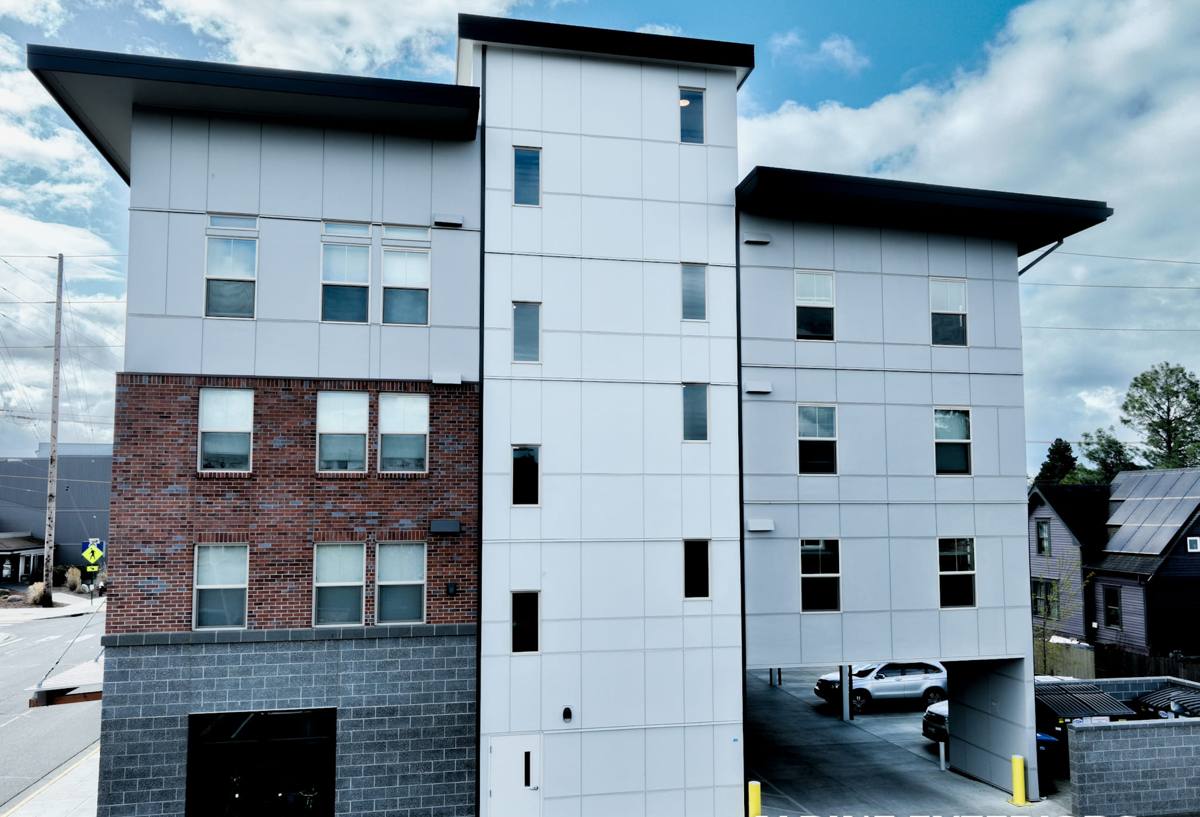
What This Climate Does to the Wrong Siding Choice
Moisture and Moss
Whatcom County's damp, shaded conditions are close to ideal for moss and algae growth on exterior surfaces. Siding materials that absorb water or have porous, uneven surfaces give moss more to grab onto and more moisture to feed on. Over time that turns into surface staining, and if water is getting past the surface, it can mean rot or delamination happening out of sight.
Wind-Driven Rain
Storms coming off the water don't just fall straight down — they push rain horizontally into wall assemblies, testing every seam, joint, and piece of trim. Siding that isn't installed with the right clearances and flashing details will let water intrude at exactly those weak points, regardless of how good the siding material itself is.
Temperature Swings and Humidity Cycling
Even without extreme heat, the region's freeze-thaw cycles and near-constant humidity put stress on materials that expand and contract differently than the wood framing behind them. Siding that isn't dimensionally stable in these conditions eventually pulls away from fasteners, opens gaps at seams, or cups and warps.
Why We Only Install James Hardie Fiber Cement
We made a decision as a company to install one siding product: James Hardie fiber cement. We don't install vinyl, LP SmartSide, Cemplank, Allura, primed spruce, or cedar, and that's not a marketing position — it's a standard we hold because of what we've seen happen to the alternatives in exactly this kind of climate.
Wood-based and engineered-wood sidings depend on an intact factory coating to keep moisture out; once that coating is compromised at a cut edge, a fastener hole, or a joint, the substrate underneath can swell, rot, or delaminate — and in a climate this wet, that coating gets tested constantly. Vinyl is inexpensive and low-maintenance in dry climates, but it can warp in temperature swings, fade over time, and it isn't fire-resistant. Fiber cement products from other manufacturers exist, but James Hardie's HZ5 product line is specifically engineered for Pacific Northwest moisture exposure, and the company backs it with a long transferable warranty and a factory-applied ColorPlus finish that resists fading and holds up to repeated wet-dry cycling far better than field-applied paint.
None of this means the other products are junk — cedar has real appeal, LP SmartSide has its fans, vinyl is budget-friendly. It means that for a home in Sumas that has to survive salt air, driving rain, and moss season year after year, we think fiber cement engineered for this exact climate is the material that gives homeowners the best long-term outcome, and we'd rather turn down a job than install something we don't believe in.
What a Correct Siding Installation Actually Involves
The Weather-Resistive Barrier and Flashing
Everything starts underneath the siding. A continuous, properly lapped weather-resistive barrier and correctly integrated flashing around windows, doors, and any wall penetration is what actually keeps bulk water out of the wall assembly. Siding is the visible layer, but the barrier and flashing are what do the real work during a wind-driven rain event.
Clearances and Fastening
James Hardie specifies exact clearances from grade, roof lines, decks, and other siding-to-surface transitions, along with a specific fastening pattern and fastener type. Cutting corners here — nailing too high, too low, or too tight, or skipping ground clearance — is one of the most common ways a fiber cement installation fails prematurely, even when the material itself is correct.
Cut Edges and Field Touch-Up
Every cut edge on a ColorPlus panel needs to be sealed with the manufacturer-approved edge sealer, and any touch-up paint has to be a color-matched, Hardie-approved product. Skipping this step leaves raw fiber cement exposed at seams and corners — exactly where this climate's driving rain hits hardest.
Joint Treatment and Caulking
Butt joints, trim intersections, and corners need the right combination of flashing, backer material, and sealant — not just a bead of caulk over a gap. Caulk is a maintenance item; flashing is the permanent solution, and a correct installation uses caulk to supplement flashing, not replace it.
Our Process for Sumas-Area Homeowners
1. On-Site Assessment
We walk the exterior, check the condition of the current siding and the sheathing underneath where accessible, and look at how the house is actually exposed to prevailing wind and rain on this particular lot.
2. Product and Color Selection
We help you choose the right Hardie product line and ColorPlus finish for the home's style and exposure, including matching trim and accent options.
3. Preparation and Removal
Old siding comes off, sheathing gets inspected and repaired as needed, and any moisture damage found underneath gets addressed before anything new goes on — this is the step that gets skipped by crews trying to move fast, and it's the one that matters most.
4. Installation to Manufacturer Spec
Barrier, flashing, fastening, clearances, and edge sealing are all done to James Hardie's published installation requirements, not shortcuts that only hold up in dry weather.
5. Final Walkthrough
We go over the finished job with you, check details up close, and make sure everything meets both the manufacturer's standard and ours.
Cost Factors for Siding Installation in Sumas
Every home is different, but the same variables tend to drive the price of a fiber cement siding installation in this area up or down:
| Factor | Why It Matters |
|---|---|
| Home size and wall complexity | More corners, gables, and dormers mean more cutting, flashing, and labor time |
| Current siding removal | Tear-off and disposal of old material adds time versus installing over new construction sheathing |
| Sheathing or framing repair | Moisture damage found during tear-off has to be fixed before new siding goes on |
| Hardie product line chosen | Lap, shingle, and panel styles carry different material and labor costs |
| Trim and accent detailing | Custom trim packages and accent colors add material and install time |
| Site access | Tight lots, slopes, or limited staging area can affect scaffolding and labor efficiency |
We give a firm, itemized quote after seeing the home in person — not a ballpark over the phone — because these factors vary enough from house to house that a generic number isn't useful to you.
Signs a Sumas Home May Need New Siding Now
- Visible moss, algae, or dark streaking that keeps coming back after cleaning
- Soft spots, bubbling, or a spongy feel when you press on the siding
- Cracked, warped, or separating boards, especially at joints and corners
- Paint that's peeling or failing faster than it should between repaints
- Visible gaps at trim, window, or door edges where water could get behind the siding
- Rising energy bills that suggest the wall assembly isn't sealing the way it used to
- Siding that's simply reached the end of its expected service life for its material type
Why Hiring a Crew That Already Works This Area Matters
A siding installation is only as good as the crew's understanding of how the local climate actually behaves against a wall assembly. A crew that already works in Birch Bay and the surrounding Whatcom County communities has seen firsthand which details hold up here and which ones fail — not in theory, but on real homes exposed to real weather. That local experience shows up in the small decisions: how flashing gets lapped, how much clearance gets left at grade, how joints get sealed before the next storm rolls in.
It also means a company that's still around and reachable years after the installation, standing behind both the workmanship and the manufacturer's warranty. James Hardie's transferable warranty only pays off if the installation was done to spec in the first place — that's the whole reason we standardized on one product and one correct way of installing it, instead of taking on every material a homeowner might ask for.
If your Sumas-area home needs new siding, or you're not sure whether what's on the walls now is still doing its job, we're happy to take a look and give you a straightforward, no-pressure estimate — just fill out the form below.