 Birch Bay Siding
 Window Replacement Built for Marietta's Coastal Conditions
Marietta sits close enough to Drayton Harbor and the Salish Sea that homes here take on a different kind of weather load than houses ten or fifteen miles inland. Salt-laden air corrodes hardware and finishes faster. Wind-driven rain doesn't just fall on windows, it gets pushed sideways into any gap in the flashing or trim. And the long, damp moss season that defines a Whatcom County winter keeps window sills, sashes, and surrounding trim wet for weeks at a time. Windows that were installed without those specific conditions in mind tend to fail early, and they usually fail quietly, inside the wall, long before you see a problem on the surface.
Window replacement in Marietta isn't just about swapping old glass for new. It's about correcting or reinforcing the water management details around the window opening so the next set of windows actually holds up to the environment they're going into.
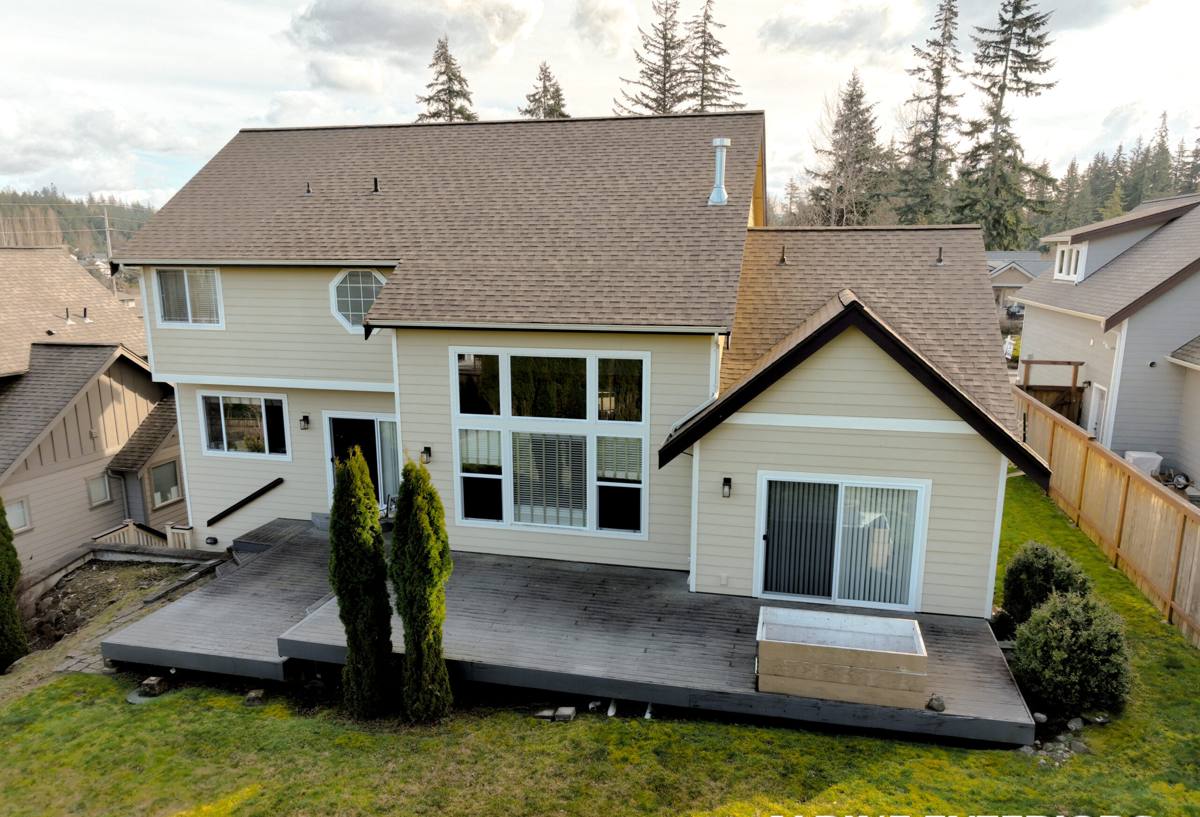
Signs Your Windows Are Losing the Battle
Most homeowners call us after noticing one of these issues, and by the time they're visible, there's often more going on behind the trim than what shows on the surface.
- Fogging or a permanent haze between double-pane glass, meaning the seal has failed
- Sashes that are hard to open, stick, or won't stay up on their own
- Visible gaps between the window frame and siding or trim
- Soft or discolored wood trim around the window, especially at the bottom corners
- A noticeable draft or cold spot near the window even with it fully closed
- Paint or finish that's bubbling, peeling, or chalking faster than the rest of the house
- Condensation forming on the inside of the glass regularly during cooler months
Any one of these on its own might just mean the window needs attention. Several of them together, especially on a wall that faces prevailing wind and rain, usually points to a flashing or seal problem that a new window alone won't fix unless it's addressed during the install.
What a Correct Window Replacement Job Actually Involves
It's Not Just the Window
A window is only as good as the opening it sits in. In a marine climate, the flashing, the sill pan, and the sealants around the window do as much work keeping water out as the window unit itself. Any window replacement worth doing includes:
- Removing the old unit and inspecting the framing and sheathing underneath for rot or moisture damage
- Repairing or replacing any compromised framing before the new window goes in
- Installing a proper sloped sill pan so any water that does get past the window drains back out, not into the wall
- Integrating window flashing correctly with the house wrap or weather barrier, shingle-style, so water always sheds downward and outward
- Using sealants and backer rod rated for exterior exposure, not general-purpose caulk that hardens and cracks within a couple of seasons
- Insulating the gap between the window frame and the rough opening without overpacking it, which can bow the frame
Skipping any of these steps to save time is exactly how a brand-new window ends up with a rot problem five years later. We treat the flashing and sill detail as the part of the job that actually determines how long the window lasts, not a formality on the way to installing the sash.
Matching the Window to the Wall It's Going Into
A window on a wall that takes direct wind-driven rain off the water needs a tighter installation standard than one tucked under an eave on a protected side of the house. We look at each opening on its own rather than treating every window on a house the same way.
Choosing Materials That Hold Up to Salt Air
Frame material matters more here than it would in a drier, inland climate. Salt air accelerates corrosion on hardware and can degrade certain finishes faster than the manufacturer's general climate ratings account for. Here's how the common options compare for a Marietta application:
| Frame Material | Moisture & Salt Air Performance | Maintenance | General Cost Tier |
|---|---|---|---|
| Vinyl | Good — won't rot or corrode, but lower-grade vinyl can become brittle with UV and temperature swings over time | Low — occasional cleaning | Lower |
| Fiberglass | Very good — dimensionally stable, resists moisture and salt exposure well | Low | Mid to higher |
| Wood, unclad | Poor in this climate unless finish is maintained diligently — most exposed to rot and moisture intrusion | High — regular refinishing needed | Mid to higher |
| Wood-clad (aluminum or vinyl exterior) | Good — exterior shell resists weather while interior keeps a wood look, but hardware and cladding seams need attention in salt air | Moderate | Higher |
| Aluminum | Fair — durable but conducts cold and can corrode at fasteners and hardware without marine-grade specification | Moderate | Mid |
We don't push one material for every home. A vinyl window on a protected, inland-facing wall can perform fine for decades. The same low-grade vinyl on a wall that takes direct salt spray off the water is a different bet. Our job is to tell you honestly which tier makes sense for your specific exposure rather than upselling every window to the top of the line.
Glass and Hardware Considerations for This Climate
Beyond the frame, a few details make a real difference in a coastal Whatcom County setting:
- Corrosion-resistant hardware — locks, hinges, and balance systems rated for coastal or marine exposure last significantly longer than standard-grade hardware here
- Low-E, dual-pane glass — standard for our climate, it helps with both energy performance and reducing interior condensation during our wetter, cooler months
- Weep hole placement and screening — weep holes need to actually drain and stay clear of debris, moss spores, and insects, or trapped water becomes its own problem
- Finish quality on any exposed metal — cheaper anodized or painted finishes can pit or discolor faster under regular salt exposure
Our Window Replacement Process
- On-site assessment — we look at each window opening individually, checking exposure, existing flashing condition, and any signs of hidden moisture damage
- Honest recommendation — we tell you which openings need full replacement, which could be repaired, and what material tier fits your budget and exposure
- Written estimate — a clear scope and price before any work starts, no surprise add-ons mid-project
- Removal and inspection — old windows come out carefully so we can check the framing underneath before anything new goes in
- Correct flashing and sill installation — this is the step that determines long-term performance, and we don't shortcut it
- New window installation and sealing — set plumb and level, sealed with exterior-rated materials
- Interior and exterior trim finish — matched to the surrounding siding and trim so the house reads as a finished job, not a patch
- Final walkthrough — we check operation on every window and walk you through anything you should know about care going forward
Why a Crew That Already Works Marietta Matters
A contractor who mostly works drier, inland jobs can install a window correctly on paper and still miss the details that matter here — how tight the flashing lap needs to be on a wall facing open water, which sealants actually hold up through a full Whatcom County winter instead of just the warranty period on the label, or where moss and standing moisture tend to collect on a given roofline and eave design. That's not a knock on general contractors; it's just a different skill built from repetition in a specific environment.
We work on homes throughout Birch Bay and the surrounding Whatcom County coastline regularly, including Marietta, so we've seen how the salt air, wind exposure, and moss season here actually play out on real houses over years, not just at the time of installation. That's the difference between a window that looks right for the first year and one that's still performing right at year fifteen.
Caring for New Windows After Installation
New windows still need some basic upkeep in this climate to get their full expected lifespan. A short seasonal checklist:
- Rinse salt residue off exterior frames and glass periodically, especially on wind-exposed walls
- Check and clear weep holes of debris, moss, or spider webs a couple of times a year
- Inspect exterior caulk lines annually for cracking or separation and have gaps resealed before they let water in
- Keep gutters and downspouts clear so roof runoff isn't sheeting down over window heads
- Operate locks and hardware periodically through the year, especially windows that don't get opened often, so mechanisms don't seize
- Watch for moss buildup on nearby trim or siding and address it before it holds moisture against the window frame
Getting a Straight Answer on Your Windows
Not every window that looks tired needs full replacement, and not every window that looks fine is actually sealed the way it should be. We'd rather tell you the truth about what your home needs than sell you more than that. If you're in Marietta and dealing with drafty, foggy, or hard-to-operate windows, or you just want a professional opinion on where things stand, we're glad to take a look. Reach out for a free, no-pressure estimate using the form below.