 Birch Bay Siding
 Bellingham's Exterior Walls Work Harder Than People Realize
Homes around Bellingham and Birch Bay sit close to the water, and that proximity shapes everything about how a wall assembly ages. Bellingham Bay and the Strait of Georgia push salt-laden air inland on a regular basis, driving rain comes in sideways off Pacific systems for months at a time, and the shaded, damp conditions common to Whatcom County give moss, algae, and mildew a long growing season with little downtime. Siding here isn't just a cosmetic layer. It's the first line of defense against a climate that rarely gives a wall assembly a chance to fully dry out.
That combination of salt air, wind-driven moisture, and persistent dampness is exactly why generic siding advice from a national blog doesn't always hold up on the ground in Bellingham. What performs fine in a dry inland climate can struggle here, and what looks fine for the first year or two can still be trapping moisture behind the surface. This page is about what fiber cement siding specifically needs to get right in this area, and what we do differently because of it.
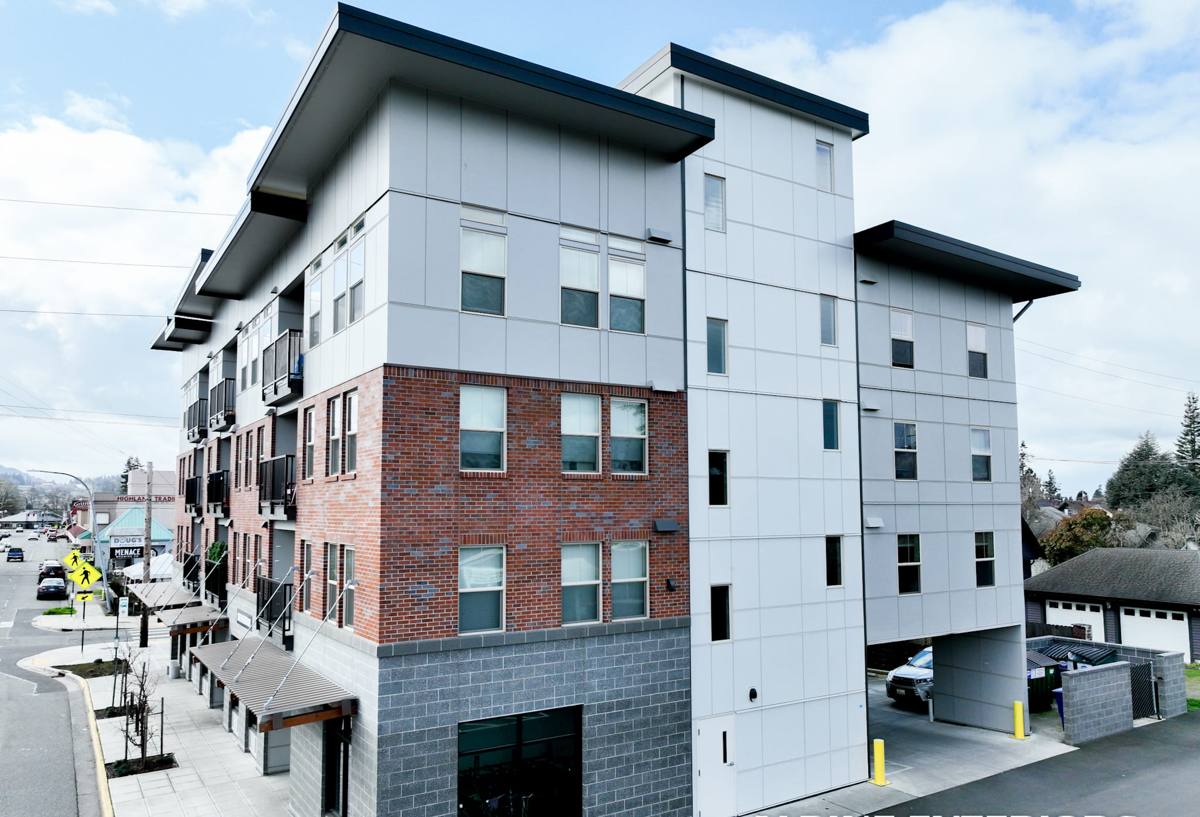
What Salt Air, Rain, and Moss Actually Do to a Wall
Salt Air
Airborne salt is corrosive to metal fasteners, flashing, and trim, and it accelerates the breakdown of coatings that aren't built to resist it. Over years, this shows up as premature fastener staining, degraded caulk joints, and paint or coating failure well ahead of the manufacturer's expected timeline.
Driving Rain
Wind-driven rain doesn't just run down a wall, it gets pushed sideways and upward into laps, seams, and penetrations. A siding system that isn't detailed correctly at these transition points will let water behind the cladding, where it can sit against sheathing and framing far longer than in a calmer, drier climate.
Moss and Algae
Whatcom County's long shoulder seasons and shaded lots (tree cover is common around Birch Bay and the surrounding Bellingham area) keep siding surfaces damp for extended stretches. Materials and finishes that hold moisture at the surface become a growing medium for moss and algae, which then trap even more water against the wall.
Why Fiber Cement Is the Right Category of Material Here
Fiber cement is a cement, sand, and cellulose fiber composite. It doesn't rot, it isn't a food source for moss and algae the way untreated wood-based products can be, and it holds its shape and dimensions in wet-dry cycles far better than wood siding or engineered wood products. It's also non-combustible, which matters for wildfire-conscious homeowners even in a coastal county. None of that means fiber cement is maintenance-free or immune to problems, but it starts from a much more forgiving baseline for a climate like this one.
Where fiber cement fails prematurely, it's almost always an installation problem, not a material problem: unsealed cut edges, incorrect flashing, panels installed too close to grade or a roofline, or gaps and caulk joints that were never properly maintained. In a wet, salty climate, those installation details matter more than they would somewhere drier.
Why We Only Install James Hardie
We install James Hardie fiber cement siding exclusively. We don't install LP SmartSide, vinyl, Cemplank, Allura, primed spruce, or cedar, and that's a deliberate standard, not a lack of options. Hardie's HZ5 product line is engineered specifically for the wetter, cooler climate zones the Pacific Northwest falls into, and the ColorPlus factory-applied finish is baked on and cured under controlled conditions rather than field-painted, which gives it better resistance to fading, chipping, and the salt-air weathering that's common this close to the water. Hardie also backs its products with a strong, transferable warranty when the installation follows their specifications, which matters to us because we stand behind our labor as well.
We're not going to tell you every alternative product is unusable. Vinyl, engineered wood, and other fiber cement brands all have legitimate uses. But we've made a professional decision, based on what we see in the field in this specific climate, to put our name behind one system we can install to spec every time and warranty with confidence, rather than juggling several products with different moisture behaviors, cut requirements, and long-term track records.
What a Correct Fiber Cement Installation Involves
A lot of the difference between fiber cement that lasts thirty-plus years and fiber cement that fails in ten comes down to details most homeowners never see once the job is finished. In a high-moisture, salt-exposed area like Bellingham and Birch Bay, these details aren't optional extras, they're the whole point.
- A correctly lapped weather-resistive barrier behind the siding, with all seams and penetrations sealed
- Proper flashing at windows, doors, deck ledgers, and any roof-to-wall transitions
- Rain screen or drainage gap where conditions call for it, so incidental moisture can drain and the wall can dry
- Correct fastener type and spacing to resist wind and salt-air corrosion over time
- Factory-cut edges used wherever possible; field cuts sealed per manufacturer spec
- Proper clearance between the bottom of the siding and grade, decks, patios, and roofing
- Caulking only at the joints Hardie specifies, not as a substitute for correct flashing
Skipping any one of these doesn't usually cause a visible problem right away. It shows up two, five, or ten years later as a soft spot, a stain, or a section that has to be opened up and repaired. That delay is exactly why installation quality is harder for a homeowner to evaluate up front than a wood species or paint color, and why it matters who you hire.
How We Approach a Bellingham-Area Siding Job
| Stage | What Happens | Why It Matters Here |
|---|---|---|
| Assessment | Walk the exterior, check for existing moisture damage, note grade clearance, roof transitions, and tree/shade exposure | Damp, shaded lots common around Birch Bay hide problems that need addressing before new siding goes up |
| Prep and repair | Repair or replace any damaged sheathing or framing found once old siding is removed | New siding over a compromised wall just hides the problem again |
| Weather barrier and flashing | Install and detail the drainage plane, flashing, and any rain screen components | This is the layer that actually keeps driving rain out, not the visible siding itself |
| Hardie installation | Install panels or lap siding to manufacturer spec, with correct fasteners and clearances | Warranty coverage depends on installation matching Hardie's published requirements |
| Finish and walkthrough | Final caulking per spec, trim and paint touch-up, walkthrough with the homeowner | Confirms clearances, seams, and finish details before we call the job done |
What Affects the Cost of a Fiber Cement Job
Every home is different, so we won't quote a number here that doesn't mean anything without seeing the house. What we can do is explain the factors that actually move the price, so an estimate makes sense when you get one.
| Factor | Why It Affects Cost |
|---|---|
| Condition of the existing wall | Rot or moisture damage found during tear-off adds repair work before new siding can go on |
| Home size and wall complexity | More corners, gables, and trim details mean more labor and material cuts |
| Siding profile chosen | Lap siding, panel systems, and shingle-style Hardie products differ in material and labor cost |
| Drainage/rain screen requirements | Adding a rain screen assembly is extra labor but is often worth it in a wet, coastal climate |
| Trim and accessory work | Fascia, soffit, and window/door trim replaced alongside siding adds scope but improves the whole envelope |
| Access and site conditions | Steep grades, tight lot lines, or multi-story sections affect staging and labor time |
Signs Your Current Siding Is Already Losing the Fight
Homeowners in this area often notice one or two of the following well before they think of it as a siding problem:
- Persistent green or black staining that comes back soon after cleaning
- Soft, spongy, or bulging spots, especially near the bottom courses or under windows
- Paint or coating that's peeling, chalking, or fading unevenly
- Visible gaps, cracked caulk, or warped boards at joints and corners
- A musty smell or visible staining on interior walls that share an exterior wall
Any of these is worth a look before it turns into a larger repair. Moss and staining are cosmetic until they aren't, and by the time interior signs show up, moisture has usually been getting behind the wall for a while.
Why It Matters That We Already Work in Bellingham and Birch Bay
A crew that installs siding across a wide range of climates has to generalize. A crew that works Bellingham, Birch Bay, and the rest of Whatcom County regularly doesn't have to guess about salt exposure, driving rain patterns, or how much shade a given lot gets through a Pacific Northwest winter. We know which details get skipped on lower-bid jobs in this area, because we're the ones who get called to open up walls and fix the damage a few years later. Hiring locally isn't just about convenience or turnaround time, it's about hiring a crew whose standard installation practices already account for what this specific coastline does to a wall.
If you're planning a siding replacement in Bellingham or Birch Bay, or you're seeing early signs of trouble on your current siding, we're happy to take a look and give you a straightforward, no-pressure estimate using the form below.