 Birch Bay Siding
 Why Bellingham Roofs Wear Out Differently
Bellingham sits close enough to the water that roofs here take on a mix of stress that inland homes never deal with. Salt-laden air drifts in off the Salish Sea, driving rain comes through sideways during winter storms, and the shade and dampness that define a Pacific Northwest fall and winter keep roofs wet for weeks at a stretch. None of that damage happens overnight. It shows up as a slow accumulation: a corroded fastener here, a lifted shingle tab there, a patch of moss that quietly works its way under the surface. A repair that doesn't account for this climate usually fails again within a season or two.
Salt Air and Fastener Corrosion
Exposed metal on a roof, roofing nails, vent flashing, drip edge, valley metal, reacts to salt-carrying air faster than it would twenty or thirty miles inland. Corrosion at fastener heads and flashing seams is one of the more common root causes we find when tracing a leak back to its source, even on roofs that otherwise look to be in decent shape.
Wind-Driven Rain Finds the Gaps
Rain that comes straight down mostly runs off. Rain that's being pushed sideways by wind off the water behaves differently, it gets forced up and under laps, around fasteners, and into any gap that a vertical rain would never reach. That's why leaks around chimneys, dormers, and roof-to-wall transitions tend to show up first here, and why a repair has to address those transition points correctly rather than just resealing the surface.
A Moss Season That Doesn't Really End
On shaded, north-facing slopes especially, moss in this part of Whatcom County can be a near year-round presence rather than a seasonal nuisance. Moss holds moisture directly against the roofing material, lifts shingle edges as it grows, and creates a constant damp layer that accelerates decay in the material underneath. A roof that's been carrying heavy moss for a few seasons often has more going on underneath than the moss itself.
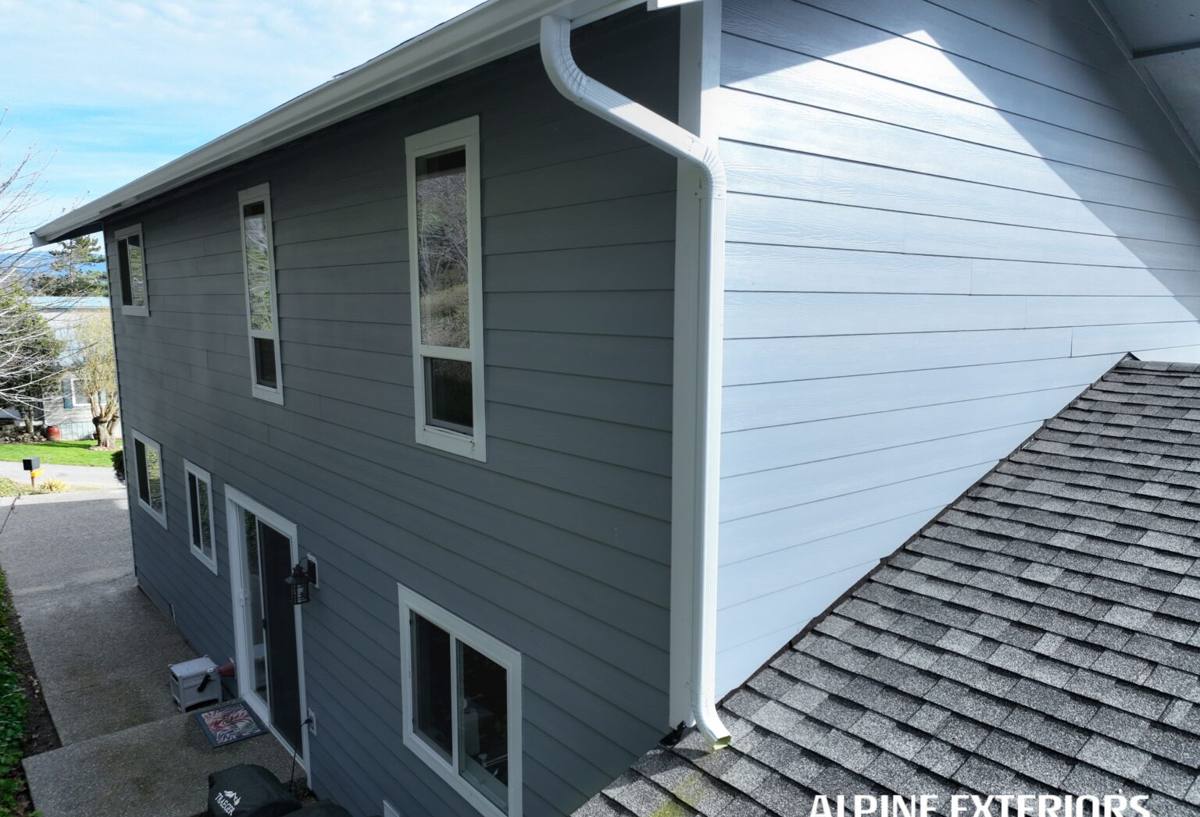
Signs a Bellingham Roof Needs Repair, Not a Full Tear-Off
Most of the roofs we're called out to look at don't need replacing, they need the actual problem found and fixed correctly. These are the signs worth calling about before they turn into something bigger:
- Water stains on ceilings or in the attic, especially ones that appear after a windy rainstorm rather than a steady one
- Missing, cracked, or curling shingles concentrated in one area rather than spread evenly across the roof
- A noticeable increase in granules collecting in gutters or at downspout outlets
- Thick moss growth concentrated on shaded slopes, particularly where it's built up along shingle edges
- Soft or spongy spots underfoot when walking the roof (we check for this during inspection, not something to test yourself)
- Daylight or damp insulation visible in the attic near a flashing point, vent, or chimney
- A single, specific leak that started after a storm, rather than a roof that's failing broadly
What a Correct Repair Actually Involves
A repair is only as good as the diagnosis behind it. Sealing over a stain without knowing why it's there just buys a little time before the same leak reappears, often in a different spot on the ceiling that makes it look like a new problem.
Finding the Real Source
Water rarely drips straight down from where it enters. It tends to travel along the underside of the sheathing or down a rafter before it shows up as a stain, which means the entry point is often several feet upslope from where the damage is visible indoors. That's why a proper repair includes an attic-side look whenever possible, not just a walk across the shingles.
Matching Materials, Not Just Colors
A patch that doesn't match the surrounding roofing in profile, weight, and material compatibility becomes its own weak point. We also pay attention to avoiding contact between dissimilar metals, mixing certain metal types at flashing points can set up galvanic corrosion that eats through the newer piece faster than the surrounding material weathers.
Flashing Is Where Most Leaks Start
Chimneys, plumbing vent boots, skylights, valleys, and step flashing along walls account for the large majority of leaks we trace on Bellingham roofs, far more often than failure in the open field of shingles. Correcting a flashing leak means removing and resetting the metal with proper laps and fresh sealant, not just running a bead of caulk over the existing seam.
Common Repairs We Handle Around Bellingham
| Repair Type | Typical Cause | What the Fix Involves |
|---|---|---|
| Flashing leaks (chimney, vent, valley) | Sealant failure, corrosion, or an original install that skipped proper laps | Remove and reset flashing with correct overlap and fresh sealant; replace corroded metal |
| Missing or wind-damaged shingles | Wind uplift, storm debris impact, or age-related brittleness | Match existing shingle profile and color as closely as available; reseal surrounding tabs |
| Moss and moisture damage | Prolonged shade, poor airflow, long-term organic buildup | Careful moss removal, inspection and treatment of the affected decking, underlayment replacement where saturated |
| Soft or sagging decking | A hidden leak that's been active longer than visible symptoms suggest | Open the affected section, replace rotted sheathing, confirm framing is sound before closing it back up |
| Ventilation-related issues | Blocked soffit or ridge vents causing trapped attic moisture | Clear or add ventilation to correct the attic moisture balance and prevent repeat damage |
Our Repair Process
- Inspection. We look at both the roof surface and, where accessible, the attic side, so we're diagnosing the actual source rather than the visible symptom.
- Honest explanation. We walk you through what we found, what caused it, and what's actually needed, no upsell to a full replacement if a repair will genuinely hold.
- Written estimate. Scope, materials, and price are laid out before any work starts, so there are no surprises partway through.
- The repair itself. We schedule around weather when we can, since roofing work done on a dry deck holds up better than work rushed between rain bands.
- Follow-up. We confirm the fix is holding and flag any other areas worth keeping an eye on, especially if moss or ventilation issues are part of the picture.
Repair or Replace? What Actually Drives That Decision
Not every roof with a leak needs to come off. The decision usually comes down to a handful of concrete factors rather than a gut feeling, and we'll walk through these with you directly rather than defaulting to the more expensive option.
| Factor | Leans Toward Repair | Leans Toward Replacement |
|---|---|---|
| Age of the roofing | Well within its expected service life | Already near or past the end of its typical lifespan |
| Extent of damage | Isolated to one area, flashing point, or slope | Spread broadly across multiple sections |
| Decking condition | Sheathing underneath is sound | Widespread rot or repeated soft spots found |
| Repair history | First or second repair on this roof | Several past repairs in different spots, a sign of general age-related failure |
| Material availability | Matching shingles or material still available | Original product discontinued, making a clean match difficult |
Why Hiring a Crew That Already Works Bellingham Matters
A crew that regularly works roofs in this part of Whatcom County already knows what salt air does to fasteners over time, what moss patterns typically look like on shaded slopes here, and which flashing details tend to fail first under driving winter rain. That familiarity shortens the diagnostic process and helps avoid repairs that look fine on paper but don't hold up to this specific climate. It also matters for accountability, if a repair needs a second look down the road, you're calling a crew that's still working in the area, not chasing down a contractor who came through once from out of town.
Keeping Moss and Moisture From Undoing the Repair
A repair holds longer when the conditions that caused the original problem are addressed too. A few habits make a real difference between one repair and a roof that needs attention every year:
- Keep overhanging tree branches trimmed back to improve airflow and let shaded slopes dry out between rains
- Clear gutters, valleys, and downspouts each fall before the wet season settles in
- Avoid pressure washing the roof surface, it strips protective granules and can force water under shingles
- Ask about zinc or copper control strips near the ridge, which help suppress new moss growth over time
- Schedule a quick visual inspection annually, and always after a major windstorm, to catch small issues before they become interior leaks
If you're dealing with a leak, missing shingles, or a moss problem on a Bellingham roof, we're happy to take a look and give you a straight answer about what it actually needs. Reach out for a free, no-pressure estimate using the form below.