 Birch Bay Siding
 Point Roberts' Roofing Problem: Salt, Wind, and Rain All at Once
Point Roberts sits almost entirely surrounded by water, which means homes here take on a combination of weather stress that inland Whatcom County properties simply don't see. Salt-laden air moves in off the water and settles on every exposed surface, wind-driven rain gets pushed sideways into laps and seams that were never designed to handle it, and the long, wet Pacific Northwest shoulder seasons keep roofs damp for months at a stretch. Add in the shade from mature conifers common along the peninsula, and you get a moss season that can run from fall through spring.
None of these factors are dealbreakers on their own. The problem is that most roofing materials, and a lot of roofing installations, are built for one or two of these conditions — not all three layered together, year after year. A roof that performs fine in Ferndale or Lynden can fail early out here simply because it wasn't specified or installed with the coastal exposure in mind.
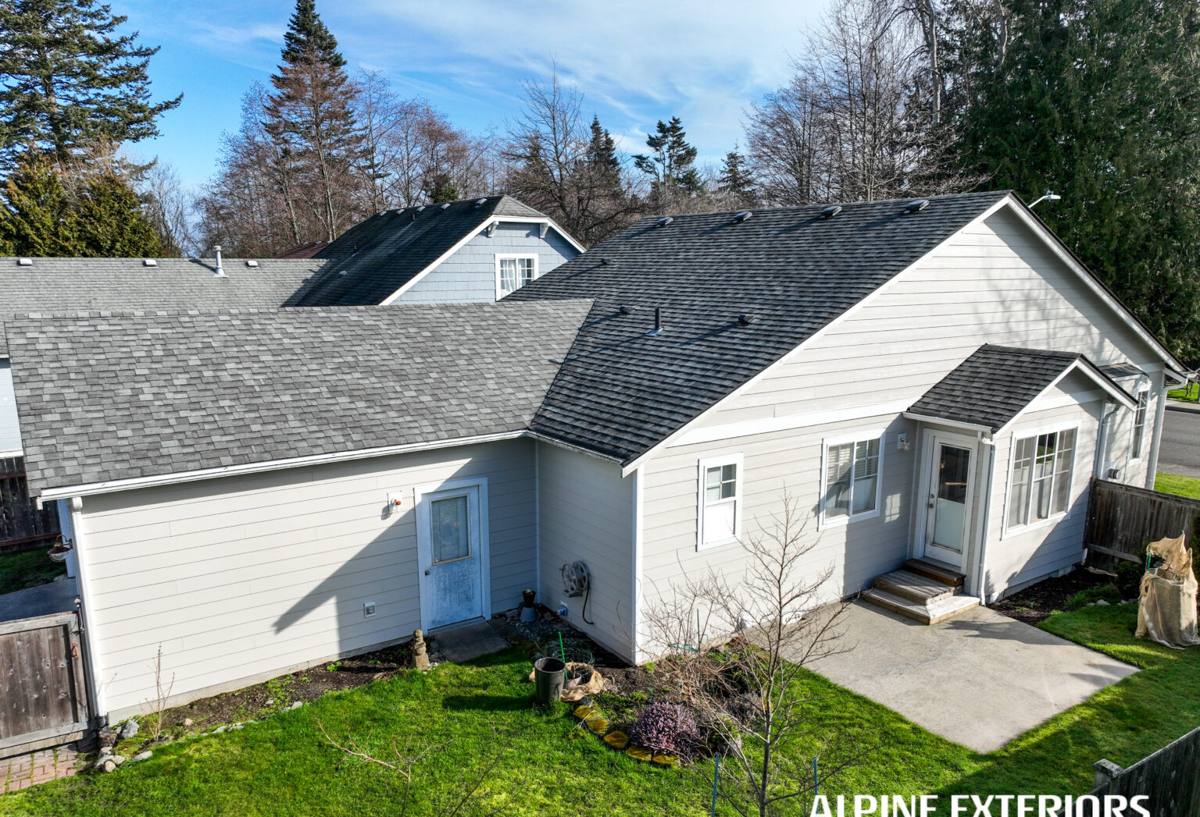
Why Metal Roofing Fits This Climate
Metal roofing earns its reputation in exactly these conditions when it's the right system, correctly installed. A few reasons it holds up better than most alternatives on an exposed, coastal Whatcom County property:
- Steep, unbroken panel runs shed wind-driven rain instead of giving it a chance to work under shingle tabs or wick into felt paper
- A properly finished metal surface doesn't absorb moisture the way wood shakes or aging asphalt does, which slows the moss and algae growth that thrives on damp, organic-friendly surfaces
- Standing seam and concealed-fastener panel systems have far fewer exposed penetration points for wind and salt spray to exploit over time
- A quality panel and coating system is built to last decades, which matters on a property under near-constant marine exposure rather than getting seasonal breaks
That said, "metal roofing" isn't one product. On a site like this, the specific panel material, coating, and fastener choice matter as much as the fact that it's metal at all.
Choosing Metal That Can Actually Handle Salt Air
Panel Material and Coating
Salt air is corrosive, and it's not equally kind to every metal. This is where a lot of roofs on exposed coastal lots run into trouble years down the road — not because metal roofing was the wrong call, but because the wrong grade of metal or coating was used for a site this close to the water.
| Option | Coastal Salt Resistance | Typical Maintenance | Notes |
|---|---|---|---|
| Bare or mill-finish steel | Poor | High — rust risk starts early | We don't recommend this for a property with this much salt exposure |
| Galvanized steel (G-90) | Fair | Moderate | Zinc coating helps but wears faster in direct marine air |
| Galvalume steel | Good | Low to moderate | Aluminum-zinc coating handles coastal exposure better than standard galvanized |
| Aluminum | Excellent | Low | Doesn't rust by nature — a strong fit for waterfront or near-waterfront homes |
| PVDF (Kynar-type) finish over steel or aluminum | Excellent | Low | Premium factory finish resists fading and chalking under constant UV and salt exposure |
For a property this exposed, we generally steer homeowners toward aluminum or a Galvalume substrate with a PVDF finish rather than bare or lightly coated steel. It costs more up front, but on a site with this much salt in the air, the cheaper option tends to show corrosion at seams, cut edges, and fastener heads well before the panels themselves are worn out.
Fasteners and Trim
Fasteners fail before panels do, almost every time. Standard coated screws can start weeping rust within a few seasons this close to the water. We use stainless steel fasteners with sealing washers rated for coastal use, and we match flashing and trim metal to the panel material so two dissimilar metals aren't sitting against each other and corroding through galvanic reaction.
Installation Details That Actually Matter Out Here
Metal roofing is unforgiving of shortcuts in a way that shingle roofing sometimes isn't — a sloppy shingle roof can still shed most water for a while, but a metal roof with the wrong lap, fastening pattern, or flashing detail finds its failure point fast in wind and driving rain.
Underlayment
We install a full synthetic underlayment on every metal roof, with self-adhered ice-and-water membrane in valleys, around penetrations, and along eaves where wind-driven rain is most likely to get pushed uphill under the panel edge. On an exposed site, this second line of defense is not optional — it's what keeps a windstorm from becoming a leak even if water does make it past the panel seams.
Fastening for Wind Uplift
Point Roberts homes see sustained wind off the water that inland properties don't. We follow manufacturer fastening schedules built for higher wind exposure rather than a standard inland pattern, with tighter fastener spacing at eaves, ridges, and rakes where uplift forces concentrate.
Flashing and Penetrations
Every pipe boot, chimney, skylight curb, and wall transition is a place where two materials meet, and that's where most roof leaks actually start regardless of the roofing material overhead. We custom-fit and seal flashing at every penetration rather than relying on stock boots and generic trim, which matters more here than in a drier, calmer inland climate.
Ventilation
A metal roof deck that can't breathe traps moisture underneath the panels, which leads to condensation and deck rot even if the roof surface itself never leaks. We check and correct attic and roof ventilation as part of any metal roof project, not as an afterthought.
Moss, Debris, and Drainage Control
Metal roofing doesn't give moss the same foothold that wood shakes or granulated asphalt shingles do, but it isn't moss-proof. Spores still land, and given enough shade, standing debris, and months of damp weather, moss and algae can build up in valleys, around penetrations, and anywhere leaves and needles collect and hold moisture against the panel.
- Keep gutters and valleys clear of needles and leaf litter, especially under mature conifers common along the peninsula
- Trim back overhanging branches where practical to cut down on shade and organic debris landing on the roof
- Rinse accumulated grime and organic buildup off the roof surface periodically rather than letting it sit through an entire wet season
- Address standing moss promptly with a gentle, roof-safe treatment rather than pressure washing, which can damage panel finishes and force water under seams
Good drainage design during installation — correct panel overlap, properly sized gutters, and valleys that actually move water instead of pooling it — does more to prevent long-term moss and moisture problems than any amount of after-the-fact cleaning.
Our Process, Start to Finish
Every property on the peninsula sits a little differently in relation to wind, water, and tree cover, so we start with a real inspection rather than a generic quote.
- On-site inspection. We look at your current roof, the deck underneath, existing ventilation, and how exposed the property is to wind and salt spray from its specific orientation.
- Material recommendation. Based on that exposure, we recommend a panel material, coating, and profile suited to your home and your budget — not a one-size-fits-all package.
- Written estimate. You get a clear scope of work and price before anything is scheduled, with no pressure to decide on the spot.
- Tear-off and deck check. We remove the old roofing and inspect the deck itself, flagging any rot or damage before covering it up with new material.
- Underlayment, flashing, and panel installation. Installed to the wind and moisture standards described above, not a stripped-down inland spec.
- Cleanup and walkthrough. We clear the site of debris and fasteners and walk the finished roof with you before we consider the job done.
Because Point Roberts is only reachable by a specific route through Canada, material delivery and crew scheduling take real planning. We build that into the timeline up front so a project doesn't stall out waiting on a supply run that should have been scheduled a week earlier.
Maintenance and What to Expect Long-Term
A correctly installed metal roof on this coastline should need far less attention than an asphalt or wood roof, but low maintenance doesn't mean no maintenance. Plan on:
- An annual visual check of fasteners, flashing, and sealant at penetrations, since these fail well before the panels do
- Keeping gutters and valleys clear, especially heading into the wet fall and winter months
- Watching cut edges and any field-modified trim for early signs of corrosion, particularly if the roof was installed by a crew unfamiliar with coastal detailing
- Reviewing your manufacturer warranty terms, since coverage on finish, coating, and paint performance is usually separate from the structural panel warranty and can have different conditions
We're upfront that no roofing material is maintenance-free on a site this exposed. The goal with the right metal system, installed correctly, is a roof that needs a yearly look rather than constant attention.
Why Hire a Crew That Already Works in Point Roberts
A metal roof is only as good as the details behind it, and those details change based on how exposed a specific property is. A crew that mostly works drier, more sheltered inland sites can install a technically competent roof that still underperforms out here simply because it wasn't built for this level of wind and salt exposure. Familiarity with how Point Roberts and the broader Birch Bay and Whatcom County shoreline behave in a winter storm — where wind-driven rain actually gets pushed, which orientations take the worst of it, how fast moss builds under the tree cover typical here — changes what gets specified and how it gets installed.
Before you hire anyone for a metal roof on the peninsula, it's worth asking a few direct questions:
- Are you licensed and insured to work in Washington State, and can you show proof?
- Have you installed metal roofing on other coastal or waterfront properties in this area?
- What panel material and coating do you recommend for this specific site, and why?
- What fastener and flashing materials do you use, and are they rated for coastal salt exposure?
- What does the manufacturer warranty actually cover, and what would void it?
- How do you plan for material delivery and scheduling given the location?
A contractor who can answer those clearly, without vague reassurances, is one who's actually done this work here before.
If you're weighing a metal roof for a Point Roberts home, we're happy to take a look and walk you through what your specific property needs. Fill out the form below for a free, no-pressure estimate.