 Birch Bay Siding
 Bellingham's Coastal Climate Puts Real Stress on Exterior Siding
Bellingham sits on Bellingham Bay in Whatcom County, close enough to Birch Bay and the Strait of Georgia that homes here deal with a specific combination of weather that inland Washington siding never has to survive. Salt-laden air off the water accelerates corrosion on fasteners and metal trim. Wind-driven rain off the Sound doesn't just fall straight down — it gets pushed sideways into wall assemblies, seams, and butt joints that a fair-weather installation job never accounts for. And the long, wet shoulder seasons that stretch from fall through spring give moss and algae months of damp, shaded surfaces to colonize.
None of this is unusual for the Pacific Northwest, but it does mean siding installed here has a harder job than siding installed in a drier climate. A product and installation method that would be perfectly adequate in eastern Washington can fail early in Bellingham if the water management details aren't right. That's the standard we build every job to.
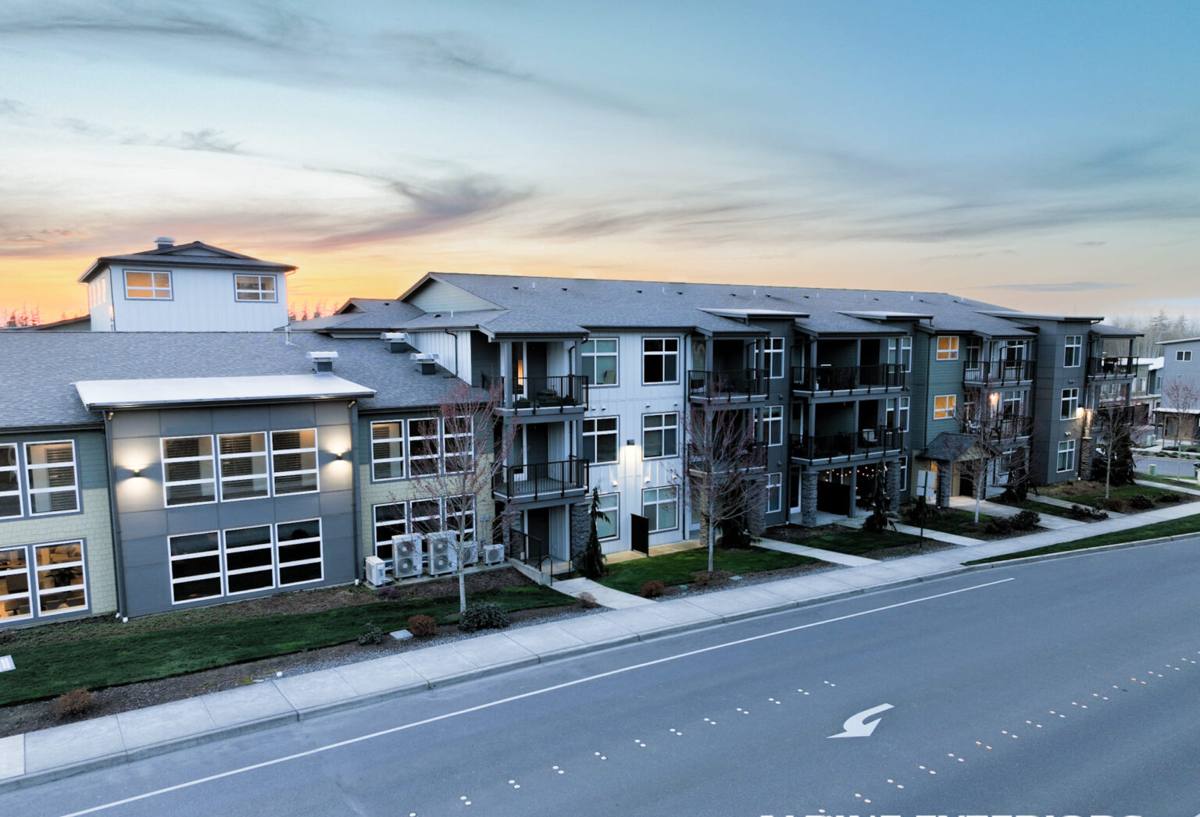
What Correct Siding Installation Looks Like in This Climate
Siding is a system, not just a surface. The visible boards matter, but what's behind them determines whether a home stays dry for twenty years or starts showing rot at year seven. In a marine climate like Bellingham's, three details separate a correct installation from one that just looks fine on move-in day.
Weather-Resistive Barrier and Flashing
Every wall gets a continuous weather-resistive barrier, and every penetration — windows, doors, hose bibs, light fixtures, vents — gets properly integrated flashing so water is directed out and down, never trapped behind the siding. This is the single most common place we find shortcuts on older installs: caulk used in place of flashing, or flashing installed but not lapped correctly with the barrier underneath it.
Rainscreen Gap and Drainage
Fiber cement siding performs best with a small drainage gap between the back of the board and the wall sheathing, so any moisture that does get past the siding can drain and dry instead of sitting against the wall. This detail matters more in a wet, humid coastal climate than almost anywhere else in the state, because the drying window between rain events is shorter.
Fastening and Caulking Standards
Corrosion-resistant fasteners, correct nailing patterns, and manufacturer-specified gaps and sealants at joints all matter more near saltwater. Cutting corners here doesn't usually show up in the first year — it shows up in year five or six, as streaking, swelling, or fastener failure.
Why We Install Only James Hardie Fiber Cement Siding
We don't offer vinyl, LP SmartSide, Cemplank, Allura, or wood siding — not because those products can't be installed correctly somewhere, but because we've made a professional judgment that James Hardie fiber cement is the better long-term fit for homes in this climate, and we'd rather stand fully behind one system than spread our expertise thin across several.
Fiber cement is non-combustible, which matters given wildfire smoke seasons are now a Pacific Northwest reality even this far north. It's dimensionally stable, so it doesn't expand and contract with moisture the way wood-based products can, and it holds paint and factory finish far longer than wood siding does in a wet climate. Hardie's ColorPlus finish is baked on at the factory under controlled conditions, which gives it better fade and moisture resistance than field-applied paint — an advantage that's worth more here than in a dry climate, because Bellingham homes spend more months of the year wet than most.
Hardie also makes climate-engineered product lines — including HZ5 formulations built for regions with more moisture exposure — and backs installations with a strong transferable warranty when installed to their specification. That warranty is only as good as the installation behind it, which is why correct flashing, fastening, and clearances aren't optional steps for us — they're the difference between a warranty that actually holds up and one that doesn't.
Signs a Bellingham Home Is Overdue for New Siding
Because moss and algae growth is so common here, it can mask what's actually happening underneath. A few signs are worth taking seriously rather than just power-washing over:
- Dark green or black staining that returns within weeks of cleaning, especially on north- and west-facing walls
- Soft, spongy, or visibly warped sections of siding, particularly near the ground or below windows
- Cracked, gapped, or missing caulk at trim and window edges
- Paint that's peeling or bubbling rather than just fading — often a sign of moisture trapped behind the surface
- Visible rust streaking from fasteners, common on older installations near the water
- Interior signs like musty smells, peeling interior paint, or soft drywall near exterior walls
Any one of these can be minor. Several together, especially on a home more than fifteen to twenty years old, usually means it's worth a real inspection rather than another round of cleaning.
Our Installation Process, Start to Finish
The process is the same discipline whether the home is right on Bellingham Bay or a few miles inland, because the climate doesn't change much across that distance.
- Assessment. We inspect the existing siding, sheathing, and trim, checking for hidden moisture damage before quoting the job — not after starting it.
- Moisture and substrate check. Any soft or rotted sheathing gets identified and addressed before new siding goes on. Installing over a compromised substrate just hides a problem, it doesn't fix it.
- Removal. Old siding and trim come off cleanly, with attention to what the tear-off reveals about how the original wall was built.
- Weather barrier and flashing. A continuous, correctly lapped weather-resistive barrier goes on, with flashing integrated at every window, door, and penetration.
- Furring and drainage gap. Where called for, a rainscreen gap is built in so the wall assembly can dry properly between wet spells.
- Hardie installation. Boards, panels, or trim go on to manufacturer spec — correct fastener type, spacing, and clearances from grade, decks, and roof lines.
- Finish and walkthrough. Caulking, touch-up, and a final walkthrough so you know exactly what was done and what to expect going forward.
What Siding Installation Costs Depend On
There's no single price per square foot that means much without context — the real cost drivers on a Bellingham job tend to be the same handful of factors:
| Factor | Why It Matters Here |
|---|---|
| Home size and wall complexity | More corners, dormers, and trim detail means more cut boards and flashing work |
| Condition of existing sheathing | Moisture damage from past water intrusion has to be repaired before new siding goes on |
| Siding product and finish | Board style, panel size, and ColorPlus color selection affect material cost |
| Access and site conditions | Tree cover, slope, and proximity to neighboring structures affect labor time |
| Existing drainage details | Homes without a rainscreen gap may need furring added, which adds labor |
| Trim and accessory work | Fascia, soffit, and window trim replaced alongside siding adds to scope but avoids mismatched future repairs |
We walk through these factors on-site before giving a number, because a phone-quote on siding is a guess, not an estimate.
Why Hiring a Crew That Already Works Bellingham Matters
A crew that installs siding across a range of climates has to relearn local conditions on every job. A crew based in this area already knows how much drainage detail a given wall orientation needs, which parts of a property hold moisture longest, and how aggressively moss and algae will come back on shaded north walls versus sun-exposed south walls. That local pattern recognition shows up in fewer surprises during the job and a finished install that's built for the actual conditions the home will face, not generic conditions.
It also matters for permitting and code familiarity specific to Whatcom County jurisdictions, and for knowing which manufacturer specs actually apply to a coastal, high-moisture exposure zone versus a standard install elsewhere in the state. None of this is exotic knowledge, but it's the kind of thing that only comes from doing the work here repeatedly.
After Installation: Keeping Bellingham Siding Performing
James Hardie siding installed correctly needs relatively little upkeep, but a few habits matter more in this climate than in a drier one:
- Rinse siding annually to slow moss and algae buildup, especially on shaded walls
- Keep gutters clear so overflow doesn't run down the siding face repeatedly
- Trim back vegetation and tree limbs that keep siding shaded and damp
- Check and re-caulk trim joints every few years as part of routine maintenance
- Watch for any new staining or soft spots after major wind-driven rain events
If you're seeing early signs of wear on your current siding, or you're planning ahead for a replacement, we're happy to take a look and put together a straightforward, no-pressure estimate based on your home's actual condition — not a generic price list.