 Birch Bay Siding
 If you're building new, adding a room, or taking a Cottonwood Beach home down to the studs, the windows you choose and how they're installed matter more here than almost anywhere else in Whatcom County. This stretch of shoreline sits right up against the Strait of Georgia, and that proximity to open water shapes everything about how a window assembly needs to be built — from the metal in the hardware to the order the flashing goes on. Get it right during construction and the windows will hold up for decades. Get it wrong, and the first sign of trouble is usually hidden behind the siding, not visible from the curb.
What "New-Construction" Windows Actually Means
New-construction windows are not the same product as the replacement windows most homeowners are familiar with. The distinction matters, and it's worth understanding before you get quotes.
Nail-Fin Windows vs. Pocket Replacements
A new-construction window has a continuous nailing flange — a fin — around the perimeter of the frame. That fin gets fastened directly to the wall sheathing before the siding goes on, and it's designed to work together with the house wrap, flashing tape, and trim in one integrated water-management system. A replacement (pocket) window, by contrast, slides into an existing frame with no fin, relying on the old frame and trim to keep water out. Pocket windows are the right tool when you're upgrading an existing home without touching the siding. New-construction windows are the right tool — really the only correct tool — when the wall is open, whether that's a full new build, an addition, or a re-side down to the sheathing.
Using the wrong type in the wrong situation is one of the more common mistakes we see corrected on older Whatcom County homes. A nail-fin window installed into an already-finished wall, or a pocket window used where the sheathing is exposed, both create long-term leak risks that are expensive to fix later.
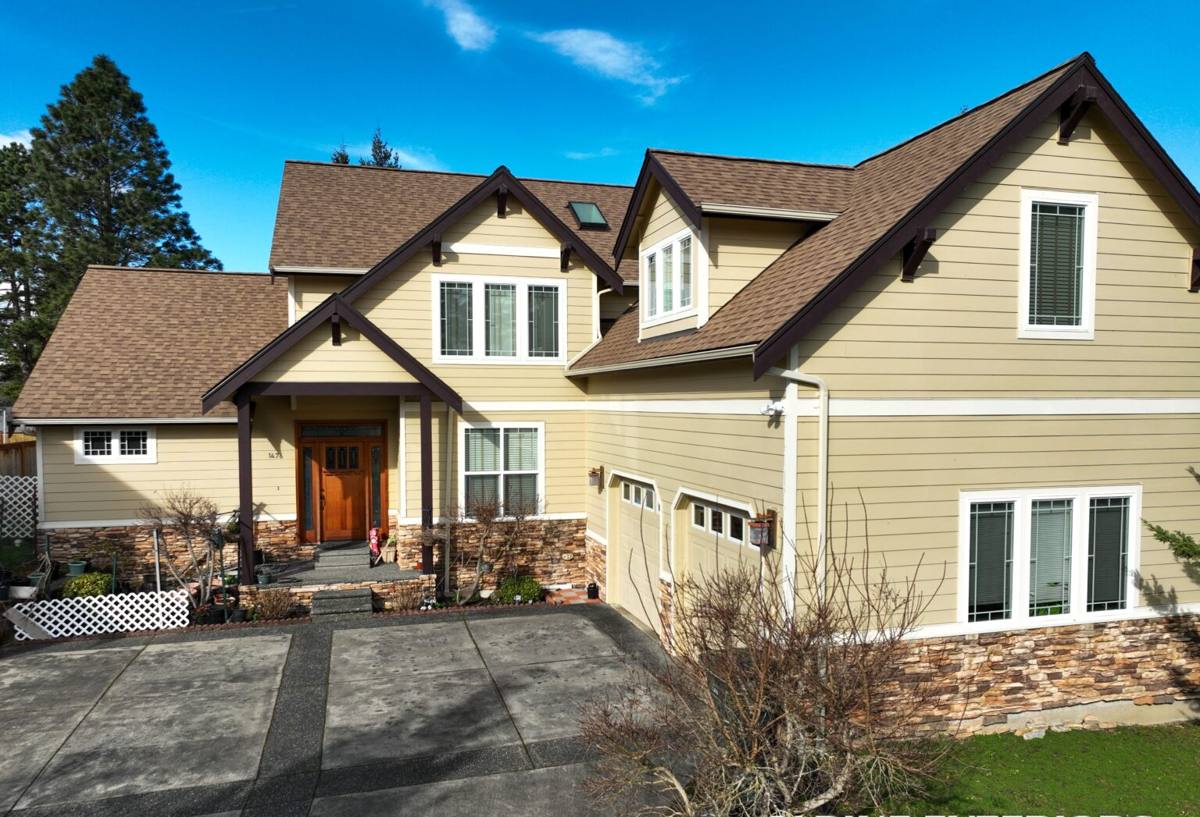
What Cottonwood Beach Homes Are Up Against
Every coastal community in Whatcom County deals with rain, but Cottonwood Beach's direct exposure to the water adds a few specific stressors that a window installation has to account for.
- Salt-laden air accelerates corrosion on unprotected metal — fasteners, hinges, balance hardware, and cheap flashing all degrade faster here than they would ten or fifteen miles inland.
- Driving rain off the water doesn't just fall straight down; wind pushes it sideways and up under trim, sills, and any gap in the flashing that isn't lapped correctly.
- A long moss and mildew season keeps horizontal surfaces — sills, sloped trim, anywhere water can sit — damp for months at a time, which is exactly the condition that rots wood trim and breaks down poor-quality sealant.
- Temperature swings between a mild coastal winter and warm summer afternoons put ongoing stress on seals and glazing, so the installation needs room to expand and contract without opening a gap.
None of this means a home in Cottonwood Beach needs exotic materials. It means the standard installation details — the ones that get skipped on a tight schedule — can't be skipped here.
Getting the Installation Right
A window opening is only as good as the sequence it's built in. Every layer has to lap over the one below it, so water is always shed outward and downward, never trapped behind the siding.
Pan Flashing and Sill Details
Before the window ever goes in, the rough opening needs a sloped sill pan that directs any water that gets past the window back outside the wall, not down into the framing. This is the single most-skipped step on a rushed job, and it's the one that causes the most damage over time because a failure here is invisible until the sill or subfloor is already rotting.
Head Flashing and the Water-Resistive Barrier
The house wrap or building paper has to integrate with the window's nailing fin in the correct order — side flashing over the sill pan, the window itself, then head flashing lapped over the top of the fin, with the water-resistive barrier lapped over the head flashing last. Done in the wrong order, water runs downhill into the seam instead of over it.
Sealant: Where It Belongs and Where It Doesn't
Caulk is a backup, not a strategy. We seal the top and sides of the flange as appropriate for the flashing system, but we intentionally leave the bottom of the nailing fin unsealed on most assemblies so that any water that does get behind the cladding has a path back out instead of pooling against the sill. A fully caulked perimeter looks tidy but can trap moisture — that's a mistake we see on older installs that we don't repeat.
Choosing Frame Materials for This Location
There's no single "best" window frame material — the right choice depends on budget, maintenance appetite, and how much direct salt-air and weather exposure the specific elevation of the house sees. Here's how the common options stack up for a Cottonwood Beach build:
| Frame Material | Salt-Air / Corrosion Resistance | Maintenance | Typical Cost Position |
|---|---|---|---|
| Vinyl | Good — won't corrode, but hardware quality varies by manufacturer | Low; occasional cleaning | Entry to mid-range |
| Fiberglass | Very good — dimensionally stable, resists pitting and corrosion | Low | Mid to upper-mid |
| Aluminum-clad wood | Good exterior protection, but interior wood needs the seal maintained | Moderate | Upper-mid to premium |
| Bare aluminum | Poor in direct salt exposure without upgraded finishes | Higher | Varies |
For most Cottonwood Beach homes, we steer clients toward vinyl or fiberglass for the exposed, water-facing elevations, since both shed the corrosion problem entirely rather than managing it. Where a homeowner wants a wood interior look, aluminum-clad wood works well as long as the cladding and sealant are inspected periodically — we'll walk you through what that upkeep actually looks like rather than downplaying it.
Our Process for New-Construction Window Installs
- Plan review. We look at rough opening sizes, elevation exposure (which walls take the worst of the wind-driven rain), and confirm window selection against the home's design and your budget.
- Material staging. Flashing tape, sill pan material, and sealants are chosen for compatibility with the specific siding and house wrap being used — not a one-size-fits-all kit.
- Sequenced installation. Sill pan, window set plumb and level, side flashing, head flashing, and WRB integration, in that order, on every opening.
- Fastening and shimming. Windows are shimmed at manufacturer-specified points and fastened through the fin without over-driving nails, which can bow the frame and cause the sash to bind or leak.
- Final inspection. Every opening gets checked for square, level, and a continuous flashing lap before siding or trim covers it up — this is the last point where a mistake is cheap to fix.
Why Local Experience in Cottonwood Beach Matters
A crew that only occasionally works this close to the water tends to build to a generic standard — the same details they'd use on a home fifteen miles inland. A crew that regularly works Cottonwood Beach and the rest of the Birch Bay shoreline already knows which elevations take the worst of the wind-driven rain in a winter storm, which fastener and flashing grades hold up under sustained salt exposure, and how long moss and mildew season actually runs in this part of Whatcom County. That's not a marketing point — it changes real decisions on site, like which walls get extra flashing lap or where we recommend upgrading hardware even if the base window package doesn't include it.
It also means fewer surprises during permitting and inspection, since local building requirements and typical inspector expectations for this area are already familiar territory rather than something to figure out mid-project.
A Homeowner's Checklist Before You Build or Add On
If you're planning new construction, an addition, or a full re-side in Cottonwood Beach, these are the questions worth settling before framing is closed in:
- Confirm whether your project needs new-construction (nail-fin) windows or pocket replacements — don't let this get decided by whatever's on hand.
- Ask what sill pan flashing method will be used on every opening, not just the ones facing the water.
- Choose a frame material based on which elevation the window sits on, not just overall house style.
- Confirm the flashing and WRB integration sequence in writing before the wall is closed up — this is the part you can't inspect later.
- Ask how the installer handles sealant at the sill, and why — a fully sealed perimeter is a warning sign, not a bonus.
- Get clarity on hardware grade if the home is on a direct water-facing lot, since standard hardware may not hold up as long here.
Every home in Cottonwood Beach sits a little differently relative to the water, the prevailing wind, and the tree line, so there's no substitute for a walk-through of your specific plans or existing structure. If you're framing a new build, planning an addition, or opening up walls for a re-side, we're happy to take a look and put together a straightforward, no-pressure estimate — just fill out the form below to get started.