 Birch Bay Siding
 Board & Batten in a Salt Air Coastal Village
Birch Bay Village sits close enough to the water that the weather off the Salish Sea is part of daily life — salt-laden air, wind-driven rain that hits walls sideways instead of straight down, and a wet season that runs long enough to grow moss on anything that stays damp. Board and batten siding is a popular choice here because the vertical lines and deep shadow reveal give a home real character, whether it's a newer build or an older place getting a facelift. But board and batten is also one of the least forgiving siding styles to get wrong. The seams, the fastening pattern, and the drainage behind the panels all matter more on a vertical profile than on standard horizontal lap siding, and Birch Bay Village's climate does not give sloppy work anywhere to hide.
This page covers what board and batten siding needs to hold up in Birch Bay Village specifically, what a correct installation actually involves, and why we install it in James Hardie fiber cement only — not vinyl, not engineered wood, not cedar.
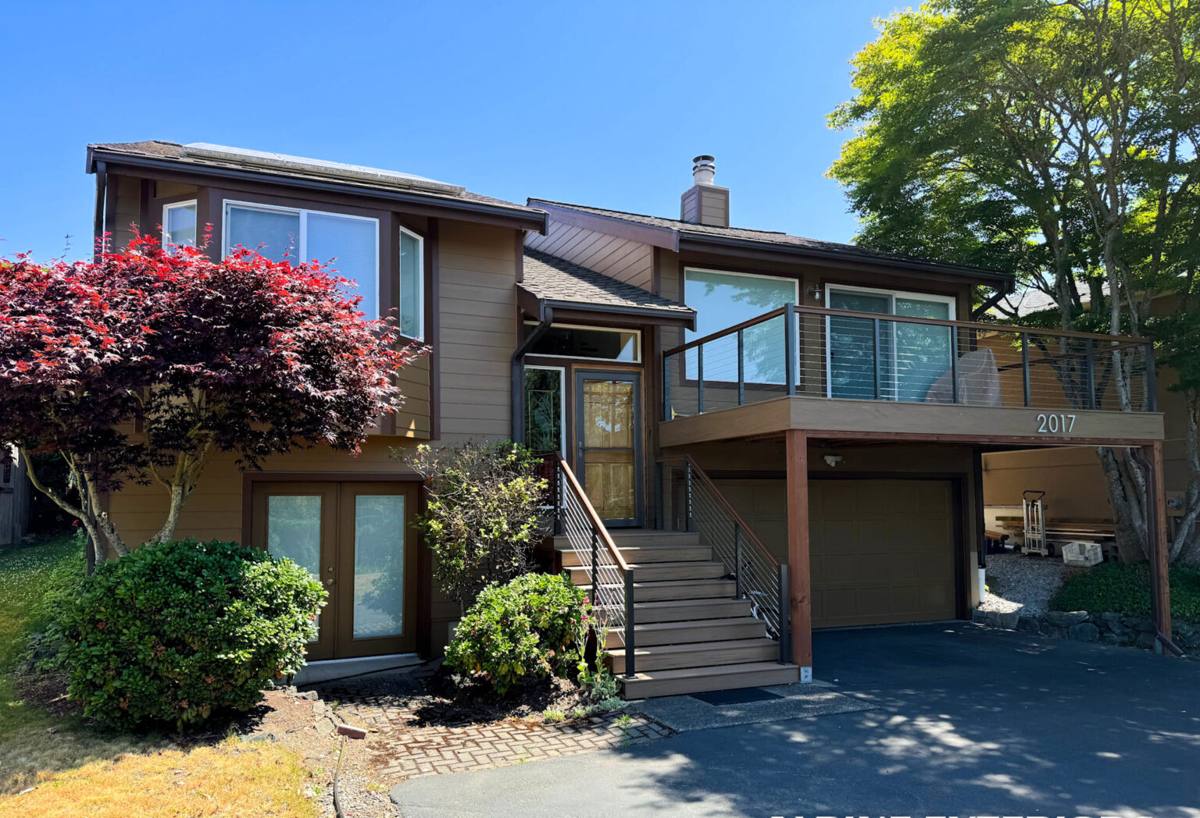
What This Climate Does to Board & Batten Siding
Salt Air
Airborne salt from the Salish Sea settles on exterior surfaces and accelerates corrosion on anything metal — fasteners, flashing, trim caps. On board and batten specifically, the battens themselves create dozens of extra vertical seams compared to lap siding, and every one of those seams has fasteners that need to resist that corrosion for decades, not years.
Driving Rain
Wind off the water pushes rain sideways, and a vertical siding profile gives that water more direct seams to work into than a horizontal lap does. If the batten spacing, caulking, or drainage plane behind the panel isn't done correctly, water finds its way behind the siding rather than running off the face of it.
Moss Season
Whatcom County's wet stretch runs long, and any siding surface that stays shaded and damp for weeks at a time is a candidate for moss and mildew growth. Board and batten's vertical battens create narrow ledges and shadow lines that hold moisture a little longer than a flat lap surface, which is exactly why the material underneath the paint has to be genuinely moisture-resistant, not just moisture-tolerant.
Why Board & Batten Needs to Be Done Right the First Time
Board and batten isn't inherently a high-maintenance siding style — but it punishes shortcuts more than most. A rainscreen gap that's too shallow, battens fastened straight through into the panel without accounting for expansion, or caulk used as a substitute for proper flashing will all show up as staining, swelling, or panel separation within a few wet seasons on a property exposed to this much salt air and rain. Getting it right the first time matters more here than on a sheltered inland lot.
What a Correct Board & Batten Installation Involves
- A drainage plane (rainscreen or weather-resistant barrier) installed behind the siding so any moisture that gets past the battens has somewhere to go besides your sheathing
- Panels and battens fastened per the manufacturer's engineered pattern — not "close enough" spacing that looks fine until the first hard windstorm
- Corrosion-resistant fasteners appropriate for a coastal, salt-air environment
- Correct flashing at every window, door, and horizontal transition — caulk is a supplement to flashing, never a replacement for it
- Factory-applied finish on the siding itself, so field-painted cut edges are sealed and touch-up paint matches rather than fades unevenly over time
- Proper clearance at the base of the wall so battens and panels aren't sitting in standing water or buried landscaping
Why We Install James Hardie for Board & Batten
Board and batten can be built from several different materials, and we get asked fairly often why we standardized on one. Here's the honest comparison of what's typically used for this look, and why we settled where we did.
| Material | Salt air / corrosion | Moss & moisture resistance | Maintenance | Typical lifespan |
|---|---|---|---|---|
| James Hardie fiber cement | Non-combustible core, engineered for coastal exposure | Won't rot or absorb moisture like wood; factory finish resists mildew staining | Occasional wash; repaint cycle is long due to ColorPlus finish | Decades, when installed to spec |
| Vinyl board & batten | Doesn't corrode, but battens/panels can warp or bow in temperature swings and wind | Moss grows on the surface; seams and J-channels trap moisture behind the panel | Low, but repairs are visible and color can't be touched up | Variable; UV and impact damage shorten it |
| Engineered wood (LP-style) | Fasteners and cut edges are the weak point if not fully sealed | Wood-based core is vulnerable if moisture reaches it through a compromised seam | Moderate to high; edge sealing has to be maintained | Depends heavily on installation quality and upkeep |
| Real cedar | No corrosion issue, but the wood itself weathers and needs regular protection | Naturally rot-resistant but still needs sealing/staining to resist moss and moisture over time | High — refinishing on a recurring schedule | Shorter without diligent, ongoing maintenance |
Every one of these products has homeowners who are happy with it. Our position is narrower than "the others are bad" — it's that fiber cement gives us a non-combustible, dimensionally stable material with a factory finish that's built to handle a wet, salty, moss-prone coastal climate with the least amount of homeowner upkeep. For board and batten in particular, where you're relying on dozens of vertical seams to stay tight for decades, that stability matters.
For the board and batten look, we build with James Hardie's vertical panel siding paired with HardieTrim battens over the joints — a system engineered to work together, rather than mixing a panel product with mismatched trim.
Our Process for a Birch Bay Village Board & Batten Project
1. On-Site Assessment
We look at your home's exposure — how much direct wind and rain it takes off the water, where moss has already established itself, and what condition the existing sheathing and moisture barrier are in before we ever talk panel layout.
2. Prep and Drainage Plane
Any damaged sheathing gets addressed before new siding goes on. We install a proper weather-resistant barrier and rainscreen gap so the wall system has a way to dry out even after wind-driven rain gets past the outer surface.
3. Panel and Batten Installation
Panels go up first, followed by battens over the seams, fastened to the engineered spacing and using corrosion-resistant fasteners suited to salt air exposure.
4. Flashing and Trim Detail
Every penetration — windows, doors, hose bibs, light fixtures — gets flashed correctly rather than caulked and hoped for. This is the step that determines whether your siding is dry in five years or stained and swelling.
5. Final Walkthrough
We walk the finished job with you, point out the drainage and flashing details you won't otherwise see, and go over what little maintenance the siding actually needs going forward.
Maintenance in a Moss-Prone, Salty Climate
Board and batten in fiber cement isn't maintenance-free, but it's low-maintenance if it was installed correctly. A periodic rinse to knock salt residue and surface grime off the panels, keeping gutters clear so water isn't sheeting down the wall in concentrated streams, and trimming back vegetation that shades and dampens a wall section will do most of the work. Because the factory finish resists moisture absorption, you're not fighting the constant repaint cycle that wood siding demands in this climate.
Why Local Experience Matters
A contractor who hasn't worked this specific stretch of Whatcom County coastline can install board and batten siding that looks correct and still fails early — because the failure points here are driven by wind direction, salt exposure, and moss growth patterns that aren't obvious from a spec sheet. A crew that's already worked in Birch Bay Village knows which wall exposures take the worst of the weather, where moss tends to establish first, and how to detail the drainage plane for this specific kind of coastal exposure — not a generic installation manual written for a dry inland climate.
What to Look For Before You Hire
- Manufacturer-trained or certified installers, not just "we've used this product before"
- A written scope that specifically mentions rainscreen or drainage plane installation, not just "new siding"
- Flashing details called out for every window, door, and penetration — ask them to walk you through it
- Fastener specifications appropriate for coastal, salt-air conditions
- A clear explanation of why they use the material they use — you should get a straight answer, not a sales pitch
If you're considering board and batten siding for a home in Birch Bay Village, we're happy to take a look and walk you through what your specific property needs. The estimate is free, there's no pressure, and you'll get a straight answer about what correct installation looks like for your home.