 Birch Bay Siding
 Birch Bay Village sits inside one of the wetter, saltier pockets of Whatcom County, and a deck out here has no wall or roofline to hide behind — it takes the full brunt of the marine air, the wind-driven rain, and the moss season directly on its walking surface and framing. A lot of the homes in this neighborhood started life as smaller seasonal or vacation cabins, many since added onto or converted for year-round living, and the decks attached to them run the full range from decades-old wood platforms that have never been touched to newer builds sized to make the most of a water view. Whatever the starting point, a deck built or rebuilt here needs to be built for this specific stretch of coastline, not for an average inland lot.
This page covers what deck building actually involves for Birch Bay Village specifically — what the climate does to a deck here, what a correctly built one looks like, and how our process works when we take on a project in this neighborhood.
Why Decks in Birch Bay Village Take Extra Punishment
Salt Air
Homes in Birch Bay Village sit close enough to the water that salt-laden air is part of daily conditions, not an occasional event. Salt accelerates corrosion in exposed metal — screws, structural connectors, railing hardware, post brackets — and a fastener that's corroding loses holding strength well before it looks obviously bad from the surface. On a structure people walk and stand on every day, that's a real safety consideration, not just a cosmetic one.
Driving Rain
Storms coming off the water in this part of Whatcom County rarely just fall straight down. Wind pushes rain sideways, driving it up under railings, into ledger connections where the deck ties into the house, and between deck boards that aren't gapped correctly for drainage. A deck surface that would shed water fine on a calm day can still trap moisture the moment wind gets involved, and out here wind is involved often enough that it has to be planned for, not treated as the exception.
A Long Moss Season
Mild temperatures and near-constant dampness give moss and mildew a growing season that runs most of the year in this area. A horizontal deck surface is one of the first places it takes hold, since it holds water longer than a vertical wall and stays damp between rain events. Shaded decks and north-facing surfaces are usually first to show it, and any decking material with even a little surface porosity gives moss something to grip onto.
What Birch Bay Village Properties Typically Need
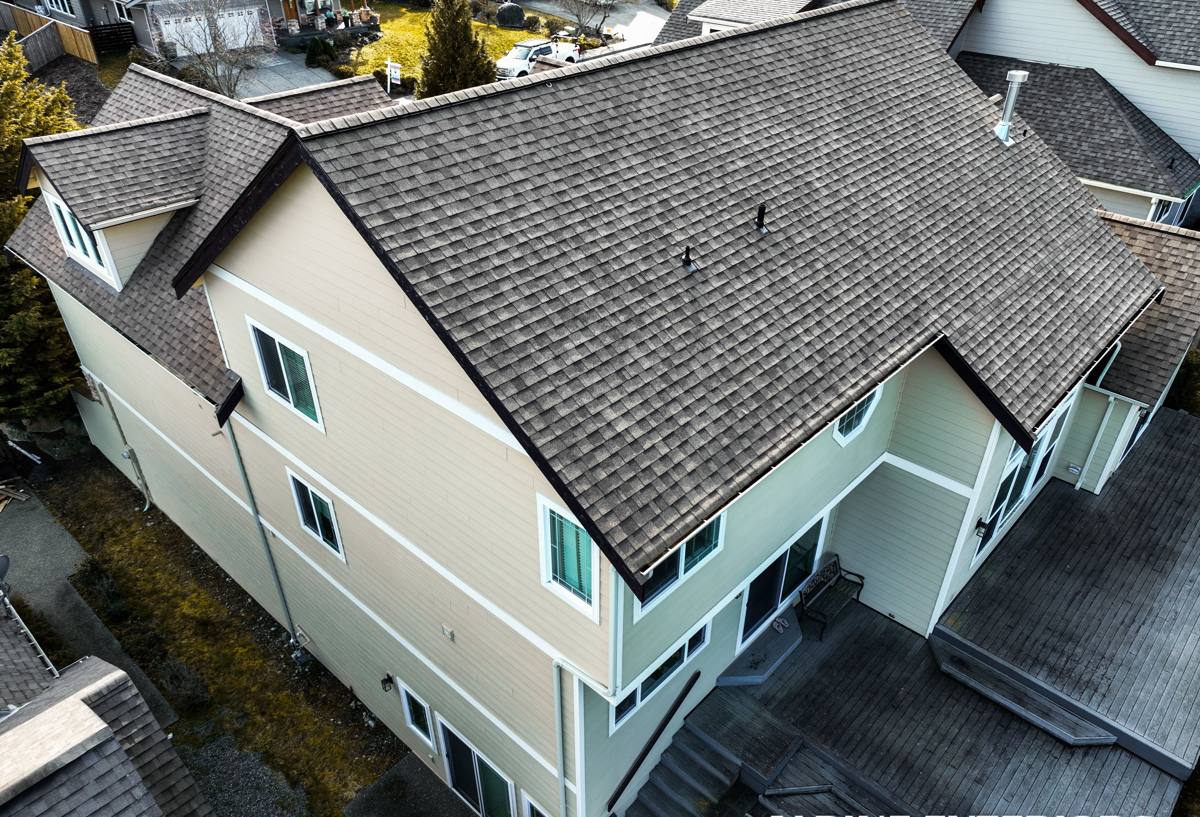
A few patterns come up repeatedly on deck projects in this neighborhood. Older cabins and cottages often have small, low decks built decades ago with standard hardware and no real drainage planning, and by the time we're called out the framing underneath has usually taken more moisture damage than the surface boards let on. Homes that have been added onto or converted from seasonal to year-round use sometimes have decks that were never sized or engineered for the load and use they get now. And newer construction or remodels aimed at the water view tend to want larger decks, elevated platforms, and open railing designs that maximize sightlines — which changes the wind exposure and structural requirements compared to a smaller deck tucked closer to grade.
None of that makes a project unusual for us; it's routine work in this community. It does mean an honest deck project here usually starts with an assessment of what's actually holding the existing structure together, not just a conversation about new boards on top.
Choosing the Right Decking Material for This Exposure
Decking material choice matters more in Birch Bay Village than it would on a drier, more sheltered lot, because the gap in performance between a well-suited product and a poorly-suited one shows up faster here. The three categories most homeowners weigh are wood, capped composite, and cellular PVC.
Wood
Pressure-treated lumber and cedar are the traditional choice and can look good when new, but both need regular sealing or staining to hold up against sustained moisture, and both are more vulnerable to fastener corrosion issues in salt air over time. Left unmaintained even a season or two, wood in this climate is usually the first material to show moss, graying, and soft spots.
Capped Composite
Capped composite boards have a plastic shell around a wood-fiber composite core, which resists moisture absorption, staining, and UV fade far better than uncapped composite or bare wood. In a salt-air, high-moisture environment like this one, that cap layer is doing real work — it's the difference between a board that needs occasional washing and one that needs ongoing sealing to stay ahead of moisture.
Cellular PVC
PVC decking contains no wood fiber at all, so it doesn't absorb moisture the way even capped composite can at cut edges or fastener holes. It typically costs more than composite and can flex more under heavy point loads, but for a deck that sits close to the water or gets heavy shade and moisture exposure, some homeowners find the added moisture resistance worth the extra cost.
| Material | Handling Salt Air & Moisture | Moss Resistance | Upkeep |
|---|---|---|---|
| Cellular PVC | Excellent — no wood fiber to absorb moisture | Strong, smooth non-porous surface | Occasional washing |
| Capped composite | Strong — cap layer resists moisture and staining | Good on most lines | Occasional washing |
| Uncapped composite | Moderate — some moisture absorption at exposed fiber | Fair; more prone to buildup over time | Periodic cleaning |
| Cedar | Moderate — natural resistance, but needs sealing | Fair when sealed and maintained | Regular oiling or sealing |
| Pressure-treated wood | Weak against sustained salt exposure over time | Poor without regular treatment | Regular sealing or staining |
What a Correctly Built Deck Involves Here
The decking surface gets most of the attention when homeowners picture a new deck, but in this climate the framing, fasteners, and drainage details underneath are what actually decide how long it lasts. A build done right for Birch Bay Village includes:
- Framing material rated for sustained moisture exposure, sized correctly for the actual span and load rather than a generic layout
- Stainless steel or coastal-grade corrosion-resistant fasteners throughout, not standard hardware that starts corroding in salt air within a few seasons
- Hidden fastener systems on the walking surface where the product allows, reducing exposed metal and giving a cleaner finish
- Correct board gapping for drainage and material movement, so wind-driven rain and standing moisture can actually drain and dry between boards
- Proper ledger board flashing at the point where the deck ties into the house — one of the most common places moisture gets into a wall system on a poorly built deck
- Joist spacing matched to the specific decking product's span rating, not a one-size layout used regardless of material
- Railing and post attachment sized for the wind exposure the site actually sees, which matters more on elevated, view-facing decks common in this neighborhood
- Grading and ventilation underneath the deck so moisture doesn't sit against the framing between storms
Skip any one of those and the deck usually still looks fine on day one. The problems tend to show up a couple winters later — a soft joist, a loosening railing post, or fastener corrosion staining the boards around it.
Design Considerations Specific to This Neighborhood
Beyond material and structure, a deck in Birch Bay Village has a few site-specific questions worth working through before anything gets built. On lots oriented toward the water, an open railing design maximizes the view but offers less wind break, so that trade-off is worth discussing against how exposed the site actually is. Elevation matters too — decks built up off a sloped lot or a walk-out level need railing height, stair design, and structural support handled differently than a low deck near grade. And because a fair number of homes here started as smaller seasonal structures, a deck addition sometimes needs to tie into framing that wasn't originally built to carry it, which is something we check for before committing to a layout rather than after.
Our Process
- On-site assessment — we look at existing structure condition if it's a replacement, drainage and grade around the deck area, sun and wind exposure through the day, and how close the site sits to the water
- Honest recommendation — material options and design approach that fit the budget and how the space will actually be used, explained with the reasoning behind it
- Permitting — deck projects in Whatcom County generally follow standard setback, structural, and elevation requirements, and we handle that as part of the job
- Substructure and framing — sized and fastened for the site's actual exposure, not a generic spec
- Decking, railing, and stairs — installed to the sequence the specific material and design call for
- Walkthrough — a plain explanation of what your specific decking material needs going forward, which for most modern products is minimal, but not nothing
What Your Deck Still Needs From You
Even a well-built deck in the right material needs some routine attention in this climate to reach its full lifespan.
- Rinse or wash the deck surface periodically to clear salt residue, pollen, and organic buildup before it works into the surface or cap layer
- Keep gaps between boards clear of leaves and debris so water and airflow can move through the way the design intends
- Check railing posts and hardware once a year for early corrosion or loosening, especially heading into the wet season
- Trim back overhanging branches or plants that hold moisture against the deck or block sun and airflow across the surface
- Address any soft framing or standing water underneath right away — that's a structural issue, not a cosmetic one, and it doesn't improve with time
Why It Matters That We Already Work Birch Bay Village
A crew that mostly builds decks further inland can still put one together competently, but a Birch Bay Village job has variables that don't come up as often elsewhere in Whatcom County — corrosion-grade fastener requirements from sustained salt exposure, wind loads tied to open water-facing lots, older seasonal-cabin framing that wasn't built for today's use, and moss pressure that runs longer here than in more sheltered towns. Working this neighborhood regularly means we're not guessing at those requirements on your project. We've seen which decking lines actually hold up to this specific combination of salt air, driving rain, and moss, and which fastener grades and framing details are worth the extra time rather than an upsell.
That familiarity also shows up in the smaller judgment calls — how to orient a deck for the wind a particular lot actually sees, when an older structure underneath needs more than surface repair, and being straightforward about what a deck here realistically needs to last versus what's just an extra line item.
What to Ask Before Hiring for Deck Work Here
- Confirm current Washington contractor licensing and insurance
- Ask what fastener grade and framing material they use for coastal, salt-air exposure
- Ask how they handle ledger flashing where the deck attaches to the house
- Get a written scope of work, including material specifications, before signing anything
- Ask how labor and the decking material are each covered under warranty
Whether you're replacing a tired deck that's been part of the house for decades, adding one to a home that's grown past its original footprint, or building new to take advantage of the water view, we're happy to walk the site with you and lay out the options plainly. Use the form below for a free, no-pressure estimate on your Birch Bay Village deck project.