 Birch Bay Siding
 Birch Bay Village Sits Right at the Edge of a Tough Climate
Birch Bay Village is close enough to the water that homes here take a different kind of weathering than siding just a few miles inland in Whatcom County. Salt-laden air off the bay, wind-driven rain that hits walls sideways instead of straight down, and a moss and mildew season that runs longer than most of Western Washington are the three things we look at first on every siding job in this neighborhood. Siding that would hold up fine in a drier, more sheltered part of the county can fail early here if it wasn't built or installed with these conditions in mind.
This page is about one product, in one place: fiber cement siding for homes in Birch Bay Village. We'll cover what the climate actually demands, what a correct installation looks like, and why the crew you hire for this job matters as much as the material itself.
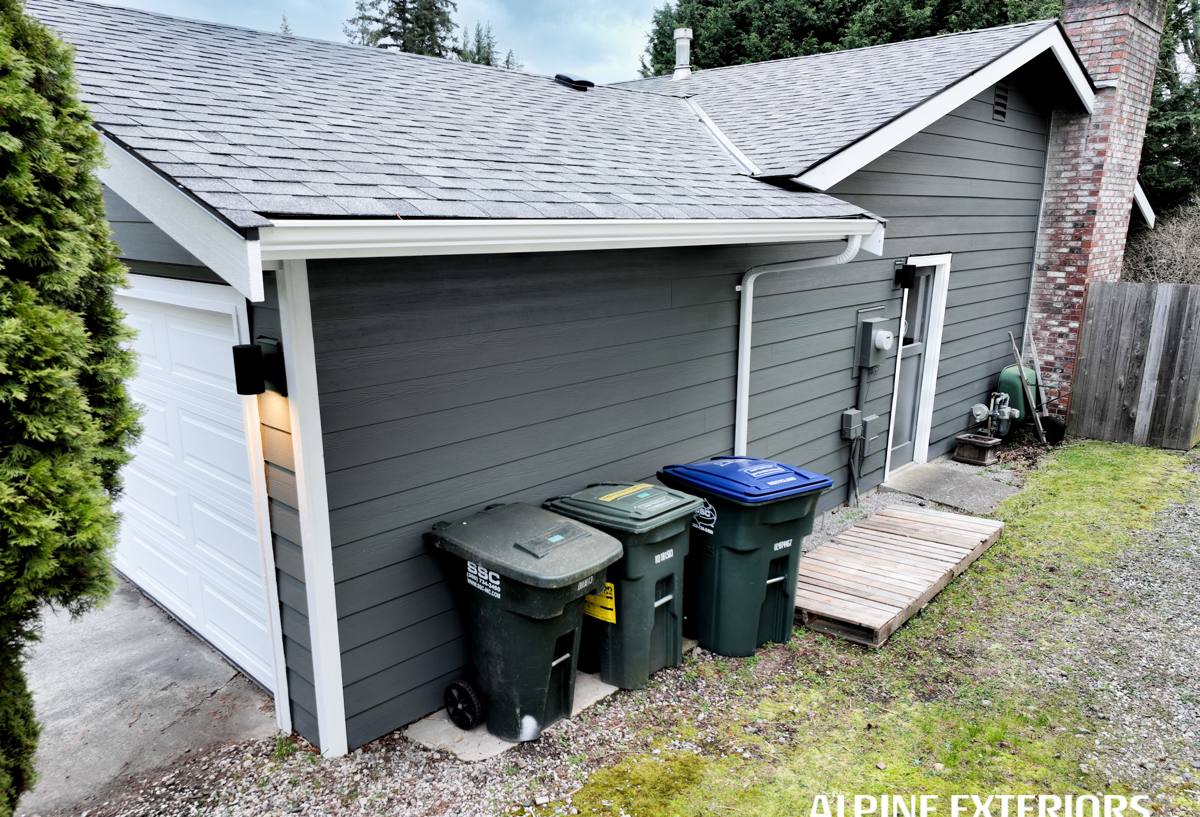
What Salt Air, Rain, and Moss Actually Do to Siding
Salt Air and Fasteners
Airborne salt doesn't just sit on the surface of a wall — it works into any exposed metal, including fasteners, flashing, and trim connectors. Over years, that accelerates corrosion in components that aren't rated for coastal exposure. It's a slow process, which is exactly why it gets overlooked: the siding can look fine on the outside while the fasteners holding it in place are quietly degrading underneath.
Wind-Driven Rain
Birch Bay's exposure to wind off the water means rain frequently hits siding at an angle instead of falling straight down. That changes how water behaves at every joint, seam, and penetration. A siding system that relies on caulk alone to keep water out, rather than proper lapping, flashing, and drainage behind the cladding, will eventually let moisture in — usually at corners, window trim, and butt joints first.
A Long Moss and Mildew Season
Whatcom County's damp, mild winters and shaded, moisture-retaining microclimates near the water give moss and mildew a long window to establish themselves on exterior surfaces. Siding materials that absorb moisture, or finishes that don't resist organic growth, end up needing more frequent cleaning and repainting than homeowners expect when they first choose them.
Why Fiber Cement Is the Right Material Category for This Location
Fiber cement is dimensionally stable, doesn't swell or rot when it gets wet, and is non-combustible. Those three properties matter directly in a salt-air, high-rain environment: the material itself isn't the weak point. The weak points in any siding job — coastal or not — are almost always the details: how water is managed behind the cladding, how fasteners are chosen and driven, and how joints and penetrations are sealed and flashed.
That's why we don't treat "fiber cement" as one interchangeable category. The brand, the specific product line, and the installation crew's attention to those details determine whether the siding performs for 30-plus years or starts showing problems within a decade.
Why We Install Only James Hardie Fiber Cement
We standardized on James Hardie products for every job we take on, including here in Birch Bay Village, for a few specific reasons:
- Climate-engineered product lines. Hardie manufactures its HZ5 line specifically for cooler, wetter regions like Western Washington, rather than using one formulation everywhere.
- Factory-applied ColorPlus finish. The finish is baked on under controlled conditions rather than field-applied, which gives more consistent coverage and better long-term resistance to fading and moisture than a job-site paint job.
- Non-combustible material. Fiber cement doesn't contribute fuel to a fire the way wood-based or foam-backed products can.
- A transferable warranty backed by a large, established manufacturer. That matters more on a coastal property, where warranty claims related to moisture or fastener corrosion are more likely to come up over the life of the siding.
We don't install vinyl, LP SmartSide, primed wood, cedar, or other fiber cement brands. That's a deliberate standard on our part, not a claim that every other product is unusable — it's that after years of installing and maintaining siding in this climate, Hardie is what we're willing to put our labor and our name behind.
What a Correct Installation Involves
The material is only half the job. The installation details below are where most long-term siding failures actually originate, coastal or not.
Drainage Behind the Cladding
Correct installation includes a weather-resistive barrier and a drainage plane behind the siding, not just a house wrap stapled flat against the sheathing. That gap lets any moisture that does get past the outer surface drain and dry out instead of sitting against the wall assembly.
Clearances at the Ground and Roofline
Fiber cement siding needs specific clearance from grade, roof surfaces, and decks. Skipping these clearances is one of the most common corner-cutting mistakes we see on re-siding jobs, and it's a direct path to moisture problems at the bottom courses of a wall.
Fastening and Fastener Selection
In a salt-air environment, fastener material and placement aren't a place to save time or money. Manufacturer-specified fastener types, correct embedment, and proper spacing all affect how the siding holds up to wind load and how resistant it is to the kind of corrosion that salt air accelerates.
Joint and Penetration Treatment
Butt joints, corners, and every point where the siding is penetrated (hose bibs, vents, light fixtures, etc.) need to be treated as water-management details, not just cosmetic seams. Given how often rain here hits at an angle, these are the spots most likely to leak if they're rushed.
James Hardie Fiber Cement vs. Other Approaches
| Factor | James Hardie Fiber Cement | Untreated / Generic Alternatives |
|---|---|---|
| Moisture response | Doesn't swell, rot, or delaminate when wet | Wood-based products can absorb moisture and degrade over time |
| Finish | Factory-baked ColorPlus finish, engineered for UV and moisture exposure | Field-applied paint varies with weather and application quality |
| Fire resistance | Non-combustible material | Varies; some materials contribute fuel to a fire |
| Climate matching | HZ5 line engineered for cooler, wetter regions like Whatcom County | Often one formulation regardless of region |
| Warranty | Manufacturer-backed, transferable | Varies widely by brand and installer |
Our Process for a Birch Bay Village Project
- On-site assessment. We look at your home's exposure — how much direct wind and salt air it gets, roofline and grade clearances, existing moisture damage, and trim/window condition.
- Scope and product selection. We walk through the right Hardie panel or lap profile, color, and any trim work needed, and put it in writing before anything starts.
- Removal and substrate check. Old siding comes off and we inspect the sheathing underneath for rot or damage before anything new goes up — this step catches problems that aren't visible from the outside.
- Weather barrier and drainage plane installation. This is the layer that does the real long-term water management work, and it goes in before a single piece of siding is hung.
- Siding installation to manufacturer spec. Correct clearances, fastening, and joint treatment throughout — not just on the parts of the house that are easy to reach.
- Final trim, caulking, and walkthrough. We go over the finished job with you before we consider it done.
Cost Factors for a Birch Bay Village Home
Every home is different, so we won't quote a number without seeing the property, but these are the factors that most affect cost on a job like this:
| Factor | Why It Affects Cost |
|---|---|
| Home size and wall complexity | More corners, gables, and trim details mean more labor and cut waste |
| Substrate condition | Rotted sheathing found during removal adds repair work before new siding can go up |
| Existing siding type | Some materials are more labor-intensive to remove and dispose of than others |
| Trim and accessory scope | Window trim, fascia, and soffit work are often bundled into a siding project |
| Access and site conditions | Waterfront lots, slopes, and limited access can add setup time |
Maintaining Fiber Cement Siding in a Salt-Air, Moss-Prone Setting
Fiber cement is low-maintenance compared to wood, but "low-maintenance" doesn't mean "no maintenance," especially this close to the water. A simple seasonal routine goes a long way:
- Rinse the siding periodically to clear salt residue and airborne debris, especially on walls facing the water
- Check shaded, north-facing, or tree-covered sections for early moss or algae growth and clean gently before it spreads
- Inspect caulking at joints, trim, and penetrations annually and have any cracked or missing sections resealed
- Keep gutters and downspouts clear so water isn't running down the face of the siding
- Trim back vegetation and maintain clearance between soil, mulch beds, and the bottom of the siding
- Have any impact damage or visible cracking repaired promptly rather than waiting for it to worsen
Why Hiring a Crew That Already Works in Birch Bay Village Matters
Siding installation isn't uniform across regions, and it shouldn't be. A crew that mainly works drier, inland areas of Whatcom County may not default to coastal-grade fastener choices or the clearance and drainage details that matter most this close to the bay. Familiarity with Birch Bay Village's specific exposure — its wind direction, salt air, and moss pressure — shows up in the small decisions made on the job site, the ones that determine whether siding looks and performs well ten and twenty years out, not just on installation day.
If you're weighing a siding replacement or new construction siding for a home in Birch Bay Village, we're happy to take a look at your specific property and walk you through what we'd recommend. Reach out for a free, no-pressure estimate using the form below.