 Birch Bay Siding
 Birch Bay Village Roofs Take a Different Kind of Beating
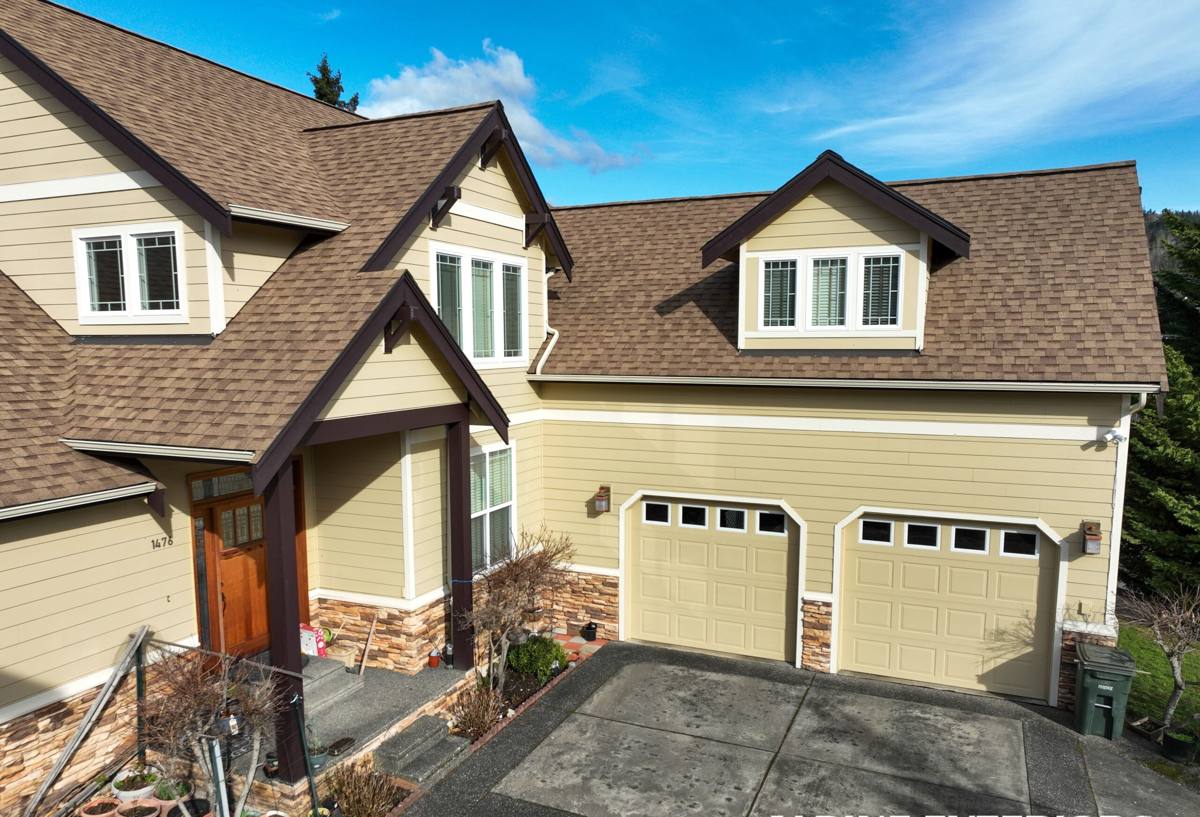
Birch Bay Village sits close enough to the water that its roofs deal with a combination most inland Whatcom County homes don't: salt-laden air off the bay, wind-driven rain that gets pushed sideways under normal flashing details, and a moss season that runs long because the shade, humidity, and mild temperatures rarely let roofs fully dry out between rain events. None of those three things alone is unusual for Western Washington. Together, on a shoreline-adjacent community, they age a roof faster than the same roof would age twenty minutes inland.
Storm damage repair here isn't just "patch the hole and move on." A roof that's already dealing with salt-accelerated corrosion on fasteners and flashing, and moss roots working into shingle mat, doesn't respond to a storm the way a newer, drier roof does. A wind event that would just lift a shingle tab on a healthy roof can tear it loose entirely if the nailing or the shingle itself was already compromised. That's the context we bring to every storm repair call in this neighborhood.
What Actually Counts as Storm Damage
Homeowners usually call us after something obvious — a missing shingle, a branch through the roof deck, water coming through a ceiling. But a lot of the storm damage we find during an inspection isn't obvious from the ground, and it's not always from the most recent storm. Wind and rain damage tends to show up in a few recognizable patterns:
- Wind-lifted or creased shingles — tabs that got peeled back far enough to break the sealant bond, even if they laid back down and look fine from the driveway.
- Torn or displaced flashing — around chimneys, skylights, and roof-to-wall transitions, where wind-driven rain finds the smallest gap.
- Granule loss — heavy rain and hail-adjacent debris can strip the protective granule layer off shingles, which shows up as bald patches and premature aging, not a leak right away.
- Impact damage — from falling branches or debris carried by wind, which can crack shingles or punch through decking without an obvious hole from above.
- Compromised sealant lines — around penetrations (vents, pipe boots, satellite mounts) that were already brittle from sun and salt exposure and finally gave way under wind pressure.
The tricky part is that several of these don't leak immediately. A creased shingle or a torn seal can sit for weeks or months before the next heavy rain finds its way through, which is exactly why we recommend a roof check after any significant wind event, not just after you see a stain on the ceiling.
What a Correct Storm Repair Actually Involves
Assessment Before Anything Gets Touched
We start on the roof, not with a quote written from the ground. That means checking the deck for soft spots, pulling back shingles around suspect areas to see if water has already tracked underneath, and inspecting flashing and penetrations, not just the section that's visibly damaged. Storm damage rarely stays confined to one tidy area, and a repair that only addresses the visible symptom often leaves the actual entry point open.
Matching the Repair to the Roof's Actual Condition
If the roof around the damaged section is otherwise sound, a targeted repair — replacing shingles, re-flashing, resealing penetrations — is the right, honest answer. If the surrounding material is already brittle, moss-compressed, or corroded from years of salt exposure, we'll tell you that plainly instead of nailing new shingles into a section that's going to fail again in the next storm. That's a judgment call that only means something coming from someone who's actually seen your roof, not a phone estimate.
Getting the Details Right
Storm repairs fail most often at the details, not the field shingles. Correct step flashing at wall transitions, proper pipe boot replacement (not just resealing an already-cracked boot), and nailing patterns that meet manufacturer wind ratings all matter more here than in a lot of drier inland climates, because Birch Bay's wind-driven rain will find any shortcut.
Our Process From Call to Closed-Up Roof
- Initial contact and scheduling — we get basic information about what happened and when, and get someone out promptly, especially if there's active water intrusion.
- On-roof inspection — full assessment of the damaged area and the surrounding roof, including decking, flashing, and ventilation, not just the obvious spot.
- Temporary weatherproofing if needed — if there's an active leak risk before the full repair can happen, we get it covered and dry first.
- Written scope and honest recommendation — repair, or a conversation about replacement if the roof's condition warrants it, with the reasoning explained, not just a number.
- The repair itself — deck repair where needed, correct underlayment and flashing detail work, matching shingles as closely as possible, and proper cleanup.
- Final check — confirming the repair area and adjacent sections are sealed and sound before we consider the job done.
Repair vs. Replace: What Actually Drives That Decision
Not every storm-damaged roof needs to be replaced, and not every roof that "just needs a patch" should stop there. These are the factors that actually determine which side of the line a Birch Bay Village roof falls on.
| Factor | Leans toward repair | Leans toward replacement |
|---|---|---|
| Age of roof | Under roughly 12-15 years | Near or past typical shingle service life |
| Extent of damage | Localized to one section | Scattered across multiple slopes |
| Decking condition | Solid, dry sheathing found under damage | Soft, delaminated, or repeatedly wet decking |
| Moss/algae history | Managed, minimal mat penetration | Heavy moss growth with root intrusion into shingle mat |
| Fastener/flashing condition | Sound, minimal corrosion | Significant salt-air corrosion on nails, flashing, or fasteners |
| Prior repair history | First repair on this roof | This is the third or fourth patch in a few years |
Cost ranges for storm repairs vary widely depending on how much of the deck needs replacing, how much flashing work is involved, and whether matching shingles are readily available. We'll give you real numbers after we've actually seen the damage, not before.
Salt Air, Moss, and the Birch Bay Maintenance Reality
Salt Air's Slow Damage
Being close to Birch Bay's shoreline means airborne salt settles on roofing metal, fasteners, and flashing continuously, not just during storms. Over years, that accelerates corrosion on exposed nail heads, drip edge, and flashing seams — the exact components that are supposed to keep wind-driven rain out. A roof with corroded flashing has less margin to survive a storm without damage than the same roof twenty minutes inland.
Moss Season That Doesn't Really End
Western Washington's moss season is long everywhere, but shaded, humidity-holding sections of roof in Birch Bay Village stay damp longer between rain events than more exposed roofs. Moss doesn't just look bad — it holds moisture against the shingle surface and works its rhizoids under and into the shingle mat, weakening the material's grip on granules and its resistance to wind lift. A moss-compromised shingle is far more likely to tear loose in a wind event than a clean one.
Driving Rain and Wind Direction
Storms coming off the water often push rain sideways rather than straight down, which stresses flashing, siding-to-roof transitions, and any gap that a straight-down rain would never find. This is part of why we pay particular attention to wall flashing and penetration details on every Birch Bay Village repair — it's usually where the real vulnerability is, not the open field of shingles.
Insurance and Documentation
Many storm repairs are at least partially covered by homeowner's insurance, depending on your policy and the cause of damage. We document what we find with photos before we touch anything, which gives you something concrete to bring to an adjuster. We're not a public adjuster and we don't handle your claim for you, but we'll give you an honest, accurate written assessment of the damage and the repair needed — not an inflated one written to maximize a claim.
What to Do Right After a Storm
- Do a visual check from the ground with binoculars — don't get on the roof yourself, especially on wet or wind-damaged sections.
- Check attic and ceiling areas for staining, damp insulation, or drips, even if nothing looks wrong from outside.
- Photograph any visible damage — missing shingles, damaged gutters, debris on the roof — for your own records.
- Cover any active leak from the inside with a bucket or tarp to limit interior damage while you arrange an inspection.
- Avoid the temptation to caulk or seal anything yourself before an inspection — it can mask the real entry point and complicate diagnosis later.
- Call for an inspection promptly — small storm damage left open to the weather turns into deck rot and interior damage fast in this climate.
Why a Crew That Already Works Birch Bay Village Matters
A roofer who works this specific stretch of Whatcom County coastline knows what a salt-air-corroded flashing nail looks like versus a normal one, knows how far moss growth typically gets before it's compromising shingle integrity here, and has a realistic sense of how local wind patterns off the bay tend to concentrate damage on certain roof faces. That local pattern recognition is the difference between a repair that addresses the actual problem and one that just replaces what's visibly broken and leaves the underlying vulnerability in place for the next storm.
We also know that storm damage in Birch Bay Village doesn't wait for convenient scheduling, and that a roof left open to driving rain gets worse fast. Being local means we can respond quickly and follow up on the work afterward, rather than treating it as a one-time visit.
Get an Honest Look at Your Roof
If a recent storm left you with missing shingles, a new leak, or just a nagging feeling something's not right up there, we'll come take a real look and tell you plainly what we find — repair, replace, or nothing urgent at all. Reach out for a free, no-pressure estimate using the form below.