 Birch Bay Siding
 Why Blaine Roofs Wear Differently
Blaine sits right up against Semiahmoo Bay and the open water of the Salish Sea, and that location shapes what a roof has to survive here. Salt-laden air moves inland with the marine wind and slowly attacks exposed metal — nail heads, flashing, vent caps, and fastener coatings all corrode faster near the water than they would twenty miles inland. Add in driving rain that comessideways off the bay during winter storms, and you've got a roof that's being tested on wind-driven water intrusion at valleys, flashing laps, and ridge caps, not just straight-down rainfall.
Then there's moss. Whatcom County's wet season runs long — often eight months or more of consistently damp conditions — and shaded, north-facing roof slopes in Birch Bay and Blaine rarely get a real chance to dry out between storms. Moss and algae take hold in that environment, and once established they hold moisture against the roofing material, work into shingle laps, and shorten the usable life of a roof that might otherwise have years left in it. A roof built for a drier inland climate, installed without regard for these conditions, ages faster here than it should.
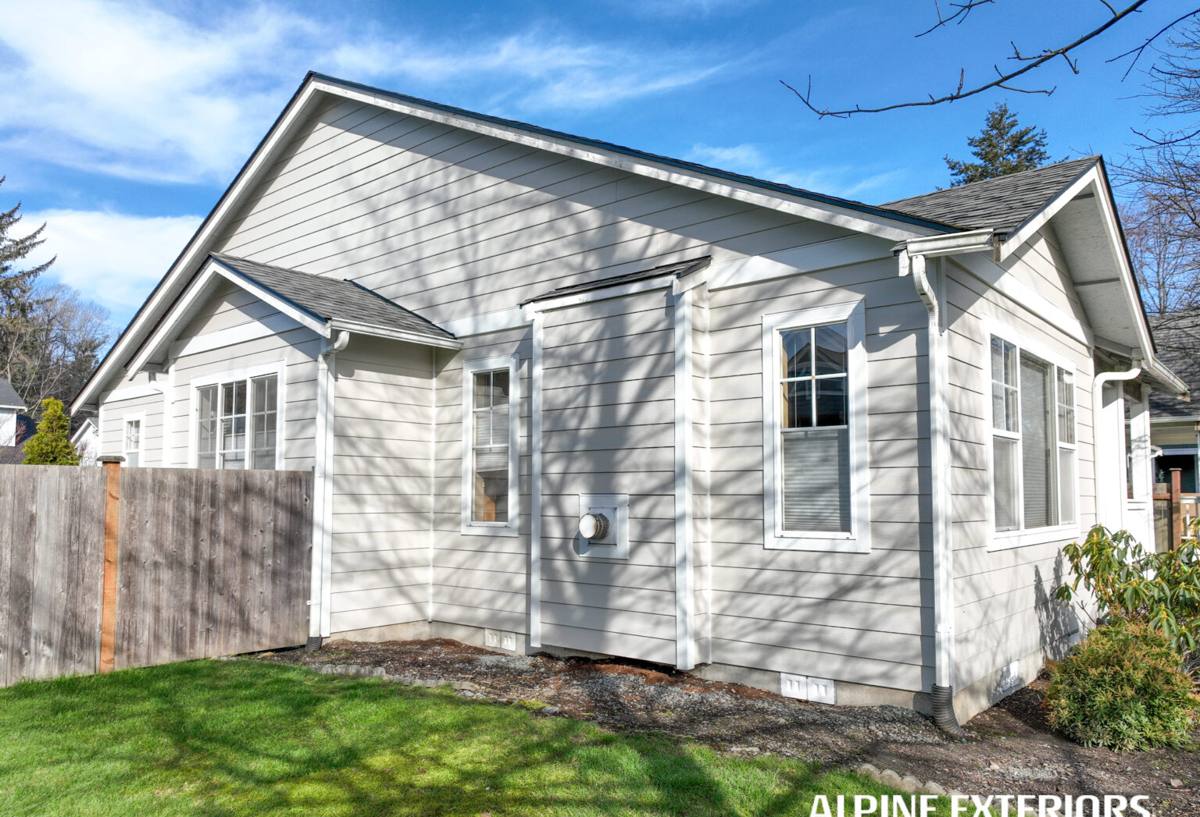
Signs a Blaine Roof Needs Replacing, Not Just Another Repair
Repairs make sense when a roof is fundamentally sound and the problem is localized. Replacement becomes the honest answer once the roof is failing broadly rather than in one spot. Homeowners in Blaine typically see a combination of these signs before we recommend full replacement:
- Granule loss heavy enough that you can see bare, shiny patches on multiple slopes
- Shingles curling, cupping, or lifting at the edges, especially on the west and south exposures
- Moss mats thick enough to hold visible moisture, particularly on shaded slopes
- Leaks that keep returning in different spots after repairs, rather than staying fixed
- Soft or spongy decking felt underfoot during inspection, indicating water has reached the sheathing
- Daylight visible through the roof deck from inside the attic
- A roof at or past 20-25 years old for standard asphalt shingle, regardless of appearance
One or two of these on their own might still be repairable. Several together, especially with the roof's age already in that 20-25 year range, usually means a homeowner is paying for repairs that only buy a season or two before the next leak shows up somewhere new.
What a Correct Roof Replacement Actually Involves
A roof replacement is more than stripping old shingles and nailing down new ones. In a climate like Blaine's, the details underneath the visible roofing material are what determine whether the new roof actually outperforms the old one.
Tear-Off and Deck Inspection
Every layer of old roofing comes off down to the deck, not just the top layer. That's the only way to actually see the sheathing underneath. Any soft, delaminated, or water-damaged decking gets replaced before anything new goes down — installing new roofing over a compromised deck just hides the problem and guarantees an early failure.
Underlayment and Water Protection
Given how much wind-driven rain Blaine gets off the bay, underlayment choice matters more here than it would in a drier region. We use synthetic underlayment for its tear resistance and consistent water-shedding performance, and we install self-adhered ice-and-water barrier at the vulnerable points — eaves, valleys, and roof-to-wall transitions — where wind-driven water is most likely to work its way underneath the roofing material.
Ventilation
Proper intake and exhaust ventilation keeps the attic temperature and moisture level balanced, which does two things: it protects the underside of the new roof deck from condensation damage, and it reduces the freeze-thaw and moisture cycling that helps moss and algae take hold in the first place. A roof replacement that skips ventilation upgrades on an older home is leaving a known problem in place.
Flashing and Valleys
Flashing around chimneys, skylights, and wall intersections, along with valley metal, is where most roof leaks actually start — not in the open field of shingles. We replace flashing rather than reuse it whenever a roof is being torn off, since old flashing has already taken years of salt-air corrosion and doesn't owe anyone another decade of service.
Choosing the Right Roofing Material for Blaine's Climate
There's no single "best" roofing material — there are trade-offs, and the right call depends on the home, the budget, and how much long-term maintenance a homeowner wants to take on. Here's how the common options actually perform in a coastal Whatcom County environment:
| Material | Typical Lifespan Here | How It Handles Salt Air & Moss | Relative Cost |
|---|---|---|---|
| Architectural asphalt shingle | 25-30 years | Good corrosion resistance in fasteners/flashing when installed with quality metal; algae-resistant granule options help slow moss growth | Moderate |
| Standing seam metal | 40-50+ years | Excellent water shedding on steep slopes and driving rain; needs marine-grade fasteners and coatings near the water to avoid accelerated corrosion | Higher |
| Cedar shake | 20-30 years with upkeep | Attractive but requires real maintenance discipline in a wet, moss-prone climate — moisture retention and fire rating are the honest trade-offs | Higher |
| Composite/synthetic shake | 30-50 years | Doesn't absorb moisture the way natural wood does, so moss and rot risk drop significantly; performs well in coastal exposure | Moderate to Higher |
For most Blaine homes, we lean toward architectural asphalt with algae-resistant granules or a synthetic shake product as the practical middle ground — strong performance against this climate's specific stresses without the ongoing maintenance commitment that natural cedar demands near the water.
Our Roof Replacement Process
- Inspection and written estimate — we walk the roof, check the attic, and document deck condition, ventilation, and flashing before quoting anything.
- Material selection — we go over the trade-offs above based on the home's exposure, slope, and the homeowner's budget and maintenance preference.
- Scheduling around weather — we plan tear-off for a realistic dry window and keep the home covered and protected if conditions shift mid-project.
- Tear-off and deck repair — full removal down to the sheathing, with any damaged decking replaced before moving forward.
- Underlayment, flashing, and ventilation installation — the protective layers that actually determine long-term performance.
- Roofing material installation — installed to manufacturer specification, not shortcuts, since warranty coverage depends on it.
- Cleanup and magnetic nail sweep — yard, driveway, and landscaping cleared of debris and stray fasteners.
- Final walkthrough — we go over the finished roof with the homeowner and provide documentation for warranty purposes.
Why a Crew That Already Works in Blaine Matters
Roofing crews that mainly work inland don't always account for how differently a coastal roof ages. A crew already working Blaine and the surrounding Birch Bay area knows which slopes on a given property will hold moss longest, understands where wind-driven rain actually gets into a roof system versus where it just runs off, and specs fasteners and flashing metal that hold up against salt air instead of corroding within a few seasons. That local familiarity also shows up in scheduling — knowing the realistic dry windows in a Whatcom County wet season means less risk of a project getting stretched out or exposed to weather mid-tear-off. It also matters for permitting and code requirements specific to the county, so the work is done right the first time rather than needing correction later.
Living With Moss and Algae After Replacement
A new roof in Blaine still lives in the same climate that aged out the old one. A few ongoing habits go a long way toward protecting that investment:
- Keep gutters and downspouts clear so water isn't backing up under the roof edge
- Trim back tree limbs that shade roof slopes and keep them damp longer than they need to be
- Have moss and algae growth removed with a soft wash approach rather than a pressure washer, which can strip granules and shorten shingle life
- Pay closer attention to north-facing and heavily shaded slopes, where moss tends to establish first
- Schedule a roof inspection every year or two, especially after major windstorms off the bay
Timing a Roof Replacement Around Local Weather
There's no perfect month to replace a roof in a marine climate, but some windows are more workable than others. We watch the forecast closely, plan tear-off for the driest realistic stretch available, and keep material and tarps on hand to protect an open roof deck if weather moves in faster than expected. Waiting for a leak to become an emergency during the wettest part of the year is the scenario we're trying to help homeowners avoid — planning a replacement before that point gives everyone more control over timing and cost.
If your roof is showing its age or you're just not sure whether it needs repair or replacement, we're happy to take a look and give you a straightforward, no-pressure estimate. Use the form below to get started.