 Birch Bay Siding
 Why Windows Fail Faster Near Blaine and Birch Bay
Homes along this stretch of Whatcom County sit close to the water — Semiahmoo Bay, Drayton Harbor, and the Strait of Georgia all put moisture and salt into the air that blows across siding and window openings almost year-round. That combination is harder on windows than most inland homeowners ever have to think about. Salt-laden air accelerates corrosion on hardware and certain frame materials, wind-driven rain pushes water into gaps that would stay dry in a calmer climate, and the region's long, damp winters give moss and algae months to establish themselves on north- and west-facing walls and trim.
None of this means windows in Blaine or Birch Bay are doomed to fail early. It means the installation has to account for conditions a generic install in a drier part of the state wouldn't need to plan around. A window that's a good product but poorly flashed, or well-flashed but the wrong material for a waterfront exposure, will show problems within a few winters — usually as staining, soft trim, or a draft that wasn't there the year before.
What "Driving Rain" Actually Does to a Window Opening
Driving rain isn't just heavier rainfall — it's rain pushed sideways by wind, which means it hits window openings at an angle and gets forced up under trim and into any gap in the sealant or flashing. A window that would stay bone-dry in still conditions can take on water during a windy December storm off the Strait. This is why the flashing and sealing details matter as much as the window unit itself in this climate.
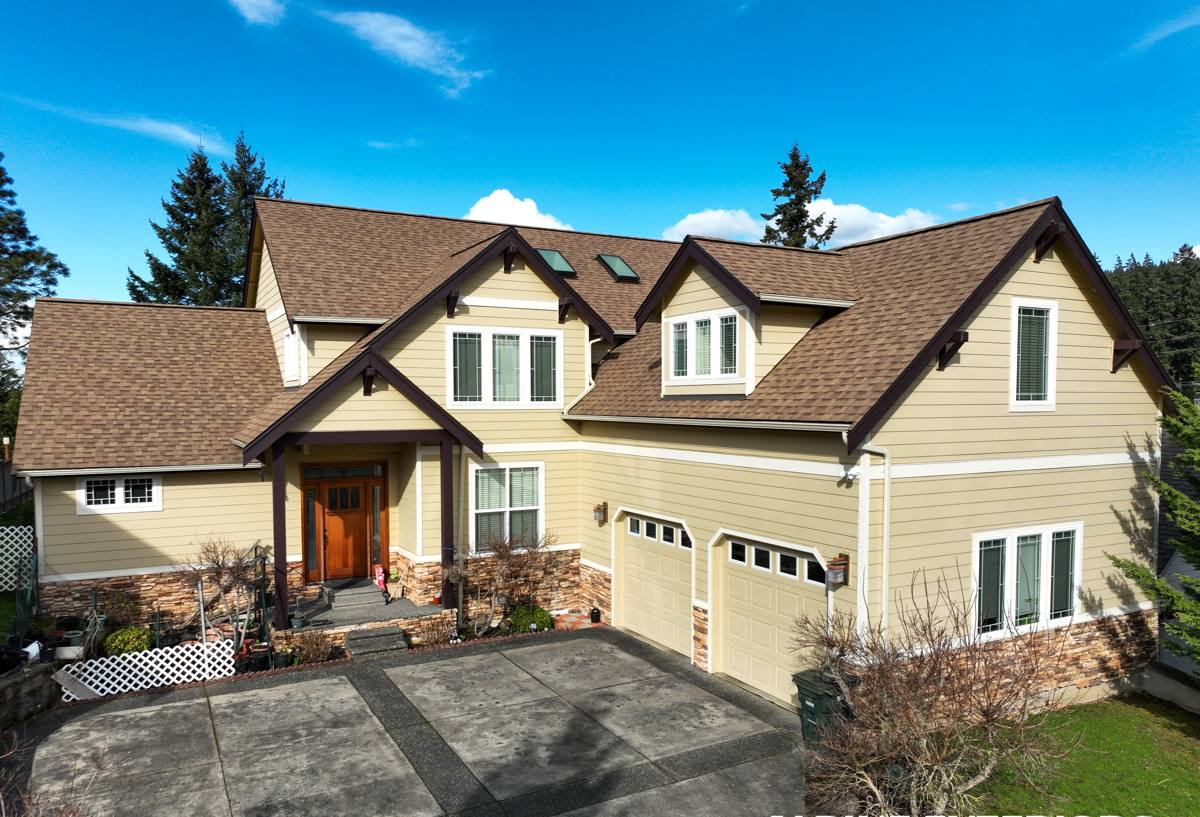
Signs a Blaine Home's Windows Need Attention
Because moisture problems around windows develop slowly, most homeowners don't notice until the damage has spread into the wall framing. Catching it earlier keeps the repair simpler and cheaper.
- Soft, discolored, or bubbling trim or siding directly around a window frame
- Fogging or a milky haze between panes of a double-pane window (a sign the seal has failed)
- Visible moss or dark streaking on the sill, trim, or the wall just below a window
- A noticeable draft or cold spot near a window on a windy day, even with it fully latched
- Difficulty opening, closing, or locking a window that used to operate smoothly
- Peeling interior paint or a musty smell near a window, which can point to moisture already inside the wall cavity
Any one of these on its own might just mean a caulk touch-up. Two or more together, especially on the side of the house that takes the worst weather, usually means it's worth having the window and the opening looked at properly rather than patched.
What a Correct Window Installation Actually Involves
A window installation is really two jobs layered together: setting the window unit itself, and building a watertight, wind-tight opening around it. In a coastal climate, the second job is where most of the long-term performance comes from.
Flashing and Water Management
Every opening should get sill pan flashing — a sloped, sealed pan under the window that catches any water that gets past the frame and directs it back outside instead of into the wall. Head flashing above the window and properly lapped side flashing tie into the home's weather-resistant barrier so water always sheds downward and outward, never into a seam. This layered approach matters more here than in a dry inland climate, because it assumes water will occasionally get past the outer seal and gives it a way out.
Air Sealing and Insulation
The gap between the window frame and the rough opening needs to be sealed with a material that stays flexible through temperature swings and doesn't compress or crack over time — not just stuffed with fiberglass or filled solid with expanding foam, which can bow a frame out of square. Proper low-expansion foam or backer rod and sealant keeps the opening airtight without distorting the window.
Fastening and Structural Fit
The window has to be shimmed level, plumb, and square before it's fastened, and fastened at the manufacturer's specified points — skipping this is a common source of operational problems (windows that stick or won't latch) down the road. A slightly out-of-square window puts stress on the seals and hardware every time it's opened or closed.
Choosing a Window Frame Material for a Waterfront Climate
Frame material has a bigger effect on long-term performance here than most people expect, mainly because of salt exposure and moisture, not just temperature.
| Frame Material | Salt-Air Performance | Maintenance | Typical Cost Tier |
|---|---|---|---|
| Vinyl | Very good — won't corrode or rust | Low; occasional cleaning | $ |
| Fiberglass | Excellent — stable in wet, salty air | Low | $$$ |
| Wood-clad | Fair — exterior cladding helps, but any breach exposes wood | Higher; watch for moss and paint failure | $$$ |
| Aluminum | Poor to fair — prone to pitting and corrosion near salt air | Moderate | $$ |
We install vinyl and fiberglass windows on the large majority of Blaine and Birch Bay projects for this reason — both hold up to salt air without the corrosion risk aluminum carries or the moisture vulnerability of exposed or poorly maintained wood. Wood-clad windows can still work well on some homes, but we're upfront that they ask more of the homeowner in terms of upkeep, particularly on walls that stay shaded and damp for long stretches of the year.
Moss, Shade, and North-Facing Exposures
Birch Bay and Blaine get enough overcast, damp weather that moss and algae growth on siding and trim is routine, especially on north-facing walls and anywhere tree cover blocks the sun. Around windows, this matters for two reasons. First, moss holds moisture against trim and sills, which shortens the life of paint, caulk, and any exposed wood. Second, a window opening that isn't properly flashed can let that trapped moisture work its way behind the trim rather than just sitting on the surface — that's where rot starts. Part of doing this job right is making sure trim details shed water instead of collecting it, so moss stays a surface issue instead of a structural one.
New Construction, Full Replacement, and Retrofit — Not the Same Job
"Window installation" covers a few different situations, and the right approach depends on which one applies to a given home.
New Construction Windows
Installed into a bare rough opening before siding goes on, giving full access to integrate flashing with the house wrap from scratch. This is the cleanest scenario for getting water management details right.
Full-Frame Replacement
The old window and its frame come out entirely, exposing the rough opening so it can be inspected and re-flashed properly. This is usually the right call when there's already evidence of water intrusion, rot, or a frame that's out of square — it costs more than a pocket replacement but it's the only way to actually fix a problem in the opening itself rather than build a new window around it.
Pocket (Insert) Replacement
The new window is fitted into the existing frame, which stays in place. It's faster and less disruptive, and it's a reasonable option when the existing frame is sound, square, and free of water damage. It's the wrong choice when the opening already has hidden moisture problems, because it seals those problems in rather than solving them.
We'll tell a homeowner honestly which category their project falls into once we've actually looked at the opening — not before.
How Our Process Works
- On-site assessment — we look at the existing windows, trim condition, and any signs of past water intrusion before recommending an approach.
- Product selection — we walk through frame material, glass package, and style options suited to the home's exposure, not a one-size-fits-all recommendation.
- Opening prep — old units are removed carefully to protect surrounding siding and trim, and the rough opening is inspected for hidden damage before anything new goes in.
- Flashing and installation — sill pan, head flashing, and air sealing go in per manufacturer and code requirements, then the window is set level, plumb, and square.
- Exterior finish work — trim, caulking, and any siding tie-in are finished to shed water correctly, matching the surrounding exterior as closely as the project allows.
- Final walkthrough — we check operation, locks, and seals with the homeowner before calling the job done.
What Affects the Cost of a Window Installation
Every home is different, so we don't quote a price without seeing the job, but these are the main factors that move the number up or down.
| Factor | Why It Matters |
|---|---|
| Number of windows | Per-window cost typically drops as the total count on one project goes up |
| Frame material | Vinyl is the most budget-friendly; fiberglass and wood-clad cost more up front |
| Installation type | Full-frame replacement costs more than a pocket install because it involves more labor and opening repair |
| Condition of the opening | Hidden rot or past water damage adds repair work before the new window can go in |
| Glass package | Upgraded low-E coatings or triple-pane glass add cost but can help with both energy loss and condensation |
| Trim and siding tie-in | Matching existing trim profiles or siding material adds finish labor |
Why It Matters That We Already Work in Blaine and Birch Bay
A crew that installs windows across a range of inland climates but doesn't regularly work this stretch of Whatcom County coastline can still install a window correctly on paper and still get the details wrong for this environment — using a frame material that looks fine for the first year or two but starts pitting in salt air, or flashing an opening the way they always have without accounting for how hard wind-driven rain hits a west-facing wall near the water. Local experience means we've already seen which details hold up here and which ones don't, on homes with the same exposure as yours.
It also means we're not guessing at how a Blaine or Birch Bay home ages. We've seen what five or ten years of salt air and moss season does to different frame materials and different flashing details, and that shapes what we recommend and how we install it — not just what's cheapest or fastest to put in.
Caring for New Windows After Installation
A properly installed window in this climate still benefits from basic upkeep. A few habits go a long way:
- Rinse salt residue and grime off frames and glass a couple of times a year, especially on walls facing open water
- Check exterior caulking annually and re-seal any cracked or shrunken beads before winter storms arrive
- Keep gutters and downspouts clear so roof runoff isn't sheeting down over window trim
- Trim back vegetation that shades a wall and keeps it damp, which slows drying and encourages moss
- Operate locks and hardware a few times through the year so they don't seize from disuse
If you're weighing whether it's time to replace aging windows, or you've noticed one of the warning signs above, we're happy to take a look and give you a straight answer — no pressure, no upsell. Fill out the form below for a free estimate on your Blaine or Birch Bay home.