 Birch Bay Siding
 Board & Batten in Cottonwood Beach: A Look Built for the Shoreline
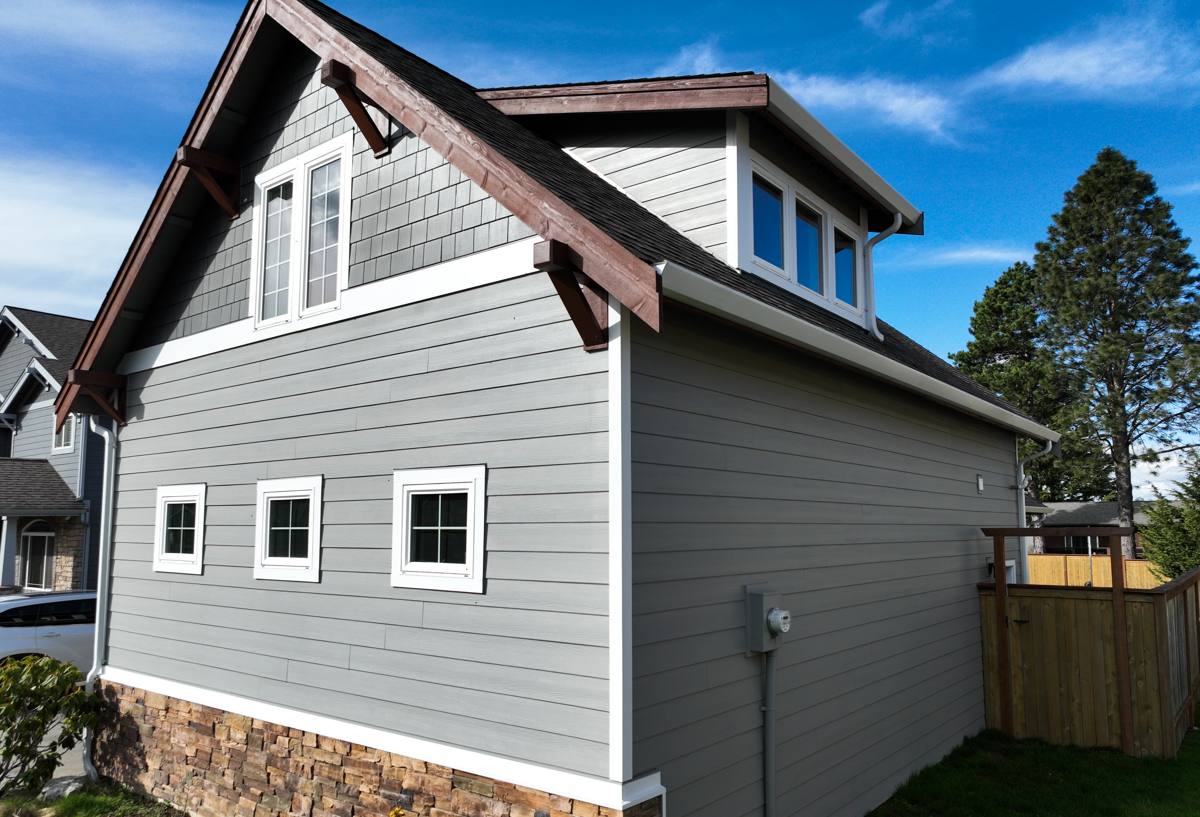
Board and batten has become one of the most requested siding profiles in Cottonwood Beach, and it's easy to see why. The bold vertical lines suit the mix of craftsman cottages, modern coastal builds, and remodeled beach houses that line this stretch of Whatcom County waterfront. It reads as clean and substantial next to cedar shakes and shingle-style neighbors, and it holds up visually against the wide-open sky and water views that define the area.
But board and batten is also one of the more demanding profiles to install correctly, especially this close to the water. Every vertical batten creates a seam, and every seam is a place where wind-driven rain, salt spray, and moss can find a way in if the assembly underneath isn't built right. On a home a mile inland that might be a minor detail. On a home in Cottonwood Beach, it's the difference between siding that looks sharp for decades and siding that's showing streaking, soft spots, or lifted battens inside of ten years.
What This Climate Does to Vertical Siding
Cottonwood Beach sits close enough to the water that salt air is a daily fact of life, not an occasional event. Salt-laden air accelerates corrosion on exposed fasteners, staples, and lower-grade trim, and it breaks down cheap paint films faster than an inland environment would. Add in the driving rain that comes through Whatcom County off the Strait of Georgia and the Salish Sea during fall and winter storms, and you've got wind pushing water sideways into siding, not just letting it run downward the way gravity-fed drainage assumes.
Then there's moss. Western Washington's long wet season, running roughly from October through May, keeps north- and east-facing walls damp for weeks at a stretch, especially where trees or neighboring structures block sun and airflow. Moss and algae don't just look bad — they hold moisture against the siding surface and, over time, work into any gap or unsealed joint they can find.
Board and batten is more exposed to all of this than a standard horizontal lap profile, simply because it has more vertical joints and more places where two pieces of material meet. That's not a reason to avoid the look — it's a reason to be strict about how it's built.
How We Build Board & Batten With James Hardie
The System, Not Just the Look
We install James Hardie fiber cement exclusively, and for board and batten that typically means HardiePanel vertical siding set behind HardieTrim battens, both finished in a factory-applied ColorPlus finish. The panel underneath does the structural and weather-resistance work; the battens create the shadow lines and rhythm that make the profile recognizable. Because both pieces come from the same manufacturer as one engineered system, the expansion rates, fastening requirements, and finish coatings are designed to work together — which matters when the assembly is going to spend its life absorbing salt spray and driving rain.
James Hardie's climate-engineered product lines are formulated with the moisture exposure of regions like the Pacific Northwest in mind, which is part of why we standardized on the brand rather than mixing and matching cheaper alternatives for parts of a job.
How It Compares to Other Board & Batten Materials
| Material | Salt-air / moisture behavior | Maintenance | Typical warranty |
|---|---|---|---|
| James Hardie fiber cement | Non-combustible, engineered resistance to moisture-driven damage when installed to spec | Occasional wash; factory finish holds color | Long transferable product warranty, separate finish warranty |
| LP SmartSide (engineered wood) | Wood-based substrate; edges and cuts need diligent sealing near salt air and standing moisture | Field-applied finishes need more frequent upkeep | Shorter, more installation-sensitive warranty terms |
| Vinyl board and batten | Won't rot, but can warp or fade under UV and temperature swings; seams are a weak point in wind-driven rain | Low, but damage often means full panel replacement | Typically shorter and less transferable |
| Cedar or primed spruce | Natural material; absorbs and releases moisture, prone to moss growth without regular treatment | Highest — refinishing, sealing, and moss treatment on a recurring schedule | Product warranty is on the wood only, not the finish |
This is a general comparison, not a claim that any of these products fail outright — plenty of them perform fine when installed and maintained correctly. But we've made a professional decision to install only James Hardie because, in a marine climate like this one, the trade-offs on maintenance burden, moisture behavior, and long-term finish performance consistently favor fiber cement with a factory finish over the alternatives.
What a Correct Installation Involves
The board and batten look is simple. The assembly behind it is not. Getting it right in Cottonwood Beach means treating every layer as part of the water-management system, not just the visible finish.
Key steps we don't skip
- Confirming the water-resistive barrier (house wrap) is continuous, lapped correctly, and free of tears before any siding goes up
- Flashing every window, door, and penetration so water is directed out and down, never trapped behind the panel
- Setting proper gaps at panel joints, corners, and terminations per manufacturer spec so the material can move without cracking the finish
- Fastening with corrosion-resistant fasteners appropriate for a salt-air environment, placed and spaced to manufacturer requirements
- Maintaining consistent batten spacing and reveal so the finished wall reads clean from every angle, not just straight on
- Keeping bottom clearance off grade, decks, and roof lines so splash-back and standing water don't sit against the siding
- Field-sealing cut edges and touching up any exposed fastener heads with manufacturer-matched product
Skip any one of these and the siding can still look right on installation day. The problems that show up later — streaking below joints, soft trim, battens that start to separate — almost always trace back to one of these steps being rushed or skipped.
Why We Don't Install LP, Vinyl, or Cedar Board & Batten Here
We get asked fairly often why we won't quote board and batten in LP SmartSide, vinyl, or cedar, especially when a homeowner has priced one of those against Hardie. The honest answer is that each of those materials asks the homeowner to take on a maintenance or moisture-management burden that fiber cement with a factory finish doesn't.
Engineered wood products like LP SmartSide perform well in a lot of climates, but they're still wood-based, and wood-based products are more sensitive to sustained moisture exposure at cut edges and seams — exactly the conditions Cottonwood Beach's rain and salt air create. Vinyl sheds water fine but relies on overlapping seams that can work loose under wind-driven rain, and it doesn't hold up the same way to UV and temperature cycling over decades. Cedar and primed spruce are honest, attractive materials, but they need a recurring cycle of refinishing and moss treatment to keep performing — a cycle that gets harder to keep up with the closer a home sits to the water.
James Hardie's fiber cement, factory-finished with ColorPlus, gives us a non-combustible material with an engineered moisture profile and a finish warranty that isn't dependent on the homeowner keeping up a maintenance schedule to protect the substrate. That's why it's the only board and batten system we put our name behind.
Our Process for Cottonwood Beach Homes
Because we already work in this neighborhood, we know what to check before a single panel goes up.
Site assessment. We walk the exterior, note sun and shade exposure on each wall, check existing moss and staining patterns, and look at how water currently moves off the roof and around the foundation.
Moisture and substrate check. Where we're removing existing siding, we check the sheathing underneath for hidden moisture damage before closing anything back up. Problems found now are far cheaper to fix now than after new siding is on.
Water-resistive barrier and flashing. This layer gets built out fully and inspected before any Hardie product is installed — it's the part of the job nobody sees once it's finished, and it's the part that determines whether the siding performs for the next 30-plus years.
Panel and batten installation. HardiePanel goes up to spec, battens go on with correct spacing and fastening, and every joint, corner, and penetration is treated as a potential water path.
Finish and cleanup. We touch up fastener heads and cut edges with manufacturer-matched product, walk the job with the homeowner, and clean the site thoroughly before we leave.
Maintenance in a Moss-Prone, Salt-Air Neighborhood
James Hardie's factory finish is low-maintenance, not no-maintenance. In a location like Cottonwood Beach, a little seasonal attention goes a long way toward keeping board and batten looking the way it did on installation day.
- Rinse the siding with a garden hose once or twice a year to clear salt residue and airborne grime, especially on walls that face the water
- Keep gutters and downspouts clear so water is directed away from the wall rather than sheeting down over battens and joints
- Trim back trees and shrubs that shade siding and keep it damp, particularly on north-facing walls where moss takes hold fastest
- Do a quick annual look at caulking around windows, doors, and trim, and flag any cracking or separation early
- Avoid pressure washing directly into seams and battens — a soft wash is enough and won't force water behind the panel
What Board & Batten Costs to Get Right
Board and batten typically costs somewhat more than standard lap siding in the same material, mainly because of the extra trim and labor involved in installing and spacing battens correctly. Rather than quote a number that won't mean much without seeing your home, here's what actually drives the cost on a Cottonwood Beach project:
| Cost factor | Why it matters here |
|---|---|
| Existing siding removal | Tear-off and disposal, plus any sheathing repair found underneath, adds time before new siding can start |
| Wall height and access | Two-story walls and homes close to steep grade or water frontage need more setup and staging |
| Batten spacing and trim detail | Tighter batten spacing and more corner and window trim mean more cuts, more fasteners, and more labor |
| Color and finish selection | Factory ColorPlus finishes vs. field painting affect both cost and long-term maintenance |
| Flashing and water-management scope | Homes with more window and door penetrations, or more complex rooflines, need more flashing detail — a bigger factor here than in a drier climate |
We walk every home in person before putting a number on paper, because these factors vary house to house even within the same neighborhood.
If you're considering board and batten siding for a home in Cottonwood Beach, we're happy to take a look and talk through what your specific walls, exposure, and existing siding actually need. Fill out the form below for a free, no-pressure estimate.