 Birch Bay Siding
 Board & Batten in Semiahmoo: A Style That Has to Earn Its Keep
Semiahmoo sits right up against the water in Whatcom County, and homes here take a different kind of weather beating than houses ten miles inland. Board and batten siding is popular in this part of Birch Bay because the vertical lines suit the coastal and craftsman-style homes common to the area, and the deep shadow lines from the battens hold up visually against gray, overcast days better than flat lap siding does. But board and batten is also one of the least forgiving siding profiles when it's installed wrong. The batten strips create dozens of extra seams, fastener points, and shadow gaps compared to standard lap siding, and every one of those details is a place where water, salt, and moss can get a foothold if the installer cuts corners.
This page is about doing board and batten siding correctly for a Semiahmoo home, not about the style in general. If you already have board and batten siding, or you're considering it for a rebuild or full re-side, the details below are what actually determine whether it looks good and holds up in ten years, or turns into a maintenance headache in three.
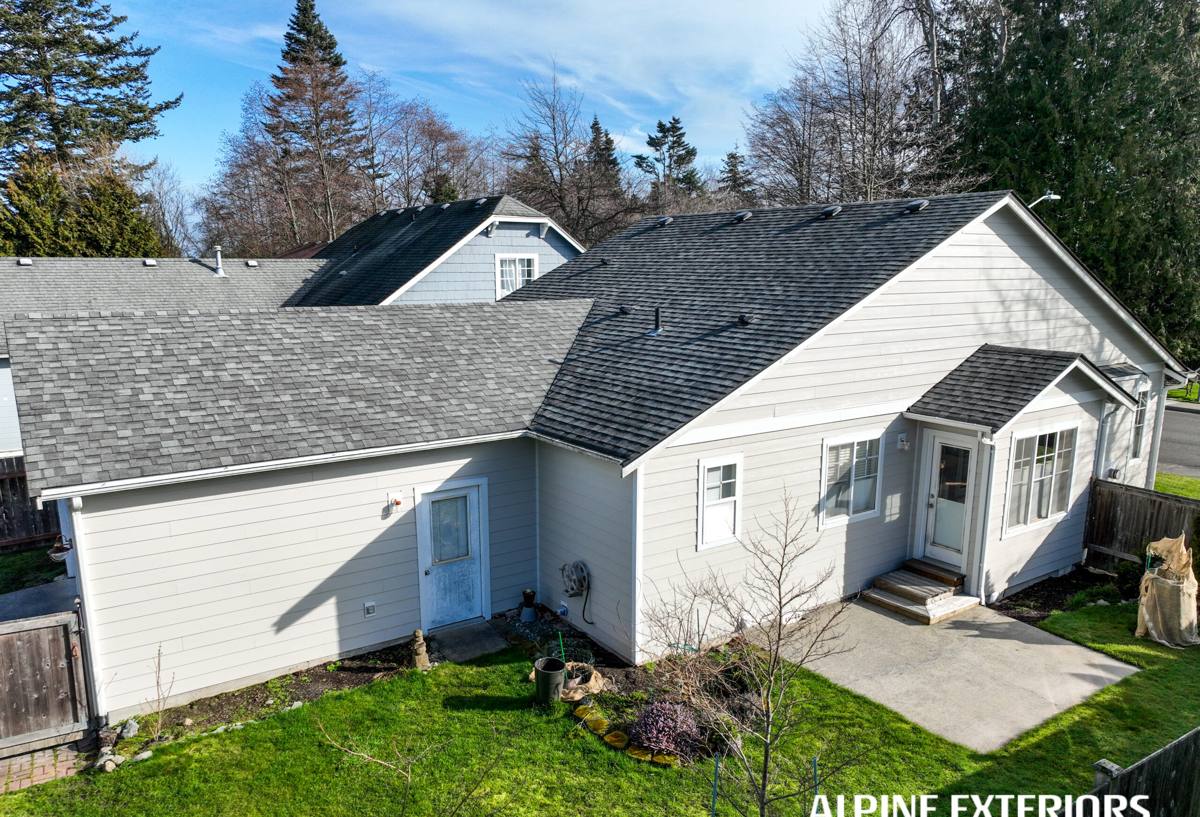
The Semiahmoo Climate Problem
Three things work against exterior siding here, and they compound each other.
Salt Air
Properties close to the water get a steady dose of salt-laden air. Salt is hygroscopic — it pulls moisture out of the air and holds it against whatever surface it lands on. On fasteners and trim that aren't rated for coastal exposure, that means accelerated corrosion. On paint film, it means faster breakdown and chalking. On raw wood, it means the wood stays damp longer than it would a few miles inland, which feeds rot and mildew.
Driving Rain
Wind off the water doesn't just bring rain straight down — it drives it sideways into the wall assembly. Board and batten siding has more vertical seams than lap siding, and every batten joint is a spot where wind-driven rain can be forced upward and behind the board if the installation doesn't account for it. A siding system that works fine in a calm, dry climate can fail here simply because it was never designed to handle rain moving sideways under pressure.
A Long Moss Season
Between the marine humidity and the tree cover common around Birch Bay and Semiahmoo, moss and algae growth has a long season — often close to year-round on north-facing and shaded walls. Moss holds moisture against the siding surface, and on the wrong substrate that constant dampness eventually works its way into seams, fastener holes, and any spot where the finish has started to fail.
None of this means board and batten is a bad choice for Semiahmoo. It means the material, the fasteners, and the installation details all have to be chosen with this specific exposure in mind — not just whatever spec sheet came with the product.
Why We Only Install James Hardie for Board & Batten
We install James Hardie fiber cement exclusively — we don't do vinyl, LP SmartSide, Cemplank, Allura, primed spruce, or cedar board and batten. For a climate like Semiahmoo's, that's not a brand preference, it's a practical decision about what actually holds up to salt air and driving rain over time.
Fiber cement doesn't rot, doesn't feed moss and mildew the way wood-based products can, and is non-combustible. James Hardie's HZ5 product line is engineered specifically for climates with sustained moisture exposure, which describes Semiahmoo well. The factory-applied ColorPlus finish is baked on under controlled conditions and backed by its own finish warranty — that matters here because field-applied paint is exactly the kind of finish that breaks down fastest under salt air and constant damp, leading to the repaint cycle that wood and primed products eventually require.
For vertical board and batten applications specifically, we typically use HardiePanel vertical siding with HardieTrim battens installed over it, or Hardie's Artisan V-plank system where a more refined reveal is wanted. Both are engineered as complete systems — the panel, the battens, and the fastening schedule are designed to work together, which is a real advantage over mixing a fiber cement field with wood trim battens, a combination that reintroduces the exact wood-rot risk fiber cement is meant to solve.
Board & Batten Material Comparison
| Material | Moisture/Rot Resistance | Salt Air Durability | Maintenance Burden | Typical Lifespan |
|---|---|---|---|---|
| James Hardie fiber cement | Does not rot; won't absorb water like wood | Engineered HZ5 line for coastal/wet climates | Low — factory finish, no repainting cycle | 30+ years to warranty |
| Cedar | Natural rot resistance, but degrades once finish fails | Salt accelerates finish breakdown | High — regular refinishing/staining | 15-25 years with upkeep |
| Primed spruce/wood composite | Vulnerable once primer or paint is compromised | Poor without diligent maintenance | High — repainting and caulk renewal | 10-20 years |
| Vinyl board and batten | Doesn't rot, but seams can trap moisture behind it | Can become brittle; fades in UV/salt exposure | Low, but limited repair options if damaged | 20-30 years, fading is common |
What a Correct Board & Batten Installation Actually Involves
The battens are the part everyone sees, but the parts that determine whether the job lasts are underneath them.
Rainscreen Gap
In a driving-rain climate, siding should be held slightly off the wall sheathing to create a drainage and drying gap behind it, rather than fastened flat against the weather-resistive barrier. This lets any moisture that does get behind the siding drain and dry out instead of sitting against the sheathing.
Weather-Resistive Barrier and Flashing
A correctly lapped weather-resistive barrier, proper flashing at every window, door, and penetration, and careful integration at roof-to-wall transitions are what actually keep water out of the wall assembly — the siding itself is the second line of defense, not the first.
Fastening Pattern and Batten Spacing
James Hardie specifies fastener type, spacing, and embedment depth for a reason — under-driven or over-driven fasteners, or the wrong fastener material, are one of the most common causes of premature siding failure, especially where salt air accelerates corrosion of the wrong hardware. Batten spacing has to account for the panel's expansion and contraction, not just be spaced for even looks.
Joint Treatment
Every horizontal panel joint and batten-to-panel seam needs to be treated according to manufacturer spec — the right sealant, the right gap, and correct shingling of any horizontal joints so water is directed out and down rather than trapped.
- Rainscreen gap or approved drainage plane behind the siding, not a flat, sealed-tight install
- Correctly lapped weather-resistive barrier with flashed windows, doors, and penetrations
- Manufacturer-specified fasteners, corrosion-rated for coastal exposure
- Batten spacing and fastening that follows Hardie's engineering, not just visual spacing
- Sealant and joint treatment at every seam, following manufacturer detailing
- Factory-finished ColorPlus panels and trim, minimizing field-painted joints
Our Process for a Semiahmoo Board & Batten Project
We walk every Semiahmoo home in person before quoting anything, because exposure varies a lot depending on how close a wall is to open water, how much tree cover it has, and which direction it faces. A north wall under trees and a south wall facing open water on the same house can need different attention.
- On-site assessment — we look at existing siding condition, moss and moisture patterns, trim and flashing condition, and how exposed each elevation is to wind-driven rain.
- Tear-off and sheathing check — old siding comes off and we inspect the sheathing underneath for any hidden rot or moisture damage before anything new goes up.
- Weather barrier and drainage plane — a new weather-resistive barrier is installed and lapped correctly, with a rainscreen gap built in behind the siding.
- Flashing and detailing — windows, doors, and any wall penetrations are flashed before siding installation begins.
- Hardie panel and batten installation — installed to manufacturer fastening and spacing specifications, with corrosion-rated fasteners appropriate for a coastal environment.
- Final inspection — we walk the finished job checking every seam, joint, and fastener line before calling it done.
Signs Your Current Board & Batten Siding Needs Attention
If your home already has board and batten siding, whether wood, vinyl, or another fiber cement brand, these are the warning signs worth a professional look before they become structural problems:
- Soft or spongy spots when you press on boards or battens, especially near the bottom courses
- Persistent moss or algae growth that comes back quickly after cleaning
- Visible gaps opening up at batten seams or panel joints
- Peeling, bubbling, or chalking paint, especially on walls facing the water
- Rust streaking below fastener heads or trim pieces
- Any staining or discoloration on interior walls that lines up with an exterior wall
Why Hiring a Crew That Already Works Semiahmoo Matters
Siding installation isn't just about following a spec sheet — it's about applying that spec to the specific exposure a house actually faces. A crew that regularly works Semiahmoo and the surrounding Birch Bay area already understands how wind comes off the water, which elevations tend to hold moss longest, and how to sequence a job around the wetter stretches of the year so materials aren't installed into damp conditions. That local knowledge doesn't replace manufacturer specifications, but it's what keeps a technically correct installation from turning into a house-specific problem three years down the road.
Local crews also tend to have a better handle on Whatcom County permitting requirements and, where relevant, any community design guidelines that apply to homes in resort or planned communities like Semiahmoo. Getting that sorted before work starts avoids delays once the project is underway.
Get a Straightforward Estimate
If you're weighing board and batten siding for a Semiahmoo home, or you have an existing installation showing signs of wear, we're happy to take a look and give you an honest read on what it needs. There's no pressure and no obligation — just a straight assessment from a crew that installs James Hardie siding and knows this stretch of the Whatcom County coastline. Fill out the form below to schedule a free estimate.