 Birch Bay Siding
 Roofing in California Creek's Coastal Climate
California Creek sits close enough to the water that homes here take a different kind of weathering than roofs a few miles inland. Salt-laden air off the bay works its way into metal fasteners and flashing over time. Driving rain, pushed sideways by wind off the strait, tests every lap and seal in a roofing system rather than just the field of the shingles. And Whatcom County's long, damp shoulder seasons give moss and moisture months to sit on a roof surface instead of drying out quickly like they would in a drier climate. None of this means a roof here is doomed to fail early — it means the installation has to account for these conditions from the start, not as an afterthought.
A roof that was designed for a generic climate chart, installed by a crew that doesn't normally work this close to the water, tends to show its age faster in Birch Bay than the same materials would somewhere inland. That's the gap we aim to close with every full roof replacement we do in California Creek.
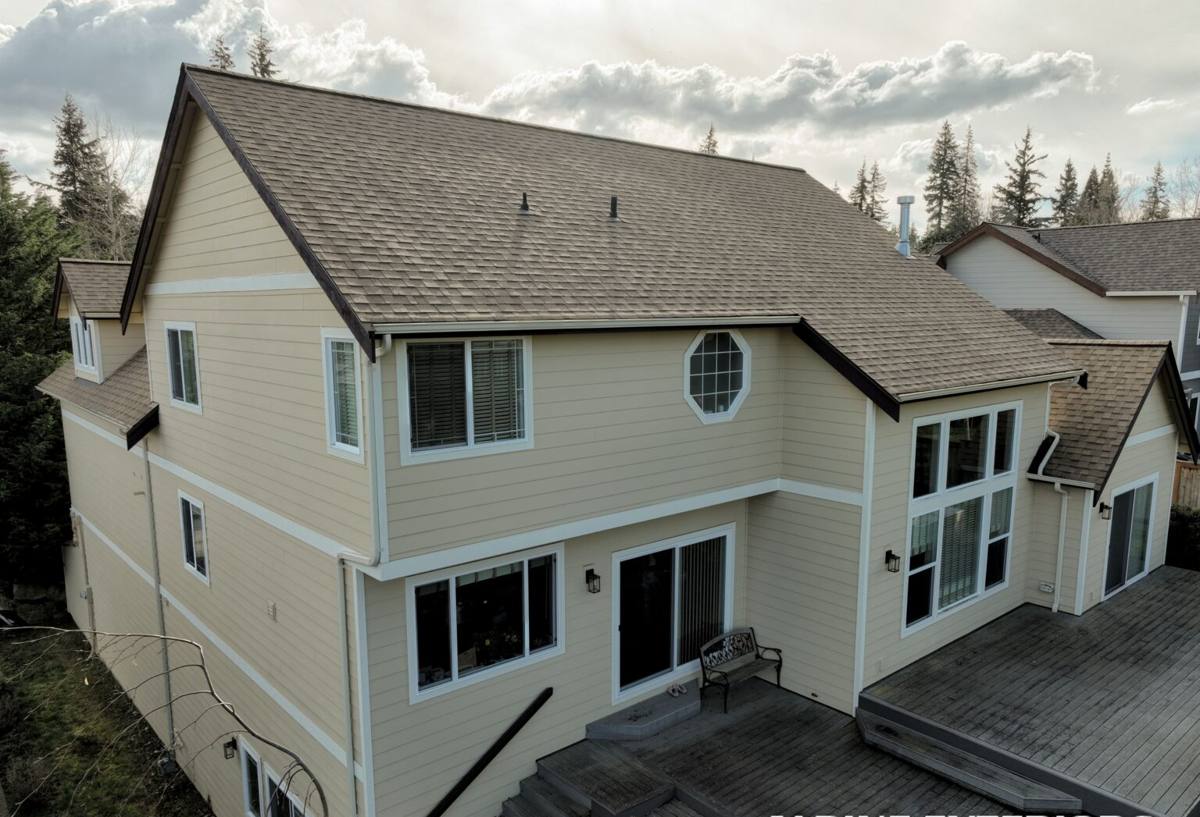
What Local Homes Actually Need From a New Roof
Corrosion-Resistant Metal Components
Flashing, fasteners, drip edge, and any exposed metal trim take the brunt of salt exposure. Standard galvanized fasteners can start showing rust streaks on a roof near the water years before they would inland. We spec corrosion-resistant fasteners and flashing metals suited to coastal exposure, because replacing a failed flashing detail later means tearing back shingles that were otherwise fine.
Wind- and Rain-Rated Underlayment
Driving rain doesn't just fall — it gets pushed under shingle tabs and around penetrations when wind is involved. A synthetic underlayment with a proper self-adhered ice-and-water membrane at eaves, valleys, and penetrations gives the roof a second line of defense if wind-driven rain gets past the shingle layer, which it eventually will on any coastal roof during a bad storm.
Ventilation That Actually Moves Air
Moss thrives where moisture lingers, and a roof deck that can't breathe stays damp longer after every rain. Balanced intake and exhaust ventilation — not just a ridge vent slapped on without enough intake — helps the deck dry out between weather systems instead of staying wet through an entire moss season.
Moss-Resistant Roofing Materials
Zinc or copper strips near the ridge, algae-resistant shingle granules, and roof designs that avoid unnecessary shaded, low-slope sections all reduce how aggressively moss and moss-friendly algae take hold. No roof in this climate is moss-proof, but the difference between a roof designed with moss in mind and one that wasn't shows up clearly by year five or six.
What a Correct Roof Installation Involves
A new roof is more than shingles nailed to plywood. The parts homeowners rarely see are usually what separates a roof that holds up in Birch Bay's climate from one that doesn't.
- Full tear-off to the deck — never installing over old layers, which traps moisture and hides deck damage
- Deck inspection and repair of any soft, rotted, or delaminated sheathing before anything new goes down
- Ice-and-water shield at eaves, valleys, and all roof penetrations, not just where code requires the minimum
- Properly lapped synthetic underlayment across the full roof field
- Corrosion-resistant flashing at every wall intersection, chimney, and skylight
- Balanced intake and exhaust ventilation sized to the attic volume
- Correct nailing pattern and fastener count per manufacturer specification — not just "enough to hold it down"
- Final walkthrough covering gutters, downspouts, and roof-to-siding transitions that affect water flow off the house
Skipping any one of these doesn't usually cause an immediate problem. It shows up two, five, or ten years later as a leak, a rotted fascia board, or a moss mat that won't stop coming back — right in this kind of coastal, high-moisture climate where the margin for error is smaller than it is inland.
Comparing Common Roofing Materials for This Area
Every material has trade-offs. Here's how the common options perform under California Creek's specific conditions — salt exposure, driving rain, and extended moss season.
| Material | Salt Air Performance | Moss Resistance | Maintenance |
|---|---|---|---|
| Architectural asphalt shingles | Good, with corrosion-resistant fasteners and flashing | Fair — improves significantly with algae-resistant granules and zinc strips | Periodic moss and debris removal recommended |
| Standing seam metal | Very good with marine-grade coatings and fasteners | Very good — smooth surface sheds moss more easily | Low; occasional fastener and seam checks |
| Cedar shake | Fair — natural material but absorbs and holds moisture | Poor without regular treatment | High; needs consistent moss treatment and inspection |
| Composite/synthetic shake | Good — non-organic, doesn't absorb moisture | Good | Low to moderate |
We install the products that hold up to this specific coastline, and we're upfront when a material a homeowner is drawn to — cedar shake is the most common example — comes with a higher maintenance burden in this climate. That's not a knock on the material itself; it's a maintenance and moisture-behavior trade-off worth knowing before you commit to it.
How Our Process Works
1. On-Site Assessment
We walk the roof, check the attic for existing ventilation and moisture signs, and look at how the current roof has held up against wind, rain, and moss in your specific spot — sun exposure and tree cover vary block to block even within a small area like California Creek.
2. Written Estimate
You get a clear scope of work and pricing before anything is scheduled — materials, tear-off, deck repair contingencies, and timeline, all spelled out so there are no surprises mid-project.
3. Tear-Off and Deck Repair
Old roofing comes off down to the deck. Any damaged sheathing gets replaced before new materials go down — this step gets skipped by crews trying to move fast, and it's the single biggest predictor of how long a new roof will actually last.
4. Installation
Underlayment, flashing, ventilation components, and the roofing material go in per manufacturer spec, with the coastal-specific details — corrosion-resistant hardware, expanded ice-and-water coverage — built in as standard, not upsold as an extra.
5. Final Walkthrough
We review the finished roof with you, confirm gutters and water flow off the roof are working correctly, and go over any care recommendations specific to your property's sun and shade exposure.
Cost Factors for a New Roof in California Creek
Every roof is priced on its own specifics, but the same handful of factors drive most of the variation homeowners see between quotes:
- Roof size and complexity — square footage, number of valleys, dormers, and penetrations
- Material choice — asphalt shingles, metal, and composite products all carry different material and labor costs
- Deck condition — hidden rot or soft sheathing found during tear-off adds repair cost, but skipping it costs far more later
- Ventilation upgrades — adding or correcting intake/exhaust balance if the existing system is inadequate
- Access and pitch — steeper roofs and tighter site access affect labor time
- Tear-off layers — removing multiple existing layers takes longer than a single-layer tear-off
We'd rather walk your roof and give you real numbers than throw out a broad range that doesn't mean much until we've actually seen the deck condition and material choice you're leaning toward.
Why It Matters to Hire a Crew That Already Works California Creek
A roofing crew that mainly works drier, inland climates isn't necessarily doing anything wrong — they're just solving for different conditions. A crew that regularly works Birch Bay and the surrounding Whatcom County coastline already knows which flashing details tend to fail first in salt air, which roof orientations in this area collect the most moss, and how wind off the water actually behaves against a roofline versus how it behaves on paper. That familiarity shows up in the details that don't get skipped — not because a homeowner asked for them, but because the crew has seen what happens when they're left out.
It also matters for the long haul. A local crew is easier to reach for a warranty question, a post-storm check, or advice on when a roof actually needs moss treatment versus when it can wait another season.
Signs Your California Creek Roof May Need Replacement, Not Repair
- Shingles that are cracked, curling, or losing granules across large sections rather than one isolated spot
- Soft spots or sagging in the roof deck when walked or viewed from the attic
- Recurring leaks in different locations after previous repairs
- Heavy, persistent moss growth that returns quickly after cleaning
- Flashing that's rusted, lifted, or separating from the roof plane
- A roof approaching or past the expected service life of its material
One or two of these on their own might just call for a repair. Several at once, especially on a roof already in its later years, usually points to replacement being the more cost-effective path.
If your California Creek home is due for a new roof, or you're just not sure whether repair or replacement makes more sense, we're happy to take a look. Fill out the form below for a free, no-pressure estimate.