 Birch Bay Siding
 Why California Creek's Location Is Hard on a Roof
California Creek sits close enough to the water that homes there take a different kind of weathering than roofs just a few miles inland. The combination of salt-laden air, wind-driven rain off the Strait of Georgia, and a shaded, damp growing season for moss means a roof here rarely fails from one dramatic event. It fails slowly, from small problems that were left alone too long. A loose piece of flashing, a corroded fastener, a patch of moss holding water against the shingles — none of these look urgent on their own, but in this climate they compound fast.
Whatcom County's roofs get a lot of rain spread across a lot of months, which means more cycles of wet-dry, more time for organic growth to establish, and more opportunity for water to find a weak spot. Add the salt air common to Birch Bay's shoreline neighborhoods and you get a second aging mechanism working on the metal components of the roof — flashing, fasteners, vent boots — even when the shingles themselves still look fine. Understanding both of these forces is the starting point for repairing a roof correctly instead of just patching what's visible.
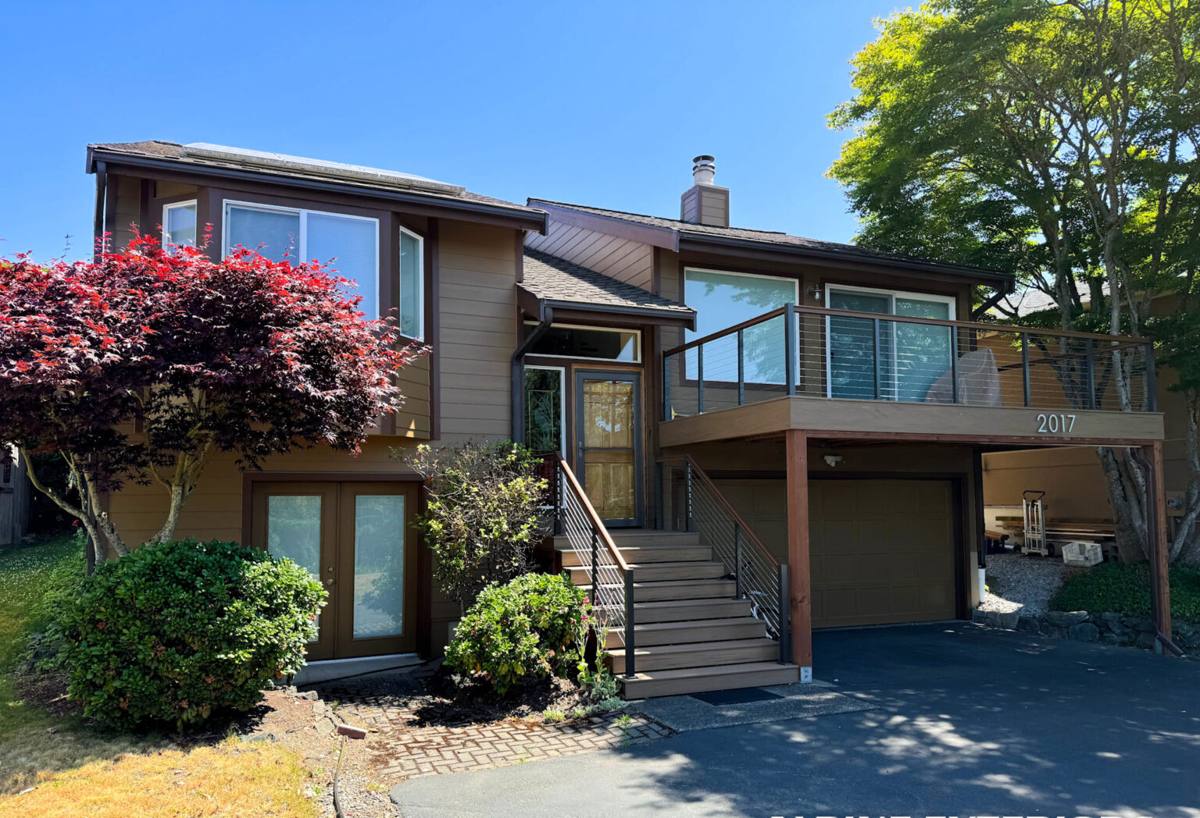
The Roof Problems We See Most Often in California Creek
Moss and Trapped Moisture
Moss doesn't just sit on top of a roof — it holds moisture against the shingle surface, works into the granule layer, and can lift shingle edges over time. On roofs with north-facing slopes or tree cover, moss growth is often heaviest right along ridge lines and in valleys, which happen to be the same areas most critical for shedding water. Left unaddressed through a few wet seasons, moss-related damage stops being cosmetic and starts being a leak risk.
Salt Air and Corroded Metal
Homes closer to the water tend to show corrosion on exposed fasteners, drip edge, and flashing well before the shingles themselves are due for replacement. Corroded or loosened fasteners can back out slightly over time, which opens a path for wind-driven rain even without any visible hole. This is one of the more deceptive failure points, because the roof can look intact from the ground while individual fasteners have already lost their grip.
Wind-Driven Rain at Roof Transitions
Storms coming off the water don't just drop rain straight down — they push it sideways, into places a roof isn't designed to shed water quickly: chimney-to-roof intersections, skylight curbs, sidewall step flashing, and valleys. A roof can be watertight in normal rain and still leak during a windstorm if the flashing details at these transitions weren't built with driving rain in mind.
What a Correct Roof Repair Actually Involves
Flashing, Not Just Sealant
Caulk and roofing cement are a temporary fix, not a repair. When we find a leak at a chimney, wall, or valley, the goal is to correct or rebuild the flashing detail so water is mechanically directed off the roof — not just sealed shut with a product that will eventually crack, shrink, or lose adhesion. Sealant has a place as a secondary layer of protection, but it should never be the only thing standing between the house and the weather.
Matching Underlayment to the Risk
Where a roof is most exposed to wind-driven rain — eaves, valleys, and around penetrations — the underlayment underneath the visible roofing matters as much as the shingles themselves. Part of doing a repair correctly is making sure the underlayment in these high-risk zones is intact and appropriate for the exposure, not just patching the top layer and assuming what's underneath is fine.
Matching Materials, Not Just Patching
A repair that uses mismatched shingle profiles, the wrong flashing metal, or fasteners that will corrode again in a year or two isn't really solving the problem — it's delaying it. We repair with materials suited to a coastal environment, and we match existing roofing closely enough that the repair blends in rather than becoming its own future weak point.
Signs Your California Creek Home Needs Roof Repair Now
- Dark streaking or thick moss growth on north-facing or shaded roof slopes
- Granules collecting in gutters or at the base of downspouts
- Rust staining below flashing, vent boots, or exposed fasteners
- Soft or discolored ceiling drywall, especially after a windy rainstorm
- Shingles that look lifted, curled, or out of alignment along ridges or valleys
- Daylight visible through the attic roof deck, or damp insulation below it
- Cracked or shrinking sealant around a chimney, skylight, or vent pipe
Any one of these on its own might not mean a major problem, but in this climate it's worth having a real inspection rather than waiting to see if it gets worse.
Repair or Replace? How We Help You Decide
Not every roof problem in California Creek calls for a full replacement, and we don't push one when a targeted repair will genuinely hold up. The honest answer depends on the roof's age, how widespread the damage is, and whether the underlying decking and underlayment are still sound.
| Situation | What Usually Drives the Decision | Typical Cost Range |
|---|---|---|
| Isolated flashing leak or a few damaged shingles | Localized damage, roof otherwise sound and not near the end of its service life | $300–$900 |
| Moss removal with minor shingle or fastener repair | Moss caught before it lifted shingles or damaged the deck | $400–$1,200 |
| Multiple leak points or valley/skylight rebuild | Several failure points, some deck or underlayment work needed | $1,000–$3,500 |
| Widespread age-related wear across the roof | Repairs would only buy a short amount of time before more failures appear | Full replacement usually makes more sense |
These ranges are meant to give a sense of scale, not a quote — every roof is different, and the only way to know which category yours falls into is a hands-on inspection.
Our Roof Repair Process
1. On-Roof Inspection
We get up on the roof, not just on the ground with binoculars. That means checking flashing, fastener condition, moss and debris buildup, and the state of the decking wherever it's accessible, along with a look in the attic if there's evidence of moisture intrusion.
2. Clear Diagnosis and Estimate
Before any work starts, we explain what we found, why it's happening, and what we recommend — including when a cheaper, more limited repair is the right call instead of upselling a bigger job.
3. The Repair Itself
We rebuild flashing where needed, replace damaged shingles or decking, address moss and its underlying moisture, and correct the fastener and underlayment issues that caused the problem in the first place — not just the visible symptom.
4. Cleanup and Follow-Up
We clear debris, check gutters and downspouts for anything that fell during the work, and let you know what to watch for afterward, especially through the first heavy storm following the repair.
Materials We Use for Coastal Repair Work
For fasteners and flashing in salt-exposed areas, we favor corrosion-resistant materials over standard-grade hardware, since the cost difference upfront is small compared to redoing the same repair a few years later. For shingle replacement, we match the existing product line as closely as possible for both appearance and compatibility, and we're upfront when an exact match isn't available and a close alternative is the more honest option. We generally steer away from repair shortcuts that rely heavily on surface sealants in high-exposure areas — not because any one product is bad, but because sealant-only fixes have a shorter service life in driving rain and salt air than a properly flashed detail, and we'd rather set expectations correctly than have a homeowner surprised by a repeat leak.
Why a Crew That Already Works in California Creek Matters
A roofer who mainly works drier, inland areas of Whatcom County can still do competent work, but they may not automatically account for how much faster moss reestablishes here, or how much more aggressively salt air attacks exposed metal near the water. Crews who regularly work California Creek and the rest of Birch Bay's shoreline see these patterns often enough to know which parts of a roof fail first, which repair shortcuts don't hold up locally, and which small warning signs are worth flagging before they become interior damage. That familiarity shows up less in what gets said during the estimate and more in what actually holds up two or three winters later.
Simple Maintenance That Extends the Life of a Repair
A repair done correctly still benefits from basic upkeep in this climate. Keeping gutters and valleys clear of needles and debris prevents standing water from sitting against shingles and fasteners. Addressing moss while it's still light — rather than after it's established — is far less invasive and far cheaper than dealing with the shingle damage that follows heavier growth. And after any major windstorm, a quick visual check for lifted shingles or new staining can catch a small problem before the next round of rain turns it into an interior repair.
If you're noticing moss buildup, a stain on a ceiling, or just want an honest read on how your roof is holding up against California Creek's weather, we're happy to take a look. Fill out the form below for a free, no-pressure estimate — we'll tell you what we actually find, not just what's easiest to sell.