 Birch Bay Siding
 Building a Deck That Holds Up in Blaine's Marine Climate
Blaine sits right on the water in northern Whatcom County, where wind off Semiahmoo Bay and the Strait of Georgia carries salt spray inland year-round. Add in the region's long wet season and the moss that comes with it, and a deck here is working against different odds than a deck built inland. We build decks for homeowners in Blaine and throughout the Birch Bay area, and the difference between a deck that lasts fifteen-plus years and one that starts failing in five almost always comes down to material choices and structural details you can't see once the project is finished.
This page is about one thing: building a deck in Blaine that's designed for this specific coastline, not a generic deck design dropped into a marine environment and hoped for the best.
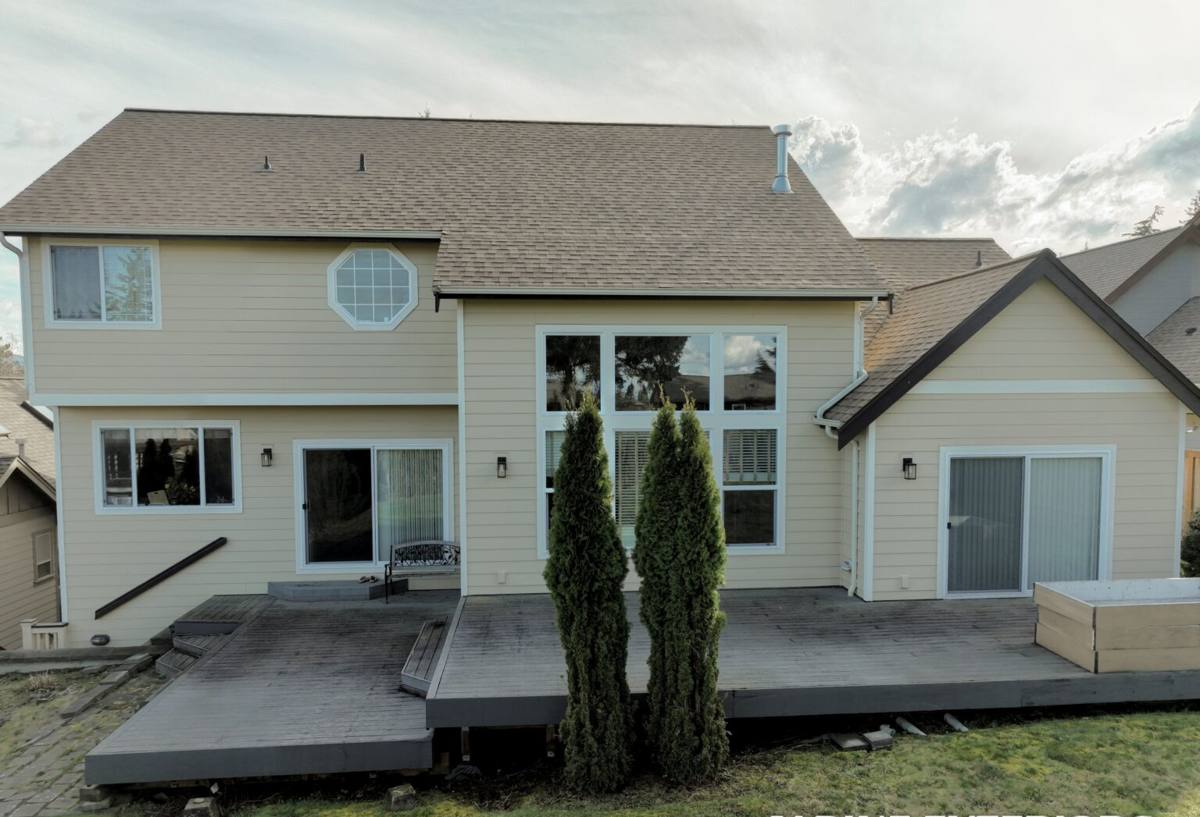
What Blaine's Climate Actually Does to a Deck
Salt Air
Airborne salt is corrosive to unprotected metal. On a deck, that means fasteners, post bases, joist hangers, and any exposed hardware are under constant low-grade attack. Standard electro-galvanized screws and connectors that would be fine forty miles inland can start rusting within a few seasons this close to the water. Once a fastener corrodes, it loses holding strength long before the rust is visible from the surface.
Driving Rain and Wind
Storms coming off the water in Blaine tend to drive rain sideways, which pushes moisture into places a vertical rain would never reach — under railings, behind ledger boards, into end-grain cuts on decking boards. A deck built with only "typical" flashing and gapping details often ends up with hidden moisture damage in exactly those spots.
A Long Moss Season
Whatcom County's wet season runs long, and shaded or north-facing decks in Birch Bay and Blaine can stay damp for weeks at a stretch. Moss and algae need very little to get established — just consistent moisture and a surface with enough texture to hold onto. Once moss takes hold on decking, it holds water against the board surface, which accelerates rot in wood and can leave permanent staining on some composite products.
Choosing the Right Decking Material for This Location
There's no single "best" decking material for every deck — it depends on budget, how much maintenance you're willing to do, and how exposed the deck is to sun, shade, and salt spray. Here's how the common options actually perform in Blaine's conditions:
| Material | Salt Air Resistance | Moss/Moisture Behavior | Maintenance |
|---|---|---|---|
| Pressure-treated wood | Good if fasteners are upgraded | Needs regular cleaning and sealing to resist moss and rot | Annual cleaning, re-sealing every 1-3 years |
| Cedar | Naturally decay-resistant, but softens with age | Still needs cleaning; moss will grow on neglected cedar | Regular sealing/staining to hold color and resist moisture |
| Composite decking | Excellent — no metal to corrode, won't rot | Can still grow surface algae/moss if shaded and not cleaned | Occasional washing, no sealing or staining |
| PVC/capped polymer decking | Excellent — fully sealed surface | Sheds moisture well; easiest to keep moss-free | Lowest maintenance of the group |
Composite and PVC decking have become the more common choice for homes directly exposed to salt air and shade, mainly because they remove the ongoing sealing and staining work that wood demands in this climate. That said, well-built wood decks are still a sound, more budget-friendly option when the structure and fasteners underneath are specified correctly and the owner is willing to keep up with cleaning and sealing.
The Structure Underneath Matters More Than the Boards
Homeowners often focus on decking material and overlook the framing, but the substructure is what determines whether a deck is actually safe and long-lasting. In a marine climate, three details matter most:
Footings and Post Bases
Footings need to be set below frost depth and sized for the soil conditions on the lot — coastal lots in this area can have variable soil, from sandy fill to heavier clay, and that affects footing design. Post bases should hold the post above the concrete rather than embedding wood directly in or against it, since standing water at the base of a post is one of the most common places rot starts.
Ledger Board Flashing
The ledger board — where the deck attaches to the house — is the single most common failure point on any deck, anywhere, and driving rain makes it worse here. Proper flashing (metal flashing plus a self-adhering waterproof membrane behind it) keeps water from tracking behind the siding and into the house framing. This detail doesn't show once the deck is built, which is exactly why it's worth asking about before construction starts.
Joist Protection
Joist tape — a self-adhering waterproof strip applied to the top of each joist before decking goes down — prevents water from sitting in the screw holes and end grain where boards attach. It's inexpensive relative to the whole project and meaningfully extends the life of the framing underneath.
Fasteners and Hardware: Where Most Failures Start
This is the detail that gets skipped most often, and it's the one that matters most this close to the water. Not all "exterior-rated" hardware is equal:
| Fastener/Hardware Type | Suitability for Blaine's Salt Air |
|---|---|
| Standard electro-galvanized | Not recommended — corrodes noticeably faster in salt air |
| Hot-dip galvanized | Better, adequate for many framing connectors |
| Stainless steel (305/316 grade) | Best option for fasteners and hardware in direct salt exposure |
We spec fasteners and connectors based on how exposed a given deck is — a covered deck set back from the water doesn't need the same hardware as an open deck facing the bay directly. The goal is matching the hardware grade to the actual exposure, not over- or under-building it.
Drainage, Slope, and Keeping Moss From Taking Hold
Moss doesn't need much to grow — just moisture that sits instead of draining. A few structural choices make a real difference over the life of the deck:
- Decking installed with a slight slope away from the house so water sheds instead of pooling
- Proper gapping between boards so air can circulate and boards dry between rains
- Hidden fastener systems that don't create small dams where debris and moisture collect
- Keeping the underside of the deck ventilated rather than fully enclosed against the ground
- Trimming back vegetation that shades and holds moisture against the deck surface, where the layout allows it
None of these are expensive add-ons — they're standard details we build in from the start because retrofitting drainage and gapping after the fact is far more disruptive than doing it right the first time.
Permits and Code Requirements in Blaine
Most new decks in Blaine and unincorporated Whatcom County require a building permit, particularly once the deck is attached to the house or elevated above a certain height. Permitted work typically covers footing depth and spacing, ledger attachment, guardrail height and baluster spacing on elevated decks, and stair requirements if the deck isn't at grade. We handle the permit process as part of the build so the finished deck meets code and there are no surprises if the home is inspected or sold later.
Our Deck Building Process
- On-site assessment — we look at sun/shade exposure, distance from the water, existing drainage, and how the deck will connect to the house.
- Design and material selection — layout, decking material, and hardware grade matched to that specific site's exposure and your budget.
- Permitting — we prepare and submit the paperwork required for the scope of work.
- Framing and structural work — footings, posts, ledger flashing, joist protection, and framing built to the spec set in design.
- Decking, railing, and finish work — boards, fasteners, railings, and stairs installed with attention to gapping, slope, and hardware consistency.
- Final walkthrough — we go over the finished deck with you, including what maintenance (if any) the material you chose will need going forward.
Keeping a Blaine Deck in Good Shape Long-Term
Even a well-built deck benefits from basic upkeep in this climate. A simple annual routine goes a long way:
- Rinse or sweep the deck surface regularly to keep organic debris from feeding moss growth
- Clean gaps between boards where leaves and needles collect and hold moisture
- Check railings and stair connections yearly for looseness, which can signal fastener corrosion underneath
- Re-seal or re-stain wood decking on the schedule the product calls for — don't wait until it's visibly weathered
- Look underneath the deck occasionally for signs of moisture staining near the ledger board
Why It Matters to Hire a Crew That Already Works in Blaine
A deck built to a generic spec sheet can look fine on installation day and still be the wrong deck for this location. Crews that don't regularly work this stretch of Whatcom County's coastline sometimes default to standard fastener grades and standard flashing details because that's what works everywhere else — and in most places, it does. Here, those shortcuts show up a few years later as rust streaks, soft spots near the ledger, or moss that keeps coming back no matter how often it's cleaned. Building for Blaine's salt air and rain from day one costs little to nothing extra up front and saves real money and hassle over the life of the deck.
If you're planning a new deck or replacing one that hasn't held up, we're glad to take a look and put together a free, no-pressure estimate — just fill out the form below.