 Birch Bay Siding
 Fiber Cement Siding Built for Cherry Point's Exposure
Cherry Point sits on an exposed stretch of Whatcom County coastline near Birch Bay, and that location puts real demands on a home's siding. Properties out here take a steady dose of salt-laden marine air, wind-driven rain that doesn't fall straight down, and a moss and mildew season that can stretch across most of the year on shaded or north-facing walls. It's a tougher environment than homes set back a few miles inland deal with, and it's exactly the kind of exposure that separates siding installed to last decades from siding that starts failing within a handful of wet seasons.
This page focuses on one service in one area: fiber cement siding for Cherry Point homes. We install James Hardie fiber cement exclusively, and we treat this coastline's specific combination of salt, wind, and moisture as the starting point for every decision on a project — product line, fastener grade, drainage detailing, and installation sequence — rather than an afterthought.
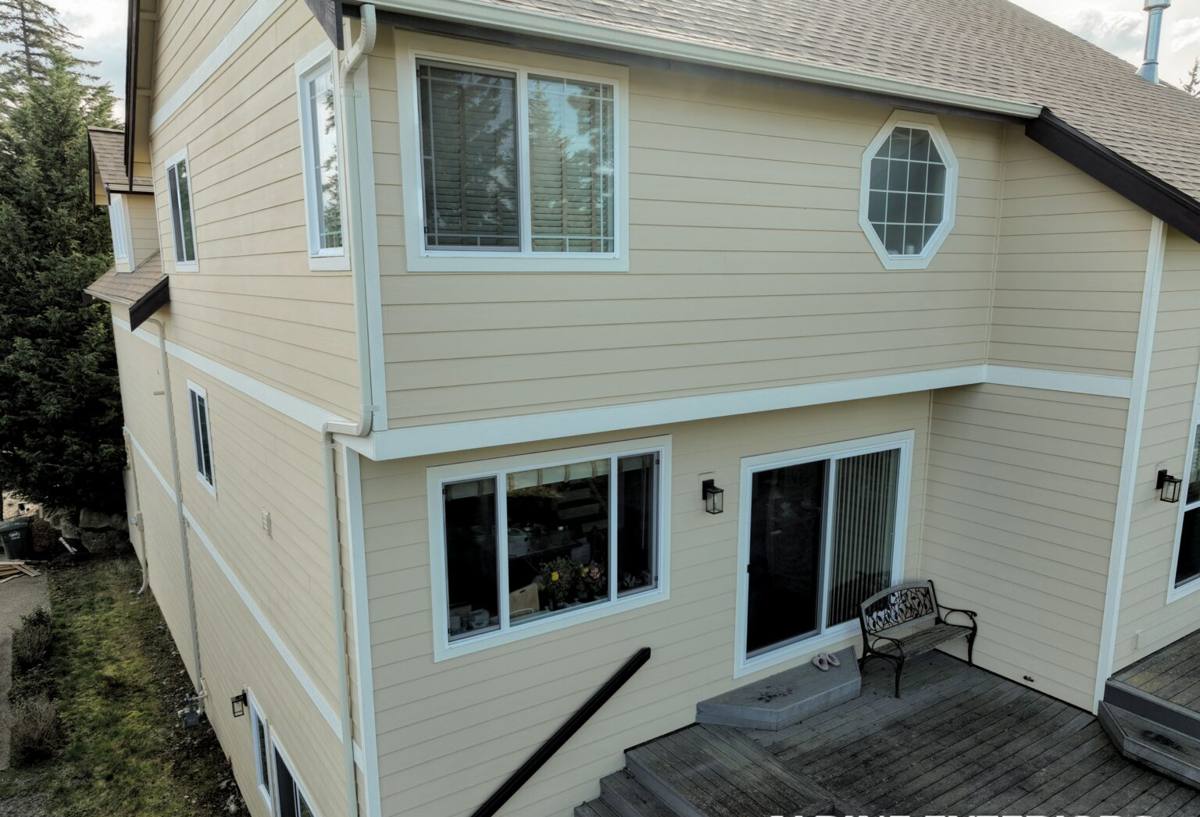
What Salt Air, Driving Rain, and Moss Actually Do to Siding
Salt-Laden Marine Air
Being close to the water means Cherry Point homes deal with more airborne salt than properties farther inland. Salt accelerates corrosion of fasteners, flashing, and trim, and it breaks down lower-quality paint and coatings faster than a drier climate would. Any material or piece of hardware going on the exterior of a home here needs to be selected with that corrosion exposure in mind from the start, not chosen just for how it looks on a sample board.
Wind-Driven, Sideways Rain
Open coastal exposure also means more sustained wind, and wind-driven rain doesn't behave like a straight-down downpour — it gets pushed sideways into wall assemblies, seams, and every horizontal joint in a siding system. That's a heavier and more sustained moisture load than a simple annual rainfall figure suggests. Siding that performs fine in a calm, sheltered yard a few miles away can fail here specifically because water is finding its way in from the side, not from above.
A Long Moss and Mildew Season
Mild temperatures, shade from surrounding trees, and near-constant moisture add up to a moss and mildew season that runs long on this part of the Whatcom County coast. Siding that's even slightly porous, or that holds moisture against the substrate instead of shedding it, becomes a growth surface over time. North-facing walls and anything shaded by trees or a neighboring structure typically need closer attention than sun-exposed walls on the same house.
Why We Install Only James Hardie Fiber Cement Here
We don't offer a menu of siding brands. On a coastline like this one, we've made a professional call to install one system we fully stand behind rather than a lineup of options that shift long-term maintenance risk onto the homeowner. That decision came from years of installing, inspecting, and repairing siding in this specific kind of salty, wet, moss-prone climate — not from a supplier relationship.
- Non-combustible core: Fiber cement doesn't feed a fire the way wood-based siding products can, which matters for both safety and, in many cases, insurance considerations.
- Factory-applied ColorPlus finish: The finish is baked on under controlled factory conditions instead of applied on-site, and it holds up longer against salt exposure, fading, and chalking than field-applied paint.
- Climate-engineered HZ formulation: Hardie's HZ5 product line is built specifically for regions with heavy moisture exposure and freeze-thaw cycling, which describes this stretch of coastal Whatcom County accurately.
- Dimensional stability: Fiber cement doesn't swell, cup, or warp the way engineered wood siding can after repeated wetting through a long, wet season.
- Strong transferable warranty: Hardie backs its product with a warranty structure that transfers to a new owner if the home sells, provided installation followed spec.
We won't install LP SmartSide, vinyl siding, Cemplank, Allura, primed spruce, or cedar on a Cherry Point home. Each of those products has a legitimate place in the broader market and homeowners elsewhere who are satisfied with them. But given what direct salt and sustained wind-driven moisture do to a wall assembly out here, we'd rather stand fully behind one system than offer a cheaper alternative and let the homeowner absorb the extra maintenance over time.
Picking the Right Hardie Line and Profile for This Coastline
James Hardie isn't a single product — it's a system of climate-matched formulations and siding profiles, and getting the match right for Cherry Point's exposure is part of what makes an installation last. HZ5 is the correct base formulation for this region; HZ10, which is built for hot, humid climates, isn't a fit here regardless of what a supplier might have on hand. From there, the choice of profile is mostly about how a home is exposed to wind and moisture, plus what look fits the property.
| Profile | Best Fit For | Coastal Consideration |
|---|---|---|
| Lap siding (various reveals) | Most homes; traditional or modern look | Horizontal joints need correct lap and fastening to shed wind-driven rain |
| Shingle-style panels | Homes wanting a cedar-shake look without cedar's upkeep | More seams to detail correctly; drainage behind the panel matters more |
| Vertical board and batten | Accent walls, gables, modern facades | Batten spacing and fastening need extra attention under sustained wind loads |
| Trim and fascia (HardieTrim) | Window and door surrounds, corners, fascia boards | Corrosion-resistant fasteners are critical since trim sees the most direct weather |
Color selection matters here too. ColorPlus finishes are factory-cured and resist fading better than field-applied paint, which matters on a coastline where UV, salt, and moisture are all working against a finish at the same time. We walk homeowners through the available ColorPlus palette rather than defaulting to whatever's easiest to order.
What Correct Installation Involves
Fiber cement only performs the way it's engineered to when it's installed to Hardie's published specifications, and that's especially true in a climate this demanding. A rushed or generic install will still develop moisture problems here even with the right product on the wall.
- Correct fastener type, length, and spacing — and corrosion-resistant fasteners given the salt exposure
- Proper clearance between siding and grade, roof lines, and decks to keep the bottom edge from sitting in standing moisture
- Rain-screen or drainage-plane detailing behind the panels so any moisture that gets past the surface can drain and dry out
- Factory-mitered corners or properly caulked and primed field joints, not raw cut edges left exposed
- Flashing integrated correctly at every window, door, and roof-to-wall transition, since these are the most common points where wind-driven rain gets into a wall assembly
- Manufacturer-specified fastener patterns at seams and butt joints, which matter more under sustained coastal wind loads than they would on a sheltered inland wall
Our Process for a Cherry Point Siding Project
We start with an on-site assessment of the existing siding and wall assembly, looking specifically for how the current system has handled salt exposure, wind-driven rain, and moss over time — not just a surface-level look at the paint or panels. That tells us whether we're dealing with cosmetic wear or deeper moisture intrusion behind the cladding, which changes the scope of the job.
From there we put together a clear, written scope and timeline before any work begins, including which Hardie profile and color fit the home and which parts of the existing wall assembly, sheathing, or flashing need attention as part of the tear-off. During installation, drainage detailing, flashing integration, and fastener grade are handled as standard practice on every Cherry Point project, not offered as optional upgrades. We finish with a walkthrough so the homeowner understands what was done and what routine maintenance, if any, the new siding actually needs.
Comparing Siding Materials for This Climate
| Material | Moisture Behavior | Maintenance in Salt Air | Typical Longevity Here |
|---|---|---|---|
| James Hardie fiber cement | Dimensionally stable; resists swelling and cupping | Low; factory finish resists fading, chalking, and moisture damage | 30+ years with correct installation |
| Vinyl siding | Can warp or distort under heat and wind load over time | Low upfront cost, but seams and fasteners are exposure points | Variable; often shorter in high-wind coastal spots |
| LP SmartSide / engineered wood | Wood-based core is moisture-sensitive at cut edges and joints | Moderate; edge sealing and caulk upkeep matter a lot | Depends heavily on installation quality and upkeep |
| Cedar / primed wood | Absorbs and releases moisture readily | High; regular refinishing needed in salty, wet air | Shorter without consistent, ongoing maintenance |
Why a Crew That Already Works Cherry Point Matters
A contractor who regularly works this stretch of the Whatcom County coastline already knows how salt air, sustained wind, and prolonged moisture behave differently here than they do even a short distance inland. That familiarity shows up in specific decisions — which fastener grade gets used, how flashing is lapped at a window head, where extra drainage detailing gets added on a shaded north wall — and those details are what actually determine whether a siding job holds up for one wet season or several decades.
It also matters for accountability. A crew that installs siding here regularly sees the long-term results of its own work on nearby homes, which keeps installation quality honest in a way that a one-off out-of-area job doesn't.
Signs Cherry Point Siding Needs Attention
- Persistent moss or dark streaking on shaded walls that keeps returning after cleaning
- Soft spots, bubbling, or visible swelling, especially near the bottom edge or around window trim
- Caulk that's cracked, shrunk, or pulled away from joints and trim
- Paint or finish that's chalking, peeling, or fading unevenly, particularly on the side facing prevailing wind
- Visible gaps, warping, or fastener heads backing out at seams and corners
A Simple Checklist Before Hiring for Siding Work in Cherry Point
- Ask what siding material they install and why, and whether they'll put a written warranty behind it
- Confirm current Washington contractor licensing and active liability insurance
- Ask specifically how they detail flashing at windows, doors, and roof-to-wall transitions for wind-driven rain
- Ask about fastener corrosion resistance given the salt exposure this close to the water
- Get a clear, written scope of work — including product line, profile, and color — before signing anything
If you're weighing siding options for a Cherry Point home, we're happy to walk the exterior with you and give an honest read on what it actually needs. Reach out below for a free, no-pressure estimate.