 Birch Bay Siding
 Why Marietta's Shoreline Setting Changes What a Deck Needs to Survive
Marietta sits close to the water on Birch Bay, which means the air here carries salt, the rain comes in sideways more often than not, and the damp, shaded stretches of the year run long. That combination is hard on outdoor structures in general, and it is especially hard on the wrong material choice or a deck that was framed without the coastal Pacific Northwest in mind. Salt-laden air speeds up corrosion on fasteners and hardware. Wind-driven rain finds its way into seams and end grain that would stay dry in a drier climate. And moss does not just grow on roofs here — it takes hold on any horizontal surface that stays damp and shaded for weeks at a stretch, decks included.
None of this means a deck in Marietta is doomed to rot or turn green within a few seasons. It means the material choice, the framing details, and the finishing touches all have to account for what this stretch of Whatcom County actually throws at a structure year-round, not just what looks good in a showroom.
Why Composite Makes Sense for This Kind of Climate
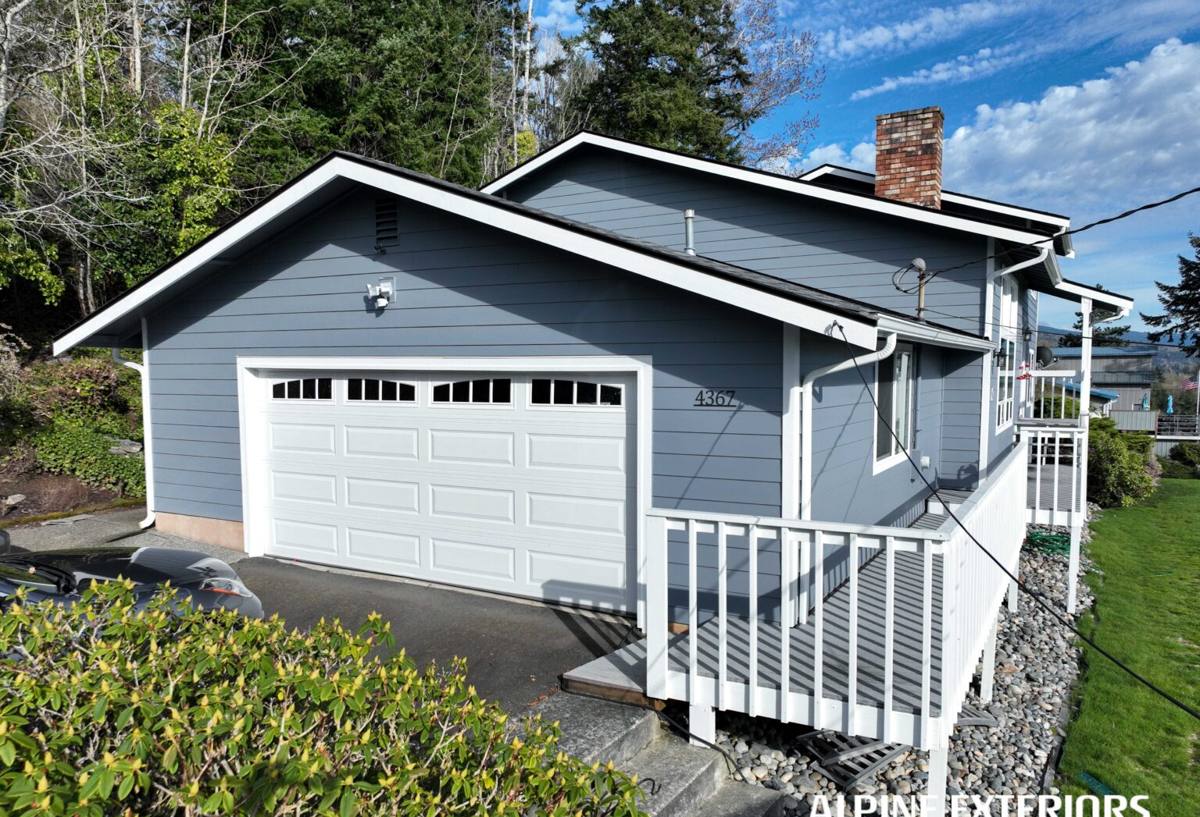
Composite decking blends wood fiber with plastic, and the better products add a fully capped shell around all four sides of the board. That cap is the part that matters most near Birch Bay — it's what keeps driving rain and salt spray from soaking into the board's core the way it would with raw lumber or an uncapped composite. A capped board doesn't need annual staining or sealing, it won't splinter, and it resists the kind of moss and algae growth that thrives on porous, moisture-holding surfaces.
What It Doesn't Solve on Its Own
Composite decking is a real upgrade for this climate, but the board itself is only part of the picture. A composite deck built over a poorly ventilated or poorly flashed substructure will still trap moisture underneath, and that moisture doesn't care what the walking surface is made of. Substructure rot, corroded fasteners, and mildew on the underside of the deck are just as possible with composite boards as with wood if the framing and drainage details are wrong. The board choice matters, but it doesn't replace correct building practice underneath it.
What a Correct Composite Deck Build Involves Here
A deck that's going to hold up in Marietta's marine air and long wet season needs attention paid to details that don't show up in a finished photo:
- Corrosion-resistant fasteners and hardware rated for coastal or high-moisture exposure, not standard interior-grade hardware
- Proper joist spacing and blocking sized for the specific composite board being installed — composite spans differently than wood and manufacturers publish exact spacing tables for a reason
- Ledger board flashing that actually sheds water away from the house rim joist, since this is one of the most common failure points on any deck attached to a structure
- Adequate airflow underneath the deck so trapped humidity doesn't sit against the framing all winter
- Drainage grading so water sheets off and away from the house instead of pooling near the foundation
- Board gapping set correctly for expansion and contraction, which shifts more with our temperature and moisture swings than people expect
Skip any one of these and the finished deck can still look right for a year or two while the substructure quietly deteriorates underneath it.
Moss, Algae, and the Long Wet Season
Birch Bay's wet season stretches long, and a deck that sits under any tree cover or on the shaded side of a house will hold moisture for days after a storm passes. Composite boards resist moss and algae far better than untreated wood, but "resist" isn't "immune." Debris left in board grooves, leaf litter against the house, and low-airflow corners of a deck can still grow a film of algae over a wet winter, which gets slick and needs attention.
What Keeps a Composite Deck Looking Right Year-Round
The good news is that maintenance on composite is genuinely lighter than wood — there's no annual staining or sealing cycle. A seasonal rinse, keeping gutters and nearby drainage clear so water isn't sheeting directly onto the deck, and sweeping debris out of board grooves before it decomposes in place covers most of what a composite deck needs here. That's a fraction of the upkeep a wood deck demands in this same climate.
Composite vs. Other Decking Options for This Location
Every material has trade-offs, and the right call depends on budget, how much upkeep a homeowner wants to take on, and how exposed the deck site is to weather. Here's how the common options stack up for a coastal Whatcom County property.
| Material | Upfront Cost | Maintenance | Moisture & Salt Air Behavior |
|---|---|---|---|
| Pressure-treated wood | Lowest | Annual staining/sealing recommended | Prone to splintering, checking, and moss growth without diligent upkeep |
| Cedar or other natural wood | Moderate | Regular sealing to hold appearance | Naturally rot-resistant but still absorbs moisture without finish maintenance |
| Uncapped composite | Moderate | Low, but surface can absorb moisture over time | Can hold water at the surface, more prone to staining and mold in wet climates |
| Fully capped composite | Higher | Lowest — rinse and clear debris | Shell resists moisture intrusion, salt spray, and staining best of this group |
We install fully capped composite as our standard recommendation for homes in this area precisely because of that last row. It's not the cheapest board on the shelf, but for a deck that's going to sit through decades of Birch Bay winters, the capped shell is doing real work, not just adding cost.
What Affects the Cost of a Composite Deck in Marietta
Every quote is going to be shaped by a handful of variables, and it's worth understanding what's actually driving the number before comparing bids.
- Deck size and footprint shape — simple rectangles cost less per square foot than decks with multiple levels, angles, or curves
- Board tier — entry-level capped composite costs less than premium lines with deeper wood-look embossing or longer warranty coverage
- Height off grade — a deck requiring stairs, taller railings, or additional footings for slope will cost more than a low, ground-level deck
- Substructure condition — replacing decking over an existing frame that needs repair or rebuilding costs more than a straightforward resurface
- Accessibility of the site — how easily materials and equipment can reach the build area affects labor time
- Permit and inspection requirements — factored into the timeline and the quote rather than treated as an afterthought
We break all of this down in writing during the estimate so you know what you're paying for and why, rather than getting a single lump-sum number with no explanation behind it.
How We Approach a Composite Decking Project in Marietta
Our process is the same whether the job is a full replacement or new construction, and it starts before any material gets ordered.
Site Assessment
We look at sun and shade exposure, prevailing wind and rain direction off the water, existing drainage patterns around the house, and the condition of anything we're building on top of or tying into. A deck attached to an older ledger board sometimes needs that connection rebuilt before anything else happens.
Framing and Substructure
We size joists and blocking to the specific board manufacturer's span tables rather than defaulting to standard wood-deck spacing, flash the ledger correctly, and use fasteners rated for the exposure the deck will actually see.
Decking Installation
Boards go down with the gapping and fastening pattern the manufacturer specifies, and we keep grooves and drainage paths clear of debris as we go so the finished deck starts its life without trapped moisture already working against it.
Final Walkthrough
We go over basic seasonal care with the homeowner — what to rinse, what to keep clear, what a decade of coastal weather actually looks like for that specific board — so there are no surprises down the road.
Permits and Code Considerations
Deck projects in Whatcom County typically need a permit once they cross certain size or height thresholds, and guardrail height, footing depth, and ledger attachment all have code requirements that vary depending on the specific site and structure. We handle the permitting conversation as part of the estimate rather than leaving it for the homeowner to sort out separately, and we build to code as a floor, not a target to shave down.
Why Hiring a Crew That Already Works This Area Matters
A contractor who's built decks up and down the Birch Bay shoreline has already seen how a given board handles a wet November, how a particular lot's drainage behaves in a heavy storm, and where salt air does the most damage on hardware over time. That's not something a crew based well inland picks up on their first job out here — it comes from doing this specific kind of work in this specific climate, repeatedly. It shows up in small decisions: which fastener grade actually holds up, how much ventilation a given substructure design really needs, where a ledger board is most likely to have hidden rot on a house of a certain age. Those are judgment calls, and judgment gets better with local repetition.
Before You Hire: A Quick Checklist
Whoever you have look at your deck project, it's worth confirming a few things up front:
- Ask what fastener and hardware grade they use, and whether it's rated for coastal/marine exposure
- Ask how they handle ledger board flashing and whether they inspect the existing rim joist before attaching to it
- Ask for the manufacturer's span table for the specific board being quoted, not a generic wood-deck spacing
- Ask whether the quote includes pulling the required permit and meeting current guardrail and footing code
- Ask how they handle drainage and airflow underneath the deck, not just what's visible on the surface
A contractor who answers those questions specifically, rather than in generalities, is one who's actually thought through what this climate does to a deck.
Get a Straightforward Estimate
If you're weighing a new composite deck or a replacement for an aging one in Marietta, we're happy to take a look and walk you through what we'd recommend for your specific site — no pressure, no upsell script. Use the form below to request a free estimate and we'll go from there.