 Birch Bay Siding
 Why Cottonwood Beach Homes Need a Different Approach to Windows
Cottonwood Beach sits close enough to the shoreline of Birch Bay that homes here take a steady, cumulative beating from salt-laden air, wind-driven rain, and the long grey stretch of moss season that defines a Whatcom County winter. Windows in this kind of exposure don't fail because they're old — they fail because they were never built or installed with this specific environment in mind. A window that performs fine three miles inland can start showing corrosion, fogged glass, or soft framing within a few seasons if it's facing open water and salt spray.
"Custom" isn't a marketing word for this project — it's a practical requirement. Cottonwood Beach homes tend to have a mix of older beach cottages, additions built over the years, and newer construction chasing water views, which means rough openings that don't match anything off a standard supply-house shelf. Getting this right means measuring, selecting, and installing for the actual house and the actual exposure, not a generic spec sheet.
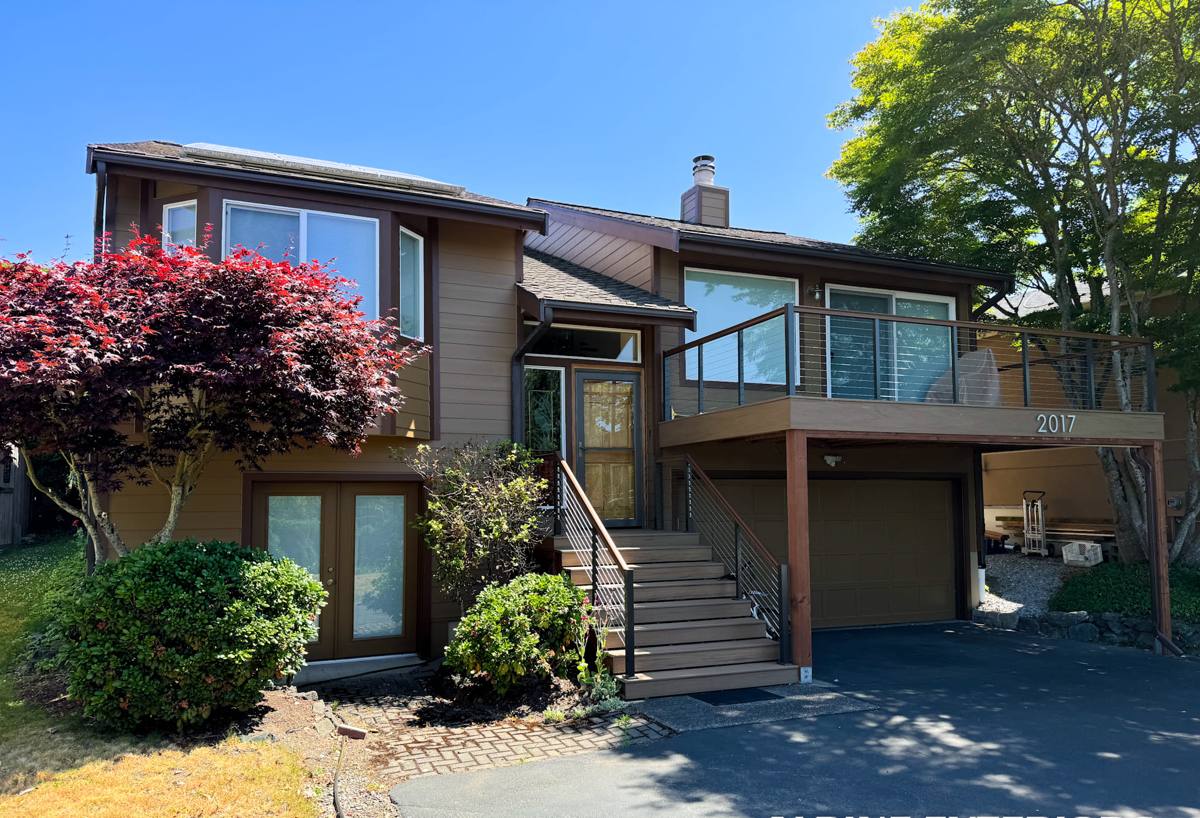
What Salt Air, Driving Rain, and Moss Season Actually Do to a Window
Salt air is corrosive to metal hardware — hinges, locks, and cranks on lower-quality windows can seize up or pit within a few years of direct marine exposure. It also breaks down seals faster than inland conditions, which is why fogged or "misted" double-pane glass shows up sooner on waterfront homes than the manufacturer's warranty paperwork suggests it should.
Wind-driven rain is a separate problem from ordinary rainfall. It doesn't just run down the glass — it gets pushed sideways and upward into any gap in the flashing, trim, or sealant. A window that's watertight in a calm rain can still leak in a wind-driven storm coming straight off the bay if the installation details weren't built for that kind of pressure.
Then there's moss season. Whatcom County's long wet stretch keeps wood, vinyl, and trim damp for months at a time. Moss and algae take hold in shaded sill corners and frame joints, holding moisture against the material and accelerating rot in wood components or discoloration and grime buildup on vinyl and fiberglass. None of this is dramatic on its own — it's the slow, compounding kind of damage that shows up as a soft sill or a stuck sash five or ten years down the road.
The Telltale Signs We Look For
- Hardware that feels gritty, stiff, or corroded to the touch
- Condensation or fogging between the panes, not just on the surface
- Soft or discolored wood at the sill, especially on the ocean-facing side
- Moss or dark staining collecting in frame corners and joints
- Drafts or cold spots near the frame during windy weather
- Paint or finish that's chalking, peeling, or bubbling faster than elsewhere on the house
What "Custom" Means on a Project Like This
Custom windows for a Cottonwood Beach home usually means one or more of the following: matching an odd or non-standard rough opening in an older structure, building larger view-oriented units for a great room or upper floor facing the water, or replacing a window with a different shape or configuration than what's currently there. It also means selecting a wind and water rating appropriate for a home in direct coastal exposure rather than a standard inland spec — the design pressure (DP) rating on a window matters more here than in a sheltered neighborhood a few miles from the water.
For homes chasing a water view, we also think about sightlines: fewer, larger panes with slimmer frames can open up a view without adding structural cost, but that only works if the header and surrounding framing can support it — which is something we check before quoting rather than after removing the old window.
Choosing the Right Frame Material for This Exposure
There's no single "best" frame material for every house — it depends on the home's exposure, upkeep expectations, and budget. Here's how the common options actually hold up in a salt-air, high-moisture environment like Cottonwood Beach:
| Frame Material | Salt Air / Moisture Behavior | Maintenance | General Cost Range |
|---|---|---|---|
| Vinyl | Doesn't corrode; UV and reflected glare near water can cause quicker chalking over time | Low — occasional cleaning | Lower |
| Fiberglass | Very stable in temperature swings and moisture; resists corrosion well | Low | Mid to upper-mid |
| Aluminum | Strong but prone to pitting/corrosion in direct salt exposure unless properly coated | Moderate — coating needs monitoring | Mid |
| Wood-clad | Attractive interior finish, but exterior wood components are the most vulnerable to rot in this climate if detailing isn't precise | Highest | Upper |
We'll walk through these trade-offs against your specific exposure — a window on the water-facing wall has different demands than one on a sheltered side of the same house.
Getting the Installation Right — Where Most Failures Actually Start
Most window problems in this climate don't come from a bad product — they come from an installation that didn't account for wind-driven rain and constant moisture. A correct installation on a Cottonwood Beach home includes:
- A properly sloped sill pan with a back-dam to direct any water that gets past the glass back outside instead of into the wall cavity
- Flashing tape and house wrap integration that's lapped correctly — water management has to work with gravity and wind, not just gravity
- Sealants and fasteners matched to the frame material, since the wrong sealant can fail or even damage certain finishes over time
- Fastening and anchoring appropriate to the wind exposure of the specific wall, not just the minimum code requirement
- Insulation and air-sealing around the frame that doesn't trap moisture behind interior trim
Skipping any one of these doesn't usually cause an immediate problem — it causes a slow one, which is exactly why it matters to get it right the first time rather than diagnosing a leak two winters later.
How Our Process Works
- On-site assessment — we look at the specific wall exposure, existing framing condition, and any signs of past moisture or hardware wear before recommending anything.
- Measurement and product selection — we measure the actual openings and match frame material, glazing, and wind/water rating to that wall's exposure and your budget.
- Permitting, if required — some scopes of work need a permit through the local building department; we handle that step when it applies.
- Removal and prep — old windows come out carefully, and we inspect the framing and sill for hidden rot or moisture damage before anything new goes in.
- Installation — proper flashing, sill pan, sealant, and fastening, done to the standard the exposure calls for, not the minimum that would pass a quick glance.
- Cleanup and walkthrough — we clean up the site and walk you through the finished windows, including how to open, lock, and maintain them.
Glazing and Comfort Choices Worth Understanding
Low-E coatings and argon-filled double panes are the standard baseline for energy performance today, and they also help cut down glare off the water on bright days. Triple-pane glass adds further insulation and can help with condensation control on the coldest, wettest weeks of the year, at a higher upfront cost — worth discussing if a room runs cold or sweats on the glass every winter. Sound dampening from double or triple glazing is also worth a mention for homes close enough to hear wind and surf regularly; thicker glass assemblies noticeably quiet that down.
Condensation on the inside of glass in a marine climate is usually a sign of high indoor humidity meeting a colder window surface, not a defective window — better glazing helps, but so does ventilation, especially in bathrooms and kitchens.
Why It Matters to Hire a Crew That Already Works Cottonwood Beach
A contractor who regularly works this stretch of Birch Bay's shoreline has already seen how salt air, wind direction, and moss season play out on real houses here — which sill details fail first, which frame materials hold up, and which installation shortcuts cause problems two winters down the line. That's different knowledge than general residential experience, and it shows up in fewer callbacks and windows that actually perform the way they're supposed to in this specific exposure.
Simple Maintenance That Extends the Life of New Windows
- Rinse salt residue off exterior glass and frames a few times a year, more often on the water-facing side
- Clear moss and debris from sill corners and weep holes before moss season sets in
- Lubricate hardware periodically to keep locks and cranks from seizing
- Check exterior caulking annually and re-seal any cracked or separated joints
- Run bathroom and kitchen fans during and after showers or cooking to limit indoor condensation
If you're noticing drafts, fogged glass, sticky hardware, or moss buildup around your windows, we're happy to take a look and give you a straightforward, no-pressure estimate for what a proper fix or replacement would involve — just fill out the form below.