 Birch Bay Siding
 Roof Replacement in Cottonwood Beach: A Shoreline Job, Not a Standard One
Cottonwood Beach is one of the small waterfront communities along the Birch Bay shoreline in northern Whatcom County, and a roof out here carries a heavier load than a roof just a few miles inland. Salt-laden air off the water, wind-driven rain that comes in sideways during fall and winter storms, and a moss season that can run most of the year on shaded slopes all work against asphalt, metal, and even the flashing and fasteners holding a roof system together. Replacing a roof in Cottonwood Beach isn't a different product than replacing one anywhere else in the county — it's the same materials installed with a lot more attention to the details this specific exposure punishes first.
We've worked roofs up and down this stretch of shoreline, from Birch Bay proper through Cottonwood Beach, and we treat every replacement here as a shoreline job from the start: material choice, fastener grade, flashing detail, and ventilation are all chosen with salt air and sustained moisture in mind, not just a standard spec sheet.
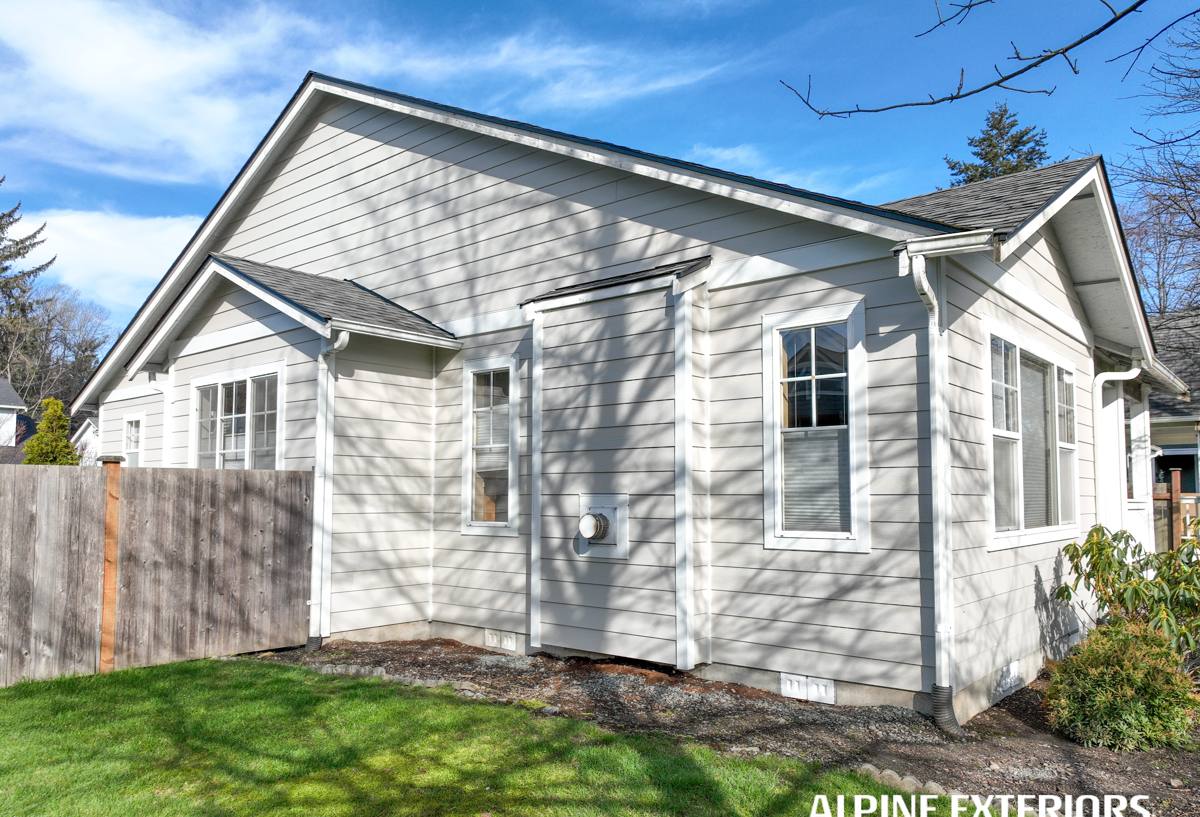
What the Cottonwood Beach Climate Does to a Roof
Salt Air and Corrosion
Being this close to the water means a steady, low-level dose of salt in the air even on calm days. Salt accelerates corrosion of exposed fasteners, flashing, and any metal trim on a roof. Standard-grade hardware that lasts for decades a few miles inland can show rust and pitting years earlier out here, and once a fastener or flashing seam starts to fail, water finds its way in behind it.
Driving Rain and Wind
Open shoreline exposure means more wind than a sheltered inland lot, and wind-driven rain doesn't behave like an ordinary rainstorm — it gets pushed sideways and upward under shingle tabs, around vents, and into any flashing seam that isn't lapped correctly. A roof detail that holds up fine in a calm setting can leak here specifically because the water is coming from an angle the detail was never built to handle.
Moss, Mildew, and a Long Wet Season
Mild temperatures, shade from surrounding trees, and near-constant moisture add up to a long moss and mildew season on this part of the Whatcom County coastline. North-facing slopes and anything shaded tend to hold moss longest, and moss does real damage — it holds moisture against the roofing material, lifts shingle edges, and works its way under flashing over time. A roof that isn't installed and maintained with moss in mind will show granule loss and soft spots well ahead of its rated lifespan.
Signs a Cottonwood Beach Roof Needs Replacement, Not Just Repair
Not every roof problem calls for a full replacement, but in this climate, certain signs mean the roofing system as a whole has reached the end of its useful life rather than needing one more patch.
- Granule loss heavy enough to show up consistently in gutters and downspouts
- Moss regrowth in the same spots year after year, even after cleaning
- Shingles that are cupping, curling, or cracking across multiple slopes, not just one isolated area
- Soft spots or visible sagging when walking the roof or viewing the deck from the attic
- Repeated leaks showing up in different locations after storms, rather than one consistent trouble spot
- Flashing that's rusted, lifted, or missing sealant at chimneys, vents, and roof-to-wall transitions
- A roof approaching or past the manufacturer's rated lifespan for this climate zone
If a roof is showing two or three of these at once, patch repairs tend to become a cycle of chasing the next leak instead of solving the underlying problem. A full replacement resets the clock with materials and details matched to this exposure.
What a Correct Roof Replacement Involves Here
Tear-Off and Deck Inspection
A proper replacement starts with a full tear-off to bare deck, not a roof-over. That's the only way to actually see the condition of the sheathing underneath — soft, delaminated, or water-stained deck sections need to be identified and replaced before anything new goes down, because new roofing installed over a compromised deck will fail early no matter how good the material is.
Underlayment and Ice-and-Water Protection
Given the volume of wind-driven rain this area sees, underlayment choice and coverage matter more than they would in a drier climate. Self-adhering ice-and-water membrane at eaves, valleys, and around penetrations gives a second line of defense in exactly the spots where wind-driven rain is most likely to get past the primary roofing material.
Flashing at Every Transition
Flashing is where most roof leaks actually start, and it's the detail most sensitive to wind-driven, sideways rain. Chimneys, skylights, vent pipes, and roof-to-wall transitions all need correctly lapped, corrosion-resistant flashing, installed so water sheds outward at every layer instead of relying on caulk to make up the difference.
Fasteners and Hardware
In a salt-air environment, fastener grade isn't a place to cut corners. Corrosion-resistant fasteners cost more than standard ones, but standard fasteners are exactly what shows up rusted and failing on tear-offs of roofs that were installed without this exposure in mind.
Ventilation
A roof deck that can't breathe traps moisture from below, which speeds up rot and shortens the life of the roofing material from underneath. Balanced intake and exhaust ventilation lets the attic and roof deck dry out between storms instead of staying damp through the wet season.
Comparing Roofing Materials for a Cottonwood Beach Home
There's no single right material for every roof, but each option behaves differently under salt air, sustained moisture, and heavy moss exposure. The table below lays out the practical trade-offs for this specific climate.
| Material | Moss and Moisture Behavior | Salt Air / Corrosion Factor | Typical Maintenance Here |
|---|---|---|---|
| Architectural asphalt shingle | Moderate; benefits from algae-resistant granules | Fastener and flashing grade matter more than the shingle itself | Periodic moss removal, especially on shaded slopes |
| Standing seam metal | Sheds moss and moisture well due to a smooth, steep-shed surface | Needs a coastal-rated finish and fasteners to resist salt corrosion | Low; occasional fastener and seam checks |
| Composite / synthetic shingle | Resists moisture absorption better than organic-based products | Hardware and flashing grade still the deciding factor | Low to moderate; varies by product line |
| Wood shake | Absorbs moisture readily; higher moss and rot risk in shade | Not a direct corrosion issue, but shortens material life in this climate | High; regular treatment and moss control needed |
Pitch, shade cover, and how exposed a particular roof plane is to direct wind also factor into which material makes sense for a given home. We walk homeowners through those specifics rather than defaulting to one product for every roof.
What Drives the Cost of a Roof Replacement Here
Every estimate depends on the specifics of the house, but a few factors consistently move the number for roofs in Cottonwood Beach and along the rest of the Birch Bay shoreline:
- Roof size and pitch — steeper roofs take longer and require more safety setup than low-slope ones
- Deck condition — sheathing replacement adds cost but isn't optional where the deck is compromised
- Material choice — asphalt, metal, and composite options carry different material and labor costs
- Number of penetrations — chimneys, skylights, and vents each add flashing labor
- Tear-off layers — removing multiple existing layers takes more labor than a single-layer tear-off
- Access and staging — shoreline lots with limited access or steep grades can affect setup time
We give a firm, written estimate after walking the actual roof, not a phone-quoted range, because the factors above vary enough from house to house that a generic number isn't useful to a homeowner trying to budget.
Our Roof Replacement Process
We start with an on-site inspection of the existing roof — from the ridge to the eaves, and from the attic side where accessible — to assess deck condition, ventilation, and how the current system has handled moisture and moss over time. From there we put together a clear, written scope covering material, underlayment, flashing detail, and ventilation, along with a firm price and timeline, before any work begins.
During tear-off, we inspect the deck as it's exposed and flag any sections that need replacement before new underlayment goes down. Flashing, fastener grade, and ventilation are handled as standard practice on every job in this area, not offered as optional upgrades, because those are the details that determine whether a roof lasts through one wet season or several decades of them.
Why a Crew That Already Works Cottonwood Beach Matters
A roofing crew that regularly works this stretch of the Birch Bay shoreline already knows how salt air, wind exposure, and a long moss season behave differently here than they do a few miles inland. That familiarity shows up in choices that aren't always spelled out in a proposal — which fastener grade gets specified, how much ice-and-water membrane goes down at valleys and eaves, and which roof planes need extra attention because of shade or wind direction. Those are the choices that separate a roof needing attention again in a few years from one that goes the distance.
A Simple Checklist Before Hiring for a Cottonwood Beach Roof Replacement
- Ask what underlayment and ice-and-water protection they use at eaves and valleys, and why
- Confirm current Washington contractor licensing and active liability insurance
- Ask how they handle flashing at chimneys, skylights, and roof-to-wall transitions specifically for wind-driven rain
- Ask about fastener grade and corrosion resistance for a salt-air environment
- Get a written, itemized scope of work — material, underlayment, flashing, ventilation — before signing anything
If you're weighing a roof replacement for a home in Cottonwood Beach or elsewhere along the Birch Bay shoreline, we're glad to walk the roof with you and give an honest, specific read on what it needs. Reach out below for a free, no-pressure estimate.