 Birch Bay Siding
 Why Cottonwood Beach Is Hard on Siding
Cottonwood Beach sits right up against the water in Birch Bay, and that proximity to the Salish Sea changes what "normal wear" looks like on a house. Homes here take on a steady drift of salt-laden air, near-constant humidity, and driving rain that comes in sideways off the bay during winter storms. Add in the shade and moisture that mature evergreens hold against north- and west-facing walls, and you get a siding environment that's considerably tougher than what a house ten miles inland in Whatcom County deals with.
Salt air doesn't just corrode metal — it accelerates the breakdown of paint films, softens caulking faster, and works its way into any seam or crack in a wall assembly. Combine that with a moss season that can run eight or nine months out of the year in this part of Washington, and siding that isn't built and installed for the coast tends to fail from the water side long before it looks bad from the street.
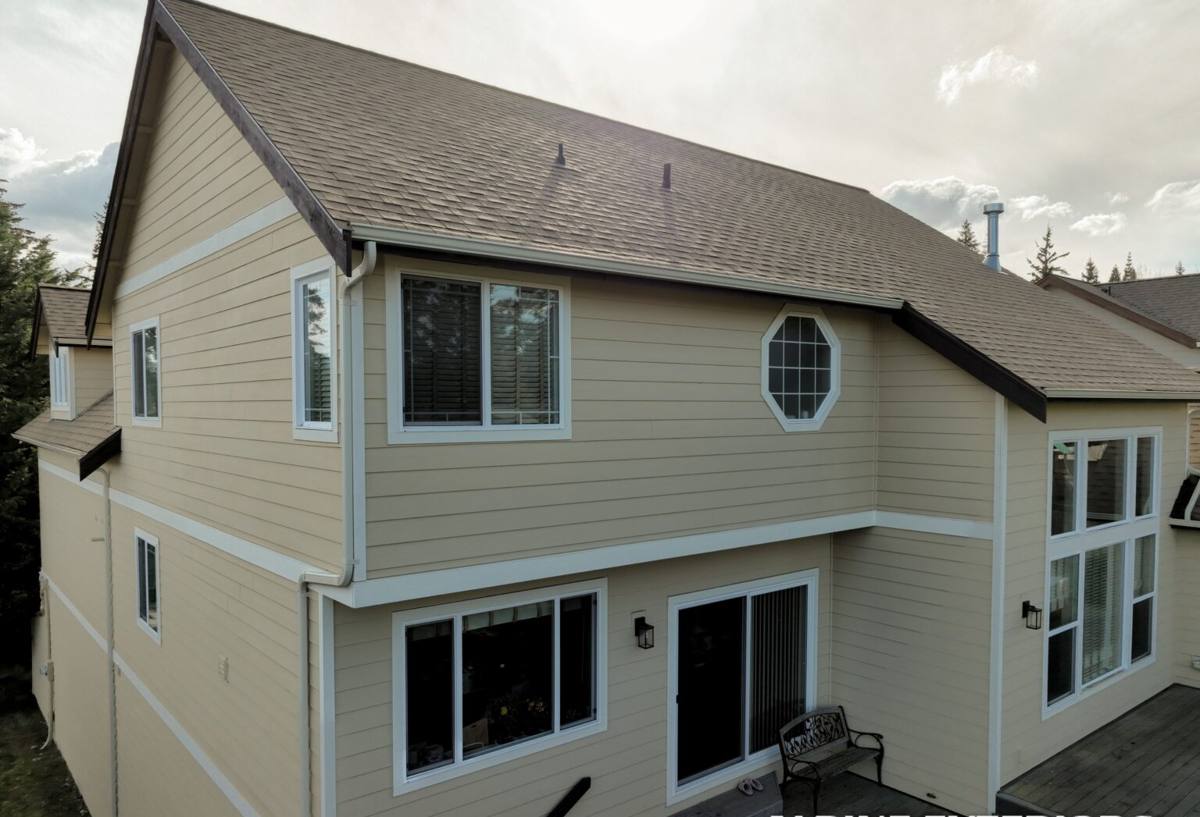
What Salt Air, Rain, and Moss Actually Do to Siding
Salt Air
Airborne salt settles on siding surfaces and fasteners, and over time it draws moisture to itself even on days when it isn't raining. On wood-based products this speeds up rot at butt joints and fastener holes. On lower-grade composites it can accelerate finish breakdown, chalking, and fading well ahead of the manufacturer's expected timeline.
Driving Rain
Storms coming off the water don't just fall straight down — wind-driven rain gets pushed sideways into laps, corners, and any gap around windows or trim. A siding system is only as good as its ability to shed that water before it reaches the wall sheathing. This is a water-management problem as much as it is a material problem.
Moss and Constant Dampness
Shaded walls near mature trees stay damp longer after every rain event, which gives moss, algae, and mildew a long runway to establish themselves. On porous or absorbent siding materials, that sustained dampness can wick moisture into the substrate itself, not just sit on the surface.
Signs a Cottonwood Beach Home Needs Siding Replacement, Not Just a Patch
- Soft or spongy spots when you press on the siding, especially near the bottom courses and around window sills
- Paint that keeps failing in the same spots within a year or two of repainting
- Visible warping, cupping, or buckling of panels or lap boards
- Persistent moss or dark staining that returns within weeks of cleaning
- Gaps opening up at seams, corners, or trim that weren't there a few years ago
- Rising energy bills with no other explanation, which can point to a compromised weather barrier behind the siding
- Visible corrosion streaking near fasteners or metal flashing
A single soft board near a downspout might be a repair. Multiple soft spots, especially on the walls that face the water or sit in shade, usually mean the whole wall assembly has been taking on moisture for a while and a full replacement is the more honest recommendation.
What a Correct Siding Replacement Involves
Replacing siding on a Cottonwood Beach home is not just swapping old boards for new ones. Done right, it's a full rebuild of the wall's water-management system, and skipping steps here is exactly how a new-looking house ends up with the same rot problems five years later.
Tear-Off and Inspection
Old siding comes off down to the sheathing, which lets us actually see what's happening underneath — soft sheathing, old moisture damage, or rot around windows and penetrations that was hidden by the old cladding. This step is also where a lot of contractors cut corners; you can't fix what you don't uncover.
Repair the Substrate
Any damaged sheathing or framing gets repaired or replaced before anything new goes on. Installing new siding over compromised wood just seals the problem in.
Weather-Resistive Barrier
A properly lapped and taped weather barrier goes over the sheathing, with attention to how it integrates around windows, doors, and any wall penetrations. In a driving-rain environment like Cottonwood Beach, this layer — not the siding itself — is the last line of defense if wind-driven water gets past the cladding.
Flashing and Drainage
Proper flashing at windows, doors, and horizontal transitions, along with a drainage gap where the siding system calls for it, gives incidental moisture a path out instead of a place to collect.
Siding Installation to Manufacturer Spec
Correct fastener type and placement, proper clearances above grade, decks, and roof lines, and correct joint treatment all matter more on a coastal property than they do further inland, because there's simply less margin for error before moisture finds a way in.
Caulking, Trim, and Finish
Factory-finished products reduce how much field caulking and painting is required, which matters in an environment where caulk and field-applied paint are the first things salt air and UV break down.
Why We Only Install James Hardie Fiber Cement Here
We made a decision a while back to install James Hardie fiber cement siding exclusively, and we don't install vinyl, LP SmartSide, or cedar. That's a deliberate standard, not a sales pitch, and it's especially relevant on a property like one in Cottonwood Beach.
Fiber cement is non-combustible and doesn't rely on an organic wood component that can absorb moisture the way engineered wood products can. It holds up to sustained dampness and salt exposure without the swelling, softening at cut edges, or rot risk that wood-based siding carries if a seam ever gets compromised. Hardie's ColorPlus factory finish is baked on under controlled conditions, which gives it better adhesion and fade resistance than field-applied paint — a real advantage where salt air and sun both work against a finish year-round. And Hardie's HZ5 product line is specifically engineered for cold, wet climates, which the Pacific Northwest coast qualifies as.
None of this means other products are junk — vinyl, wood, and engineered wood sidings all have their place. But for a coastal Whatcom County property, the trade-offs (moisture sensitivity, finish maintenance, warranty structure) tipped clearly enough that we standardized on Hardie and stopped installing the alternatives.
Our Process Working in Cottonwood Beach
Working this stretch of Birch Bay regularly means we already know what to expect before we show up: tight lot lines near the water, mature trees that keep walls shaded and damp longer, and homes that range from older cabins converted to year-round residences to newer builds. That familiarity changes how we scope a job — we know to check specific problem areas first, like north-facing walls, low clearance above grade near the beach side, and trim around older window installations.
Our process on every replacement follows the same sequence: an on-site inspection and honest assessment of what's actually happening behind the old siding, a written scope and estimate before any work starts, full tear-off with sheathing repair as needed, correct water-resistive barrier and flashing detail, and Hardie installation to manufacturer specification. We walk the finished job with the homeowner before we consider it done.
Cost Factors for Cottonwood Beach Siding Replacement
| Factor | Why It Matters Here |
|---|---|
| Extent of hidden moisture damage | Sheathing or framing repair adds cost but can't be skipped once uncovered |
| Home size and wall complexity | More corners, gables, and trim detail mean more labor and material cutting |
| Siding profile and accessories | Lap siding, panel systems, and trim board choices vary in material cost |
| Access and site conditions | Beachfront lots, limited driveway access, or steep grades can affect setup time |
| Existing trim and window flashing condition | Older homes near the water often need trim and flashing upgrades alongside siding |
We don't publish flat pricing because these factors genuinely change the number from house to house — but every estimate we give is itemized so you can see exactly what's driving the cost.
Maintaining Hardie Siding in a Salt-Air, Moss-Prone Environment
- Rinse siding periodically to clear salt residue and organic buildup, especially on shaded or water-facing walls
- Keep gutters and downspouts clear so overflow doesn't run down the siding face
- Trim back vegetation and tree limbs that keep specific wall sections shaded and damp
- Inspect caulking at trim and window joints every year or two and touch up as needed
- Address any moss or algae growth early with gentle cleaning rather than pressure-washing, which can damage finishes
Hardie siding needs far less upkeep than wood or engineered wood products, but "low-maintenance" isn't "no-maintenance" — a little attention once or twice a year goes a long way in this climate.
Choosing a Contractor for Coastal Whatcom County Siding Work
- Ask whether they've worked specifically in Birch Bay or other Whatcom County waterfront areas, not just inland jobs
- Confirm they carry current Washington contractor licensing and insurance, and ask to see it
- Get a written scope that spells out tear-off, sheathing repair contingencies, weather barrier, and flashing detail — not just "new siding installed"
- Ask what siding brand and product line they're proposing and why, for your specific exposure
- Ask how they handle unexpected rot or moisture damage found during tear-off, and how that's priced
- Check that any warranty offered is explained in writing, including what's manufacturer-backed versus installer-backed
A contractor who's actually done this work along Birch Bay's shoreline will have specific, concrete answers to these questions rather than generic reassurances.
Get an Honest Look at Your Siding
If your Cottonwood Beach home is showing soft spots, recurring moss, or paint that won't hold, it's worth getting an honest assessment before the damage spreads further into the wall. We offer free, no-pressure estimates — we'll tell you plainly whether you're looking at a repair or a full replacement, and what a correct job would involve. Use the form below to get started.