 Birch Bay Siding
 Board & Batten in Custer: A Style That Has to Earn Its Keep
Board and batten has a clean, vertical look that suits a lot of the homes around Custer — farmhouse-style builds, garages, accent gables, and full exteriors alike. But out here, that style can't just look good. It has to hold up to salt-laden air rolling off the water, wind-driven rain that hits siding sideways instead of straight down, and a moss season that stretches for months. A board and batten job that isn't built for this specific stretch of Whatcom County will show problems within a few winters — cupping boards, black streaking in the vertical channels, and battens that trap water instead of shedding it.
This page is about doing board and batten right, specifically for Custer conditions, with the one material we've standardized on for every siding job we take.
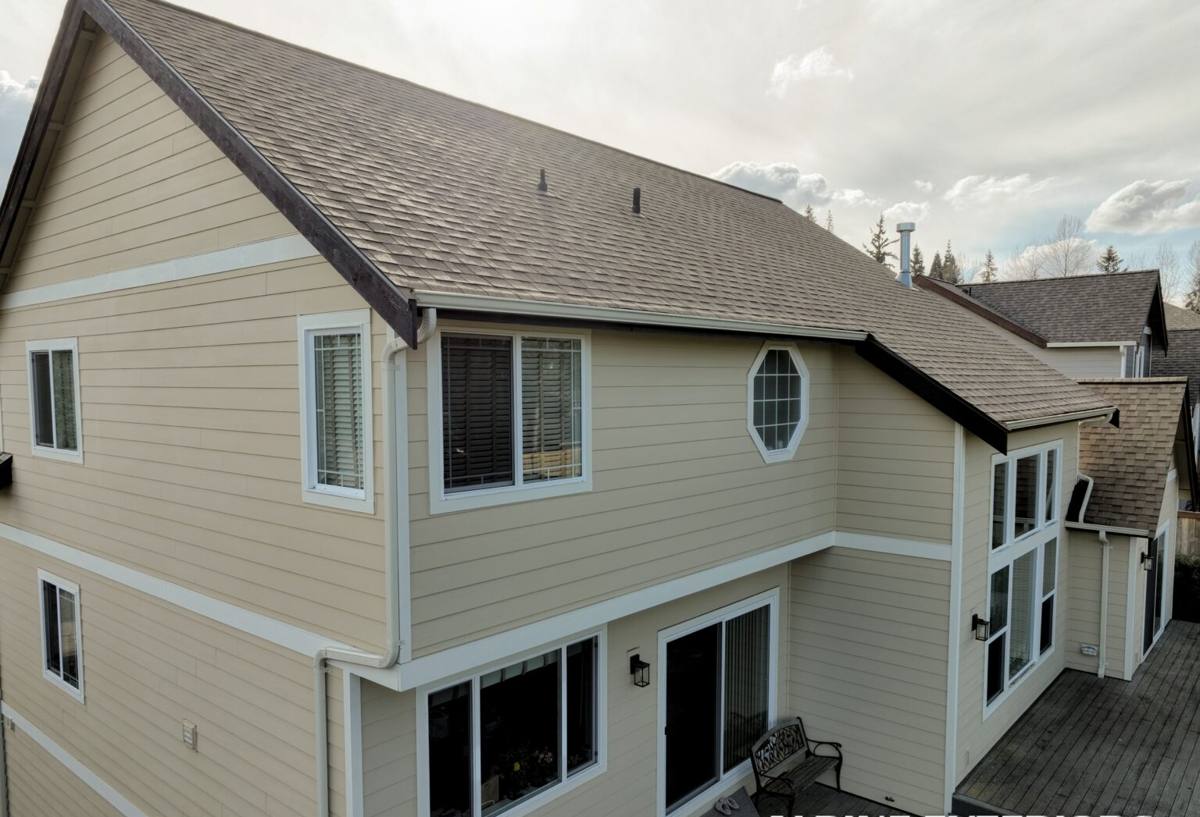
What Custer's Climate Actually Does to This Style of Siding
Salt Air
Proximity to Birch Bay and the Salish Sea means airborne salt settles on exterior surfaces year-round, not just during storms. On wood or engineered-wood board and batten, that salt accelerates finish breakdown and corrodes exposed fasteners over time. On the vertical battens especially — where water tends to sit longer than it does on flat lap siding — that corrosion shows up faster.
Driving Rain
Board and batten's vertical seams and raised battens create more edges and joints than a horizontal lap profile. Every one of those edges is a place water can be pushed in by wind rather than simply running off. Correct installation treats every batten joint and panel edge as a potential water path, not just a visual detail.
Moss and Sustained Moisture
Whatcom County's moss season runs long, and board and batten's vertical channels can hold organic debris and moisture against the siding face longer than a lap profile does, especially on north-facing walls or under tree cover common around Custer. Left alone, that trapped moisture feeds moss and mildew growth right at the seams — exactly where you don't want ongoing moisture exposure.
Why We Only Build Board & Batten in James Hardie Fiber Cement
We don't offer this style in engineered wood, vinyl, or primed spruce boards. For a profile that depends on vertical joints and exposed battens standing up to salt air and driving rain for decades, we've standardized on James Hardie fiber cement — specifically their HZ5 climate-engineered formulation, which is built for the moisture cycling common in the Pacific Northwest. It's non-combustible, doesn't swell or rot the way wood-based products can at a batten seam, and holds its ColorPlus factory finish without the repainting cycle that wood or primed products need to stay protected.
That's a deliberate trade-off, not a marketing point. Fiber cement costs more upfront than engineered wood board and batten, and it's less forgiving to install poorly. But for a profile with this many seams exposed to Custer's weather, we don't think the lighter, cheaper materials hold up long enough to be worth it.
What a Correct Board & Batten Installation Actually Involves
Panel and Batten Layout
James Hardie's board and batten look is achieved with vertical panel siding and battens fastened over the panel joints, spaced and fastened to the manufacturer's engineering specs — not eyeballed. Batten spacing that ignores expansion allowances or manufacturer fastening schedules is one of the most common shortcuts we see on failed jobs, and it's invisible until moisture starts working its way in behind a loose or improperly sealed batten.
Water Management Behind the Siding
A correct install starts before the first panel goes up: a weather-resistive barrier, properly lapped flashing at every window, door, and roofline intersection, and in most cases a rainscreen or furring strip system that lets any water that does get behind the siding drain and dry out instead of sitting against the sheathing. This matters more with board and batten than with lap siding, because the vertical seams give water more direct paths inward if the drainage plane behind the siding isn't done correctly.
Fastening and Corner Details
Fasteners need to be corrosion-resistant given the salt air, driven to the correct depth (not overdriven, which cracks fiber cement and opens a moisture entry point), and placed according to Hardie's published fastening schedule for the wind exposure at your specific site. Inside and outside corners, where board and batten profiles often show the most visible caulking, need factory trim or properly detailed site-built corners — not just caulk covering a gap.
Our Process for a Custer Board & Batten Project
- Site assessment — we look at wall orientation, tree cover, existing moisture damage, and wind exposure specific to your property before quoting anything.
- Tear-off and sheathing check — old siding comes off and we inspect the sheathing underneath for rot or damage before anything new goes on. Problems found here get addressed, not covered up.
- Weather barrier and drainage plane — house wrap, flashing, and rainscreen furring installed to manage water before it ever reaches the finish siding.
- Panel and batten installation — James Hardie panels and battens installed to manufacturer spacing, fastening, and clearance specs.
- Trim, caulking, and touch-up — corners, window and door trim, and factory-finish touch-up paint applied where fasteners are exposed.
- Final walk-through — we go over the finished job with you before calling it done.
Board & Batten Compared to Other Siding Styles for This Climate
| Style / Material | Moisture Behavior | Salt Air Durability | Maintenance in Whatcom County |
|---|---|---|---|
| James Hardie Board & Batten | Managed by rainscreen + factory-engineered panel system | Strong — non-combustible, doesn't corrode or rot | Occasional wash-down; factory finish holds color |
| Wood Board & Batten | Prone to swelling/shrinking at battens | Weak — salt accelerates finish and fastener breakdown | Repainting/resealing on a regular cycle |
| Engineered Wood Board & Batten | Vulnerable at cut edges and joints if moisture gets in | Moderate — depends heavily on caulk/paint upkeep | Edge sealing and repainting required over time |
| James Hardie Lap Siding | Fewer vertical seams; simpler water path | Strong | Low — similar to board and batten but fewer joints to inspect |
Lap siding is arguably the lower-maintenance choice for pure water management, since it has fewer vertical seams. We still install plenty of board and batten in this area — the style has real appeal and, done correctly in fiber cement, performs well — but we want homeowners to understand the trade-off going in rather than discover it after installation.
What Board & Batten Costs Depend On
We don't publish flat prices because every Custer property is different, but the main cost drivers we see are:
- Whether existing siding needs to be removed and disposed of, or you're building on new construction
- Condition of the sheathing underneath — repairs found during tear-off add cost but aren't optional to skip
- Wall height and roofline complexity — steep gables and multiple stories take longer to detail correctly
- Amount of trim, corner work, and window/door flashing detail required
- ColorPlus finish selection versus field-painted trim accents
- Site accessibility — tight lots or limited equipment access around some Custer properties can affect labor time
Get a specific number by having your property assessed — broad estimates without seeing the walls and existing siding condition aren't reliable for a style with this many install-quality-dependent details.
Keeping Board & Batten Siding Sound Through Custer's Weather
Even a correctly installed system benefits from basic upkeep, especially given the moss season and salt exposure this area sees every year:
- Rinse siding down at least once a year to clear salt residue and organic buildup, focusing on north-facing and shaded walls
- Check caulking at corners, window trim, and batten joints annually and have any cracked or missing caulk redone promptly
- Trim back vegetation and tree cover that keeps walls shaded and damp longer than necessary
- Have a contractor inspect fastener heads and touch up factory finish if any exposed areas show wear
- Address any moss or mildew growth at seams early — don't let it sit through a second wet season
Why Local Experience in Custer Matters for This Job
Board and batten installed to a generic spec sheet, without accounting for how a specific property sits relative to prevailing wind and salt exposure off Birch Bay, is how you end up with premature failures at the battens. A crew that already works this area knows which walls in Custer take the worst of the driving rain, how long moss season actually runs here, and what drainage detailing holds up through a full Whatcom County winter — not just what a manufacturer's installation manual says in the abstract. That local pattern recognition is part of what you're paying for, along with the labor itself.
If you're considering board and batten siding for a home in Custer, we're happy to walk the property with you, look at your specific exposure and existing siding condition, and put together a clear, no-pressure estimate. There's no obligation — just a straight answer on what your home needs.