 Birch Bay Siding
 Deck Building Built for Custer's Weather, Not Against It
Custer sits close enough to Birch Bay and the Strait of Georgia that homes here deal with a mix most inland decks never see: salt-laden air moving in off the water, long stretches of driving rain through fall and winter, and a moss season that can run eight months or more. A deck that's framed and finished the same way you'd build one in a dry inland climate will show problems in Custer within a few seasons — soft spots at the ledger, corroded fasteners, slick green film on the walking surface, and framing that stays damp long after the rain stops. Building a deck that actually holds up here means treating the climate as a design input from day one, not an afterthought.
This page covers what a correctly built deck for a Custer property needs to account for, what goes wrong when shortcuts are taken, and how we approach the work so you get a structure that's solid for decades, not just for the photos.
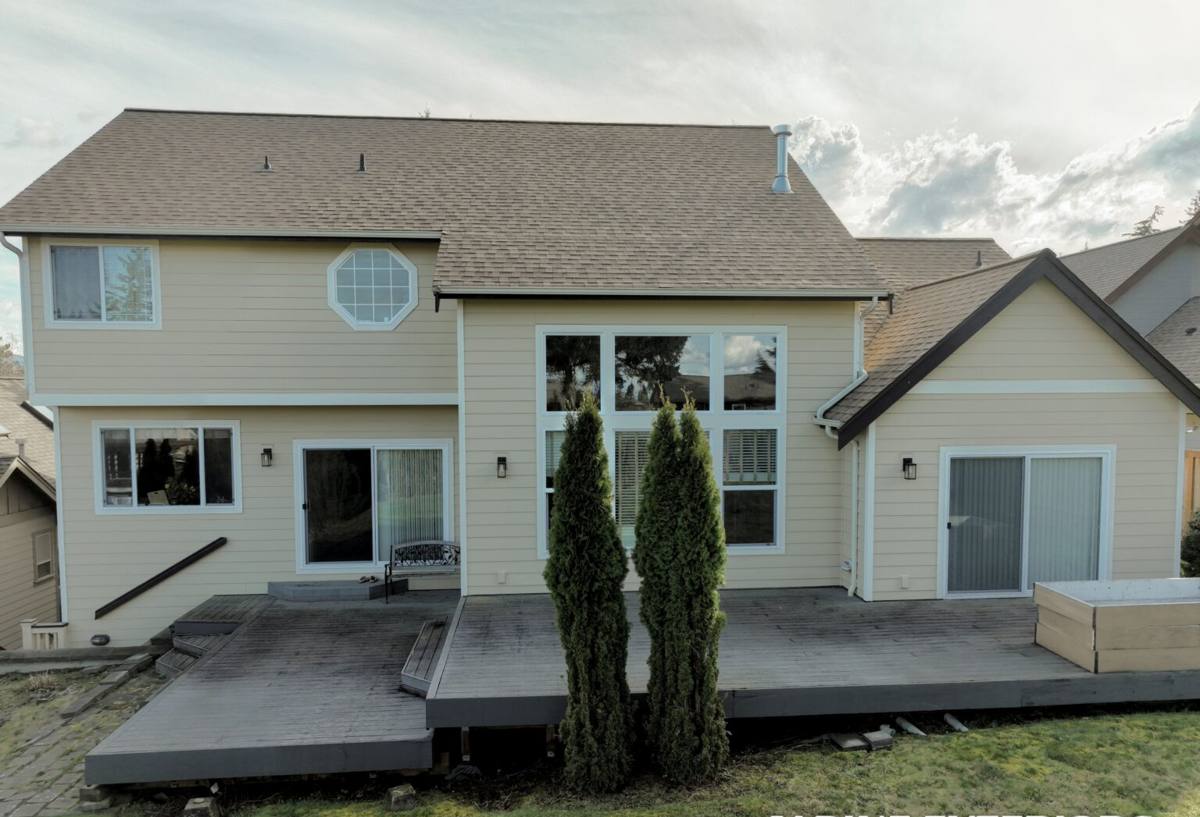
What Whatcom County Weather Actually Does to a Deck
It helps to understand the specific failure modes before talking about how to prevent them. Custer's climate attacks a deck in a few predictable ways:
- Moisture intrusion at connection points — the ledger-to-house joint, post bases, and any spot where two pieces of wood meet trap water long after a rain event, leading to rot from the inside out.
- Fastener and hardware corrosion — salt-influenced air accelerates rust on screws, joist hangers, and structural connectors that aren't rated for coastal exposure, weakening the structure in ways you can't see from the surface.
- Moss and algae growth — shaded, north-facing, or tree-covered decks in this area stay damp for extended stretches, which is exactly what moss needs to establish. Beyond looking bad, moss holds moisture against the decking surface and makes it slippery and dangerous underfoot.
- Cupping and splitting in wood decking — repeated wet-dry cycles cause wood fibers to swell and shrink unevenly, which is how you end up with cupped boards, raised grain, and splitting around fastener holes.
None of this means a deck can't be built well here — it means the build has to account for these specific pressures rather than following a generic set of plans.
Getting the Structure Right: Footings, Framing, and Ledger Attachment
Footings and Frost Depth
Whatcom County's building department sets frost depth and footing requirements for a reason — footings that are too shallow can heave or settle over time, especially in the wetter, poorly-draining soils common around Custer. We size and set footings to meet local code requirements for the property's specific soil and site conditions, not a one-size-fits-all minimum.
Ledger Board Flashing
The ledger — the board that attaches the deck to the house — is the single most common failure point on decks in wet coastal climates. Water that gets behind an improperly flashed ledger has nowhere to go, and it will rot the house's rim joist and sheathing before it ever shows on the surface. A correct ledger installation uses proper flashing (not just caulk), a water-resistant barrier behind the flashing, and a slight gap or drainage path so bulk water can escape instead of pooling against the house.
Joist and Beam Protection
Framing lumber that sits under decking is constantly exposed to splash-back and condensation, even when it's rated for outdoor use. We treat cut ends, drilled holes, and top edges of joists with a protective barrier and use joist tape or flashing on top of framing members so the structural wood isn't sitting in direct, prolonged contact with moisture.
Choosing a Decking Material for Custer Conditions
There's no single "best" decking material — the right choice depends on your budget, how much upkeep you want to do, and how exposed the deck is to sun, shade, and salt air. Here's an honest comparison of the main options we install:
| Material | Moisture Behavior | Maintenance | Typical Lifespan |
|---|---|---|---|
| Pressure-Treated Wood | Resists rot when properly sealed; absorbs and releases moisture with weather cycles | Needs re-staining/sealing every 1-2 years in this climate | 15-20 years with upkeep |
| Cedar | Naturally moisture- and insect-resistant, but still absorbs water without finish | Regular sealing needed to preserve color and prevent graying/splitting | 20-25 years with consistent care |
| Capped Composite | Polymer cap resists moisture absorption and staining; won't rot or splinter | Occasional washing to prevent surface algae film; no sealing or staining | 25-30+ years, backed by manufacturer warranty |
In a climate with Custer's rain totals and moss pressure, we see a lot of homeowners move toward capped composite for main living-level decks, while cedar remains a popular choice for homeowners who want a natural wood look and are willing to keep up with periodic sealing. Pressure-treated wood is still a solid, budget-conscious option for framing and for decks that will be painted or stained as part of the home's overall look. We'll walk through the honest trade-offs of each based on your specific site — sun exposure, shade from trees, and how the deck will actually be used — rather than pushing whichever material has the best margin.
Fasteners and Hardware: The Part Nobody Sees Until It Fails
A deck is only as strong as its connections. In a salt-air environment, standard zinc-coated screws and brackets can start corroding well before the wood around them shows any wear. We use stainless steel or heavy hot-dip galvanized fasteners and structural connectors rated for coastal and treated-lumber exposure, and we make sure hardware is compatible with the specific type of treated lumber being used — mismatched metals and chemically treated wood can accelerate corrosion in ways that aren't obvious until a post base or joist hanger fails under load.
Drainage and Moss Control: Designing the Deck to Dry Out
Moss doesn't grow because a deck is "dirty" — it grows because a surface stays damp long enough for spores to take hold. A well-built deck is designed to dry out between rain events, which in Custer's climate means paying attention to:
- Gaps between boards sized correctly so water drains through instead of pooling on the surface.
- Grading and slope away from the house so water sheds off the deck rather than collecting at the ledger.
- Under-deck airflow — decks built low to the ground or enclosed with solid skirting trap moisture underneath; leaving ventilation gaps lets air move through and keeps the framing drier.
- Trimming back overhanging trees where possible, since shaded, leaf-covered decks hold moisture far longer than decks that get some sun and airflow.
None of these design choices are complicated, but they have to be planned into the build — retrofitting drainage or airflow after the fact is far more disruptive than getting it right the first time.
Permits and Whatcom County Requirements
Most deck projects in this area require a building permit, and requirements around setbacks, guardrail height, stair geometry, and footing depth are set by Whatcom County's building code. Requirements can vary depending on the deck's height, size, and proximity to property lines, so we handle the permit process as part of the project rather than leaving it for the homeowner to figure out. Skipping permitting on a deck isn't just a compliance issue — it can create real problems when you go to sell the home or file an insurance claim after a structural issue.
How We Approach a Deck Project in Custer
Our process is the same whether it's a simple ground-level deck or a larger multi-level structure — we don't cut steps just because a job is smaller:
- On-site assessment of the ledger location, soil conditions, drainage path, and sun/shade exposure.
- Honest material and design discussion based on your budget, maintenance preference, and how the space will be used.
- Permit drawings and submission to Whatcom County where required.
- Footing and framing work built to code minimums or better for the site's specific conditions.
- Proper ledger flashing, joist protection, and corrosion-resistant hardware throughout.
- Decking installation with attention to drainage gaps, board orientation, and finish detailing.
- Final walkthrough covering how to care for your specific decking material through the wet season.
A quick maintenance checklist we go over with every Custer homeowner after installation:
- Sweep debris off the deck surface regularly, especially in fall when leaves accumulate.
- Rinse or wash the surface a couple of times a year to prevent algae and moss film from establishing.
- Check and re-seal wood decking on the schedule appropriate to that material.
- Keep gutters and downspouts near the deck clear so overflow isn't draining onto or under the structure.
- Inspect railings and stair connections annually for any looseness.
Why It Matters to Hire a Crew That Already Works in Custer
A lot of deck problems we get called out to fix weren't built by careless people — they were built using methods that work fine in drier parts of the country but weren't suited to this specific climate. A crew that regularly works in Custer and the surrounding Birch Bay area already knows which details matter here: the ledger flashing approach that actually keeps water out through a Whatcom County winter, which hardware holds up against salt air, and how to design for drainage so moss doesn't take over a shaded deck within a couple of years. That local experience shows up in fewer callbacks and a deck that still looks and performs well a decade in, not just at handoff.
If you're planning a new deck or replacing one that's showing its age, we're happy to take a look and talk through what makes sense for your property. Reach out for a free, no-pressure estimate using the form below.