 Birch Bay Siding
 Metal Roofing in Custer: A Straight Answer for a Wet, Wind-Exposed Corner of Whatcom County
Custer sits inland from the water by a few miles, out in the flat, open farmland north of Ferndale, but it doesn't get a break from the weather that shapes roofing decisions across this part of Whatcom County. Storms moving off the Strait of Georgia push wind-driven rain across open fields with little to slow it down, salt-laden marine air still reaches this far inland on a regular basis, and the mild, damp climate keeps roofs wet — and growing moss — for most of the year. A roof out here needs to shed water fast, resist corrosion, and not give moss anywhere to take hold. That's the case for metal roofing on a lot of Custer properties, and it's also why a metal roof installed wrong can cause more problems than the asphalt shingle roof it replaced.
We install standing-seam and exposed-fastener metal roofing on homes throughout Custer and the surrounding stretch of Whatcom County, and we treat the roof as a full system — flashing, underlayment, fastening, and ventilation all working together — rather than just panels on a deck. This page is about what that actually looks like for a Custer home specifically: what the climate demands, what a correct installation involves, and what questions are worth asking before anyone gets on your roof.
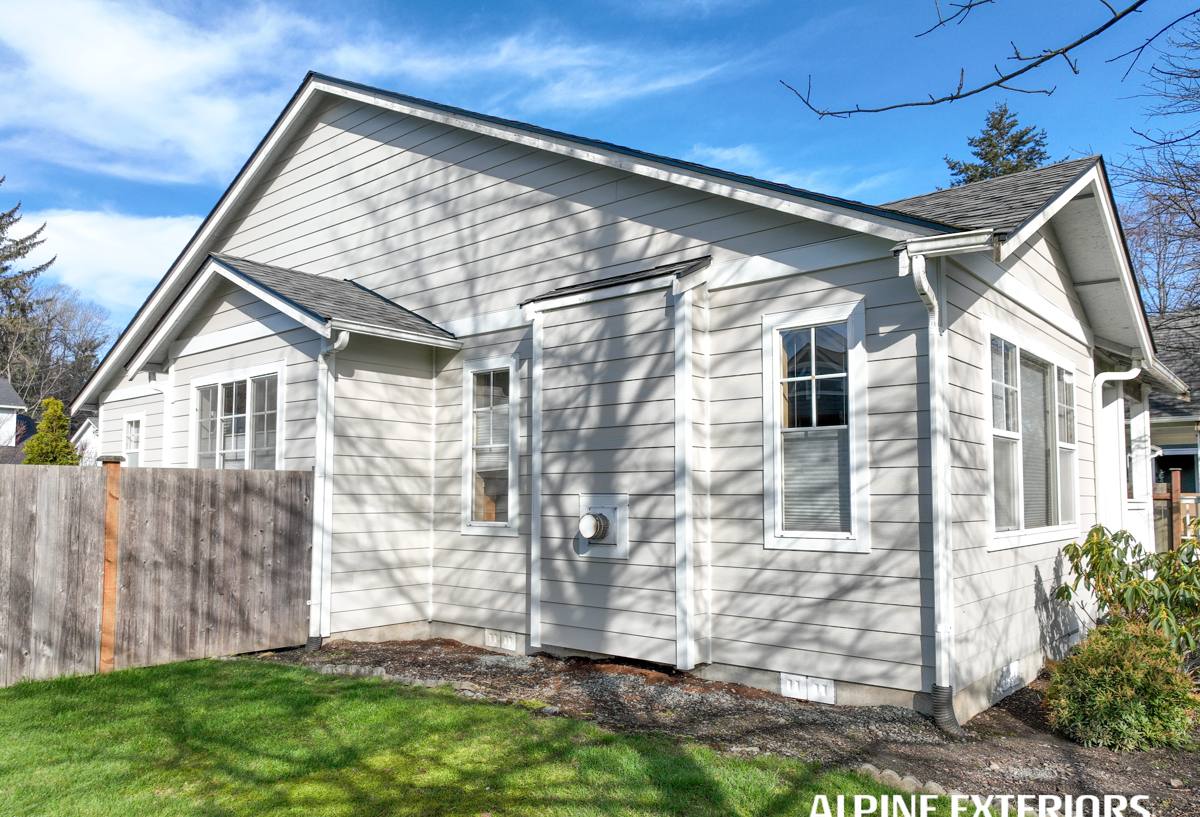
What Custer's Climate Actually Does to a Roof
Wind-Driven Rain Off Open Ground
Custer doesn't have the tree cover or terrain breaks that some inland Whatcom County towns have. Open agricultural land means wind moves across roofs with less resistance, and storms coming through push rain sideways as much as down. On a roof, that means water tries to get under laps and flashing that would stay dry in a calmer setting. Every seam, penetration, and edge detail has to be built assuming water will be tested from an angle, not just from directly overhead.
Marine Air and Corrosion
Even set back from Birch Bay and the Strait, Custer still sees enough salt-laden air carried inland on winter storms to matter for anything metal on a roof — fasteners, flashing, panel edges, and any exposed hardware. Lower-grade steel or mismatched fastener coatings can start showing rust streaks and pitting years before a properly specified system would. This is one of the main reasons material choice and fastener spec matter as much as the panel style itself.
A Long Moss and Mildew Season
Mild temperatures combined with near-constant moisture through fall, winter, and spring give moss and mildew a long growing season across Whatcom County. Asphalt shingles give moss spores a rough, porous surface to grab onto, and once established, moss holds moisture against the roof deck and works its way under shingle tabs over time. A properly installed metal roof gives moss almost nothing to grip, which is one of the clearest practical advantages for a property with shaded sections or north-facing slopes that stay damp longer than the rest of the roof.
Temperature Swings and Thermal Movement
Whatcom County doesn't see extreme heat, but the difference between a cold, wet night and a sunny afternoon still causes metal panels to expand and contract. A roof system that doesn't account for that movement — panels fastened too tightly, or clips and fastening patterns that don't allow for expansion — can develop oil-canning, loosened fasteners, or stress at the seams over a few seasons. This is a detail that shows up in how the roof is installed, not in the panel material itself.
Why Metal Roofing Fits This Climate
Metal roofing isn't automatically the right answer for every home, but for a lot of Custer properties it addresses the specific problems this climate creates better than asphalt shingles do. The main advantages are practical, not cosmetic:
- Fast water shedding: Steep-pitched panel seams and a smooth surface move wind-driven rain off the roof quickly instead of giving it time to work under a lapped edge.
- Moss resistance: A smooth metal surface gives moss spores far less to grab onto compared to the textured surface of asphalt shingles, which cuts down on one of the most common maintenance headaches in this climate.
- Corrosion-resistant coatings: Quality metal roofing systems use factory finishes and coatings specifically rated for coastal and marine-influenced exposure, which matters given how far inland salt air travels in this part of the county.
- Long service life: A correctly installed metal roof typically outlasts asphalt shingles by decades, which matters on a property where reroofing means dealing with wet, unpredictable weather windows for the work itself.
- Lower long-term maintenance: Fewer granules to lose, no shingle tabs to lift in wind, and less surface area for moss and mildew to establish on.
None of that means metal roofing is maintenance-free or that it's automatically the right call for every budget or every roof shape. It's a real trade-off worth walking through honestly, not a product we push as a one-size answer.
Metal Roofing Options for a Custer Home
| System Type | How It's Fastened | Best Fit |
|---|---|---|
| Standing seam | Concealed clips, no exposed fasteners on the field | Best long-term weather-tightness, especially on exposed or wind-heavy sites |
| Exposed-fastener panel | Screws driven through the panel face with gasketed washers | Lower upfront cost, still durable when fasteners are correctly specified and maintained |
| Metal shingle or shake profile | Interlocking panels styled to resemble traditional roofing | Homeowners who want the look of shingles or shakes with metal's durability |
Standing seam is generally our recommendation for the most exposed sites around Custer, since the concealed fastening system removes the exposed screw penetrations that are the most common long-term failure point on an exposed-fastener roof. That said, exposed-fastener systems installed correctly, with quality gasketed fasteners and proper maintenance, are a legitimate and more affordable option for plenty of homes here — it comes down to budget, roof exposure, and how the homeowner weighs upfront cost against long-term maintenance.
What a Correct Metal Roof Installation Actually Involves
Deck Inspection and Prep
Before any panel goes down, the roof deck itself needs to be sound — no soft spots, no hidden rot from a prior leak, and flat enough for panels to lay correctly. Skipping this step and installing over a compromised deck is one of the fastest ways to shorten the life of an otherwise good roofing system.
Underlayment Built for Wet Climates
We use a high-temperature, self-adhering underlayment under metal roofing rather than standard felt. Metal panels can get hot enough in direct sun to affect a lower-grade underlayment over time, and in a climate where the roof deck stays damp for long stretches, a synthetic or self-adhering underlayment gives real backup protection if wind-driven rain ever gets past the panel seams.
Fastening and Panel Layout
Panel layout starts from the most visible or most weather-exposed edge and works across the roof, with fastening patterns and clip spacing set to allow for thermal movement rather than pinning panels rigidly in place. On exposed-fastener systems, every screw gets a gasketed washer seated correctly — over- or under-driven fasteners are one of the most common sources of early leaks on this panel type.
Flashing and Penetration Details
Valleys, roof-to-wall transitions, chimneys, vents, and any other penetration are where the majority of roof leaks actually start, on metal roofs and shingle roofs alike. Custom-formed flashing that laps correctly with the panels and ties into the underlayment is standard on every job — not an upgrade homeowners have to specifically request.
Ridge and Edge Detailing
Ridge caps, eave trim, and rake edges need to shed wind-driven rain and resist wind uplift, which matters on an open, exposed site like much of Custer. Proper edge detailing also gives pests and moisture less opportunity to get up under the roof edge at the fascia line.
Signs a Custer Roof Needs Attention
- Rust streaks, pitting, or corrosion around fasteners, flashing, or panel edges
- Visible moss or algae growth on shingles, especially on shaded or north-facing slopes
- Granule buildup in gutters, a sign asphalt shingles are wearing down faster than expected
- Soft spots, sagging, or visible daylight in the attic where there shouldn't be any
- Loose, lifted, or missing shingle tabs after a windy storm
- Staining on interior ceilings or walls, which usually points to a leak that's already reached the deck
- A roof approaching or past the manufacturer's expected service life for its material
Metal Roofing vs. Reroofing With Asphalt Shingles
| Factor | Metal Roofing | Asphalt Shingles |
|---|---|---|
| Upfront cost | Higher | Lower |
| Typical service life | Several decades with correct installation | Roughly 20-30 years depending on product and exposure |
| Moss resistance | High — smooth surface gives moss little to grip | Lower — textured surface and granules are a growth surface |
| Wind-driven rain performance | Strong when seams and flashing are correctly installed | Adequate when installed correctly, more vulnerable at edges and laps |
| Ongoing maintenance | Lower, but not zero — fasteners and coatings still need occasional checks | Periodic moss treatment and granule loss are common in this climate |
How We Approach a Custer Metal Roofing Project
We start with an on-site inspection of the existing roof and deck, checking for hidden rot, ventilation problems, and how exposed the property is to prevailing wind and rain. From there we walk through panel and fastening system options with the homeowner, including real cost and maintenance trade-offs, before putting together a written scope. Deck prep, high-temperature underlayment, and custom flashing at every penetration and transition are standard on every metal roofing job we do — not line items that get added later as an upgrade.
Because we also handle siding, windows, and decks, the crew on your roof understands how roof-to-wall flashing needs to tie into the siding below it, not just how to fasten panels to a deck. That matters most at the details — valleys, wall transitions, and penetrations — which is where most roof leaks in this climate actually start.
A Practical Checklist Before Hiring for Metal Roofing in Custer
- Confirm current Washington contractor licensing and active liability insurance
- Ask specifically how they handle valley, wall-transition, and penetration flashing, not just which panel brand they install
- Get a written scope that separates the material/manufacturer warranty from the contractor's installation warranty
- Ask what underlayment they use and whether it's rated for sustained moisture and heat exposure
- Ask how fastening patterns account for thermal movement across seasonal temperature swings
- Confirm whether deck inspection and any needed repair is included in the scope or billed separately
Why a Local Crew Matters for Metal Roofing Work
A crew that works this part of Whatcom County regularly already knows how wind-driven rain behaves on an open, exposed site like Custer, and how far inland the marine air travels before it starts affecting fastener and coating choices. That experience shows up in decisions homeowners rarely see directly — how much lap a flashing detail gets, which fastener coating gets specified, how ridge and edge trim are detailed for wind exposure — and those decisions are what actually determine whether a metal roof performs for one wet winter or several decades.
If you're weighing metal roofing against a reroof with asphalt shingles, or you're not sure what condition your current roof is really in, we're happy to come take a look. Reach out below for a free, no-pressure estimate.