 Birch Bay Siding
 Building Decks for Marietta's Shoreline Conditions
Marietta sits close enough to Birch Bay and the open water that homes here deal with a different set of conditions than decks built further inland. Salt-laden air, wind-driven rain, and a long stretch of the year where moss and algae never really stop growing all work against a deck that wasn't built with this specific climate in mind. A deck that would hold up fine in a dry inland neighborhood can start showing corrosion, soft spots, and slick, moss-covered boards within a few seasons out here.
We build custom decks for homeowners throughout the Birch Bay area, and Marietta properties get the same attention to material selection, fastener choice, and drainage detailing that we'd use on any waterfront-adjacent job in Whatcom County. This page walks through what actually matters for a deck built in this specific environment — not generic deck-building advice, but the details that determine whether a Marietta deck looks and performs well in year eight, not just year one.
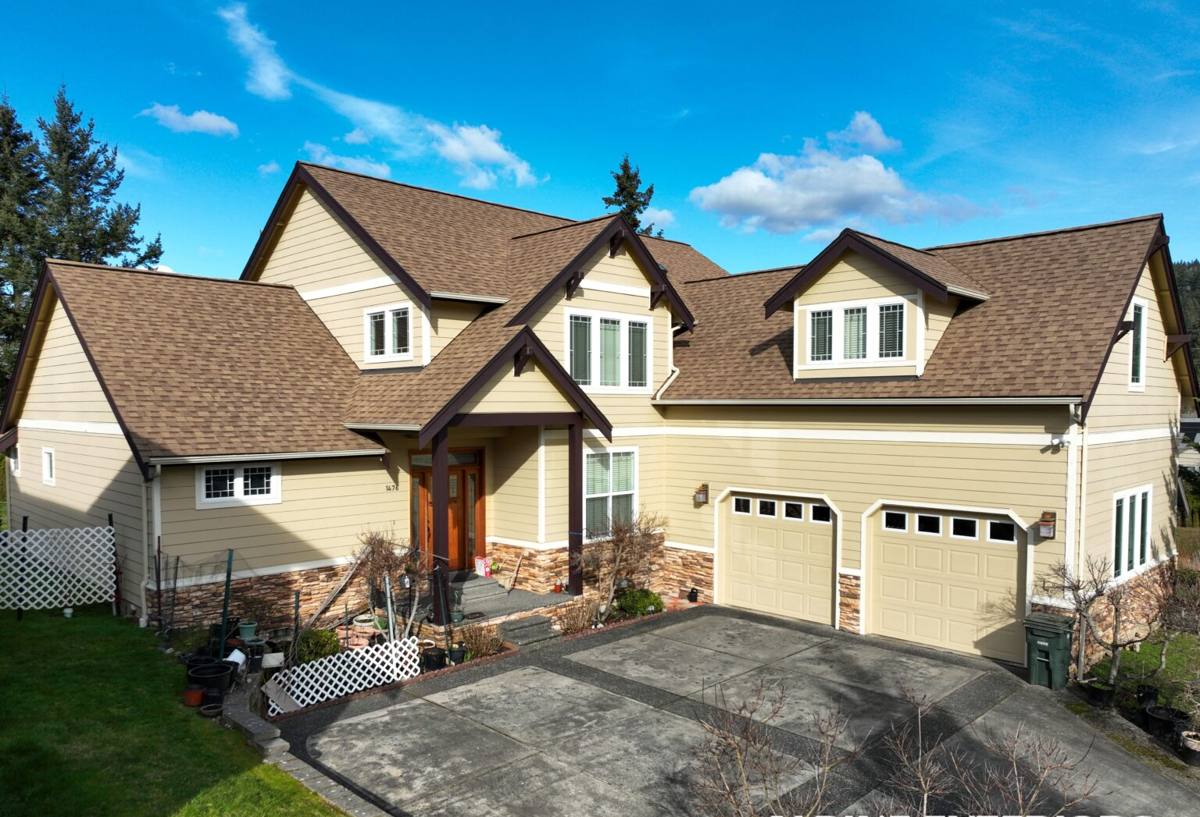
What Salt Air, Rain, and Moss Actually Do to a Deck
Salt Air and Metal Hardware
Airborne salt accelerates corrosion on anything metal — fasteners, joist hangers, railing brackets, post bases. Standard electro-galvanized screws and connectors that would last for years in a dry climate can start rusting and staining the decking around them within a couple of wet seasons this close to the water. Once a fastener starts to corrode, it loses holding strength long before the rust is visible from the top of the deck.
Driving Rain and Water Intrusion
Rain that comes in sideways off the water finds every gap in flashing, every unsealed ledger board connection, and every place where decking butts up against the house. Over time, water that gets trapped behind or under a deck's ledger attachment is one of the most common causes of structural rot — and it's usually invisible until the damage is significant, because it happens behind the siding and framing where nobody's looking.
Moss, Algae, and Surface Wear
Whatcom County's long wet season means moss and algae have months at a time to establish themselves on any horizontal wood surface that doesn't dry out quickly. Beyond looking bad, a moss-covered deck surface is genuinely dangerous — it gets slick fast, especially on stairs. Decking with poor drainage, tight board spacing, or a finish that traps moisture will grow moss noticeably faster than decking installed and finished with this climate in mind.
Choosing the Right Decking Material for This Climate
There's no single "best" decking material for every home — it depends on budget, maintenance tolerance, and how the deck will be used. But some materials are a genuinely better fit for a marine climate than others, and we'll walk you through the real trade-offs rather than just pushing whatever has the best margin.
| Material | Moisture/Salt Performance | Maintenance | Typical Lifespan |
|---|---|---|---|
| Pressure-treated wood | Decent if properly sealed and maintained; fasteners are the weak point | Annual cleaning and re-sealing recommended | 10-15 years with upkeep |
| Cedar | Naturally rot- and insect-resistant, but still needs sealing against driving rain | Regular sealing; shows weathering without it | 15-20 years with upkeep |
| Capped composite | Strong — the cap layer resists moisture intrusion and salt staining | Occasional washing; no sealing or staining | 25-30+ years |
| PVC decking | Excellent — fully synthetic, doesn't absorb moisture | Lowest of all options; wash only | 25-30+ years |
We'll be honest with you about what we install and why: on projects this close to salt air, we lean toward capped composite or PVC decking for the walking surface, paired with pressure-treated or engineered framing underneath that's rated for ground contact and coastal exposure. Wood decking isn't off the table if that's the look you want — it just means being upfront about the annual maintenance it takes to keep it performing well in this environment.
Framing Material Matters Too
The decking surface gets all the attention, but the framing underneath is what actually holds the deck up. We use pressure-treated lumber rated for ground contact on all structural framing, and where budget allows, we'll talk with you about composite or steel-reinforced framing components in high-exposure spots like ledger connections and stair stringers, where corrosion and rot do the most damage over time.
What's Under the Deck Matters as Much as What's on Top
Footings and Post Bases
Deck footings need to be sized and set below frost depth per code, and post bases need to keep the post itself off standing water. In this climate, we use post bases that elevate the wood post above grade and drain water away rather than trapping it against the concrete footing, which is a common spot for rot to start unnoticed.
Ledger Board Flashing
The ledger board — where the deck attaches to your house — is the single most important flashing detail on the entire structure. Done wrong, it's a direct path for water to get behind your siding and into the wall framing. We flash this connection with a layered approach (flashing tape, metal or composite flashing, and proper counter-flashing) so that water is shed away from the house rather than channeled into it.
Joist Spacing and Drainage
Tighter joist spacing and proper board gapping help decking dry out faster between rain events, which directly slows moss and algae growth. We also grade and space framing to avoid low spots where water can pool under the deck, since standing water under a deck is exactly the condition mold, rot, and pests look for.
Our Custom Deck Process, Start to Finish
- On-site consultation — We look at your home's exposure, existing structure (if replacing a deck), grade, and how you actually plan to use the space before recommending anything.
- Design and material selection — We walk through decking, railing, and framing options with honest trade-offs for your budget and this climate, not just the highest-margin option.
- Permitting — We handle the permit application and coordinate any required inspections with Whatcom County so you're not chasing paperwork.
- Demolition and site prep (if applicable) — Removal of the old structure, disposal, and prepping footings and grade for the new build.
- Framing and structural work — Footings, posts, beams, joists, and ledger flashing, built to hold up under coastal exposure, not just to pass inspection.
- Decking, railing, and stairs — Installed with attention to fastener choice, board spacing, and drainage detailing specific to this environment.
- Final walkthrough — We go over the finished deck with you, including what maintenance (if any) your chosen material needs going forward.
Hardware and Fasteners: The Detail Most Contractors Skip
This is where a lot of decks in coastal Whatcom County actually fail — not the decking material, but the fasteners and connectors holding everything together. It's an easy detail to cut corners on because it's invisible once the deck is finished, and it's also the detail that determines whether your deck is still solid in fifteen years or starting to fail in five.
- Stainless steel or hot-dip galvanized fasteners rated for coastal/marine exposure — not standard electro-galvanized screws
- Joist hangers and structural connectors rated for the same exposure category as the fasteners
- Corrosion-resistant post bases that elevate wood away from standing water
- Properly flashed ledger board connection with layered water protection
- Railing hardware and post connections rated for both structural load and salt exposure
- Stair stringer hardware — a high-stress connection that takes constant impact and exposure
If a contractor can't tell you specifically what grade of fastener and hardware they're using and why, that's worth asking more questions about before signing anything.
Permits and Whatcom County Requirements
Most new decks and significant deck rebuilds in Whatcom County require a building permit, and elevated decks typically need engineered or code-compliant footing and railing details reviewed as part of that process. Requirements can vary depending on deck height, size, and whether it's attached to the home, so this isn't something to guess at. We handle the permit process as part of every custom deck project so you're not left navigating county requirements on your own, and so the finished structure is something that will pass inspection and hold up to scrutiny if you ever sell the home.
What a New Deck Actually Costs — The Real Cost Drivers
We're not going to throw out a number that doesn't mean anything without seeing your specific project, but here are the factors that actually move the price, in rough order of impact:
| Cost Factor | Why It Matters |
|---|---|
| Size and footprint | Square footage is the baseline driver of both material and labor cost |
| Decking material | Composite and PVC cost more upfront than wood but less over the life of the deck |
| Height and footing depth | Elevated decks require more substantial framing, footings, and often stairs and additional railing |
| Railing style | Cable, glass, and composite railing systems cost more than standard wood or metal balusters |
| Site access and demolition | Removing an old deck or working around difficult site access adds labor time |
| Custom features | Built-in seating, multi-level designs, and lighting all add cost beyond a basic rectangular deck |
The most honest thing we can tell you is that the cheapest bid is rarely the best value on a coastal deck project — cutting corners on fasteners, flashing, or framing saves money upfront and costs more in repairs later.
Keeping Your Marietta Deck Looking Good Year-Round
Even a well-built deck needs some seasonal attention in this climate. The maintenance load depends heavily on the material you chose, which is part of why that decision matters so much upfront.
- Sweep debris off the deck surface regularly, especially in fall when leaves and needles trap moisture
- Rinse off salt residue and organic buildup a few times a year, more often in exposed locations
- Check railing and stair connections annually for looseness or corrosion staining
- Re-seal wood decking on the manufacturer's recommended schedule — don't let it lapse
- Keep gutters and downspouts near the deck clear so runoff doesn't dump directly onto or under it
- Address any soft spots, staining, or fastener corrosion immediately rather than waiting
Why Local Experience in This Area Matters
A deck built by a crew that's used to inland conditions will often make reasonable, code-compliant choices that simply weren't designed around salt air and near-constant moisture. Fastener grade, flashing detail, material selection, and drainage planning all need to be considered together for a deck that's actually built for Marietta and the broader Birch Bay area — not just built to a generic spec sheet. We work this coastline regularly, and the way we frame, fasten, and finish a deck reflects what we've seen hold up here and what hasn't.
If you're planning a new deck or replacing one that's showing its age, we're happy to come take a look and talk through honest options for your home. Fill out the form below for a free, no-pressure estimate — no obligation, just a straight answer about what your project actually needs.