 Birch Bay Siding
 Windows Built for Point Roberts' Exposure
Point Roberts sits on its own little peninsula, cut off from the rest of Whatcom County by water and the Canadian border, and that geography means homes there take weather from almost every direction. Salt-laden air off the Strait of Georgia works into window frames and hardware year-round. Driving rain off the water finds every gap in a poorly flashed window. And the long, damp moss season that defines this corner of Washington doesn't stop at the roofline — it creeps into window sills, tracks, and trim if those areas stay wet too long. A window that's fine forty miles inland can fail early out here if it wasn't chosen and installed with this specific exposure in mind.
We're a Birch Bay-based siding and exterior crew, and Point Roberts is part of our regular service area, not a special trip. We know which window details matter on this stretch of coast because we've pulled out enough failed ones to know what wear looks like after a few winters in this exact climate.
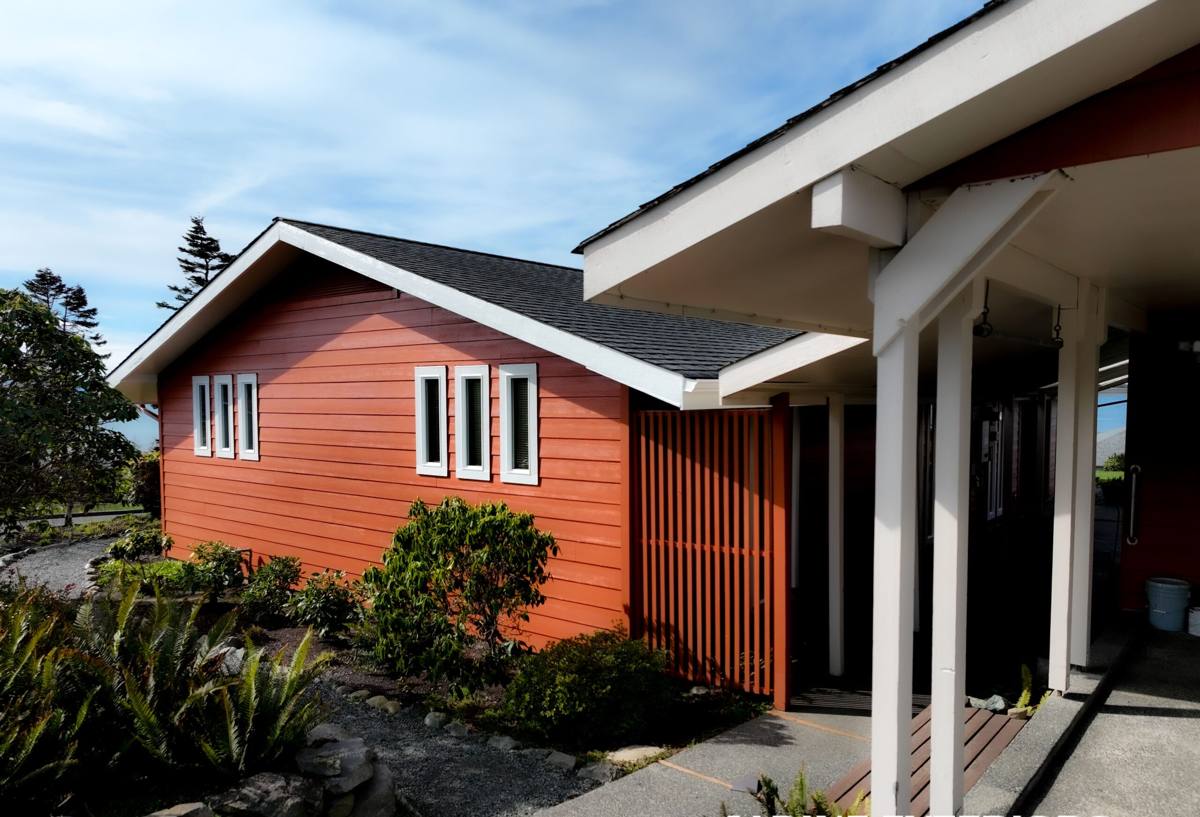
What Salt Air Actually Does to a Window Over Time
Salt air is corrosive in ways that aren't always obvious in year one. It's a slow, cumulative problem, and it shows up in predictable places:
- Hardware corrosion — cranks, locks, hinges, and balance mechanisms made from lower-grade metals pit and seize faster near salt water.
- Aluminum frame pitting — uncoated or poorly finished aluminum can develop surface corrosion that eventually affects the seal.
- Fastener failure — exterior screws and cladding fasteners that aren't corrosion-rated rust and weaken, which loosens the whole window assembly over time.
- Finish breakdown — paint and coatings on wood and composite frames chalk and fail faster under salt exposure combined with UV.
None of this means a homeowner needs to avoid certain window types altogether. It means the hardware, fasteners, and finish specification matter more here than they would on a house twenty miles inland, and it's worth asking about those specifics before signing a contract — not after installation.
Driving Rain and Water Management
Point Roberts gets weather straight off open water with little to break the wind. That means rain doesn't just fall on windows here — it's driven into them horizontally during storms. A window can be a well-built product and still leak if the flashing, sill pan, and sealant details around it are wrong. Most window water damage we find isn't a window defect at all; it's a bad installation that let wind-driven rain get behind the frame and into the wall assembly, where it goes unnoticed until there's rot, mold, or a stain on interior trim.
Moss Season and Window Sills
The long wet season in this part of Whatcom County keeps horizontal and sheltered surfaces damp for months at a time, which is exactly what moss and algae need to take hold. On windows, this shows up as green buildup in sill tracks, on exterior trim, and in the corners of frames that don't drain or dry well. Left alone, that moisture retention accelerates wood rot in wood-clad frames and trim, and it can work its way into caulk joints and compromise the seal. Window design that promotes drainage and airflow — and trim details that don't trap water — matters as much here as the window unit itself.
What a Correct Custom Window Job Involves
"Custom" doesn't just mean a non-standard size. For us it means the window and the installation are specified to fit this house, this exposure, and this budget — not a one-size-fits-all package. A correct job includes:
- Accurate measurement and sizing — true custom dimensions where the rough opening calls for it, rather than forcing a stock size and shimming the gap.
- Frame material matched to exposure — choosing vinyl, fiberglass, wood, or clad-wood based on where the window sits on the house and how much weather it takes.
- Corrosion-appropriate hardware and fasteners — specified for coastal exposure, not generic interior-grade parts.
- Proper flashing and sill pan installation — the water management layer that does more to prevent leaks than the window product itself.
- Sealant and joint detailing — correct backer rod and sealant at the right joints, not just a bead of caulk around the perimeter.
- Interior and exterior trim that sheds water — sloped sills and trim profiles that don't hold standing moisture.
Choosing the Right Frame Material for This Climate
There's no single "best" window frame material — each has real trade-offs, and the right choice depends on the specific wall, exposure, and how much upkeep a homeowner wants to take on.
| Frame Material | Coastal Exposure Notes | Maintenance |
|---|---|---|
| Vinyl | Handles salt air and moisture well; no corrosion risk in the frame itself | Low — occasional cleaning |
| Fiberglass | Very stable dimensionally, strong resistance to moisture and salt exposure | Low |
| Aluminum | Strong and slim sightlines, but needs a quality marine-grade finish to resist coastal corrosion long-term | Moderate — finish needs monitoring |
| Wood | Best appearance for many homeowners, but most vulnerable to moisture and rot in this climate without diligent upkeep | High — regular painting/sealing |
| Clad-wood | Wood interior with a protective exterior cladding; balances appearance with better weather resistance | Moderate |
We don't push one material on every project. A sheltered window on a lee wall has different needs than one facing open water, and we'll walk through those trade-offs honestly rather than steering everyone toward the same product line.
Our Process for Point Roberts Projects
Because Point Roberts is a bit of a logistical outlier — accessible by road through Canada or by water — we plan these jobs with that in mind rather than treating it like a same-day drop-in.
- On-site assessment — we look at existing window condition, framing, siding interface, and drainage before recommending anything.
- Honest scope and estimate — a written estimate covering products, labor, and any framing or rot repair the assessment turns up.
- Material staging — because of the border crossing, we plan material delivery and scheduling in advance so the job isn't held up mid-install.
- Proper removal and prep — old windows come out cleanly, and we check the rough opening and sheathing for hidden water damage before anything new goes in.
- Correct installation sequence — flashing, sill pan, window, sealant, and trim installed in the right order, not just the window itself.
- Final inspection and walkthrough — we check operation, seals, and finish work with the homeowner before calling the job done.
Cost Factors Worth Understanding
We won't quote prices without seeing the actual opening and condition of the house, but the main factors that move a custom window project's cost are worth knowing up front:
| Factor | Why It Matters |
|---|---|
| Frame material | Vinyl and fiberglass generally cost less than clad-wood or premium aluminum systems |
| True custom sizing | Non-standard openings cost more than stock sizes due to manufacturing lead time and fit |
| Existing water/rot damage | Framing repair discovered during removal adds cost but is far cheaper to fix now than later |
| Number of openings | Whole-house replacement typically has a better per-window cost than one-off swaps |
| Access and logistics | Site access, staging, and delivery timing affect labor costs, particularly for this location |
Signs Your Current Windows Are Losing the Battle
Homeowners often live with early warning signs for a season or two before calling anyone. Worth a look if you notice:
- Green or black growth building up in the sill track or on exterior trim faster than you can clean it off
- Hardware that's stiff, sticking, or visibly rusted at cranks, locks, or hinges
- Drafts or a cold feeling near the frame even with the window fully closed
- Peeling or bubbling paint on wood sills or trim, especially on the side facing open water
- Soft or spongy wood trim around the window when pressed
- Condensation forming between panes, a sign the seal on a double- or triple-pane unit has failed
Any one of these on its own isn't an emergency, but they're all signs the window's water and air seal is degrading, and that tends to accelerate once it starts.
Why Local Installation Experience Matters Here
A window installer who mostly works inland can still do fine carpentry and still get a coastal install wrong, because the failure points aren't about skill in general — they're about knowing this specific exposure. Flashing details that are "good enough" forty miles from salt water aren't always good enough at Point Roberts. Fastener and hardware specs that never come up on an inland job are a real consideration here. And the moss and moisture cycle on this part of the coast rewards drainage details that a lot of standard installations skip.
Working Birch Bay, Blaine, and Point Roberts as part of our regular territory means we're not guessing at what this coastline does to a window over five or ten years — we've seen it, and we build accordingly.
Get a Straight Answer on Your Windows
If you're dealing with drafty, stuck, or moss-lined windows on a Point Roberts home, or you're planning ahead for a full replacement, we're glad to take a look and give you an honest read on what's actually needed — no pressure, no upsell. Reach out for a free estimate using the form below.