 Birch Bay Siding
 Ferndale Siding Repair: A Climate That Doesn't Let Small Damage Stay Small
A cracked panel or a soft spot low on a wall rarely stays a small problem for long in Ferndale. Salt-laden air moving in off the water, rain that drives sideways into seams instead of falling straight down, and a moss season that can run most of the year all go to work on any opening in the siding the moment it appears. What might sit quietly for a season in a drier inland climate can turn into a real moisture problem here within a matter of months. That's the pattern behind most of the repair calls we get in this part of Whatcom County, not dramatic storm damage, but small failures that had time and weather working against them.
This page is specifically about repair, not a full re-side. Plenty of Ferndale homes don't need a whole new exterior; they need one or two sections diagnosed and fixed correctly before the damage spreads. We repair siding using James Hardie fiber cement exclusively, the same material we install on full replacements, and that consistency matters more for repair work than people expect. Matching new material cleanly into an existing wall is a different skill than installing a fresh elevation, and it only goes well when the crew doing it already knows the product in detail.
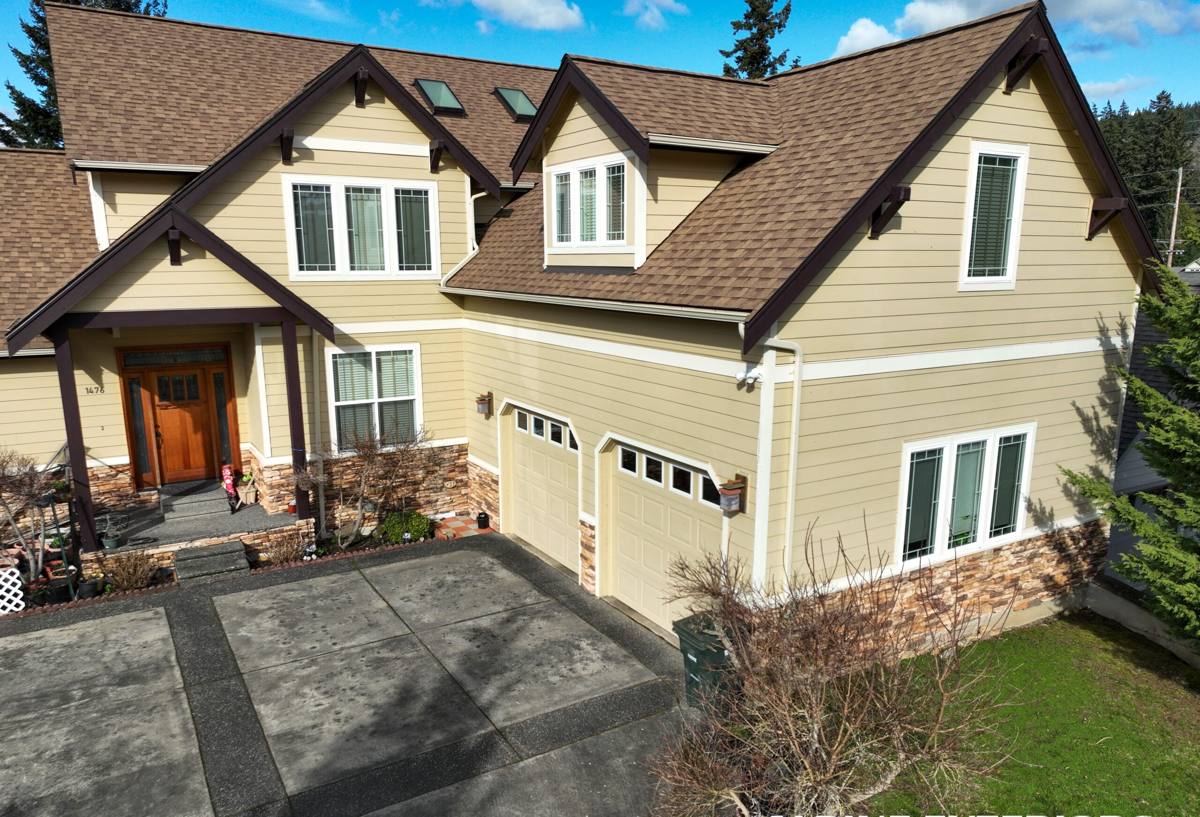
What Ferndale's Climate Does to a Damaged Wall
Salt Air and Corrosion
Even homes set back from the immediate shoreline get a steady dose of salt-tinged air moving through this stretch of the county. Once a fastener, a piece of trim, or exposed flashing starts corroding, it loses holding strength and can open a small gap exactly where the wall is supposed to be sealed. A repair that swaps out the visibly damaged siding but leaves corroded hardware in place is usually just delaying the same call by a year or two.
Wind-Driven Rain Finding the Gap
Rain here rarely falls straight down. Storms pushing in off the water drive it sideways, which means any crack, open seam, or failed joint becomes an entry point for water moving at an angle, not just from above. A repair that addresses only the visible damage and ignores how water actually approaches that section of wall tends to fail again at the next real storm rather than holding for years.
A Long Moss Season
Mild temperatures and consistent moisture keep moss and mildew active across most of the year on shaded and north-facing walls. Moss holds water against the siding surface longer than it would otherwise sit there, which means a damaged section under a patch of moss is getting a longer, wetter exposure than the same damage would see on a sunnier wall a few feet away.
Repair or Replace? How We Make the Call
Not every siding problem in Ferndale needs a full tear-off, and not every problem is a good candidate for a patch. The honest answer depends on how far the damage has actually traveled and what's happening behind the wall, not just what's visible from the yard.
| Situation | Usually a Repair | Usually Points to Replacement |
|---|---|---|
| Damage extent | One or two isolated boards or a single trim section | Damage scattered across multiple walls or elevations |
| Cause | Impact damage, a failed caulk joint, or a single bad fastener | Long-term moisture intrusion behind the siding |
| Substrate condition | Sheathing and framing behind the damage are still sound | Sheathing shows soft spots, staining, or rot |
| Age of existing siding | Siding elsewhere on the home is current and in good condition | Siding is old or already showing wear on other walls |
| Color and profile match | Current ColorPlus color or a paint match is achievable | Existing color run or plank profile is no longer available |
We open up the damaged area before quoting either option, because a wall that looks fine a couple of feet from the damage can still have moisture tracking further than expected underneath the surface. That inspection is what separates an honest repair estimate from a guess made from the driveway.
What a Correct James Hardie Repair Actually Involves
Finding the Root Cause, Not Just the Symptom
A cracked board or a soft spot is a symptom, not the problem itself. Before we replace anything, we look at why that section failed, a missing flashing detail, a fastener that backed out, a caulk joint that failed at a corner, or a drainage path that never worked correctly in the first place. Replacing the damaged material without correcting whatever let water in just means the same repair call again down the road, often at a worse stage than the first time.
Matching Material, Profile, and Color
James Hardie's factory-applied ColorPlus finish is durable, but it's also tied to whatever color run was current when the original siding went on. A repair ordered years later may need a specific color match, or a professional repaint of the repaired section, to blend in cleanly. Plank profile matters just as much, the width, exposure, and texture have to match exactly, or the patch reads as an obvious seam from the street even with a perfect color match.
Flashing and Sealing the Repair Boundary
Every edge where new material meets old is a potential water path if it isn't detailed correctly. That means proper flashing behind the top of the repair, correctly lapped joints below and beside it, and sealant used only where Hardie's specifications actually call for it rather than as a substitute for a real flashing detail. A repair that leans on caulk to do a flashing detail's job is one of the more common reasons patches fail again within a season or two.
Our Repair Process for Ferndale Homes
Inspection and Diagnosis
We start by opening up the damaged section enough to see what's actually happening behind it, not just patching over what's visible from outside. That includes checking the condition of the water-resistive barrier, the sheathing underneath, and whether nearby fasteners or trim are already showing early signs of the same failure pattern.
A Clear, Written Estimate
We explain what we found, what it will take to fix it correctly, and whether a repair is genuinely the right call or whether we think a larger section, or the whole wall, needs attention instead. If the honest answer is a bigger job than you expected walking into the estimate, we'll tell you that directly rather than quoting a patch we don't believe will actually hold.
The Repair Itself
Once the scope is agreed on, we remove the damaged material, correct whatever originally let water in, install matching Hardie product with the correct fastening and flashing detail, and finish the color match so the repair doesn't stand out as an obvious patch. We check our own work at the end the same way we would on a full installation, clearances, sealed joints, and proper drainage, because a repair is only as good as the details nobody sees once it's finished and the crew has left.
Signs It's Time to Call About a Siding Repair
- A cracked, chipped, or missing section of siding after a storm or impact
- Soft or spongy siding when you press on it, especially low on a wall or near window and door trim
- A caulk joint or seam that's visibly open or has pulled away from the siding
- Moss or dark staining that returns quickly in one specific spot even after cleaning
- A fastener head that's rusted, backed out, or left a visible gap in the siding face
- Peeling paint, or a mismatched patch from a previous repair that was never blended in properly
Any one of these is worth a look before the next wet season starts, since Ferndale's mix of salt air, wind-driven rain, and moss tends to turn small openings into bigger ones faster than a drier climate would.
Why We Repair Only with James Hardie Fiber Cement
We install and repair one siding system: James Hardie fiber cement. We don't repair vinyl, LP SmartSide, Cemplank, Allura, primed spruce, or cedar siding, and it's worth explaining why rather than just stating the policy. Repair work on an unfamiliar product means working from manufacturer specs we don't use every day, fastening patterns, expansion allowances, and finish touch-up methods all differ from one system to the next, and doing that well requires the same hands-on familiarity we bring to Hardie, not a general contractor's best guess.
Fiber cement is also simply easier to repair well in this particular climate. It's dimensionally stable, so a correctly matched patch doesn't shift or gap the way a wood-based repair can after a handful of wet-dry cycles, and its factory-applied ColorPlus finish gives us an actual color system to match from instead of guessing at a field-mixed paint can. That combination is a large part of why we standardized on one product for both new installations and repairs, rather than carrying the parts, fasteners, and specs for several unrelated systems at once.
Why a Crew That Already Works Ferndale Matters for Repairs
Repair work rewards local, repeated experience more than a fresh installation does. A crew that's already worked on homes throughout Ferndale knows which wall orientations tend to fail first, which older Hardie color runs are hardest to match, and how quickly a small gap turns into trapped moisture in this specific combination of salt air, wind-driven rain, and moss. That knowledge shortens the diagnostic part of a repair call and makes the fix more likely to actually hold through the next few wet seasons instead of turning into a callback.
It also means fewer surprises during the job itself. We've seen how older siding in this area typically ages, what's usually hiding behind a failed joint on a shaded wall, and which details are worth extra time on a repair even when they're not strictly required. That's the kind of judgment that only comes from working the same climate and the same types of homes repeatedly, not from a one-time visit.
Get a Free, No-Pressure Estimate
If your Ferndale home has a section of damaged, aging, or previously patched siding, we're glad to take a look and give you an honest read on whether it needs a repair or something more. Reach out using the form below to schedule a free estimate, no pressure and no upsell script.