 Birch Bay Siding
 What California Creek Homes Are Up Against
California Creek sits close enough to the water that homes here take a different kind of weathering than siding does further inland. Salt-laden air moves in off the coast and settles on exterior surfaces year-round, driving rain comes in sideways during winter storms, and the shaded, moisture-heavy stretches near the creek corridor stay damp long enough to grow moss on anything that will hold it. None of that is unusual for Whatcom County, but it adds up to a harder job for exterior siding than most manufacturers design for on paper.
We install fiber cement siding in this neighborhood regularly enough to know which failure points show up first — usually at butt joints, corner trim, and anywhere caulk was asked to do a job flashing should have done. This page walks through what fiber cement siding needs to hold up here, what a correct installation actually involves, and why we standardized on one product line instead of offering several.
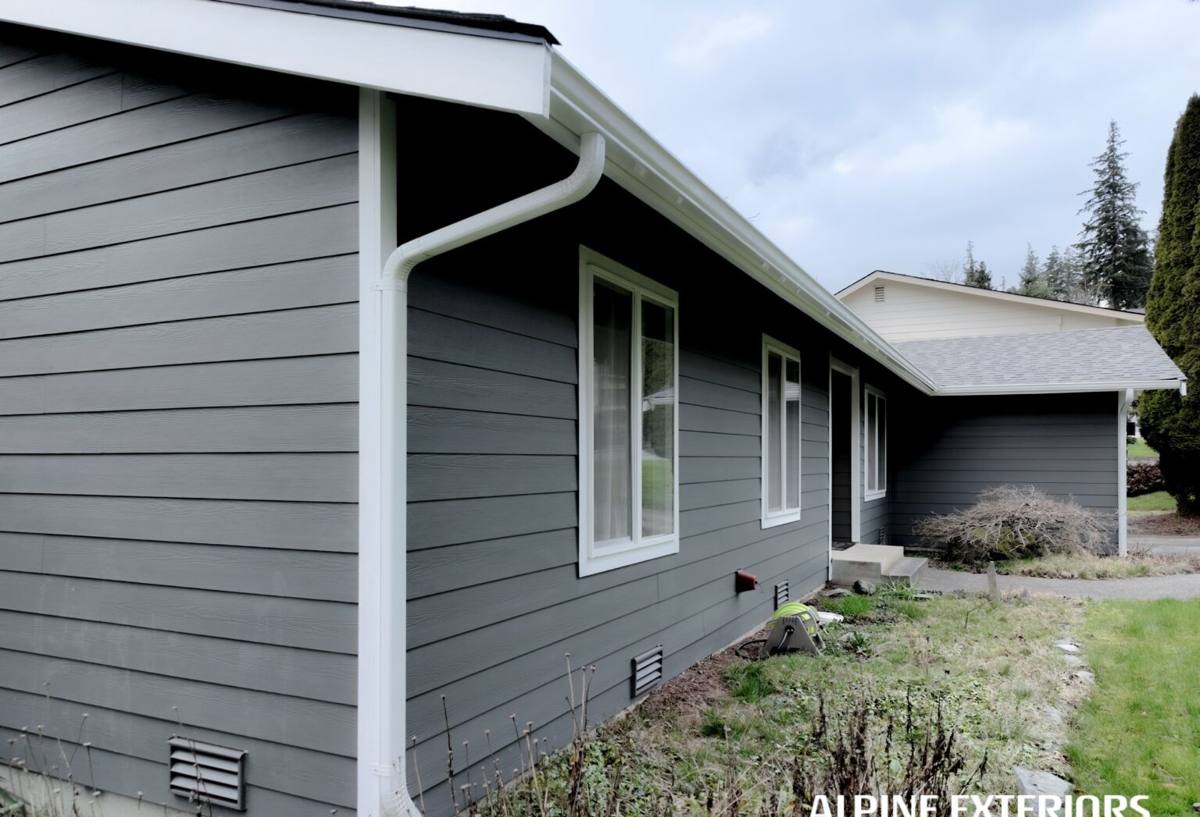
Why Salt Air, Rain, and Moss Change the Equation
Salt Air
Airborne salt doesn't just sit on the surface — over years it accelerates corrosion on any exposed metal fasteners, flashing, or trim hardware, and it can dull or chalk finishes that weren't built for coastal exposure. Siding with a factory-baked finish holds up far better against this than anything painted on site, because the finish is cured and sealed before it ever reaches the house.
Driving Rain
Wind-driven rain off the water doesn't fall straight down — it gets pushed sideways and upward into laps, seams, and penetrations. Siding systems that rely on caulk alone at horizontal joints tend to let water in eventually. The fix isn't a better caulk; it's a drainage plane behind the siding that gives water somewhere to go before it ever reaches the sheathing.
Moss Season
Whatcom County's wet season runs long, and shaded areas near creeks and mature tree cover stay damp for months at a stretch. Moss and algae need sustained moisture to take hold, and once established they hold even more moisture against the siding surface — which is exactly the wrong thing for wood-based products that swell, rot, or delaminate when they stay wet.
Why Fiber Cement Outperforms the Alternatives Here
Fiber cement is cement, sand, and cellulose fiber — it doesn't rot, it doesn't feed pests, and it doesn't swell the way wood-based products do when it stays damp. That matters a lot in a spot where moisture exposure is the rule, not the exception. Here's how it stacks up against the other materials homeowners in this area ask us about.
| Material | Salt Air / Moisture Behavior | Moss Susceptibility | Long-Term Maintenance |
|---|---|---|---|
| Fiber Cement (James Hardie) | Non-combustible, dimensionally stable, factory-cured finish resists chalking | Hard, non-porous surface sheds moisture; doesn't feed growth like wood fiber | Occasional wash; no repainting for years with ColorPlus finish |
| Vinyl | Can warp or fade with UV and temperature swings; seams are a weak point in driving rain | Grows moss/algae readily in shaded, damp spots | Low upfront, but cracks and fades over time; not repairable, only replaceable |
| Wood-Based (LP SmartSide, primed spruce) | Engineered wood strand or wood substrate; vulnerable if moisture reaches the core | Wood fiber surface holds moisture and organic growth more readily | Requires ongoing caulk and paint maintenance to keep moisture out |
| Cedar | Natural material, moves with humidity, needs consistent sealing near salt air | Highly susceptible without regular treatment | Frequent staining/sealing; highest ongoing labor cost |
This isn't a knock on those products in every setting — vinyl, engineered wood, and cedar all have legitimate uses. But for a site exposed to salt air, driving rain, and a long moss season, we don't think they hold up as well as fiber cement, which is why we don't install them.
Why We Only Install James Hardie
Fiber cement isn't a single product — several manufacturers make it, and quality varies. We standardized on James Hardie specifically because of how it's engineered for climates like this one. Hardie's HZ5 product line is formulated for regions that see sustained wet weather and freeze-thaw cycling, which describes a Whatcom County winter reasonably well. The ColorPlus finish is baked on at the factory under controlled conditions rather than field-painted, which is a meaningful difference in an area where a fresh coat of site-applied paint has to cure in exactly the damp air it's trying to resist.
Hardie also backs its siding with a transferable warranty that stays meaningful if the home changes hands — worth something on the coast, where buyers ask pointed questions about how the exterior has held up. We don't carry other fiber cement brands like Allura or Cemplank alongside Hardie. Running one product line means our crews install it the same correct way on every job, instead of switching installation details brand to brand.
What a Correct Fiber Cement Installation Involves
The siding board itself is only part of the system. Most of the moisture failures we get called out to inspect on older homes trace back to installation shortcuts, not the material. A correct job includes:
- A drainage plane behind the siding — a weather-resistant barrier with a rainscreen gap so any water that gets past the siding can drain and dry instead of sitting against the wall sheathing.
- Correct fastener pattern and depth — Hardie specifies fastener placement and embedment for a reason; over-driven or misplaced nails crack the board or leave it under-secured against wind loads off the water.
- Proper flashing at every penetration — windows, doors, hose bibs, light fixtures, and vents all need flashing detailed to shed water outward, not just caulk sealing the gap.
- Correct clearances at grade and roof lines — siding held too close to the ground, deck surfaces, or roofing wicks up moisture and stays wet longer than it should.
- Factory-cut and factory-primed edges wherever possible — field cuts get sealed properly so the cut edge isn't left absorbing water.
Skipping any one of these doesn't usually show up as a problem in year one. It shows up in year five or six, as staining, soft trim, or paint failure at the joints — right when the driving rain and moss season have had a few full cycles to work on a weak point.
Our Process on a California Creek Job
1. On-Site Assessment
We walk the exterior, check existing siding and trim condition, look at grading and drainage around the foundation, and note shaded areas where moss has already gotten a foothold. This tells us where the house is losing the fight against moisture before we ever talk numbers.
2. Honest Scope and Estimate
We put together a written scope that spells out what's being removed, what the drainage plane and flashing details look like, and which Hardie products and colors fit the home. No pressure, no inflated scare tactics about "hidden rot" we haven't actually found.
3. Tear-Off and Sheathing Check
Old siding comes off, and we inspect the sheathing underneath before anything new goes up. If moisture has already reached the sheathing, we address it before it gets covered again — closing that up under new siding just delays the problem.
4. Installation to Spec
Weather-resistant barrier, rainscreen, flashing, then Hardie siding installed with the fastener pattern and clearances the manufacturer specifies — not shortcuts to save a day of labor.
5. Final Walkthrough
We walk the finished job with the homeowner, point out the drainage and flashing details that don't stay visible once the siding is up, and answer questions about care and warranty registration.
Living With Fiber Cement Siding Near the Creek
Fiber cement is low-maintenance compared to the alternatives, but "low-maintenance" isn't "no-maintenance" in this environment. A few habits keep it performing the way it's designed to:
- Rinse siding periodically, especially on shaded or north-facing walls where moss and algae are more likely to establish.
- Keep gutters clear so overflow isn't running down the siding face during heavy rain.
- Trim back vegetation that keeps siding shaded and damp longer than the rest of the house.
- Check caulking at trim joints every year or two, even though the siding itself doesn't need repainting on the same schedule.
What Drives Cost on a Job Like This
Every home is different, but a few factors consistently move the price on California Creek fiber cement projects more than others:
| Cost Factor | Why It Matters Here |
|---|---|
| Existing siding removal | More layers or damaged sheathing underneath adds tear-off and repair time |
| Home size and complexity | Dormers, multiple gables, and cut-up wall lines mean more trim and flashing detail work |
| Drainage plane condition | Homes with no existing rainscreen need that system built in during the reside |
| Trim and accessory choices | Hardie trim, soffit, and color selections affect material cost |
| Access and site conditions | Tree cover, slope, or tight lot lines near the creek can affect staging and labor time |
We'd rather walk a homeowner through these factors on-site than throw out a number that doesn't hold up once we're actually looking at the walls.
Vetting a Fiber Cement Contractor Before You Hire
Because so much of siding performance depends on what's happening behind the boards, the contractor matters as much as the product. Before hiring anyone for a fiber cement job in this area, it's worth asking:
- Do you install a rainscreen/drainage plane behind the siding, or just a weather barrier?
- What's your fastener pattern and how do you handle manufacturer specs for embedment depth?
- How do you flash windows, doors, and penetrations — walk me through it, not just "we caulk it"?
- Is your crew factory-trained on the specific product you're installing?
- What does the manufacturer's warranty cover, and does it transfer if I sell the home?
A contractor who can answer these clearly, without hesitating, is usually one who's done the detail work enough times to know why it matters — not just on the sales pitch, but on the actual install.
If your California Creek home's siding is showing moss staining, soft trim, or paint that keeps failing at the joints, we're happy to take a look and put together a straightforward, no-pressure estimate. Use the form below to get started.