 Birch Bay Siding
 Marietta's Siding Problem Is a Water Problem
Marietta sits close enough to the water that homes here take a different kind of beating than siding a few miles inland. It isn't one dramatic storm that does the damage — it's the steady combination of salt-laden air off the bay, wind-driven rain that gets pushed sideways into wall assemblies, and long stretches of shaded, damp weather that keep exterior surfaces wet longer than they'd like to be. Whatcom County's marine climate means siding here rarely gets a clean, fast dry-out between rain events, especially on north- and west-facing walls tucked under trees or close to neighboring structures.
That combination is exactly what separates siding that holds up for decades from siding that starts showing problems in five to ten years. Fiber cement, installed correctly, is built for this. Installed poorly — or built from the wrong material to begin with — it isn't.
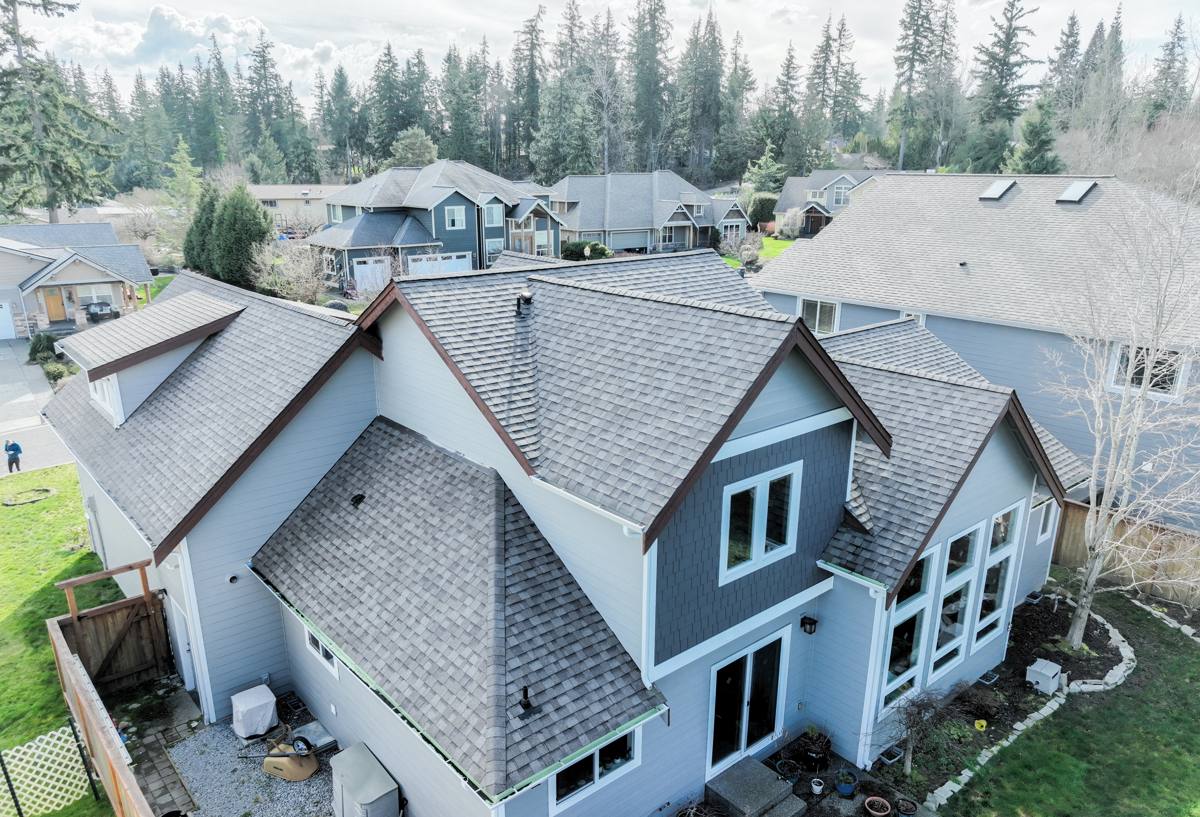
What Salt Air, Driving Rain, and Moss Actually Do to Siding
Salt Air and Wind Exposure
Airborne salt is corrosive to fasteners, trim flashing, and any metal component in the wall assembly. It also accelerates the breakdown of lower-grade coatings and caulks, which lose flexibility and adhesion faster near the water than they would inland. Over time this shows up as chalking paint, rusting fastener heads bleeding through the finish, and caulk joints that crack and open a path for water.
Driving Rain
Wind off the water doesn't let rain fall straight down — it drives it laterally into siding, trim, and window and door openings. That means water management (flashing, weather-resistive barrier, proper laps, and correctly sealed penetrations) matters more here than it does in a sheltered inland lot. A siding job that looks fine on a calm day can fail the first time a real coastal storm pushes water sideways for six hours straight.
Shade and Moss Season
Many Marietta lots have tree cover or sit close to neighboring homes, which keeps certain wall sections shaded and slow to dry. Combined with our long wet season, that's ideal growing conditions for moss and algae on any siding surface that stays damp. Some materials tolerate that moisture cycling far better than others — and some trap it, which is worse than sitting in the open.
Why We Install Only James Hardie Fiber Cement
We standardized on James Hardie fiber cement for every job we do, including here in Marietta and across Birch Bay, and we don't install vinyl, LP SmartSide, Cemplank, Allura, or bare wood siding. That's not a marketing position — it's a decision built around what actually holds up in this climate.
Fiber cement is non-combustible, dimensionally stable in wet-dry cycling, and doesn't feed moss and algae the way wood-based products can. James Hardie's ColorPlus factory finish is baked on under controlled conditions, which gives it better adhesion and UV resistance than field-applied paint, and it comes with a real, transferable warranty backing that finish. Hardie also engineers specific product formulations (its HZ10 and HZ5 climate zones) for different moisture and freeze conditions across the country — that matters in a marine climate where a product engineered for a dry inland region simply isn't built for what Whatcom County throws at a wall.
We're not going to tell you every other product on the market is worthless — many of them are reasonable materials used correctly in the right climate. But for a coastal Whatcom County home, the trade-offs (moisture sensitivity, coating durability, warranty structure, or long-term maintenance burden) are real enough that we've chosen not to put our name behind installing them. Hardie is what goes on the homes we build.
What a Correct Fiber Cement Install Actually Involves
Fiber cement is only as good as the assembly behind it. A rushed or undertrained install can leave a Hardie-branded home with the same water problems as a cheap product — the board itself isn't the whole story.
Substrate and Water-Resistive Barrier
Before a single board goes up, the sheathing needs to be sound and dry, and the weather-resistive barrier needs to be continuous and correctly lapped — top over bottom, shingle-style, so water sheds outward rather than working its way behind the barrier.
Flashing at Every Penetration
Windows, doors, hose bibs, light fixtures, vents — every penetration through the wall plane needs proper flashing integrated with the water-resistive barrier, not just caulked over the top. In a driving-rain environment like Marietta's, this is where most long-term leaks originate if it's skipped or done in a hurry.
Clearances and Fastening
James Hardie specifies minimum clearances from grade, roof lines, decks, and other siding terminations, along with specific fastener types, spacing, and depth. Fastening too shallow or too deep, or skipping clearance requirements to save time, voids warranty coverage and creates entry points for moisture — problems that often don't show up for a few years, which is exactly when they're hardest to trace back to the install.
Joints, Caulking, and Painting
Butt joints need to be treated correctly (many jobs are better served by factory-primed or pre-finished joint treatments rather than field caulk alone), and any field-cut edges need to be sealed and primed per manufacturer spec before they're exposed to weather.
How Our Process Works on a Marietta Job
- On-site assessment. We look at your home's specific exposure — how much direct salt air and wind it gets, how much shade and moisture it holds, and the condition of the existing wall assembly underneath the current siding.
- Product and profile selection. We help you choose the right Hardie board profile (lap, shingle-style panel, or vertical) and ColorPlus finish for your home's style and this climate zone.
- Tear-off and substrate check. Old siding comes off and we inspect sheathing for rot or water damage before anything new goes up — this is the step that gets skipped on corner-cutting jobs and causes problems years later.
- Water-resistive barrier and flashing. Installed and lapped correctly at every seam, window, door, and penetration.
- Board installation to manufacturer spec. Correct fastener type, spacing, clearances, and joint treatment throughout.
- Final detail and cleanup. Caulking, touch-up, trim work, and job-site cleanup before we walk the finished exterior with you.
Cost Factors on a Marietta Fiber Cement Job
Every home is different, but these are the variables that most often move the price on a job in this area — we'll walk through your specific numbers during a free estimate rather than quoting broad ranges that don't mean much until we've seen the house.
| Factor | Why It Matters Here |
|---|---|
| Existing siding removal | Wood or older siding with hidden moisture damage takes longer to remove and repair than a straightforward tear-off |
| Wall complexity | Homes with lots of dormers, bump-outs, or trim detail take more time to flash and fit correctly |
| Exposure level | Walls facing prevailing wind and rain off the water often warrant extra attention to flashing and joint treatment |
| Substrate condition | Rot or water damage found during tear-off needs repair before new siding goes on — this is common on older coastal homes |
| Profile and finish choice | Lap siding, shingle-style panels, and trim packages carry different material and labor costs |
| Access and site conditions | Tree cover, tight lot lines, and staging space affect labor time |
Caring for Fiber Cement Siding in This Climate
Fiber cement is genuinely low-maintenance compared to wood, but "low-maintenance" doesn't mean "no maintenance" — especially with the moss and algae pressure common around Birch Bay and Marietta. A simple annual routine keeps a correctly installed Hardie exterior performing the way it's supposed to for the long haul.
- Rinse siding with a garden hose (not a pressure washer aimed directly at joints or under laps) once or twice a year to clear salt residue and organic buildup
- Check caulk joints around windows, doors, and trim annually and re-caulk any that have cracked or pulled away
- Trim back tree branches and shrubs that keep sections of wall in constant shade and moisture
- Look at ground-level clearance periodically — mulch, soil, or plantings that creep up against the bottom of the siding trap moisture against the board
- Address any soft spots, gaps, or visible fastener issues promptly rather than waiting for a bigger repair
Why a Crew That Already Works Marietta Matters
Installing fiber cement correctly requires following manufacturer specs, but installing it correctly for this specific stretch of coastline means knowing which walls on a typical Marietta lot take the worst of the wind-driven rain, where shade and moisture linger longest, and how much salt exposure a given property actually gets based on its distance from the water and prevailing wind direction. That's knowledge that comes from doing the work here repeatedly, not from a general specification sheet.
A crew that's already familiar with Whatcom County's marine climate and this particular stretch of Birch Bay and Marietta will flag the details that matter for your home specifically — whether that's extra attention to a north-facing wall that never fully dries out, or clearance issues on an older foundation that wasn't built to current standards.
Get a Free, No-Pressure Estimate
If your Marietta home's siding is showing signs of moss, cracked caulk, peeling paint, or you're just planning ahead for a replacement, we're happy to come take a look and walk you through what correct James Hardie fiber cement installation would involve for your specific property — no pressure, no obligation. Use the form below to request a free estimate.