 Birch Bay Siding
 Windows Built for a Semiahmoo Waterfront Climate
Homes in the Semiahmoo area near Birch Bay sit in one of the more demanding window environments in Whatcom County. You've got salt-laden air coming off the water, wind-driven rain that hits window walls at an angle instead of falling straight down, and a wet season that stretches long enough for moss and algae to get a foothold on anything that stays damp. Windows here don't fail because they're old — they fail because they were never specified for this exposure in the first place. A window that would be perfectly fine forty miles inland can start showing seal failure, frame staining, or soft spots within a handful of years out here.
Custom windows means more than picking a size off a shelf. It means matching the frame material, glass package, and installation detail to what this particular coastline throws at a house. That's the job, and it's what we focus on for every Semiahmoo-area project we take on.
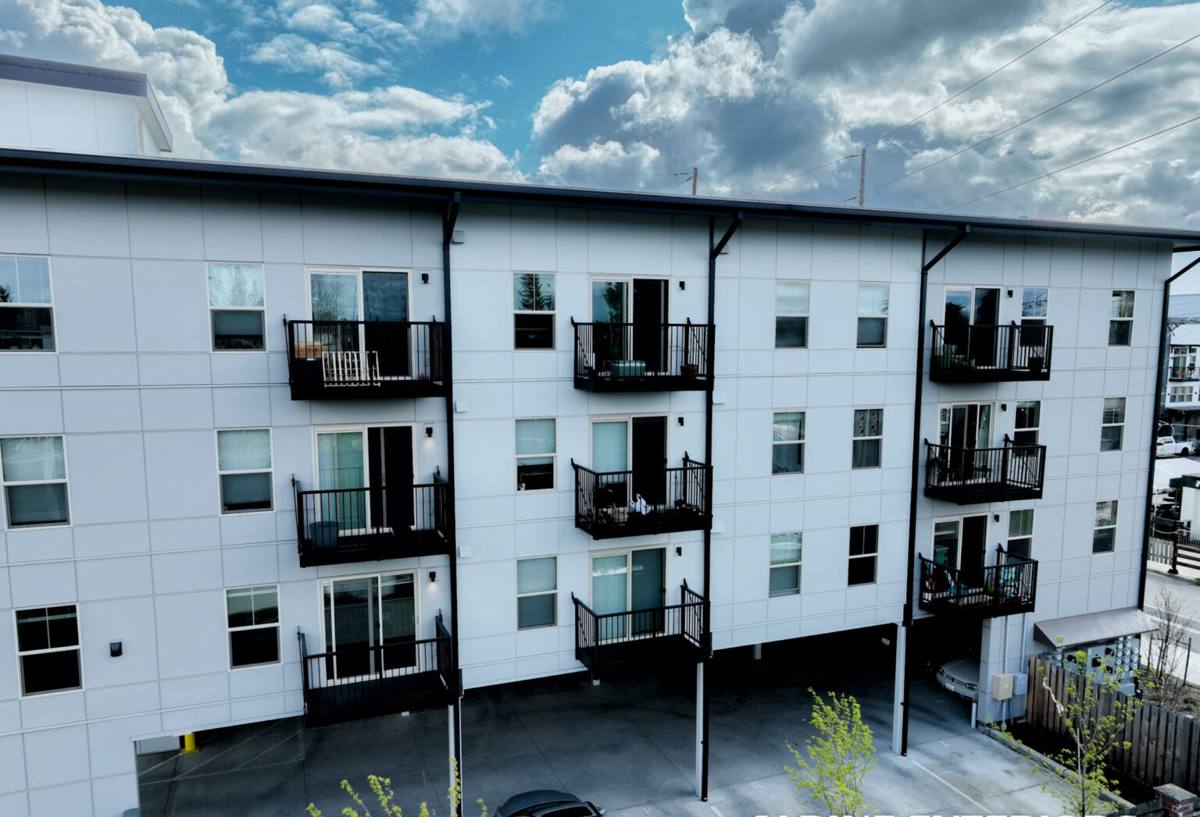
What Salt Air, Driving Rain, and Moss Season Actually Do
Each of these three conditions attacks windows differently, and understanding the mechanism matters when you're deciding what to install.
Salt Air
Airborne salt is corrosive to exposed metal hardware — hinges, cranks, balance systems, and especially lower-quality aluminum components. Over time it can also etch and dull certain glass coatings if they're not rated for coastal exposure. It settles into any crevice where air movement is low, which is exactly what happens around a poorly sealed window frame.
Wind-Driven Rain
On a calm day, water sheds off a wall and down to the ground. In a coastal wind event, rain gets pushed sideways and upward into gaps that a standard installation wouldn't need to worry about. This is why flashing detail and sill pan design matter more here than they do in a sheltered inland lot — the water is trying to get in from angles a basic install doesn't account for.
Moss and Algae Season
Whatcom County's wet stretch runs long, and any surface that stays shaded and damp for weeks at a time becomes a candidate for moss, algae, or mildew growth. On windows, this shows up most in wood sashes, in vinyl corners that don't drain well, and in the recessed tracks of older sliding units. It's mostly cosmetic at first, but trapped organic growth holds moisture against the frame longer than it would otherwise sit, which speeds up whatever decay process is already underway.
Choosing the Right Frame Material for This Exposure
There's no single "best" window material for every house — it depends on your home's exposure, your maintenance appetite, and your budget. Here's how the common options actually perform in a salt air, high-rain environment like Semiahmoo's.
| Material | Coastal Performance | Maintenance | Trade-offs |
|---|---|---|---|
| Vinyl (quality-grade) | Good — won't corrode or rot; UV-stable formulations hold up well | Low — rinse off salt film periodically | Limited color range; frame profiles are thicker than fiberglass |
| Fiberglass | Very good — dimensionally stable, resists corrosion and moisture absorption | Low | Higher upfront cost than vinyl |
| Wood (unclad) | Poor in direct salt exposure without diligent upkeep | High — regular refinishing required | Best appearance option, but moss and rot risk is real here without maintenance discipline |
| Wood-clad (aluminum or vinyl exterior) | Good — exterior cladding shields the wood core from weather | Moderate | Cladding must be properly sealed at joints or moisture gets trapped inside |
| Aluminum | Fair — strong but prone to corrosion pitting near salt water over time unless marine-grade | Moderate | Poor thermal performance unless thermally broken |
For most Semiahmoo-area homes we work on, quality vinyl or fiberglass ends up being the practical choice — both resist corrosion outright rather than requiring a maintenance routine to hold it off. If the look of real wood matters to you and you're willing to keep up with it, wood-clad is a reasonable middle ground, as long as the cladding and flashing detail are done right at every joint.
Glass and Hardware Choices That Matter Here
Frame material gets most of the attention, but glass package and hardware selection are just as important for a coastal install.
- Dual or triple-pane glass with an argon or krypton fill improves both insulation and condensation resistance — relevant given how much moisture is in the air here for months at a time.
- Low-E coatings should be specified for the actual sun exposure and orientation of each window, not applied blanket across the whole house.
- Corrosion-resistant hardware — stainless steel or coated components — holds up far longer against salt air than standard-grade hinges and locks.
- Weep hole and drainage design in the sill needs to actually clear water and debris rather than trap it, which is where cheaper window lines often cut corners.
What a Correct Installation Actually Involves
The window unit itself is maybe half the equation. The installation detail is what determines whether that window is still performing well in fifteen years or showing rot and leaks in five. For a coastal Whatcom County home, a correct install includes:
- Full removal of the old unit and inspection of the rough opening framing for hidden water damage before anything new goes in.
- Repair of any soft or compromised framing found — installing a new window into a damaged opening just hides the problem behind trim.
- Proper sill pan flashing that directs any water that does get past the window back outside the wall assembly, not into the framing.
- Correct integration of window flashing with the home's existing weather-resistive barrier — lapped in the right order so water sheds down and out, never trapped behind housewrap.
- Air-sealing and insulating the gap between the window frame and rough opening, not just caulking the exterior trim.
- Setting the unit level, plumb, and square, then confirming smooth operation before final fastening.
- Exterior trim and caulking sized and sealed for wind-driven rain, with attention to any joint where water could pool.
Skipping steps here is exactly how a brand-new, expensive window ends up with a moisture problem behind the wall within a few winters — and by the time it shows up as a stain on the interior sill, the damage is usually already done.
Our Process, Start to Finish
We keep the process straightforward and try to minimize surprises, since window replacement touches both the exterior weather barrier and the interior of your home.
1. On-Site Assessment
We look at each window opening individually — sun exposure, wind exposure, current condition of the framing where visible, and how the existing units have held up. Not every window on a Semiahmoo-facing wall needs the same spec as one on a sheltered side of the house.
2. Product and Spec Recommendation
Based on that assessment, we recommend frame material, glass package, and hardware suited to each opening's actual exposure, along with a straightforward explanation of why — not just a single product pushed across every window.
3. Written Estimate
You get a clear, itemized estimate before any work starts, so there's no ambiguity about scope or cost.
4. Installation
Our crew handles removal, any needed framing repair, flashing, insulation, and finish work following the sequence outlined above — not a shortcut version of it.
5. Final Walkthrough
We check operation, seals, and finish work with you before calling the job complete, and answer any questions about care going forward.
Signs Your Windows Need Attention
Coastal weather tends to reveal window problems earlier than an inland climate would. Watch for:
- Fogging or condensation between panes — a sign the seal has failed and the insulating gas has escaped
- Soft or discolored wood trim around the window, especially at the bottom corners
- Visible moss, algae, or persistent black staining on frames or sills
- Difficulty opening, closing, or locking a window that used to operate smoothly
- Drafts or a noticeable temperature difference near the window on a windy day
- Peeling or bubbling paint on interior sills, which often points to moisture getting past the frame
- Visible corrosion or chalky residue on hardware and hinges
Catching any of these early usually means a straightforward window replacement. Left long enough, they can turn into a framing repair job as well.
Living With Windows in This Climate
Even a well-installed, well-chosen window benefits from some basic upkeep in a salt air, high-moss environment. A periodic rinse to clear salt film, keeping weep holes and tracks free of debris and moss buildup, and checking exterior caulking annually for cracking all go a long way toward getting the full service life out of your investment. None of it is demanding — it's the kind of thing that takes an hour a couple times a year and prevents the slow deterioration that catches homeowners off guard down the line.
Why Local Installation Experience Matters
A crew that mostly installs windows in dry, sheltered inland neighborhoods isn't necessarily wrong about window products in general — but they may not have had to think hard about sill pan drainage, salt-resistant hardware, or wind-driven rain flashing detail, because their jobs rarely test for it. Working regularly in the Semiahmoo and Birch Bay area means we're specifying and installing to a standard that assumes this exposure, not treating it as an edge case. That shows up in fewer callbacks, fewer surprise moisture problems, and windows that are still performing the way they should well past the point a mismatched product would have started failing.
If you're weighing a window replacement or a full custom window project for a Semiahmoo-area home, we're happy to take a look and walk you through what makes sense for your specific exposure. Reach out for a free, no-pressure estimate using the form below.